
- EMERGENCY & SAFETY TOOLS
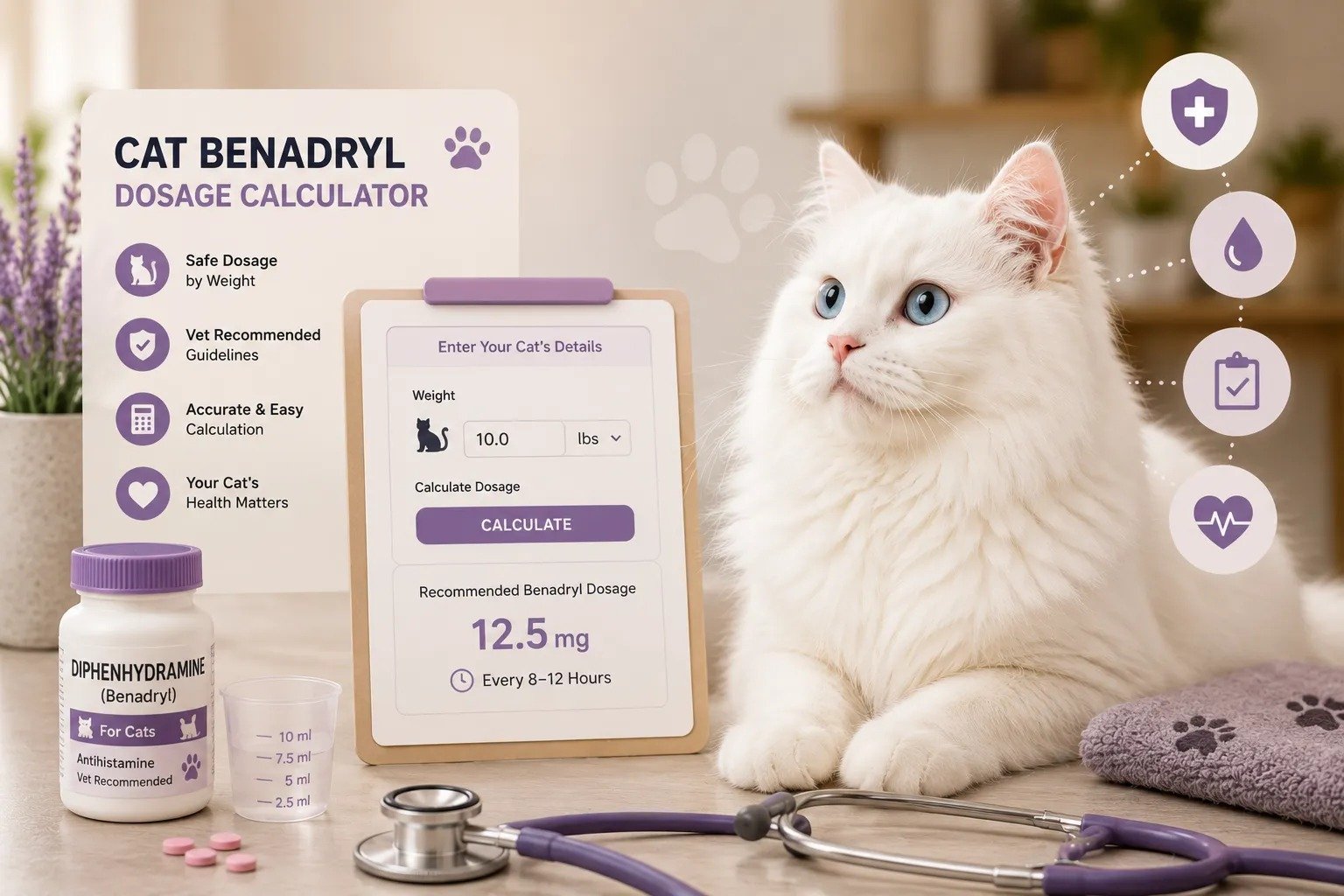
Cat Benadryl Dosage Calculator
Dealing with sudden feline allergies or bug stings? While Diphenhydramine (Benadryl) is safe for cats, human doses can easily cause toxic overdoses in small pets. Use our weight-based medical calculator to instantly generate safe, vet-approved liquid and tablet dosages customized specifically for your cat.
Cat Benadryl Dosage Calculator
Calculate safe Diphenhydramine dosages based on your cat's weight.
The Ultimate Vet-Approved Guide to Cat Benadryl Dosage
Dealing with a pet experiencing sudden allergic reactions can be an incredibly stressful ordeal for any pet owner. Whether your feline companion is scratching relentlessly due to environmental allergies, suffering from a painful insect sting, or experiencing swelling from a recent vaccine, you want to provide fast and effective relief. Many pet parents wonder if human over-the-counter (OTC) medications like Benadryl are safe for felines.
The short answer is yes, Benadryl can be used safely for cats—but only under strict veterinary supervision and with precise dosage calculations. Unlike humans, a small dosing error in a cat can quickly lead to severe toxicity due to their compact body mass and unique metabolic pathways.
Our professional Cat Benadryl Dosage Calculator is engineered to take the dangerous guesswork out of the equation. By calculating dosages based on the standard biological formula ($1\text{ mg}$ of medication per $1\text{ lb}$ of body weight), this tool provides an instant, accurate breakdown for both children’s liquid formulas and adult tablets.
In this comprehensive guide, we will break down the science behind Diphenhydramine for cats, analyze the exact math behind safe adjustments, guide you through stress-free administration techniques, and explore critical warning signs every responsible pet owner must know.
What is Benadryl and How Does it Work in Felines?
Benadryl is the popular brand name for an over-the-counter antihistamine medication known generically as Diphenhydramine hydrochloride. In both human and veterinary medicine, its primary mechanism of action is blocking H1 histamine receptors throughout the body.
The Biological Mechanism
When your cat comes into contact with an allergen—such as flea saliva, airborne pollen, mold spores, or bee venom—their immune system perceives it as a threat. In response, specialized immune cells called mast cells release a chemical compound known as histamine.
Histamine attaches to cellular receptors, causing the classical symptoms of an allergic reaction:
- Dilation of small blood vessels (leading to localized swelling and redness).
- Intense stimulation of nerve endings (causing severe itching and scratching).
- Increased capillary permeability (resulting in watery eyes, runny noses, or fluid build-up).
By administering an H1 blocker like Diphenhydramine, you effectively place a molecular shield over these cell receptors. The circulating histamine can no longer bind to the cells, which halts the progression of the allergic response and provides fast relief to your uncomfortable pet.
Why Precise Weight-Based Dosing is Absolutely Critical
When handling feline healthcare, you must never assume that animals can process medications the same way humans or even dogs do. Cats have a highly specialized liver metabolism that lacks certain key enzymes—specifically glucuronosyltransferase—which are responsible for breaking down many common foreign compounds and human pharmaceuticals.
Because of this physiological limitation, a cat’s liver processes chemical substances much more slowly. A dosage that feels tiny to a human can easily overwhelm a cat’s internal filtration organs. This is why our tool requires an exact weight input in either pounds (lbs) or kilograms (kg) before displaying any output.
An indoor cat weighing $10\text{ lbs}$ requires exactly $10\text{ mg}$ of active medication. If a well-meaning owner accidentally gives them a full adult $25\text{ mg}$ tablet, they are administering 2.5 times the safe clinical dose, pushing the animal directly into the danger zone for accidental overdose and severe central nervous system stimulation.
How to Use the Cat Benadryl Dosage Calculator
We have intentionally designed this utility widget to feature a clean, minimalist, and fully responsive frontend layout that ensures zero friction during high-stress emergency moments.
Step 1: Determine and Enter Weight:Input Mass. Weigh your cat using a precise digital scale. Enter the numerical value directly into the designated “Enter Cat’s Weight” field. Even minor fractional differences matter.
Step 2: Choose the Correct Unit Matrix:Select Unit. Toggle the adjacent dropdown selector to match your scale’s settings. You can seamlessly select either pounds (lbs) or kilograms (kg). The backend script automatically handles mathematical conversions ($1\text{ kg} = 2.20462\text{ lbs}$) instantly.
Step 3: Execute the Calculation Engine:Generate Output.
Press the prominent warm amber “Calculate Safe Dosage” button. The tool will smoothly transition, processing the internal code to display two distinct, easy-to-read dosage cards.
Step 4: Verify Product Concentrations:Cross-Reference. Compare the liquid output (displayed clearly in milliliters) against your specific bottle’s concentration, or check the tablet fractions against standard pill sizes before preparing the dose.
The Mathematical Formulas: Liquid vs. Tablet Math
To help you understand exactly what occurs behind the scenes of our digital tool, let us pull back the curtain and look at the explicit clinical mathematics used by professional veterinarians.
1. The Core Baseline Calculation
Required Dosage (mg) = Weight in lbs
If your scale outputs measurements in kilograms, the algorithm performs a conversion step first:
Weight in lbs = Weight in kgs × 2.20462
2. Children's Liquid Benadryl Calculation
Liquid formulas are highly recommended for cats because they allow for fine-tuned volumetric precision that solid pills simply cannot match. The standard, safe strength for over-the-counter Children’s Liquid Benadryl is $12.5\text{ mg}$ of active drug per $5\text{ ml}$ of liquid solution.
Liquid Dose (ml) = (Required mg ÷ 12.5) × 5
3. Solid Tablet Calculation
Standard over-the-counter adult Benadryl tablets come manufactured in solid $25\text{ mg}$ pills. Attempting to slice these small pills into tiny, accurate portions for a small animal can be incredibly challenging, which is why our tool handles the division logic for you:
Tablet Fraction = Required mg ÷ 25
Master Reference Breakdown Matrix
This comprehensive reference matrix maps out safe parameters across multiple standard weights. Keep this baseline chart handy to double-check your calculations before administering any medication:
| Weight (lbs) | Weight (kg) | Target Dose (mg) | Liquid (12.5mg/5ml) | Tablet (25mg) |
|---|---|---|---|---|
| 4.0 lbs | 1.8 kg | 4.0 mg | 1.6 ml | Strictly Avoid (Use Liquid) |
| 6.0 lbs | 2.7 kg | 6.0 mg | 2.4 ml | 1/4 Tablet |
| 8.0 lbs | 3.6 kg | 8.0 mg | 3.2 ml | 1/4 Tablet |
| 10.0 lbs | 4.5 kg | 10.0 mg | 4.0 ml | 1/2 Tablet |
| 12.0 lbs | 5.4 kg | 12.0 mg | 4.8 ml | 1/2 Tablet |
| 14.0 lbs | 6.3 kg | 14.0 mg | 5.6 ml | 1/2 Tablet |
| 16.0 lbs | 7.2 kg | 16.0 mg | 6.4 ml | 3/4 Tablet |
| 18.0 lbs | 8.1 kg | 18.0 mg | 7.2 ml | 3/4 Tablet |
| 20.0 lbs | 9.0 kg | 20.0 mg | 8.0 ml | 1 Full Tablet |
⚠️ Ultimate Hazard Warning: Active Ingredients to Avoid
When browsing the shelves of a local pharmacy for over-the-counter remedies, you will encounter dozens of variations of allergy medications. You must be extremely vigilant when reading product packaging.
Critical Warning: Many products labeled as “Benadryl” are compound medications designed to tackle multiple human cold or sinus symptoms simultaneously. Look out for, and completely avoid, the following active ingredients:
- Decongestants (e.g., Pseudoephedrine or Phenylephrine): Often found in “Benadryl-D” formulas. These compounds act as powerful central nervous system stimulants in felines, rapidly elevating heart rates and blood pressure to fatal levels.
- Pain Relievers (e.g., Acetaminophen / Tylenol): Acetaminophen is extremely toxic to felines. A single tablet can completely destroy a cat’s red blood cells, causing fatal methemoglobinemia (a condition where the blood can no longer transport oxygen to vital tissues).
- Alcohol & Artificial Sweeteners (e.g., Xylitol): Many adult liquid medications contain high alcohol percentages or sugar substitutes to mask bitterness. These compounds can trigger acute alcohol poisoning or severe, sudden drops in blood sugar (hypoglycemia) in small pets.
Always ensure the single active ingredient listed on the back of the box is pure Diphenhydramine Hydrochloride.
Step-by-Step Guide to Administering Benadryl to a Difficult Cat
Even with the correct dosage calculated, getting a cat to willingly swallow medication can be a real challenge. Felines possess highly sensitive taste receptors that pick up on chemical bitterness instantly. Here is how to complete the process smoothly and safely:
Method A: Administering Children's Liquid Using a Syringe
Liquid formulas give you the most accurate dosing, but their strong flavor can cause resistance.
- Prepare the Dose: Draw the exact milliliter volume calculated by the tool into a needleless plastic syringe.
- Secure the Cat: Wrap your cat comfortably but securely in a thick towel, leaving only their head exposed. This technique, often called the “purrito” method, keeps their paws contained to prevent accidental scratching.
- Position the Syringe: Hold your cat’s head gently from above using your non-dominant hand. Insert the tip of the syringe into the corner of their mouth, right behind their canine teeth where there is a natural gap.
- Depress Slowly: Angle the syringe towards the side of their cheek rather than straight down their throat to prevent choking. Depress the plunger slowly, allowing them ample time to swallow naturally.
Method B: Hiding Tablets in Food
f you are using a fraction of a solid tablet, leveraging their natural appetite is often the path of least resistance.
- Use High-Value Treats: Do not just drop the pill fragment into a massive bowl of standard dry food; they will easily smell it and eat around it.
- The Creamy Treat Trick: Use a commercial lickable squeeze treat, a tiny dollop of plain cream cheese, or a spoonful of strong-smelling canned wet food (like salmon or tuna).
- Form a Pill Pocket: Completely encase the tablet fragment inside a small ball of the soft food treat, ensuring they swallow it whole without biting down and tasting the bitter interior.
Expected Side Effects vs. Full-Scale Overdose Toxicoses
Like any active pharmaceutical agent, Diphenhydramine can cause noticeable changes in your cat’s baseline behavior. Learning to differentiate between mild, expected side effects and a severe medical crisis is a fundamental part of responsible pet ownership.
These reactions are standard and usually pass safely once the medication clears their system:
- Mild Drowsiness & Lethargy: Your cat may choose to nap for several hours.
- Dry Mouth: You might notice minor lip-smacking or increased water bowl visits.
- Minor Foaming or Drooling: This is a localized reaction to the bitter taste of liquid formulas, not systemic poisoning. Offering a small sip of water or a favorite treat right after the medication can quickly stop the drooling.
If you mistakenly calculate the dose or if your pet gets into a bottle of pills, look out for these indicators of toxicity:
- Paradoxical Excitement: Instead of sleeping, the cat becomes hyperactive, racing around rooms with highly dilated pupils.
- Severe Disorientation: Staggering, uncoordinated walking, or losing balance.
- Cardiovascular Distress: Rapid breathing, panting with an open mouth, or an elevated heart rate.
- Gastrointestinal Distress: Persistent vomiting or severe diarrhea.
If you observe any of these severe overdose symptoms, grab the product packaging and immediately head to the nearest emergency veterinary clinic or contact a certified animal poison control center.
Frequently Asked Questions (FAQs)
Can I give my cat Benadryl to calm them down during travel or flights?
While drowsiness is a very common side effect of Diphenhydramine, it is not clinically recommended to use it as a primary sedative for travel anxiety. In some cats, the drug can cause a reaction called paradoxical excitement, making them hyperactive, highly anxious, and aggressive inside a travel carrier. If you need to calm your cat for a long road trip, moving houses, or a flight, consult your veterinarian about targeted pet anxiety medications like Gabapentin. These options are much safer and far more effective at keeping them calm.
How many times a day can I safely give Benadryl to my cat?
Under standard veterinary care protocols, Benadryl can be administered every single 8 to 12 hours (which translates to 2 to 3 times within a full 24-hour cycle). However, you should never treat this as a long-term, daily solution for months on end. If your cat requires daily antihistamines to manage chronic skin issues, your vet can prescribe advanced, modern pet-specific medications that carry fewer sedative side effects and offer better long-term safety profiles.
Why does my cat foam at the mouth immediately after taking liquid Benadryl?
Seeing your cat foam at the mouth can be terrifying, but when it happens right after giving them liquid medication, it is usually a localized taste reaction rather than chemical poisoning. Cats possess incredibly sensitive taste buds located at the back of their tongues. The intense, synthetic bitterness of human liquid formulas triggers their salivary glands to work overtime to flush out the offending flavor. You can minimize this response by using a needleless syringe to place the liquid past the tongue or by following the dose with a tasty liquid treat.
Can I use topical Benadryl creams or sprays on my cat's itchy skin patches?
It is highly recommended to avoid using human topical creams, gels, or allergy sprays on felines. Cats are meticulous groomers and will naturally lick off any foreign substance applied to their fur or skin. Licking topical creams means they will ingest the medication in an uncontrolled, unmeasured amount, which can easily cause an accidental overdose. Additionally, many topical products contain secondary ingredients like hydrocortisone or local anesthetics that can cause internal complications if swallowed. Stick strictly to internal, precisely measured dosages or vet-approved topical formulas.
Are there any specific medical conditions where Benadryl is dangerous?
Yes, Diphenhydramine should be avoided or used with extreme caution in cats diagnosed with specific pre-existing health issues. Because the medication exhibits mild anticholinergic properties (drying effects that influence the involuntary nervous system), it can complicate conditions such as chronic glaucoma, severe heart disease, elevated high blood pressure, hyperthyroidism, or urinary tract obstructions. Always make sure your family veterinarian is fully aware of your cat’s entire medical history before introducing any over-the-counter human treatments.
How long does it take for Benadryl to start working, and how long does it stay in their system?
Once administered, Benadryl typically begins to take effect within 30 to 60 minutes, as the active compound enters the bloodstream and starts blocking histamine pathways. The therapeutic effects generally peak around the two-hour mark. For a typical, healthy adult cat, the medication will be fully filtered through the liver and kidneys and exit their system within 8 to 12 hours, which is why doses are spaced out accordingly.
Related Tools
Smart Pet Tools
Dog Age Calculator
Find your cat's age in human years
Pet Calorie Calculator
Create healthy meal plans for pets
Feeding Planner
Create healthy meal plans for pets
Vaccination Tracker
Track & never miss vaccination dates