
- 💜 SENIOR CAT & HOSPICE CARE TOOLS
Cat Quality of Life Calculator
Evaluating a senior or ill cat’s everyday comfort can feel emotional and confusing. Based on the clinically recognized HHHHHMM framework, our objective assessment tool helps you track your cat’s pain, appetite, mobility, and happiness, giving you clear guidance to support their golden years or discuss end-of-life care with your vet.
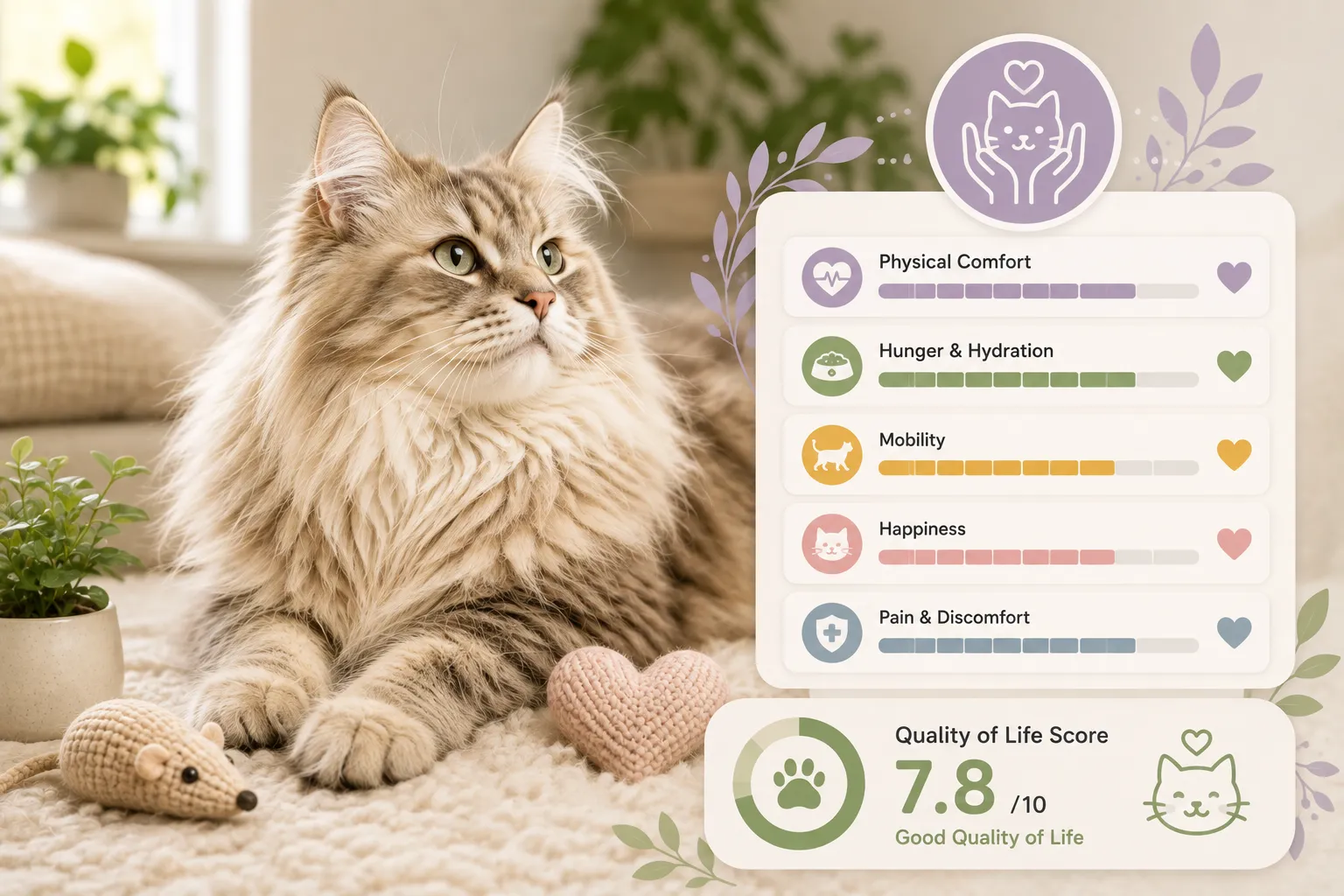
Cat Quality of Life Assessment
Based on the clinical HHHHHMM Scale developed by Dr. Alice Villalobos.
❤️ Caring Next Steps
Loading recommendation...
Understanding Cat Quality of Life: A Compassionate Guide for Pet Parents
Watching a beloved cat grow old or navigate a chronic illness is one of the hardest parts of being a pet parent. Cats hold a special place in our homes. They curl up in our laps, purr when we are stressed, and greet us at the door with quiet affection. So when their health begins to fade, deciding how best to support them can feel overwhelming and emotional.
Because cats are master masters at hiding physical pain, it is often tricky to tell when they are feeling unwell or losing their sparkle. In the wild, showing weakness makes an animal a target, so domestic cats instinctively mask their illness until a condition is quite advanced.
Our Cat Quality of Life Calculator uses a proven veterinary tool called the HHHHHMM Scale to help you track your pet’s everyday comfort objectively. By scoring seven specific areas of your cat’s life, you gain clear insights into their well-being, helping you make informed, loving choices alongside your family veterinarian.
What Is the HHHHHMM Quality of Life Scale?
The HHHHHMM Scale was created by renowned veterinary oncologist Dr. Alice Villalobos. She developed this practical framework to help pet parents and medical teams evaluate a senior or ailing pet’s day-to-day comfort.
The name “HHHHHMM” stands for seven vital categories that define a pet’s daily life:
- Hurt: Is your cat’s pain controlled effectively?
- Hunger: Are they able and willing to eat enough food?
- Hydration: Are they receiving adequate fluids?
- Hygiene: Can they stay clean and use the litter box comfortably?
- Happiness: Do they express joy, curiosity, and affection?
- Mobility: Can they move around without severe distress?
- More Good Days Than Bad Days: Are comfortable days outnumbering painful ones?
Each category is scored from 1 to 10. A total score above 35 generally means your cat still enjoys an acceptable quality of life, while scores below 35 suggest their comfort is significantly compromised.
Breaking Down the 7 Quality of Life Categories
To give your cat an accurate score, it helps to understand what to look for in each category.
1. Hurt (Pain Management and Breathing)
Pain control is the cornerstone of quality of life. Unlike dogs, who might whimper or limp, cats express pain in subtle ways. A cat in pain might crouch in a tight ball, hide under furniture, stop purring, squint their eyes, or react defensively when touched around their back or hips. Breathing difficulty is another severe form of pain; a cat who pants with an open mouth or works hard to breathe is in immediate distress.
2. Hunger (Eating and Nutrition)
Food provides both energy and emotional satisfaction. When a cat stops eating, their liver can quickly suffer from a dangerous condition called hepatic lipidosis. Look at whether your cat approaches their food bowl with interest or backs away with nausea. If your cat requires appetite stimulants or hand-feeding, note how stressed or comfortable they are during mealtime.
3. Hydration (Fluid Levels)
Dehydration makes cats feel weak, nauseous, and lethargic, especially if they suffer from kidney disease or diabetes. You can check your cat’s hydration by gently lifting the skin between their shoulder blades. In a well-hydrated cat, the skin snaps back instantly. If it stays tented or falls back slowly, your cat needs extra fluids, which can often be given safely at home under veterinary guidance.
4. Hygiene (Grooming and Bathroom Habits)
Cats are naturally fastidious creatures who spend hours every day keeping their coat clean. When a cat stops grooming, their coat becomes dull, spiky, or matted. Additionally, look at their litter box habits. Can they step over the tall edges of a standard litter box? Are they having frequent accidents because reaching the box in time is too painful?
5. Happiness (Emotional and Mental State)
A cat’s spirit is just as important as their physical body. Ask yourself: Is your cat still interacting with your family? Do they purr when you speak to them or gently stroke their head? Do they enjoy lying in their favorite sunny spot? A cat who is completely withdrawn, unresponsive, or experiencing severe confusion is signaling that their emotional well-being has dropped.
6. Mobility (Freedom of Movement)
Mobility is about independence. Can your cat get up to drink water, walk to their litter box, or climb onto their favorite resting spots? Arthritis is extremely common in senior cats, making jumps painful. While simple adaptations like pet ramps or low-sided litter boxes can help, severe immobility that leaves a cat stuck in one spot heavily impacts their dignity.
7. More Good Days Than Bad Days
When a cat has a chronic or terminal illness, bad days will happen. However, when bad days start outnumbering good days, their overall quality of life has taken a serious turn. Keeping a simple calendar where you mark each day with a green checkmark (good day) or a red circle (bad day) gives you an undeniable, visual picture of your cat’s trajectory over a month.
Practical Ways to Improve Your Senior Cat's Comfort
f your cat’s assessment score falls in the moderate range (36 to 49), there are several environmental and medical tweaks you can make right away to improve their daily comfort:
- Step 1 — Simplify Access to Essentials: Move food, water, and litter boxes to the main floor so your cat does not have to navigate stairs. Switch to ultra-low-entry litter boxes so they can walk straight in without hopping over high walls.
- Step 2 — Create Easy Climbing Ramps: Place soft foam ramps or sturdy pet steps next to couches, beds, and window sills. This allows your cat to reach their favorite lounging spots without placing sharp impact forces on sore joints.
- Step 3 — Provide Orthopedic Warmth: Older cats lose muscle mass and feel the cold much more intensely. Provide heated pet beds or padded orthopedic cushions away from drafty doors and windows to soothe stiff joints.
- Step 4 — Make Meals Effortless: Warm up wet food slightly in the microwave to make its scent stronger and more tempting. Raise food and water bowls 3 to 4 inches off the floor on a small stand so your cat does not have to strain their neck to eat.
| QoL Score Range | Status Classification | Typical Observations | Recommended Care Focus |
|---|---|---|---|
| 50 to 70 | Good / Stable Comfort | Active, good appetite, uses litter box, purrs, manages pain well. | Routine monitoring; maintain regular vet checkups every 6 months. |
| 36 to 49 | Moderate / Compromised | Stiff movement, reduced appetite, occasional accidents, quieter mood. | Palliative updates; adjust medications, add joint aids, simplify access to resources. |
| Below 35 | Critical / Severe Decline | Refuses food, unmanaged pain, unable to stand, unengaged, persistent distress. | Urgent veterinary consultation; discuss end-of-life options or hospice transition. |
How to Have an Honest Conversation with Your Veterinarian
Your veterinarian is your primary partner in managing your cat’s golden years. When you notice scores dropping, schedule a dedicated consultation specifically to discuss quality of life and hospice care options.
Here are a few direct questions you can bring to your appointment:
- “Are there additional pain management medications or joint treatments we haven’t tried yet?”
- “What specific physical signs should I watch for that would indicate my cat is in unbearable pain?”
- “Can we set up a veterinary hospice plan to keep my cat comfortable at home?”
- “When the time comes, do you offer peaceful home-euthanasia services, or can we arrange a quiet appointment at the clinic?”
Veterinarians understand how deeply emotional these decisions are. They can offer an objective medical perspective to pair with your intimate knowledge of your cat’s personality.
Frequently Asked Questions (FAQs)
How often should I fill out the Quality of Life assessment for my cat?
For a senior cat with a stable chronic condition (such as early kidney disease or arthritis), completing the assessment once a month is a great rhythm. However, if your cat has been diagnosed with a terminal illness or is showing rapid changes, filling out the score once a week or even daily will help you track subtle trends and spot declines early.
What if my cat scores well in some areas but very poorly in one specific category?
That is a very common scenario. For instance, a cat might be bright, affectionate, and purring (high Happiness), but entirely unable to stand up or reach their litter box (low Mobility). In these cases, focus on whether the single low score can be medically or environmentally fixed. If severe pain or breathing difficulty cannot be controlled despite maximum medication, that single factor may override high scores in other areas.
How do I know if my cat is in pain if they never cry or meow?
Cats rarely vocalize when they are in chronic pain. Instead, look for changes in posture and behavior. A cat in pain often sits in a hunched position with their head down, squinted eyes, and ears turned slightly outward. They may avoid being petted, stop grooming, or show sudden aggression if you touch a sore area. Trust your instincts—if your cat seems “off” or unusually quiet, pain is often the underlying cause.
Is it better to wait for my cat to pass away naturally at home?
While many pet parents hope their cat will pass away peacefully in their sleep at home, natural death in animals is rarely quick or painless. Without medical intervention, conditions like kidney failure, cancer, or heart failure often lead to prolonged distress, severe nausea, or gasping for air. Humane euthanasia is a compassionate medical gift that allows us to end a pet’s suffering peacefully, surrounded by love.
How can I prepare my family and other pets when the end is near?
Be open and honest with family members, especially children, using clear, age-appropriate language. Allow everyone time to say goodbye and create gentle final memories with your cat. It is also important to remember that surviving housemate pets often notice when a companion is gone. Keep their daily routines consistent and give them extra affection during the transition period.