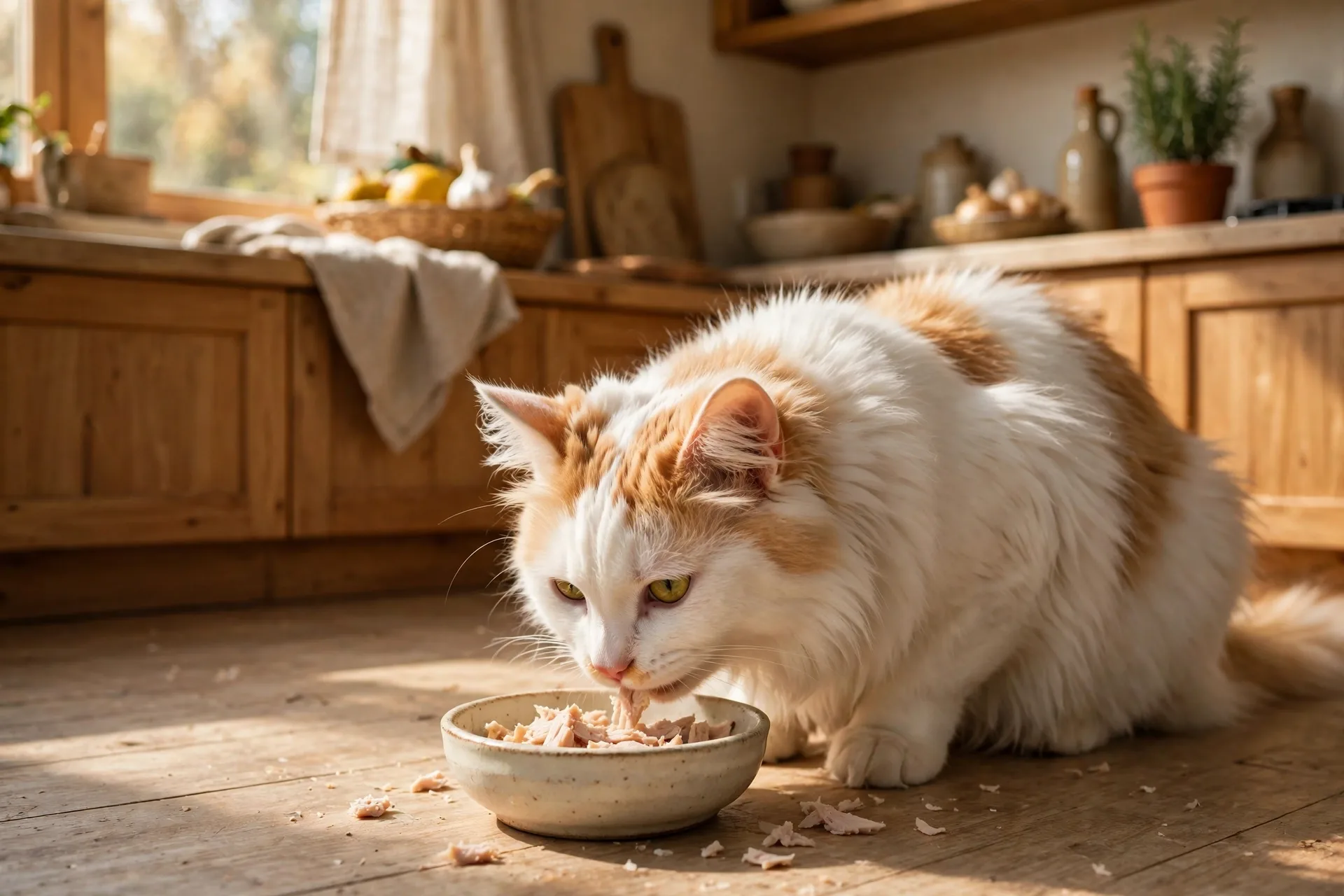
Open a tin of tuna anywhere in the house and your cat will appear within seconds, as if summoned. So, can cats eat tuna without it doing them any harm? Yes, cats can eat tuna, but only as an occasional treat, never as a regular meal. A few flakes once a week will not hurt a healthy adult cat. Problems start when tuna shows up in the bowl every day, because mercury slowly builds up in the body, the fish lacks taurine and other nutrients cats need, and many cats get so hooked on the taste that they start refusing their normal food. This guide explains how much tuna is safe, which type to pick, and which forms to keep off the menu completely.

Why Cats Love Tuna So Much
Your cat is not being dramatic when it sprints to the kitchen at the sound of a tin opener. Tuna has an intense smell that travels far, and cats rely on scent far more than taste when they judge food. The fish is packed with protein and amino acids, which is exactly what an obligate carnivore is wired to seek out.
Cats also taste things differently from us. They cannot taste sweetness at all, but they are highly tuned to savoury, meaty flavours, and tuna delivers those in a big way. That is why so many commercial cat foods use tuna flavouring, and why vets sometimes suggest a smear of tuna juice to tempt a sick cat into eating or to hide medicine. The love is real. It is also exactly why tuna needs careful handling, because your cat will happily eat far more of it than is good for them.
There is another trick at work too. The fats in tuna carry flavour compounds that linger in the mouth, so the taste sticks around long after the bite of plain chicken would fade. Cats remember that payoff. A cat that has tasted tuna once will patrol the counter every single time you cook fish, just in case.
Why Tuna Should Stay a Treat, Not a Meal
Mercury Builds Up Over Time
Tuna are large ocean predators, and they pick up mercury from the smaller fish they eat. That mercury collects in their flesh, and it collects in your cat too. A cat’s body clears mercury very slowly, so small amounts fed often can add up month after month until levels become a genuine health risk.
The type of tuna matters here. Albacore, sold as white tuna, carries noticeably more mercury than skipjack, sold as light tuna. Signs of mercury poisoning tend to appear late and can include unsteady walking, loss of balance, tremors, and vision problems. Kittens and pregnant cats are the most vulnerable, because mercury affects developing nervous systems the hardest. Keeping tuna to a small weekly treat holds your cat’s exposure at a low, sensible level.
Tuna Lacks Taurine and Other Essentials
Tinned tuna for humans was made for humans, and it simply is not a complete food for a cat. It is low in taurine, an amino acid cats cannot make enough of on their own. A long term taurine shortage can weaken the heart muscle, a condition called dilated cardiomyopathy, and it can damage the retina and slowly steal your cat’s eyesight.
There are other gaps too. Tuna is rich in unsaturated fats but poor in vitamin E, and that mismatch can trigger steatitis, sometimes called yellow fat disease, where body fat becomes inflamed and painful. Cats with steatitis often flinch or cry when picked up. The calcium and phosphorus balance is also off for feline needs. A complete cat food is built to cover every one of these bases, and tuna is not.
The Tuna Addiction Problem
Ask any vet and they will tell you about tuna junkies. These are cats that have been fed tuna so often that they turn their noses up at everything else. The strong flavour wins every time, so the cat holds out, skips its balanced meals, and waits for the good stuff.
Owners usually give in, because watching a cat refuse food is stressful. Sadly, that cycle leads to picky eating, missing nutrients, and weight problems. Keeping tuna rare protects your cat’s appetite for the food that actually keeps them healthy. A treat stays exciting precisely because it does not show up every day.

Which Type of Tuna Is Safest?
Not every tin on the supermarket shelf is equal, and the liquid the fish is packed in changes the picture a lot. Here is how the common options compare for your cat.
| Type of Tuna | Safe for Cats? | How Often |
|---|---|---|
| Tuna in water (no added salt) | Yes, the best choice | Small treat, once a week |
| Tuna in oil | Not ideal | Rarely, and only a few flakes |
| Tuna in brine | No | Avoid |
| Raw tuna | No | Avoid |
| Tuna based complete cat food | Yes | As directed on the label |
Tuna in water is the safest pick, especially the unsalted kind. Tuna in oil adds a lot of fat and calories your cat does not need, and it can loosen stools. Brine is salt water, and that sodium load puts extra strain on the kidneys and heart, so skip it entirely, including the liquid in the tin.
Raw tuna is the one form to avoid completely. It contains an enzyme called thiaminase, which destroys thiamine, also known as vitamin B1. A thiamine shortage can cause appetite loss, wobbling, and even seizures. Raw fish can also carry bacteria such as salmonella, which can make both your cat and your family ill.
Tuna Cat Food and Tuna Treats: A Different Story
Everything above is about human tuna, the kind packed in tins for sandwiches. Tuna sold as cat food plays by different rules. Reputable pet brands build those recipes to be complete and balanced, which means they add back the taurine, vitamin E, and minerals that plain tuna lacks. A tuna based wet food from a proper pet brand can safely be fed every day, exactly as the label directs.
Tuna flavoured treats and lickable purees sit somewhere in the middle. They are designed for cats, so they are a safer bet than raiding your own tin, but they are still treats, and they still count toward that ten percent daily treat allowance. Their strong taste makes them brilliant for training, bonding with a shy rescue cat, or coaxing a nervous cat through a vet visit.
The trick is reading the label. Look for wording that says the food is complete and balanced for your cat’s life stage, and treat anything else as an occasional extra. If the recipe pairs tuna with a long list of added vitamins and minerals, that is a good sign the maker has done the nutritional homework for you.
How Much Tuna Can a Cat Eat?
Portion size is where most owners slip up, because a whole tin looks like a reasonable cat meal. It is not. For an average adult cat, one teaspoon to one tablespoon of tuna, once a week, is plenty. Treats of all kinds should stay under ten percent of your cat’s daily calories, and a tablespoon of tuna in water holds roughly 15 calories, so a little goes a long way.
Serve it plain and drained, at room temperature. Check the label for added salt, and never share flavoured tins, because seasonings such as onion powder and garlic powder are toxic to cats. Kittens need even less, a half teaspoon taste on rare occasions, since their bodies are still developing. If you want help working out your cat’s daily calorie needs and treat allowance, our pet calculators can do the maths for you.
Cats with health conditions need extra care. If your cat has kidney disease, heart trouble, a fish allergy, or a sensitive stomach, check with your vet before offering tuna at all. For those cats, even a small serving of salty or fatty fish can cause a flare up that a healthy cat would shrug off.

Signs Your Cat Is Getting Too Much Tuna
Trouble usually creeps in quietly. The first clue is often behavioural: your cat starts refusing its normal meals, begging near the fridge, or waking you up demanding fish. That is the addiction pattern setting in, and it is your signal to cut back.
Physical signs follow if the habit continues. Watch for weight gain, especially with oil packed tuna, plus loose stools or vomiting after fishy meals. A dull, greasy coat can point to a diet out of balance. Pain or flinching when you stroke or lift your cat can suggest steatitis. Unsteady walking is the red flag that needs a vet visit promptly, as it can link to mercury or thiamine problems. Cutting back gradually works best: mix a few flakes into normal food, then reduce week by week.
Safer Alternatives to Tuna
Plenty of foods give your cat that fishy thrill with fewer downsides. Sardines are a smart swap: they are small fish, so they carry far less mercury than tuna, and they bring helpful omega 3 fats. Serve them plain, packed in water, and only once in a while. Small amounts of cooked salmon make a fine occasional treat too, as long as it is plain, boneless, and never raw or smoked.
Plain cooked chicken or turkey also goes down well and carries none of the mercury worry. If it is really the tuna taste your cat craves, choose a tuna flavoured complete wet food instead, because those recipes add the taurine and vitamins that plain tuna lacks. Plenty of owners also ask about other kitchen treats, and both cats eating cheese in tiny amounts and cats eating bananas as a small snack follow the same rule: rare, small, and never a meal.
Quick Rules for Serving Tuna Safely
If you take nothing else from this guide, keep these simple rules and your cat can enjoy tuna without the risks.
- Pick tuna in water, ideally with no added salt on the label.
- Drain the tin well and serve the flakes plain, with nothing added.
- Keep portions small: one teaspoon to one tablespoon is plenty.
- Serve it once a week at most, and count it as a treat.
- Never offer tuna in brine, raw tuna, or flavoured tins with onion or garlic.
- Refrigerate leftovers in a covered container and use them within two days.
- Wash your hands after handling fish, just as you would for your own food.
Follow those, and tuna stays what it should be: a happy little highlight in your cat’s week, not a habit that causes problems.
The Bottom Line
So, can cats eat tuna? Yes, and your cat will be thrilled about it, as long as you keep it in its place. Think of tuna as dessert, not dinner: water packed, unsalted, a teaspoon to a tablespoon, once a week at most. Skip brine and raw fish completely, and let a complete, balanced cat food do the daily work of keeping your cat fed, healthy, and bright eyed for years.
If your cat already begs for tuna every day, do not panic, and do not stop overnight. Wean them down gradually over a few weeks, mixing less and less fish into their proper food, and their appetite for balanced meals will usually return on its own.
Frequently Asked Questions
Can cats eat tuna every day?
No. Daily tuna raises mercury levels over time and leaves out taurine and other nutrients your cat needs. Keep tuna to a small treat once a week, and feed a complete cat food as the main diet.
Can cats eat tuna straight from the tin?
Yes, if it is tuna in water with no added salt. Drain it first, serve a teaspoon to a tablespoon, and put the rest in the fridge. Never share tuna packed in brine.
Can kittens eat tuna?
A tiny taste of tuna in water will not harm most kittens, but it should be rare and very small. Kittens are still developing, so mercury affects them more, and balanced kitten food matters far more.
Is raw tuna safe for cats?
No. Raw tuna contains thiaminase, an enzyme that destroys vitamin B1, and it can carry bacteria like salmonella. A thiamine shortage can cause wobbling and seizures, so always skip raw fish for your cat.
Why does my cat refuse normal food after eating tuna?
Tuna has a very strong flavour, and many cats hold out for it once they get used to it. Mix small flakes into regular food, then slowly reduce the amount until normal meals win again.
Can cats drink the liquid from a tuna tin?
A little liquid from tuna packed in water is fine as a food topper and can tempt a fussy eater. Never give brine liquid, because its high salt content can strain your cat’s kidneys and heart.
What fish is safer than tuna for cats?
Sardines are the best swap, since small fish carry much less mercury and add omega 3 fats. Cooked salmon in small amounts is fine too. Always serve fish plain, cooked, and boneless.
Sources:
ASPCA – People Foods to Avoid Feeding Your Pets
ASPCA – General Cat Care