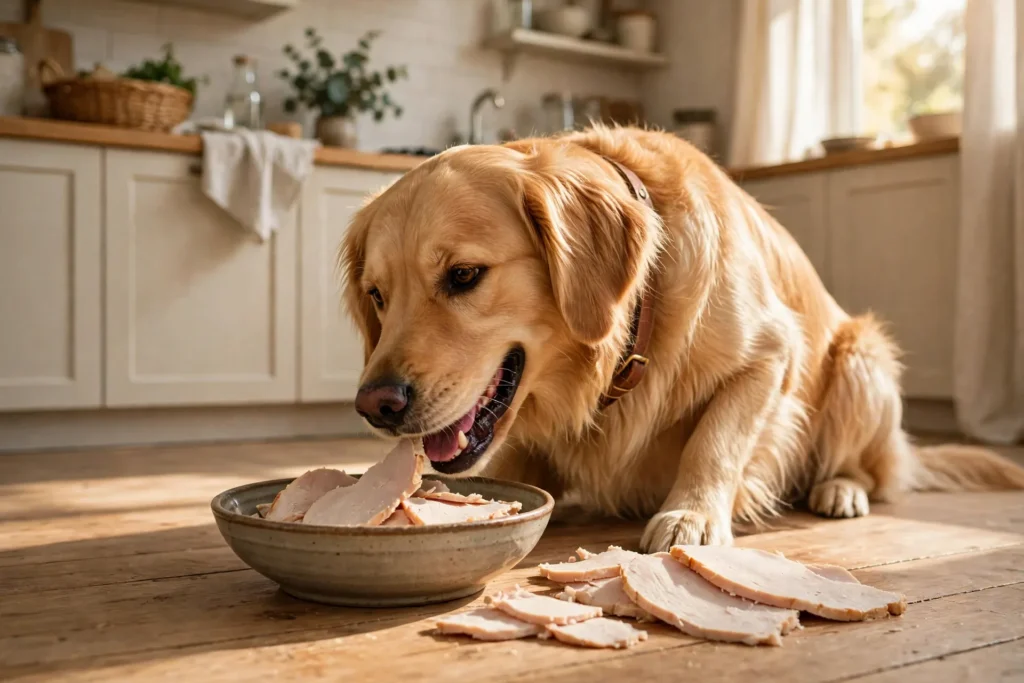
Can Cats Eat Turkey?
Thanksgiving dinner is on the table, the turkey is carved, and your cat has appeared in the kitchen as if by magic. So, can cats eat turkey without any risk to their health? Yes, cats can eat turkey when it is plain, fully cooked, boneless and skinless, served as a very small treat. The Cornell Feline Health Center says a very small piece of lean turkey is likely fine as a special treat, and PetMD calls plain cooked turkey safe and nutritious for cats. The holiday table version is rarely plain, though, and the skin, bones, seasoning, gravy and stuffing around it each carry problems. This guide walks through the benefits, the dangers that matter, the safest way to prepare turkey for a cat, the right portion for kittens, average adults and large cats, and the Thanksgiving table rules. Why Turkey Suits Cats Turkey suits cats well because it delivers lean animal protein and the amino acid taurine in a food most cats genuinely love. Cats are obligate carnivores, which means their bodies are built to run on nutrients found in animal tissue. A plain piece of cooked turkey fits that biology neatly. A 100 gram serving of cooked turkey breast provides roughly 24 grams of high quality protein, and that protein carries the amino acids a cat needs for muscle, organs and a strong immune system. Taurine is the nutrient that sets turkey apart for cats. Cats cannot make taurine for themselves, and a shortage damages the heart and the eyes over time. PetMD points out that plain turkey naturally contains taurine, which makes it a useful occasional treat. Turkey also brings B vitamins, selenium, phosphorus and zinc, and the meat is lean, which suits a species that gains weight easily on rich food. Digestibility is another point in turkey’s favour. Plain cooked turkey breast is gentle on most stomachs, and a cat that turns away from its usual food will often accept a few small flakes of turkey. That makes it handy for tempting a fussy eater or hiding a crushed tablet in a flake or two, with your vet’s approval. Owners asking can cats eat turkey for health reasons can feel confident about the answer: the meat itself matches feline biology closely, as long as it arrives cooked, plain and in a sensible portion. Other plain proteins work in a similar way, and chicken is another lean option many cats enjoy on other days of the week. Owners report two clear wins. A cat with a dull coat often looks brighter once small amounts of fresh plain meat join the week, since the protein and zinc support skin and coat health. An older cat with a fading appetite may eat more willingly when a few warm flakes of plain turkey are mixed through its food. Turkey also contrasts well with the fish many cats eat. Owners comparing proteins often ask about tuna for cats as well, and turkey carries no mercury at all. Rotating plain proteins like these keeps meals interesting without upsetting the stomach. Can Cats Eat Turkey Bones No, cats must never eat turkey bones, cooked or raw, because cooked bones splinter into sharp pieces and raw bones can lodge in the throat. This is the single most dangerous part of the bird, and it deserves its own section. Cooking dries poultry bones out and makes them snap into needle sharp shards. A cat that chews a cooked turkey bone can cut its mouth or tongue, choke on a fragment, or swallow a shard that lodges in the throat, blocks the intestines or pierces the stomach or gut wall. The Cornell Feline Health Center warns that eating poultry bones can cause gastrointestinal obstructions, and the ASPCA calls poultry bones a major choking hazard. The bones that cause trouble are not only the big leg and thigh bones. The small bones in the wing tips, the ribs and the neck are just as risky, and the wishbone can split into two sharp points. A carcass left on a counter after carving is one of the most tempting things in a house, and a determined cat can drag a piece down in seconds. Bin the carcass in a secure outside bin as soon as the meal is over, not in an open kitchen bin a cat can nose open. The same rule covers the plate of bones cleared from the table: keep it high, keep it covered, and get it out of the house quickly. If your cat does swallow a turkey bone, do not wait for symptoms. Call your vet right away and describe what happened, including the size of the bone and when it was eaten. Your vet may ask you to watch for gagging, drooling, pawing at the mouth, repeated vomiting, a swollen belly, straining to pass stool, blood in the stool, or a cat that suddenly goes quiet, hides and refuses food. Do not try to make your cat vomit at home, and do not feed bread or other food to cushion the bone, since both can make things worse. A bone that passes without trouble is a lucky escape, not proof that bones are safe, and the next one may not pass at all. Raw turkey bones are not a safe substitute either. Raw poultry can carry Salmonella and Listeria, and the string and netting used to truss a roast can get stuck in the digestive tract, so remove all of it before carving and bin it where a cat cannot reach it. The safe rule has no exception: no turkey bones of any kind ever reach the cat bowl. How to Prepare Turkey for Your Cat The safest way to prepare turkey for a cat is to cook a piece of breast meat plain until it reaches 165 degrees Fahrenheit, then strip off the skin, remove every bone and cut it into pea sized pieces. Roasting, boiling and baking all work well. Boiling keeps the fat content lowest, which suits