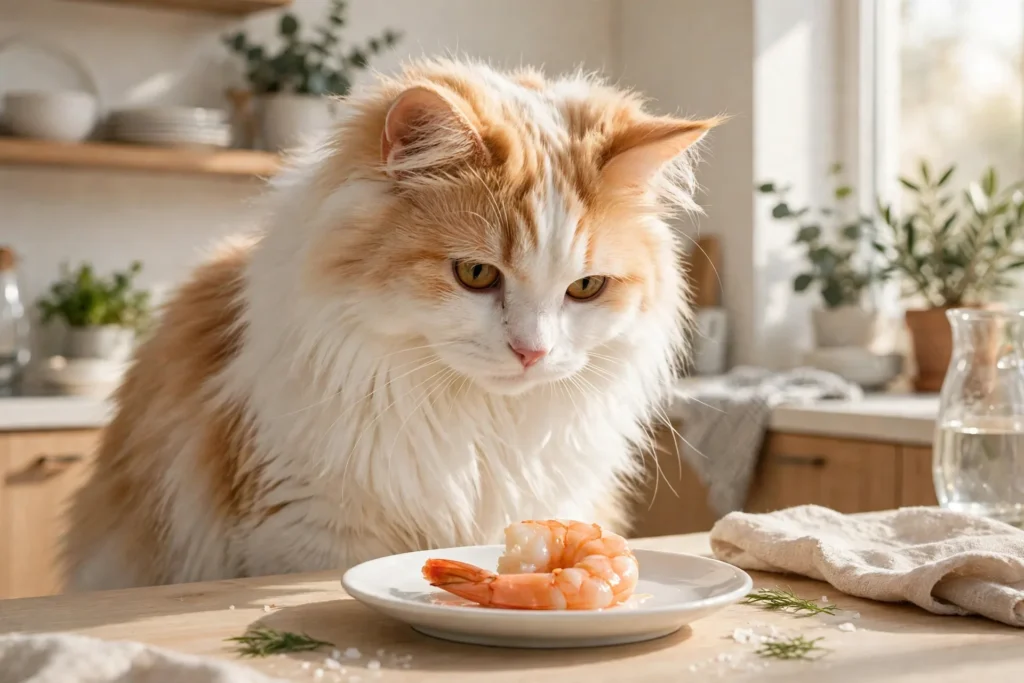
Shrimp on your plate rarely goes unnoticed by a cat. The smell alone can pull a sleeping cat off the sofa and into the kitchen in seconds, and that hopeful stare raises a fair question: can cats eat shrimp without any risk to their health? Yes, cats can eat shrimp when it is cooked plain, peeled and served in small amounts. A cooked shrimp is a lean, protein rich treat that most cats genuinely love, and it brings real nutrients along with the flavour. The rules matter, though. Raw shrimp, shells, tails, batter and buttery sauces can all turn a harmless treat into a vet visit, and shrimp is never a substitute for proper cat food. This guide covers the benefits shrimp offers, why raw shrimp stays off the menu, how to prepare it step by step, how much a cat can eat, and the forms and warning signs every owner should know.
Why Shrimp Is Good for Cats
Shrimp gives a cat lean protein, vitamin B12, selenium, phosphorus and the pink antioxidant astaxanthin for only about 7 calories per medium shrimp. Protein sits at the centre of the story. Cats are obligate carnivores, which means their bodies are built to run on animal protein, and shrimp delivers it in a form that is easy to digest and very low in fat. A medium shrimp carries roughly 6 to 7 calories, so a whole shrimp works as a treat that barely dents the daily calorie budget of an indoor cat.
Vitamin B12 supports the nervous system, red blood cell production and healthy digestion, and shrimp is one of the richest common sources of it. Selenium acts as an antioxidant that helps protect cells from damage. Phosphorus works with calcium to keep bones and teeth strong. Iodine supports the thyroid gland, the gland that controls a cat’s metabolism. Copper and zinc play smaller but real roles in blood health, skin health and immune function, and shrimp provides both in modest amounts.
The pink colour of cooked shrimp comes from astaxanthin, an antioxidant in the carotenoid family. Astaxanthin helps the body fight oxidative stress, and it is one reason shrimp often gets praised above plainer white fish. Shrimp also carries small amounts of omega 3 fatty acids. The levels are lower than in oily fish, so if omega 3 support is the goal, it is worth reading about whether cats can eat tuna as well, because tuna brings more omega 3 per bite but comes with its own mercury and moderation rules. Put together, the nutrient list explains why the answer to can cats eat shrimp leans positive: the food itself is sound, as long as the serving rules in the sections below are followed.
Shrimp also earns points with owners of overweight cats. Many commercial cat treats carry 2 to 3 calories in a single small biscuit, along with grains and fillers a cat does not need. A shrimp offers more protein, more flavour and far more excitement for a similar calorie count, and it can be cut into several small pieces so one shrimp stretches across an entire play and reward session. Shrimp contains some taurine as well, the amino acid cats must get from animal foods to protect their hearts and eyes. The amount in an occasional treat is small, so shrimp never replaces balanced food, but it adds one more quiet benefit to the list.
Can Cats Eat Raw Shrimp
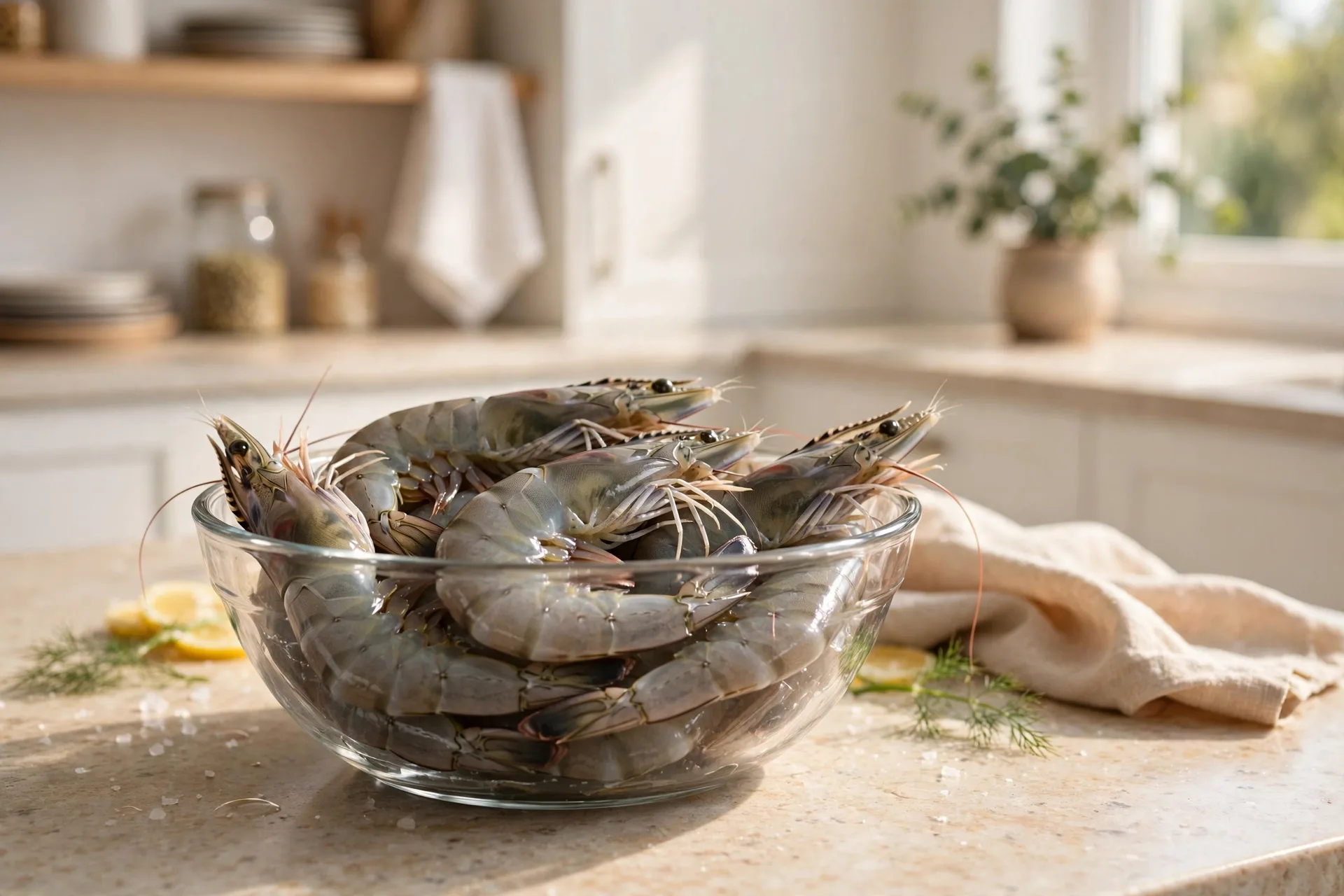
Cats cannot eat raw shrimp, because raw shrimp can carry Vibrio, Salmonella and Listeria, three bacteria that plain cooking destroys. Raw seafood lives in the same risky category for cats as it does for people. Vibrio thrives in warm seawater and can cause severe vomiting and diarrhea. Salmonella and Listeria can contaminate shrimp during catching, processing, transport or storage, and neither one changes the smell or look of the shrimp, so your nose cannot protect your cat here.
Owners sometimes point to feral cats eating raw fish scraps and argue that nature allows it. Wild and feral cats do get food poisoning, though. They simply suffer quietly, and many cases never get linked back to the meal that caused them. A pet cat has no need to take that gamble when cooked shrimp tastes just as appealing to feline noses. Freezing does not solve the problem either. A home freezer slows bacteria down, but it does not reliably kill them, and thawed raw shrimp carries much the same risk as fresh.
Buying quality shrimp reduces risk but never removes it. Wild caught shrimp comes from open water and tends to have a cleaner flavour and firmer texture, while farmed shrimp is raised in ponds where water quality and feed vary widely between producers. Farmed shrimp from a reputable source with clear labelling is a reasonable choice, and wild caught shrimp from cold, clean waters is often the better one. Either way, the shrimp still needs cooking before it goes anywhere near a cat. Signs of bacterial trouble after a raw seafood meal include vomiting, watery or bloody diarrhea, drooling, loss of appetite and unusual tiredness. Any of those signs after raw shrimp earns a prompt call to the vet, because dehydration can hit a small animal fast.
How to Prepare Shrimp for Your Cat
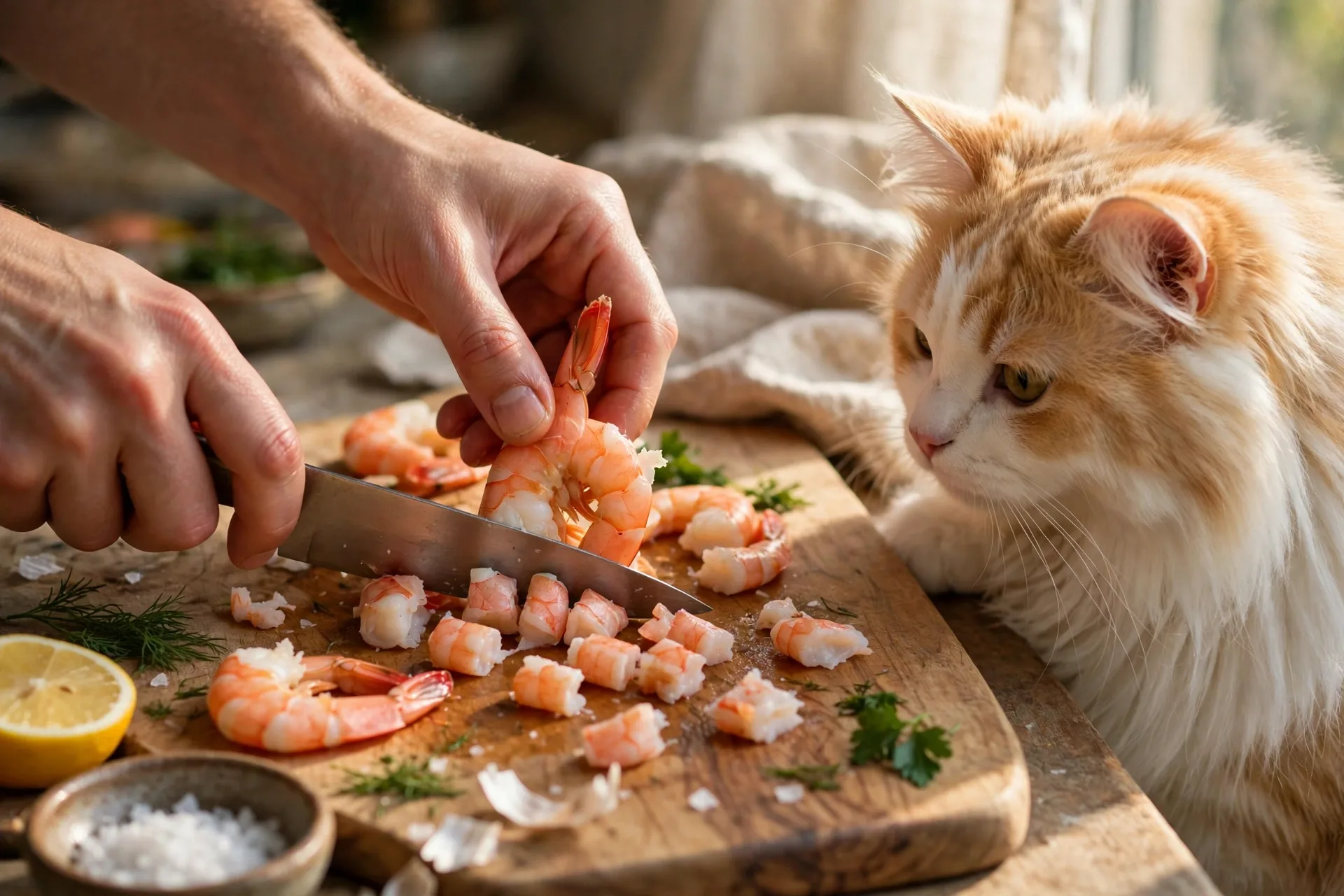
Prepare shrimp for your cat by cooking it plain, peeling it fully, taking off the tail and the vein, and cutting it into bite size pieces. Start with the shrimp itself. Fresh or frozen both work, and frozen shrimp must be fully thawed in the fridge before cooking, never left out on the counter for hours. Give the shrimp a quick rinse under cold water and check for any sour or ammonia like smell, which means the shrimp belongs in the bin, not the pan.
Cooking method is flexible. Steaming takes about two to three minutes and keeps the texture tender. Boiling works just as well: drop the shrimp into plain boiling water and lift them out as soon as they turn pink and curl into a loose C shape. Baking in a plain oven is fine too. What matters is the absence of extras. No oil, no butter, no salt, no garlic, no onion, no spice rubs and no marinade. A shrimp cooked for a cat should taste like shrimp and nothing else, the same plain approach that works when owners cook chicken safely for cats, where unseasoned meat is always the rule.
Once the shrimp is cooked and cool enough to handle, peel the shell off completely and pull the tail away. Then remove the vein, the dark line that runs along the back of the shrimp. That line is the digestive tract, and while it is not poisonous, it can carry grit and bacteria, so it comes out. Finally, cut the shrimp into small pieces. A whole medium shrimp is a mouthful for a cat, and eager cats often gulp rather than chew, so bite size pieces lower the choking risk and make one shrimp feel like several treats. Serve the pieces at room temperature or just warm, never hot from the pan, and put any leftovers in the fridge for use within a day or two.
How Much Shrimp Can a Cat Eat
An average cat can eat one medium shrimp in a serving, and a large cat can eat two, no more than about once a week. Portion control matters for two reasons. The first is the treat rule: treats of every kind should stay inside about 10 percent of a cat’s daily calories, leaving the other 90 percent for balanced cat food. The second reason is shrimp itself. For its size, shrimp is moderately high in sodium and cholesterol, and a cat that eats shrimp daily can slowly crowd out the nutrients its body actually needs while taking in more sodium than is wise.
| Cat Size | Amount per Serving | How Often |
|---|---|---|
| Kitten under 1 year | A pea size taste, finely cut | Rarely, as a first taste only |
| Small cat under 8 lb | Half to one medium shrimp | Once a week at most |
| Average cat 8 to 12 lb | One medium shrimp | Once a week at most |
| Large cat over 12 lb | Up to two medium shrimp | Once a week at most |
Spread across a month, that pattern adds up to a few shrimp as a rotating treat rather than a daily habit. Rotation is a good strategy in general: shrimp one week, a small piece of plain cooked egg the next, which is why many owners also check whether cats can eat eggs when they plan treat variety. Cats with kidney disease, heart problems or a vet prescribed low sodium diet should skip shrimp unless the vet approves it, because the sodium load matters more for them than the protein benefit.
Shrimp Forms to Avoid
Breaded, fried and garlic butter shrimp, and any shrimp served with its shell, tail or cocktail sauce, must never reach a cat. The shell and tail come first on the banned list. Both are hard, sharp and poorly digested. A swallowed shell fragment can scratch the throat or gut, a tail can lodge in the throat of a cat that gulps, and a build up of shell pieces can block the digestive tract. Nothing in the shell offers nutrition a cat needs, so shells and tails go in the bin every single time.
This section is also where can cats eat shrimp turns from a yes into a no, because preparation decides everything. Restaurant and takeaway shrimp brings a different set of problems. Breaded and fried shrimp carries batter, oil and salt, a combination that can trigger stomach upset or pancreatitis in sensitive cats. Garlic butter shrimp is worse, because garlic and onion damage a cat’s red blood cells and can cause a form of anaemia that develops over several days. Cocktail sauce adds sugar, salt and horseradish, and some recipes hide onion or garlic powder in the mix. Spicy shrimp dishes, shrimp in curry sauce and shrimp marinated in soy sauce all fail the cat test for the same family of reasons: salt, spice and seasonings.
Packaged forms need label reading too. Canned shrimp is usually packed in brine, which loads it with sodium. Smoked shrimp is cured with salt. Shrimp flavoured crisps and crackers contain almost no shrimp at all and plenty of salt and flavouring powders. Even plain pre cooked shrimp from a supermarket seafood platter deserves caution, because platters often sit chilled for hours and the shrimp may have been handled alongside sauces and lemon wedges coated in seasoning. The safe rule is simple: if the shrimp was prepared for people to enjoy with flavour, it was not prepared for a cat.

Signs of a Shrimp Allergy in Cats
A tiny first piece of shrimp, followed by a close watch for vomiting, itching or swelling, is the safe way to rule out a shellfish allergy. Shellfish allergy is not the most common food allergy in cats, beef, fish and chicken trigger more cases, but it does exist, and shrimp can be the trigger. The first serving of shrimp in a cat’s life should always be a test serving: one small piece, then a few hours of normal observation before shrimp joins the treat rotation.
Allergy signs usually appear within minutes to a few hours. Vomiting and diarrhea are the most common. Skin signs follow closely: itching around the face and ears, face rubbing on furniture, red or irritated skin, and small scabs. Swelling of the lips, eyelids or face is a more serious sign, and any breathing difficulty, open mouth breathing or repeated sneezing is an emergency that needs a vet immediately. Milder stomach upset after a first shrimp can also mean simple intolerance rather than a true allergy, since a new rich food can loosen a cat’s stool on its own. Either way, the response is the same: stop the shrimp, note what happened and when, and mention it at the next vet visit. If signs were strong, call the vet the same day and keep shrimp off the menu permanently unless the vet says otherwise. A cat that has eaten shrimp happily several times with no reaction is very unlikely to be allergic, though owners should still follow the portion rules, because a safe food can still cause trouble in silly amounts. One related point follows from can cats eat shrimp, and it concerns other shellfish. A cat that reacts to shrimp may also react to crab, lobster or other shellfish, because the proteins involved are similar across the shellfish family. Treat every new shellfish as untested, start with the same tiny first piece, and watch for the same signs before it joins the menu.
FAQs
Can cats eat shrimp every day?
No. Shrimp is a treat, not a complete food, and daily servings would push sodium up while crowding out balanced nutrition. One serving about once a week keeps shrimp in the safe treat zone.
Can cats eat raw shrimp?
No. Raw shrimp can carry Vibrio, Salmonella and Listeria, bacteria that plain cooking destroys. Always cook shrimp until it turns pink and opaque before offering any to your cat.
Can cats eat shrimp shells and tails?
No. Shells and tails are hard and sharp, they can cause choking or scratch and block the digestive tract, and they offer no nutrition. Peel shrimp fully and bin the shells and tails.
Can kittens eat shrimp?
Yes, a tiny finely cut piece of plain cooked shrimp is fine as an occasional taste. Kittens need balanced kitten food for growth, so keep shrimp rare and very small.
Can cats eat fried or breaded shrimp?
No. Fried and breaded shrimp carries oil, salt and batter, and restaurant versions often include garlic or onion seasoning, which can damage a cat’s red blood cells. Serve shrimp plain only.
Can cats eat canned shrimp?
Only with caution. Canned shrimp is packed in salty brine, so rinse it very well and offer a rare small piece, or skip it and cook fresh or frozen shrimp instead.
What should I do if my cat shows allergy signs after shrimp?
Stop the shrimp at once and note the signs. Vomiting or itching usually settles, but facial swelling or breathing trouble needs an emergency vet visit the same day.
Sources:
ASPCA – People Foods to Avoid Feeding Your Pets
ASPCA – General Cat Care