A German Shepherd fits an active owner who can give 1.5 to 2 hours of daily exercise, training and company. Choose this breed for loyalty, intelligence and protection, and skip it if your days are long, quiet and mostly away from home. This German Shepherd breed guide covers temperament, size, care, health and costs so you can decide before you visit a breeder or rescue. Picture a typical weekday with a 70 pound dog that needs a morning walk, a training game at lunch and another outing at night. That picture either sounds fun or it sounds exhausting, and your honest reaction tells you most of what you need to know. Households that want a low effort dog that sleeps through the day usually do not, and guides to the best dog breeds can help you compare calmer options. Ranked among the most trainable herding breeds in the world, the German Shepherd was built to work beside people all day, and that working drive follows the dog into your kitchen, yard and car.
Quick Facts
| Fact | Details |
|---|---|
| Lifespan | 12 to 14 years |
| Height | Males 24-26 inches, females 22-24 inches |
| Weight | Males 65-90 pounds, females 50-70 pounds |
| Coat | Medium-length double coat, most often black and tan, also sable, all black and black and red |
| Temperament | Loyal, confident, courageous, steady, intelligent and trainable |
| Exercise Needs | 1.5 to 2 hours of exercise and mental work per day |
| Shedding | Very heavy, with two major coat blows per year |
| Good With Kids | Yes, with supervision and early socialization |
| Good With Other Dogs | Often yes, with early socialization and steady training |

Temperament and Personality
German Shepherds are loyal, confident and highly trainable dogs that bond closely with family and stay reserved with strangers. For example, a well raised dog will follow its favorite person from room to room, sleep near the front door and watch visitors calmly before greeting them. Strangers get a slower welcome, because the breed was shaped to guard flocks and property. Early exposure to new people, places and sounds turns that natural caution into calm judgment instead of fear or reactivity. Intelligence is the trait owners praise most and struggle with most. Your dog will learn a new cue in a handful of repetitions, and the same dog will also learn how to open a latched gate or find the one weak board in a fence. Boredom creates problems fast. Left alone for 8 hours with nothing to do, a young German Shepherd may chew baseboards, dig under fences or bark at every sound outside. Jobs as simple as carrying a backpack on walks, finding hidden toys or practicing 10 minutes of obedience give the mind a task and the body an outlet.
Size and Appearance
Adult German Shepherds stand 24-26 inches tall for males and 22-24 inches tall for females, with a strong and athletic build. Males weigh 65-90 pounds, while females weigh 50-70 pounds. That size puts the breed firmly in the large dog group, so a full grown male takes up most of a back seat and needs a crate at least 42 inches long. Erect ears, a long muzzle and an alert expression give the dog its classic look. Most people recognize the black and tan coat first, with a dark saddle over the back and tan legs, chest and face. Sable, all black and black and red coats also appear in healthy litters, and coat color has no effect on temperament or health. Under the topcoat sits a thick undercoat that protects the dog in cold and wet weather. Growth takes time, and most dogs reach full height by 12 months and fill out with muscle by age 2. Feeding a puppy large breed food and keeping growth slow protects developing joints during that first year.
Exercise and Training
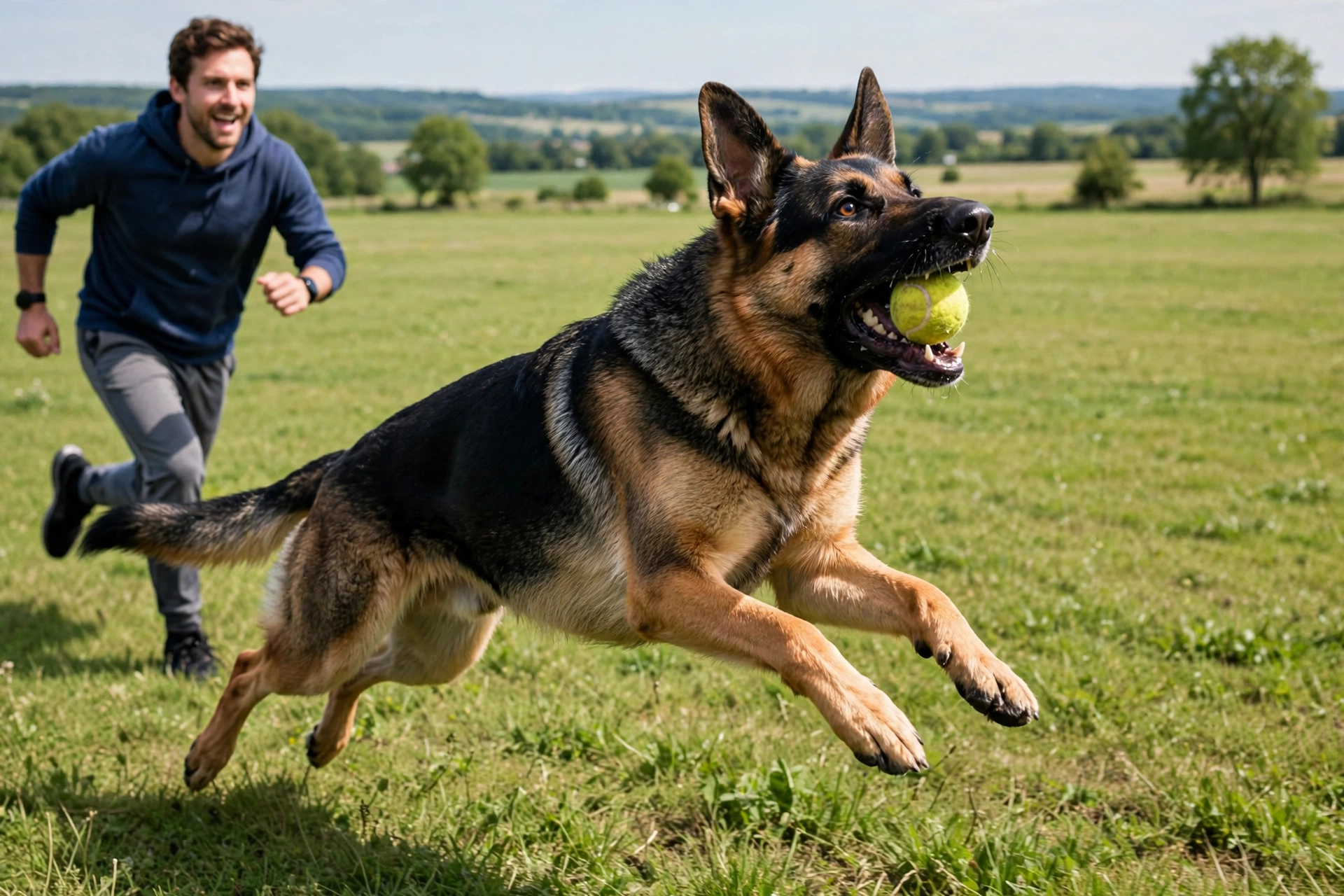
German Shepherds need 1.5 to 2 hours of exercise and mental work every day to stay calm and healthy indoors. Take a typical adult schedule as a guide: a 45 minute morning walk, 20 minutes of fetch or tug, and a 30 minute evening walk with training mixed in. Games that use the nose and brain, like hiding treats in boxes or teaching a new trick, burn energy that a plain walk leaves behind. Young puppies need far less structured exercise, and vets often suggest about 5 minutes per month of age, twice a day, to protect growing joints. Training should start the week your puppy comes home. Short sessions of 5 to 10 minutes, repeated through the day, teach sit, down, recall and loose leash walking faster than one long weekly class. Consistent dog training with rewards works far better than harsh corrections, because this sensitive breed shuts down under heavy pressure. Guided puppy socialization with calm dogs, children, traffic sounds and different surfaces builds the confidence this breed needs as an adult. Owners across the United States use herding, tracking, agility and scent work to keep their dogs fit, and a dog that trains twice a week for a sport usually settles far better at home.
Grooming
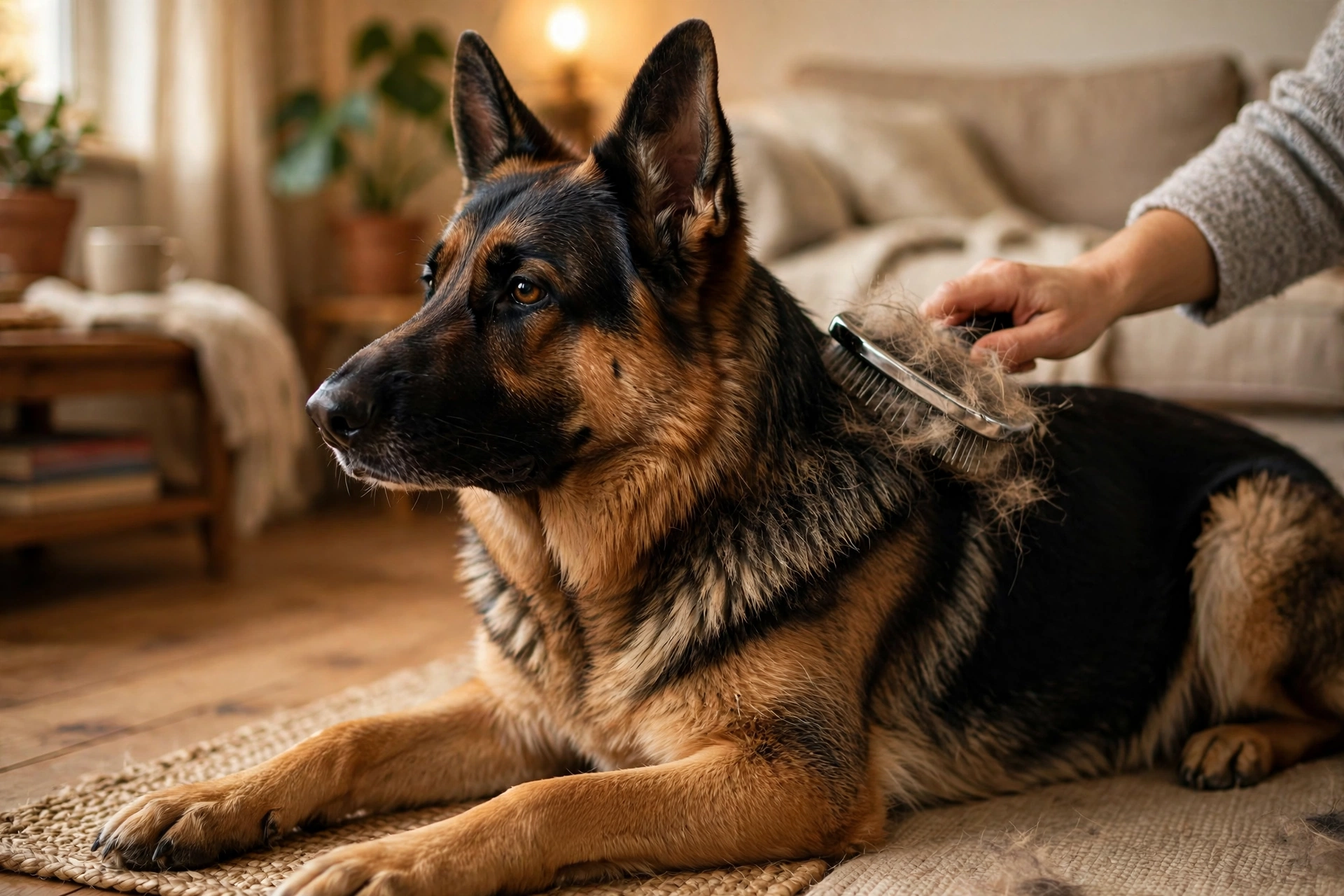
German Shepherds shed heavily all year and need brushing two to three times a week, with daily brushing during two major coat blows each year. During a spring coat blow, one 15 minute brushing session can fill a small grocery bag with loose undercoat. Outside those heavy weeks, a slicker brush and an undercoat rake keep loose fur off your floors and furniture. Baths every 6 to 8 weeks suit most dogs, unless yours rolls in mud or swims often. Overbathing dries the skin, and skin allergies already affect many dogs in this breed, so gentle dog shampoo is the safer choice. Nails need trimming every 3 to 4 weeks, and you should hear no clicking on hard floors when the length is right. Ears deserve a weekly check because those upright ears still trap dirt after hikes and swims. Teeth brushing three times a week with dog toothpaste slows tartar and protects gums. Start handling paws, ears and teeth at 8 to 10 weeks old, and grooming stays easy for life.
Feeding
Most adult German Shepherds do best on two measured meals a day with protein rich food matched to age, size and activity level. For example, a 70 pound active adult often eats about 3 to 3.5 cups of quality dry food per day, split between morning and evening. Puppies eat three to four smaller meals a day until about 6 months old, then move to two meals. Large breed puppy food matters for this breed, because controlled calcium and calorie levels support slow and even bone growth. Free feeding leads to weight gain in many pet dogs, and extra pounds strain hips and elbows that already carry risk in this breed. You should feel ribs easily under a thin layer of fat, and you should see a clear waist from above. Treats count toward the daily total, so keep them near 10 percent of daily calories. Training days add up fast when a session uses 40 small treats, and cutting the evening meal slightly balances those extras. Feeding two smaller meals instead of one large meal, and resting the dog for an hour after eating, also lowers strain on the stomach of a deep chested breed.
Health and Lifespan
German Shepherds live 12 to 14 years and face higher risk for hip dysplasia, elbow dysplasia, degenerative myelopathy, bloat, EPI and skin allergies than many breeds. Hip dysplasia means the hip joint forms poorly, and affected dogs may show stiffness, bunny hopping or pain after exercise as they age. Elbow dysplasia causes similar front leg lameness in young growing dogs, often between 6 and 12 months old. Degenerative myelopathy is a progressive spinal condition that usually appears in older dogs and slowly weakens the back legs, and a DNA test can show whether a dog carries the gene variant linked to the disease. Bloat, also called gastric dilatation-volvulus, is a life threatening emergency where the stomach fills with gas and can twist. Warning signs include a swollen belly, restless pacing, drooling and trying to vomit with nothing coming up, and a dog showing those signs needs an emergency vet at once, day or night. Exocrine pancreatic insufficiency, shortened to EPI, stops the pancreas from making enough digestive enzymes, so dogs lose weight despite a strong appetite until treatment with enzyme powder on food restores digestion. Allergies and skin problems show up as itching, ear infections and hot spots, and food or environmental triggers often need vet testing to sort out. Regular vet checks twice a year for seniors and once a year for healthy adults catch many of these problems early. Buying from breeders who screen hips, elbows and degenerative myelopathy lowers risk for the next generation, and you should ask to see those screening results in writing before you pay a deposit.
Living With a German Shepherd
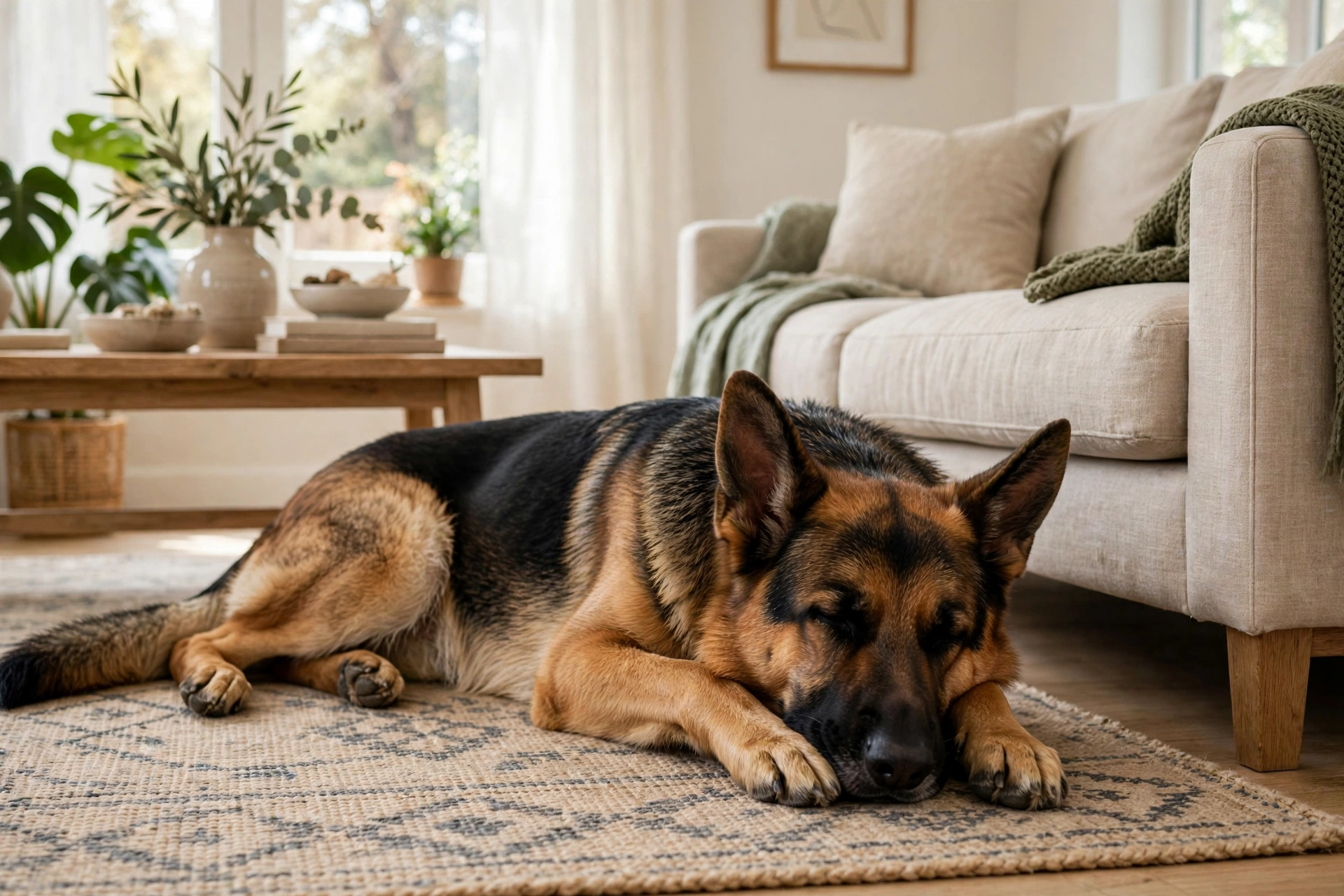
German Shepherds can live in apartments or houses if daily exercise, training and time with family are met every day. Take a one bedroom apartment as the harder test: a dog that gets a 60 minute morning outing, a midday walk and evening training can settle well in a small space. Space alone never tires this breed, and a large yard without walks or games leaves a dog just as restless as a small flat does. Barking needs honest thought before you sign a lease, because this alert breed announces visitors, hallway noise and delivery trucks. Family life suits the breed well, and most dogs adore children they grow up with. Supervision still matters with toddlers, because a playful 80 pound dog can knock a small child over by accident during a game. Other pets usually fit in fine when introductions happen early and slowly, as in the common case of a puppy raised beside a house cat from 8 weeks old. Alone time needs training from the start. Dogs left alone for full workdays without a midday break often develop barking, chewing or anxiety, so many owners use a dog walker for any day longer than 6 hours.
German Shepherd Puppy Costs and What to Know Before Buying
A German Shepherd puppy from a breeder in the United States typically costs between $1,000 and $3,000, with rescue adoption costing less. Price varies by breeder, bloodline and state, and working lines or show lines from titled parents sit at the top of that range. Rescue groups and breed specific shelters often place adult dogs and puppies for a few hundred dollars, which covers vet care already given. First year costs surprise many new owners. Budget roughly $600 to $900 for food, $400 to $700 for routine vet care and vaccines, plus a crate, bed, leash, training classes and a license, and the first year total often passes $2,000 beyond the purchase price. Good breeders prove their quality with paperwork. Ask for hip and elbow screening results, degenerative myelopathy test results, a written health guarantee and a contract that takes the dog back at any age. Red flags include breeders who always have puppies ready, refuse home visits or offer no health records. Waiting lists of 2 to 4 months are normal for careful breeders, and that wait protects you more than a fast sale does.
Pros and Cons
German Shepherds reward committed owners with loyalty and trainability, and they challenge unprepared owners with shedding, energy and a constant need for company.
Pros:
- Loyal and deeply bonded, with one family dog often watching over the whole household
- Extremely intelligent, learning new cues in as few as 5 repetitions
- Naturally protective, alerting owners to strangers and unusual sounds
- Versatile workers, used in police, service, search and rescue and herding roles
Cons:
- Very heavy shedding, with two major coat blows per year
- High exercise needs of 1.5 to 2 hours per day
- Prone to hip, elbow, spinal and stomach health problems
- Reserved with strangers, so poor socialization can turn into fear or reactivity
FAQs
The most common German Shepherd questions cover family fit, shedding, exercise, training, apartment life, lifespan and behavior around strangers.
Are German Shepherds good family dogs?
Yes. German Shepherds raised with children and socialized early are loyal, gentle and protective family dogs, and supervision is still needed with toddlers because of the breed size and strength.
Do German Shepherds shed a lot?
Yes. German Shepherds shed heavily all year, and they blow their undercoat twice a year, so expect daily brushing in those weeks and fur on floors, clothes and furniture.
How much exercise does a German Shepherd need?
Adults need 1.5 to 2 hours of exercise and mental work daily. A mix of walks, fetch, training and scent games works better than one long walk alone.
Are German Shepherds easy to train?
Yes. German Shepherds rank among the most trainable breeds, learning new cues in a few repetitions, and they respond best to short reward based sessions started in puppyhood.
Can German Shepherds live in apartments?
Yes, if daily exercise and training needs are fully met. Apartment dogs need at least two long outings a day, midday breaks and bark training for shared walls.
How long do German Shepherds live?
German Shepherds live 12 to 14 years on average. Lean weight, screened parents, regular vet checks and good food give a dog the best chance at the top of that range.
Are German Shepherds aggressive?
No. Well bred and well socialized German Shepherds are confident and steady, not aggressive, and fear or reactivity usually traces back to poor breeding, pain or missing early socialization.
The Verdict
A German Shepherd is the right choice only for an owner ready for daily training, heavy shedding and 12 to 14 years of close company. This German Shepherd breed guide points to one clear match: an active person or family that treats dog care as a daily job, not a weekend hobby. First time owners can succeed with classes, a good breeder or rescue for support and a real plan for exercise. Anyone wanting a quiet, low maintenance dog should pick a different breed. A German Shepherd gives loyalty, courage and intelligence in return for time, training and care, every single day of its life.
Sources:
American Kennel Club (AKC) – German Shepherd breed profile
ASPCA – General Dog Care