Quick Answer: What Actually Kills Fleas on a Dog?
A veterinarian flea treatment on the dog, plus washing and vacuuming at home, clears most infestations in 2 to 3 months. Adults are only about 5 percent of an infestation, so a bath alone never ends the cycle. Eggs make up about 50 percent, larvae about 35 percent and pupae about 10 percent, and the three young stages live in carpets, bedding and floor cracks. Owners asking how to get rid of fleas on dogs usually treat the coat and stop, and the pupae in the carpet restart the problem within weeks. One female flea lays up to 50 eggs a day, so a single missed week rebuilds the population fast. A 12 kilogram (26.4 pound) Beagle with 20 visible fleas, for example, points to roughly 400 fleas across all stages in the home. The plan treats the dog, the house and the yard, and the plan runs for a full 3 months without a gap.
Signs Your Dog Has Fleas
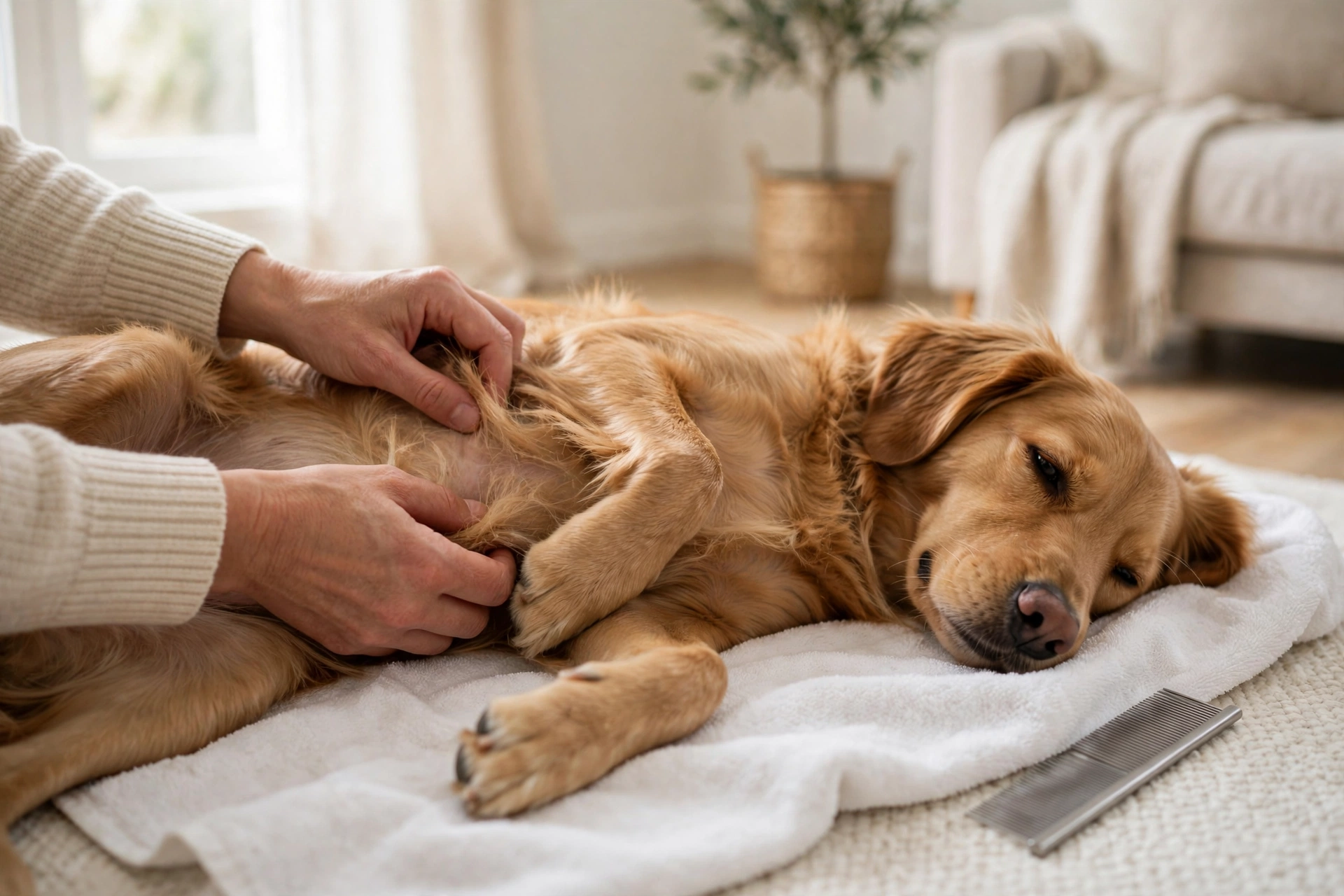
Scratching at the tail base, black specks in the coat and restless sleep are the three signs owners spot first. Flea dirt gives the clearest proof at home. Flea dirt is digested blood passed by adult fleas, and the specks look like ground black pepper scattered through the coat. Run the wet paper test: comb the coat over white paper, add drops of water to the specks, and watch the paper. Specks that melt into reddish brown streaks are flea dirt, and plain grit stays grey on wet paper. Check the tail base, the belly, the armpits and the groin first, because fleas feed where the coat is thin and warm. Hair loss, scabs and hot spots appear on the back half of allergic dogs after 1 to 2 weeks of biting. A 3 kilogram (6.6 pound) Chihuahua puppy, for example, can show pale gums and low energy from blood loss long before an owner counts 10 fleas. Puppies, senior dogs and small breeds show anaemia signs earliest, because total blood volume is low in small bodies.
The Flea Life Cycle: Why One Treatment Is Never Enough
One treatment fails because 95 percent of the flea population sits off the dog as eggs, larvae and pupae. Shampoo and spot-on products kill the adults on the coat today, and the pupae in the carpet ignore both products completely. The stage split explains why guides on how to get rid of fleas on dogs always pair pet treatment with house treatment on the same day. A female flea starts laying eggs within 24 to 48 hours of her first blood meal, and eggs fall into bedding and carpet within hours. Warm rooms speed the cycle to about 3 weeks from egg to adult, and cool rooms stretch the same cycle past 3 months.
Eggs, Larvae, Pupae and Adults: Where Each Stage Hides
Eggs hide in carpet pile, sofa seams and the gaps between floorboards. Larvae crawl away from light and feed on flea dirt deep in carpet fibres for 5 to 11 days. Pupae spin sticky cocoons that collect dust and grit, and the cocoon shields each pupa from sprays, cold and drying for months. Adults hatch when vibration, warmth and carbon dioxide announce a passing host, so a vacuum cleaner run triggers hatching in a quiet room. A holiday home left empty for 6 weeks, for example, can release a wave of hungry adults within minutes of the family walking back in.
Step-by-Step: Treating the Dog
Treat every dog and cat in the home on the same day, each animal with a product made for that species and weight. Order matters less than completeness. Bath first, comb second, and apply the monthly product after the coat dries, because water and shampoo can strip a fresh spot-on dose. Every plan for how to get rid of fleas on dogs starts on the dog and moves to the rooms on day one.
Flea Bath and Combing
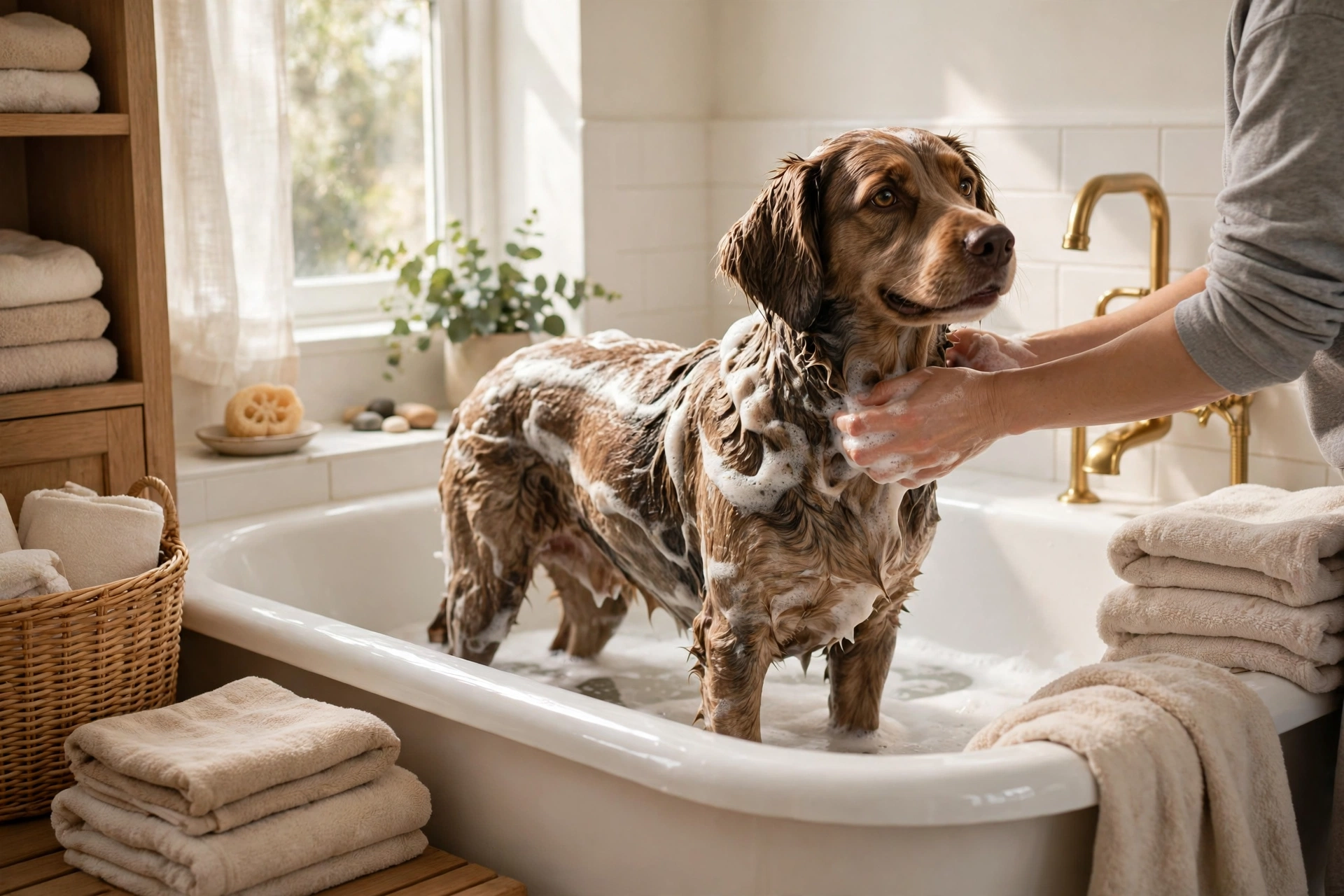
A bath in lukewarm water with a dog flea shampoo kills the adults on the coat on contact. Work the lather down to the skin and leave the lather in place for 10 minutes before rinsing. Comb the damp coat with a fine tooth metal flea comb over a bowl of warm soapy water, and drown each flea in the bowl. Repeat the combing daily for the first 2 weeks, because daily combing removes new adults before egg laying starts at 24 hours. A long coated Old English Sheepdog, for example, needs the combing done in sections, ruff first and tail base last, to keep the flea count honest.
Topical and Oral Vet Flea Treatments Compared
Veterinarian products carry the real killing power in the plan. Topical spot-on liquids spread through skin oils and kill adults for about 1 month per dose. Oral chews from the isoxazoline class, such as NexGard, Bravecto, Simparica and Credelio, kill fleas within hours of the bite and hold for 1 to 3 months per dose, depending on the brand. Nitenpyram tablets kill adults within 30 minutes and clear the body within 24 hours, so veterinarians use the tablet as a same day knockdown before a monthly product starts. Most products in both classes start at 8 weeks of age and a minimum weight near 1.8 kilograms (4 pounds), and the label on the exact box in your hand rules the dose. Ask a veterinarian first for puppies under 8 weeks, pregnant or nursing dogs, and dogs taking daily medication, because product choice changes for the three groups. Dogs with a seizure history need a veterinarian conversation before any isoxazoline product, per the United States Food and Drug Administration (FDA) class warning.
Natural Remedies: What Helps, What Is Unsafe
Natural options support the plan, and natural options never carry the plan alone. Coconut oil rubbed through the coat can slow fleas and soothes skin for some dogs. Food grade diatomaceous earth on carpets kills larvae by drying, though the dust irritates lungs and belongs on floors while pets stay out of the room. Tea tree oil and other concentrated essential oils are unsafe on dogs and dangerous around cats, and garlic or onion in food or on skin is toxic to both species and never counts as a remedy. Apple cider vinegar sprays change coat taste for an hour at best, and no study gives the spray a measurable kill rate. A Spaniel owner spraying vinegar daily, for example, still needs a monthly veterinarian product to stop egg laying.
| Method | Kills adults and eggs? | Speed | Safe for puppies? | Safe around cats? | Cost band |
|---|---|---|---|---|---|
| Flea bath with dog shampoo | Adults on the coat only | Same day | Yes, with a puppy label product | Yes | Low |
| Flea combing into soapy water | Adults only, one by one | Immediate | Yes | Yes | Low |
| Nitenpyram tablet | Adults only | Starts in 30 minutes | From 4 weeks and label weight | Yes, dog dose for the dog only | Low |
| Topical spot-on (fipronil type) | Adults, plus eggs and larvae on some labels | 24 to 48 hours | From 8 weeks and label weight | No, if the product contains permethrin | Medium |
| Oral isoxazoline chew | Adults before egg laying | 4 to 8 hours | From 8 weeks and label weight | Yes | Medium to high |
| Household spray with an insect growth regulator (IGR) | Eggs and larvae in rooms, not on the dog | Works for months per application | Rooms only, never on animals | Yes, once surfaces are dry | Medium |
Price bands reflect typical United States retail prices in 2026, and the exact price moves with dog weight and pack size.

Step-by-Step: Treating the House and Yard
Daily vacuuming and a 60 degree wash for bedding remove more young fleas than any spray sold for rooms. Vacuum carpets, rugs, sofa bases, skirting boards and the car seats daily for the first 2 weeks, then every 2 days until month 3. Vibration from the vacuum triggers pupae to hatch, and the new adults then meet a treated dog and die before laying eggs. Empty the vacuum into an outdoor bin after each run. Wash dog bedding, blankets and soft toys at 60 degrees Celsius (140 degrees Fahrenheit) twice a week during the first month. A household spray with an insect growth regulator (IGR) such as methoprene covers floor cracks and the space under furniture that vacuums miss, and the spray keeps working on eggs and larvae for months. Read the spray label, keep pets and children out of treated rooms until surfaces dry, and never spray a household product onto an animal. In the yard, mow the grass short, rake leaf piles, and focus on shaded soil spots where the dog sleeps, because larvae avoid sunlight. A shaded kennel corner under a porch, for example, holds more larvae than the open lawn beside the kennel.
Flea Treatment Timeline: How Long Until They Are Gone?
Most homes need 2 to 3 months of unbroken treatment before the last pupa hatches and the cycle ends. Week 1 brings the sharpest drop: baths, combing and the first product dose kill the adults, and scratching often eases within days. Weeks 2 to 4 bring a confusing wave, as pupae formed before day 1 hatch in batches and new fleas appear on a treated dog. New adults on a treated coat aren’t a failure sign, because each new adult dies before laying eggs. Months 2 and 3 shrink the waves to single fleas, and one full flea free month marks the end point. Skipping one monthly dose resets the clock, because one untreated week gives new females time to lay 50 eggs a day again. Owners tracking how to get rid of fleas on dogs in winter should expect the same 3 month run, since heated rooms keep the cycle moving.
Fleas and Cats in the Same Home: The Cat-Safety Rules
Dog flea products can kill a cat, and permethrin is the ingredient behind most fatal cases. Cats lack the liver pathway that clears permethrin, and even licking a treated dog coat can poison a cat within hours. The rules for mixed homes are short and strict.
- Never apply a dog product to a cat, even at a small dose
- Separate the cat from a treated dog until the coat is fully dry
- Buy cat products by cat weight and cat age, from the cat section
- Treat the cat on the same day with a cat product, because cats carry fleas too
The cat flea, Ctenocephalides felis, causes most dog infestations, so an untreated cat restarts the whole cycle. Call a veterinarian or the ASPCA Animal Poison Control Center on (888) 426-4435 at once, if a cat drools, trembles or twitches after contact with a dog product. A Persian cat grooming a freshly treated Labrador Retriever, for example, is the classic emergency veterinarians describe.
When Fleas Mean a Vet Visit
Flea allergy dermatitis, anaemia and tapeworm turn a home problem into a clinic visit. Book a visit when any line below matches your dog.
- Intense itching, hair loss or scabs across the back half of the body (flea allergy dermatitis (FAD))
- Pale gums, weakness or fast breathing in a puppy or small dog (anaemia)
- White rice-like segments near the tail or in bedding (tapeworm, Dipylidium caninum)
- Skin sores that ooze, smell or spread across the coat (secondary infection)
- Fleas still present after 4 weeks of correct treatment
A veterinarian confirms the cause with skin tests, blood counts or a stool check, and prescription strength products plus worming treatment follow the diagnosis. Puppies under 8 weeks with heavy flea loads need a same day call, because blood loss moves fastest in the smallest bodies.
Prevention Calendar: Staying Flea-Free All Year
Year round monthly prevention costs less than one 3 month infestation clear out. The Companion Animal Parasite Council (CAPC) advises flea prevention in every month of the year, because heated homes remove the winter break in most states. Build the calendar around one fixed date, and the first day of each month works for most owners.
- Day 1 each month: apply the spot-on dose or give the oral chew
- Weekly: comb the coat once over white paper and check for flea dirt
- Weekly in flea season: wash bedding at 60 degrees Celsius (140 degrees Fahrenheit)
- Monthly: vacuum sofa bases, car seats and floor cracks
- Every 3 months: check the product weight band against the current dog weight
A growing puppy can cross a weight band in 8 weeks, for example, and an under dosed product fails quietly while owners don’t notice for weeks. Set phone reminders for the monthly dose, because memory alone misses doses during holidays and house moves.
Conclusion
Flea control is a calendar habit, not a single product purchase. The dog carries the monthly dose, the vacuum and the hot wash clear the rooms, and the cat stays safe on cat only products. Owners who hold all three lines for 3 months end the cycle, and owners who hold the monthly dose all year never restart the cycle. A treated dog in a treated home kills every new flea within hours of the first bite.
Frequently Asked Questions
How long does it take to get rid of fleas completely?
Most infestations clear in 2 to 3 months. Baths and products kill adults fast, but pupae already in carpets keep hatching for weeks, so treatment must run monthly without a gap until no new fleas appear.
Can fleas live in my bed?
Yes. Eggs and larvae collect in bedding, mattress seams and blankets where a dog sleeps. Wash sheets and dog blankets at 60 degrees Celsius (140 degrees Fahrenheit) twice a week until the infestation ends.
What kills fleas instantly on a dog?
A bath with dog flea shampoo kills adults on contact, and a nitenpyram tablet starts killing within 30 minutes. Combing into soapy water removes fleas one by one. No spray kills every stage at once.
Are natural flea remedies safe for cats?
Many are not. Tea tree oil and other essential oils can poison cats, and garlic and onion damage cat red blood cells. Never apply dog products or home remedy oils to a cat without veterinary advice.
Why does my dog still scratch after flea treatment?
Scratching often continues for 1 to 2 weeks. Bite wounds heal slowly, flea saliva already in the skin keeps itching, and allergic dogs react to single new bites. Book a vet visit when sores spread.
Can indoor dogs get fleas?
Yes. Fleas ride indoors on shoes, clothing, visitors and other pets, and pupae wait in carpets for months. Indoor dogs in heated homes face flea risk in every month, so monthly prevention still applies.
Do fleas die in winter?
Outdoor fleas slow down in cold weather, but eggs, larvae and pupae survive indoors in heated homes, carpets and bedding. Winter infestations are common in houses with central heating, so prevention continues all year.
Sources:
ASPCA – Common Dog Diseases
ASPCA – General Dog Care