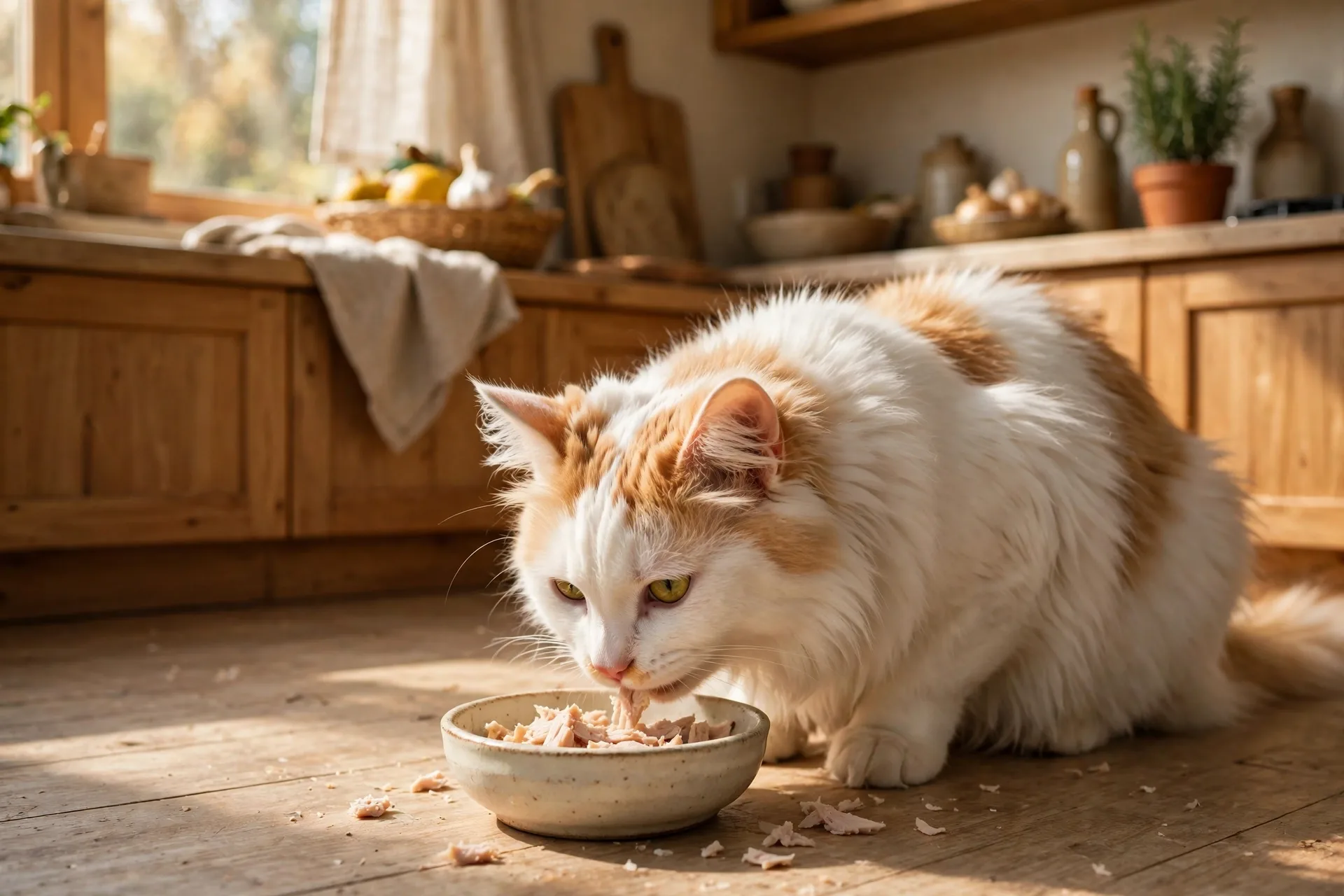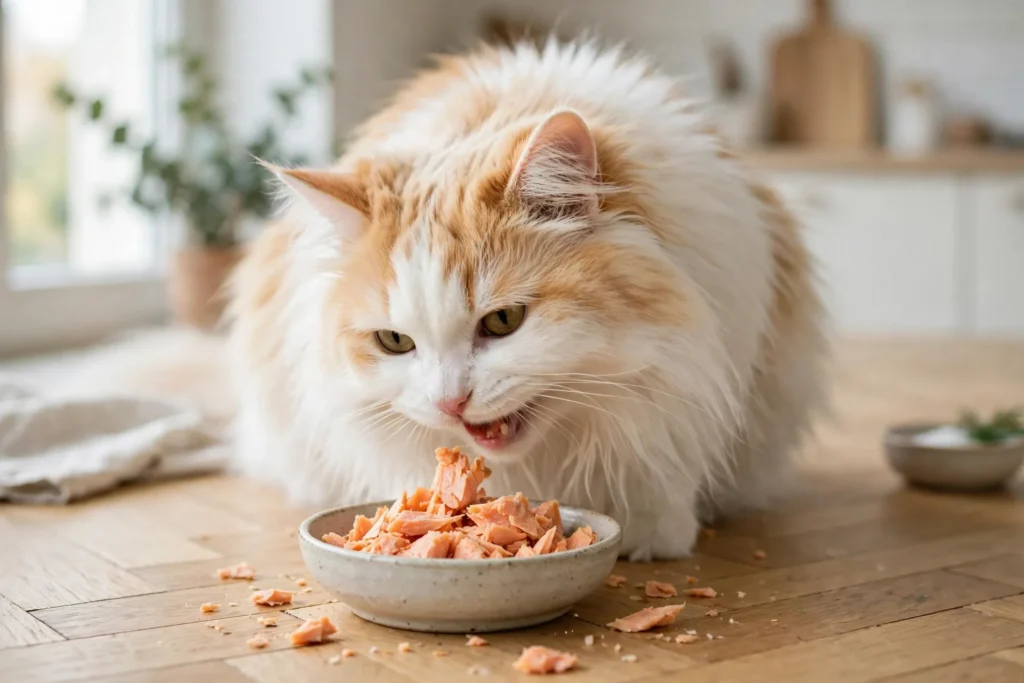
Salmon is cooking in the kitchen, the smell drifts through the house, and your cat appears as if by magic. So, can cats eat salmon without any risk to their health? Yes, cats can eat salmon when it is fully cooked, plain and boneless. Served that way, salmon gives a cat rich animal protein and the omega 3 fats that support skin, coat, joints and brain health. Raw salmon, smoked salmon and heavily salted canned fish are a different story, and each one carries problems a cat does not need. This guide walks through the benefits, the risks that matter, the safest way to cook salmon for a cat, and the right portion for kittens, average adults and large cats.
Why Salmon Is Good for Cats
Salmon suits cats well because it delivers dense animal protein and marine omega 3 fats in a food most cats genuinely love. Cats are obligate carnivores, which means their bodies are built to run on nutrients found in animal tissue. A plain piece of cooked salmon fits that biology neatly. A 100 gram serving of cooked salmon provides roughly 20 to 22 grams of high quality protein, and that protein carries the amino acids a cat needs for muscle, organs and a strong immune system.
The omega 3 fats EPA and DHA are the headline benefit. EPA helps calm the low grade inflammation that sits behind itchy skin and dull, flaky coats, and owners often notice a softer, glossier coat after a few weeks of small regular servings. DHA supports the brain and eyes, which makes it valuable for growing kittens and for senior cats whose minds are slowing down. Joints gain too, since omega 3 fats help ease the stiffness that creeps into older cats. Salmon also brings vitamin D for bone health, vitamin B12 for the blood and nervous system, and selenium, an antioxidant mineral that supports the immune system and the thyroid.
Taste matters as well. Many cats who turn away from plain chicken or turkey will eat salmon with real enthusiasm, and that makes it handy for tempting a fussy eater or hiding a crushed tablet in a flake or two, with your vet’s approval. That is the heart of the matter when owners ask can cats eat salmon: the fish matches feline biology closely, as long as it arrives cooked, plain and in a sensible portion.
The changes owners report most are easy to spot. A cat with dry, flaky skin often starts to itch less within a few weeks, and the coat takes on a visible shine as the omega 3 fats do their work. Senior cats are the other group that stands out. A stiff twelve year old who hesitates at the stairs may move a little more freely once EPA and DHA become a steady part of the week, because those fats support ageing joints as well as the brain. None of this turns salmon into medicine, and it never replaces a vet check for skin or joint problems, but as a food it pulls in the right direction.
Owners comparing fish options often ask about tuna for cats as well, and salmon compares favourably because it carries far less mercury. Pet parents who cook for the whole household may also wonder can cats eat chicken on other days of the week, and rotating plain proteins like these keeps meals interesting without upsetting the stomach.

Can Cats Eat Raw Salmon
Raw salmon is not safe for cats, and it should never reach the food bowl in any amount. Raw fish can carry bacteria such as Salmonella and Listeria, and a cat that eats contaminated fish can end up with vomiting, diarrhea, fever and a miserable few days. Healthy adult cats shrug off mild infections more easily than kittens, elderly cats or cats with weak immune systems, but no cat is fully protected, and the same bacteria can spread to people through handling and litter trays.
Parasites are the second concern. Raw salmon can host parasite larvae, and freezing at home does not always kill every one of them, whatever raw feeding forums claim. The third problem is slower and sneakier. Raw fish contains an enzyme called thiaminase, and thiaminase destroys thiamine, which is vitamin B1. A cat fed raw fish regularly over weeks or months can slide into thiamine deficiency. Early signs include a fading appetite and weight loss, and advanced cases bring wobbling, a tilted head, seizures and serious neurological damage. Cats need thiamine every single day, and raw fish quietly works against that need.
This is why the honest answer to can cats eat salmon always carries one condition: cooked, never raw. Heat settles every one of these problems at once, because proper cooking kills the bacteria, destroys the parasites and switches off the thiaminase enzyme, leaving the protein and omega 3 fats intact.
The good news is that thiamine trouble is preventable and, caught early, treatable. A cat taken off raw fish and put on a thiamine rich complete food, sometimes with a supplement from the vet, usually recovers well. The risk only grows when raw fish becomes a routine part of the diet for weeks on end, which is exactly the pattern to avoid.
Sushi night at home calls for the same rule. Keep raw fillets on the counter, keep the cat off the counter, and wash boards, knives and hands after handling raw fish. If your cat steals a piece of raw salmon from a plate, watch for stomach upset over the next day or two and call your vet if vomiting or diarrhea shows up or your cat goes off food.

How to Prepare Salmon for Your Cat
The safest way to prepare salmon for a cat is to cook it plain until it flakes easily, then remove every bone and the skin before serving. Baking, steaming and poaching all work well. Aim for an internal temperature of 145 degrees Fahrenheit, at which point the flesh turns opaque and separates into clean flakes with a fork. Microwaving is acceptable in a pinch, as long as you check for cold spots and stir the flakes so the heat spreads evenly.
Plain means plain. Add no salt, no butter, no oil blends, and no seasoning mixes. Garlic and onion are toxic to cats in fresh, cooked and powdered form, and both hide inside many marinades and spice rubs, so the fillet goes into the oven exactly as it came from the packet. Skip frying as well, because the extra fat can trigger stomach upset or a painful pancreatitis flare in sensitive cats.
Bones demand patience. Cooked fish bones splinter into sharp slivers, and a sliver can scratch the mouth or throat, lodge in the gums, or cause real trouble further down. Run your fingers slowly through the cooked flesh, pull out every bone you feel, then flake the fish and check a second time. Skin is safer than bones but still rich, so remove it or offer only a tiny piece of fully cooked skin now and then. Serve the flakes warm or at room temperature, never straight from the oven, and refrigerate leftovers for no more than two days.
Buying the fish takes a minute of thought as well. Fresh fillets should smell mild, never strongly fishy, and the flesh should spring back when pressed. Wild and farmed salmon are both fine for cats once cooked, and the nutritional gap between them is small at treat sized portions. Frozen fillets work just as well and often cost less; thaw one in the fridge overnight rather than on the counter. Avoid salmon sold with glazes, herb butters or pre applied seasoning, and check the packet of any value pack for added brine, since some fillets are injected with salt water that a cat does not need.

How Much Salmon Can a Cat Eat
Salmon works best as a small treat or topper that stays inside about 10 percent of the daily calories of a cat, offered once or twice a week. Salmon is nutritious, but it is not a complete feline diet. A cat fed nothing but salmon would miss out on calcium, since fish flesh carries almost none, and the taurine balance would not match what a cat needs from a staple food. Taurine is an amino acid cats cannot make for themselves, and a shortage damages the heart and the eyes over time. Complete cat food does the heavy lifting, and salmon plays a supporting role.
| Cat | Portion of Flaked Cooked Salmon | How Often |
|---|---|---|
| Kitten (under 1 year) | About 1 teaspoon of fine flakes | Once a week at most |
| Average adult cat (8 to 10 lb) | 1 to 2 tablespoons of flakes | Once or twice a week |
| Large adult cat (over 12 lb) | 2 to 3 tablespoons of flakes | Once or twice a week |
The calorie maths helps the table make sense. An average indoor adult cat eats roughly 200 to 250 calories a day, so the 10 percent treat allowance works out at about 20 to 25 calories. A tablespoon of flaked cooked salmon holds roughly 15 to 20 calories, which is why one to two tablespoons lands exactly inside the limit. Weigh the flakes once or twice at home if you want a feel for the amount, and after that you can judge the portion by eye with confidence.
Start smaller than the table suggests if salmon is new to your cat. Offer a pea sized taste on the first day, watch the litter tray and appetite for a day, then build up over a week or two. Sudden rich additions to the bowl are a common cause of loose stools, and a slow introduction protects the stomach. Cut the portion back for cats who need to lose weight, and count salmon flakes inside the day’s treat allowance rather than on top of it. Owners who also share fish with the family dog can check can dogs eat salmon for the dog side of the rules, since portions and preparation differ between the two species.
Canned and Smoked Salmon for Cats
Canned salmon packed in water with no added salt is acceptable for cats in small amounts, while smoked salmon should stay off the menu completely. Canned fish is already cooked during processing, so the bacteria and parasite worries that come with raw salmon do not apply. Read the label before you open the tin. Choose salmon packed in water, look for no added salt on the panel, and drain and rinse the fish under the tap to wash away more of the sodium. Mash it with a fork, pick through it for any firm bone pieces, and serve a spoonful as an occasional treat. Salmon packed in brine or oil is a poor choice, since the salt load is high and the oil adds fat a cat does not need.
So the forms sort themselves out neatly once salt and heat are considered, and that sorting is what decides can cats eat salmon in each case: fresh and cooked is a yes, canned in water is a careful yes, and smoked is a no.
Smoked salmon fails on two counts. The curing process loads it with salt, and too much sodium strains a cat’s kidneys and can push a healthy cat toward dehydration and worse. Cold smoking also never heats the fish enough to deal with the raw fish risks described above. Lox, gravlax and every other cured style belong in the same banned group. A cat that licks a small piece of smoked salmon once will usually be fine, but make it a one time accident rather than a habit, and offer fresh water right away.
When Salmon Is a Bad Idea for Cats
Salmon is a bad idea for cats with a fish allergy, cats on a strict prescription diet, and any cat who reacts badly after a first taste. Fish sits among the more common food allergens for cats. An allergic cat may scratch at the face and ears, develop itchy skin or bald patches, or suffer repeated ear infections and stomach upsets. Food allergies build with exposure, so a cat can eat salmon happily for months and then start reacting. If signs appear, stop the salmon and talk to your vet about an elimination diet to find the true trigger.
None of these cautions changes the basic answer to can cats eat salmon, which stays yes for a healthy cat given a small cooked portion now and then.
Daily feeding is another habit to avoid, even though salmon is low in mercury compared with tuna. A fish heavy diet can crowd out the balanced nutrition of complete food, encourage picky eating, and raise the allergy risk described above. Cats with kidney disease need care as well, because the protein and sodium in extras like salmon may clash with a renal diet, so ask your vet before offering any. Kittens under eight weeks should stay on kitten food and their mother’s milk or formula, full stop.
Call your vet promptly if your cat eats raw salmon and then vomits repeatedly, stops eating, drools, or seems weak or wobbly. The same advice applies if a cooked bone goes missing from a fillet and your cat starts gagging, pawing at the mouth or refusing food. Salmon rewards a careful owner. Cook it plain, strip the bones, keep the portions small, and your cat gets a treat that genuinely supports health instead of risking it.
FAQs
Can cats eat salmon every day?
No. Salmon is a treat, not a complete diet. Feed it once or twice a week inside 10 percent of daily calories, so your cat still gets balanced nutrition from complete cat food.
Can kittens eat salmon?
Yes, in tiny amounts. Offer about a teaspoon of fine, fully cooked, boneless flakes once a week at most, and only for kittens already weaned onto solid food.
Can cats eat salmon bones?
No. Cooked salmon bones splinter into sharp pieces that can scratch the mouth and throat or lodge in the gut. Always pick every bone out before serving the flakes.
Can cats eat canned salmon?
Yes, if it is packed in water with no added salt. Drain it, rinse it to cut the sodium, mash out any firm bits, and serve a spoonful as an occasional treat.
Can cats eat smoked salmon?
No. Smoked salmon is cured with heavy salt that strains the kidneys, and cold smoking never heats the fish enough to remove raw fish risks. Keep it off the menu.
Is salmon better than tuna for cats?
In one clear way, yes. Salmon carries far less mercury than tuna, so it is the safer regular treat. Both still belong in treat portions rather than daily meals.
What should I do if my cat ate raw salmon?
Watch your cat closely for vomiting, diarrhea and loss of appetite over the next two days. Call your vet if any sign appears, or right away for kittens and senior cats.
Sources:
ASPCA – People Foods to Avoid Feeding Your Pets
ASPCA – General Cat Care