

Salmon night in your kitchen usually means one pair of hopeful eyes fixed on your plate. So, can dogs eat salmon without risking their health? Yes, dogs can eat salmon, as long as the salmon is fully cooked, served plain and picked completely free of bones. Cooked salmon gives a dog high quality protein and the omega 3 fats that support skin, coat, joints and the immune system. Raw salmon is a different story entirely. A parasite carried by raw Pacific salmon and trout can trigger salmon poisoning disease, an infection that kills most untreated dogs. This guide explains how to serve salmon safely, how much to give by dog size, and which forms, canned, smoked or raw, belong in the bowl or in the bin.
Why Salmon Is Good for Dogs
Salmon earns its place in the bowl because few single foods pack protein and omega 3 fats into one serving the way salmon does. A 100 gram (3.5 ounce) serving of cooked salmon provides about 22 grams of protein and roughly 2.3 grams of EPA (eicosapentaenoic acid) and DHA (docosahexaenoic acid) combined. EPA and DHA are the two marine omega 3 fatty acids, and dogs cannot produce enough of either one on their own.
Skin and coat show the benefits first. Dogs with dry, flaky skin or a dull coat often improve within a few weeks once omega 3 fats enter the diet, because EPA helps calm the inflammation that drives itching. Joints benefit in the same way. Senior dogs with stiff hips, for example, often move more comfortably when omega 3 fats form part of their daily intake, and many joint supplements are built on fish oil for exactly that reason.
Puppies gain something extra. DHA supports brain and eye development during the first months of life, which is why quality puppy foods so often list salmon or fish oil near the top of the ingredient panel. The immune system draws on the same fats, and salmon adds vitamin D, vitamin B12 and selenium on top. Mercury is rarely a concern with salmon, because salmon carries far lower mercury levels than large predators such as tuna. Salmon is also easy to digest, and dogs who react badly to chicken or beef sometimes tolerate salmon well, though fish itself can be an allergen for a smaller group of dogs. So when owners ask can dogs eat salmon for the health benefits, the benefits behind the yes are real and measurable.

Never Feed Raw or Undercooked Salmon
Raw or undercooked salmon can kill a healthy dog, and no other common kitchen fish carries a risk this serious. Pacific salmon, trout, steelhead and char can carry a tiny flatworm called a fluke, Nanophyetus salmincola. Some of those flukes carry a bacterium, Neorickettsia helminthoeca, and a dog that swallows an infected fluke swallows the bacterium with it. The result is salmon poisoning disease, an infection found almost entirely in the Pacific Northwest of the United States and Canada, where the fluke completes its life cycle.
Signs usually appear five to seven days after the dog eats the fish, though illness can start as late as a month afterward. Fever arrives first, followed by vomiting, diarrhea that may turn bloody, complete loss of appetite, weakness and swollen lymph nodes. Owners often mistake the picture for parvo or distemper, and that delay costs lives. Without treatment, up to 90 percent of dogs with salmon poisoning disease die, usually within two weeks of eating the fish. Treatment works well when it starts early: vets use an antibiotic such as doxycycline against the bacterium and a dewormer against the fluke, plus fluids for dehydration.
This disease is the danger behind every frightening story owners find when they search can dogs eat salmon late at night. Fishing trips cause many cases. A dog that snatches a raw fillet off a cleaning table, or chews a discarded salmon carcass beside a river, can swallow an infected fluke in seconds. Cold smoked salmon belongs on the same banned list, because cold smoking never heats the fish enough to kill the fluke. Thorough cooking destroys both the fluke and the bacterium, and cooked salmon carries none of this risk. Raw fish diets built on salmon deserve the same refusal, whatever the packaging promises.
How to Prepare Salmon for Your Dog
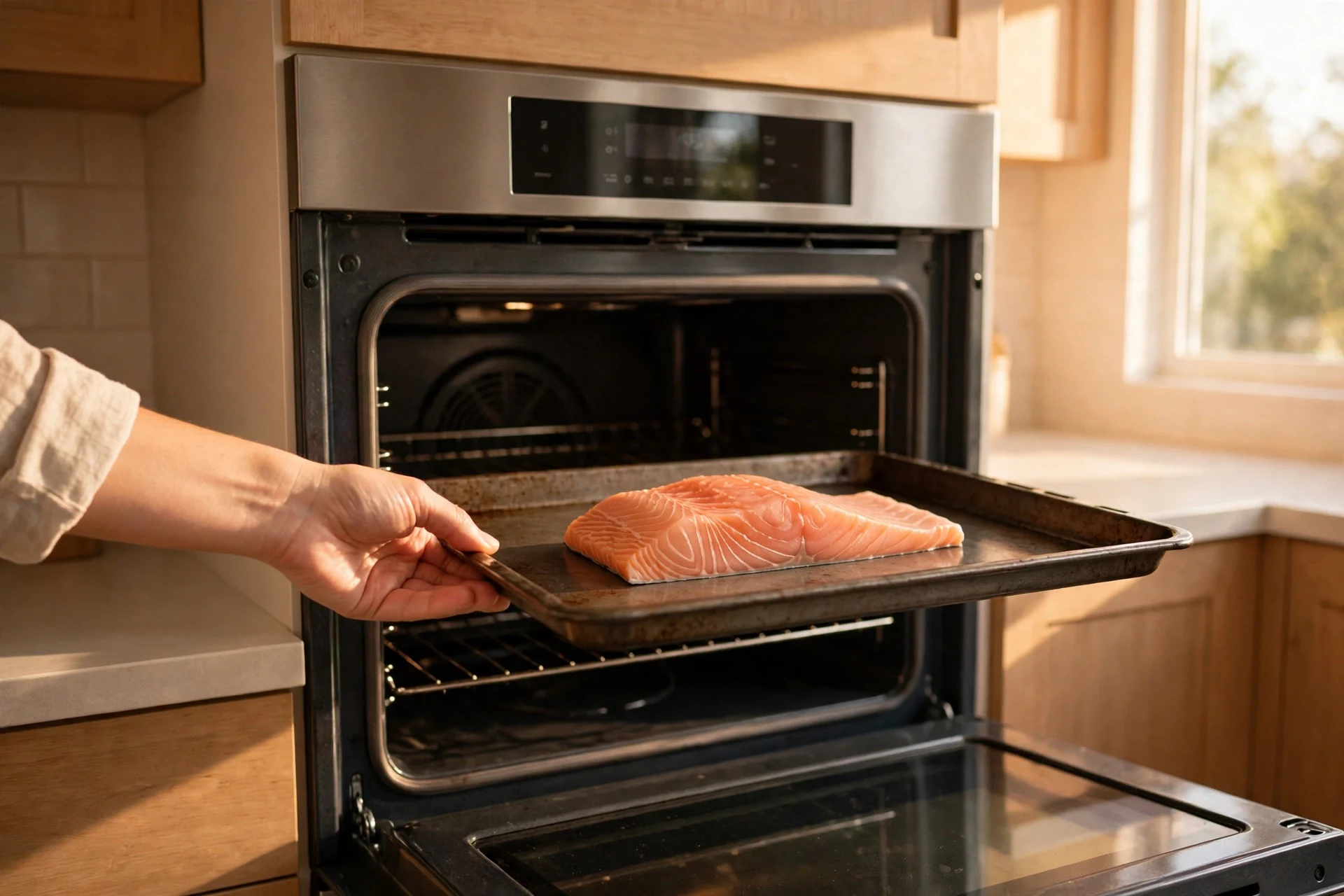
Bake, steam, grill or poach the salmon plain, cook the flesh all the way through, and remove every bone before the bowl reaches the floor. Heat the thickest part of the fillet to 145 degrees Fahrenheit (63 degrees Celsius) and hold the fish there briefly; the flesh should flake easily and show no translucent raw centre. Plain means plain. Salt, pepper, marinades and sauces stay off, and seasoning blends are worse than useless here, because garlic and onion are toxic to dogs in every form, fresh, cooked or powdered.
Skip frying altogether. Salmon fried in oil or butter adds fat your dog does not need, and rich fatty meals can trigger stomach upset or, in dogs prone to it, a pancreatitis flare. A fillet baked on a tray gives you the same fish with none of that baggage.
Bones need a slow, careful pass. Salmon carries fine pin bones along the fillet, and cooked fish bones splinter into sharp points that can lodge in the throat, gums or gut wall. Run your fingers along the cooked flesh, pull out every bone you feel, then flake the fish and check a second time. Serve the flakes warm or at room temperature, never straight from the pan.
Skin is the one grey area, and the answer is a small yes. Fully cooked, unseasoned salmon skin is safe for most dogs, and the fat layer under the skin holds a large share of the omega 3s. Skin is rich, though, so treat a few small pieces as the portion, not the whole fillet’s worth.

How Much Salmon Can a Dog Eat?
Salmon works as a topper or a treat, not as the meal itself, and every serving should fit inside the rule that treats supply no more than 10 percent of a dog’s daily calories. A complete and balanced dog food already covers daily needs, so salmon sits on top as a bonus. One ounce (28 grams) of cooked salmon holds about 58 calories, which keeps the maths simple. Serve salmon once or twice a week at most, and size each portion to the dog in front of you.
| Dog Size | Weight | Salmon per Serving | How Often |
|---|---|---|---|
| Toy and small | Up to 10 lb (4.5 kg) | About 1 ounce (28 g) | Once or twice a week |
| Medium | 11 to 30 lb (5 to 13.6 kg) | 1 to 2 ounces (28 to 57 g) | Once or twice a week |
| Large | 31 to 60 lb (14 to 27 kg) | 2 to 3 ounces (57 to 85 g) | Once or twice a week |
| Extra large | Over 60 lb (27 kg) | 3 to 4 ounces (85 to 113 g) | Once or twice a week |
Start smaller than the table suggests if your dog has never eaten fish. A teaspoon of flakes on the first day, mixed into the normal meal, lets a sensitive stomach adjust and lets you watch for any reaction before the portion grows. Nobody needs a full fillet appearing in the bowl on day one.
Trim the regular food slightly on salmon days if weight is a concern, especially for small dogs, where one ounce of fish is a meaningful slice of the day’s calories. Owners who want exact daily calorie targets for their dog’s size and activity level can run the numbers with our pet calculators before they start topping bowls.
Canned, Smoked and Other Forms of Salmon
Canned salmon in water is the most convenient safe option, smoked salmon should never reach the bowl, and salmon inside a commercial dog food is safe by design. Asking can dogs eat salmon is really three separate questions, because fresh, canned and smoked fish behave very differently in a dog’s body.
Canned Salmon
Canned salmon arrives fully cooked, so the salmon poisoning risk is gone before the tin opens. Choose salmon packed in water, and pick a no added salt tin when the shelf offers one. Regular canned salmon can hold 300 to 400 milligrams of sodium per 100 grams, so rinse the fish under the tap to wash away excess salt before serving. Bones behave differently in a tin: the canning process softens salmon bones until they crumble, and those soft bones are generally safe to eat and add calcium. Mash the fish with a fork anyway, and remove any bone that still feels firm.
Smoked Salmon
Smoked salmon fails on two counts. Curing loads the fish with salt, and a dog that eats several slices takes in far more sodium than a small body should handle, with vomiting, extreme thirst and diarrhea at the mild end. Cold smoked salmon adds the raw risk back on top, because cold smoking keeps the fish below cooking temperature from start to finish. Hot smoked salmon is cooked, but the salt stays, so the answer stays no for both kinds.
Salmon in Dog Food and Treats
Salmon in a commercial dog food plays by pet food rules, not kitchen rules. Makers cook the fish, balance the recipe to Association of American Feed Control Officials (AAFCO) standards and add back the vitamins and minerals a dog needs, so a salmon based kibble or wet food can be fed daily as directed. Dried salmon treats and salmon skin chews made for dogs count as treats, which means the 10 percent rule still applies. The same kitchen logic governs other people foods owners ask about, from peanut butter for dogs to the fish in the next section: plain, cooked and occasional is the pattern that keeps dogs safe.
Salmon Allergy Signs and When to Call a Vet
Most dogs eat cooked salmon without a single problem, but fish allergy, fat overload and the raw fish emergency each produce signs an owner should recognise early. Salmon allergy is uncommon, yet salmon is a protein, and any protein can become an allergen for an individual dog. Itching that centres on the ears, paws and face is the classic pattern, often with recurring ear infections, hot spots, gas, soft stools or vomiting after fish meals. Signs that appear within hours of every salmon serving, and fade when salmon leaves the diet, point at the fish itself. Tell your vet, and leave salmon off the menu until the vet has a plan.
Fat overload looks different. A dog that eats a large, rich portion may vomit once, pass loose stools for a day and then settle, because the stomach is protesting the fat, not the fish. Repeated rich meals carry a sharper risk: pancreatitis, an inflamed pancreas that causes belly pain, repeated vomiting and a hunched posture, and pancreatitis always needs a vet. Breeds prone to pancreatitis, and dogs who have had an episode before, should get salmon in the smallest portions or not at all.
Two situations mean call the vet the same day. First, your dog ate raw or undercooked salmon, trout or a fish carcass within the last month and now shows fever, vomiting, diarrhea or swollen lymph nodes: describe the fish meal clearly, because salmon poisoning disease is treatable only when the vet hears about the exposure. Second, your dog is on a prescription diet: PetMD advises that dogs on therapeutic diets should not receive foods outside that diet without veterinary approval, and one well meant topper can undo weeks of careful feeding.
Quick Rules for Serving Salmon Safely
Keep these rules on the fridge door and salmon stays a safe, healthy extra in your dog’s week.
- Cook salmon all the way through to 145 degrees Fahrenheit (63 degrees Celsius), with no raw centre.
- Serve the fish plain: no salt, no seasoning, no garlic, no onion, no sauces.
- Bake, steam, grill or poach; never fry the fish in oil or butter.
- Pull out every bone, including the fine pin bones, and flake the flesh before serving.
- Keep portions inside the 10 percent treat rule, once or twice a week at most.
- Pick canned salmon packed in water with no added salt, and rinse the fish before serving.
- Never offer raw, undercooked or cold smoked salmon, and never share smoked salmon of any kind.
- Stop and call your vet if fever, vomiting or diarrhea follows any fish meal, raw or cooked.
Follow those eight rules, and the only drama on salmon night will be the speed at which the bowl empties.
Conclusion
So, can dogs eat salmon? Cooked plain salmon is one of the healthiest extras you can put in a dog’s bowl, and raw salmon is one of the most dangerous foods a dog can swallow. The gap between those two outcomes is a hot pan, a careful bone check and a portion sized to the dog. Keep salmon cooked, boneless and occasional, and your dog gets the omega 3 benefits with none of the risk.
FAQs
Can dogs eat salmon every day?
A complete salmon dog food, yes, because the recipe is balanced for daily feeding. Plain cooked salmon from your kitchen, no: keep salmon to a topper or treat role, inside 10 percent of daily calories.
Can dogs eat raw salmon?
No. Raw salmon can carry flukes infected with Neorickettsia helminthoeca, the bacterium behind salmon poisoning disease. Untreated, the disease kills up to 90 percent of affected dogs, so raw fish should never reach the bowl.
Can dogs eat salmon skin?
Yes, if the skin is fully cooked, unseasoned and served in small pieces. Skin holds concentrated fat and plenty of omega 3s, so a little goes a long way, especially for small dogs and weight watchers.
Can dogs eat canned salmon?
Yes. Pick salmon packed in water with no added salt, rinse the fish to cut sodium, and mash it with a fork. Canning softens the bones until they crumble, so canned bones are generally safe.
Can dogs eat smoked salmon?
No. Smoked salmon is cured with heavy salt, which can overload a dog with sodium. Cold smoked salmon is also never heated enough to kill the flukes behind salmon poisoning disease, so both kinds stay banned.
Can puppies eat salmon?
Yes, in small amounts, fully cooked, plain and boneless. Puppies benefit from DHA for brain and eye development, but balanced puppy food stays the main diet while salmon plays a supporting role.
What should I do if my dog ate raw salmon?
Call your vet the same day and describe exactly what your dog ate. Watch closely for five to seven days and beyond for fever, vomiting, diarrhea or swollen lymph nodes, and report any sign at once.
Sources:
ASPCA – People Foods to Avoid Feeding Your Pets
ASPCA – General Dog Care