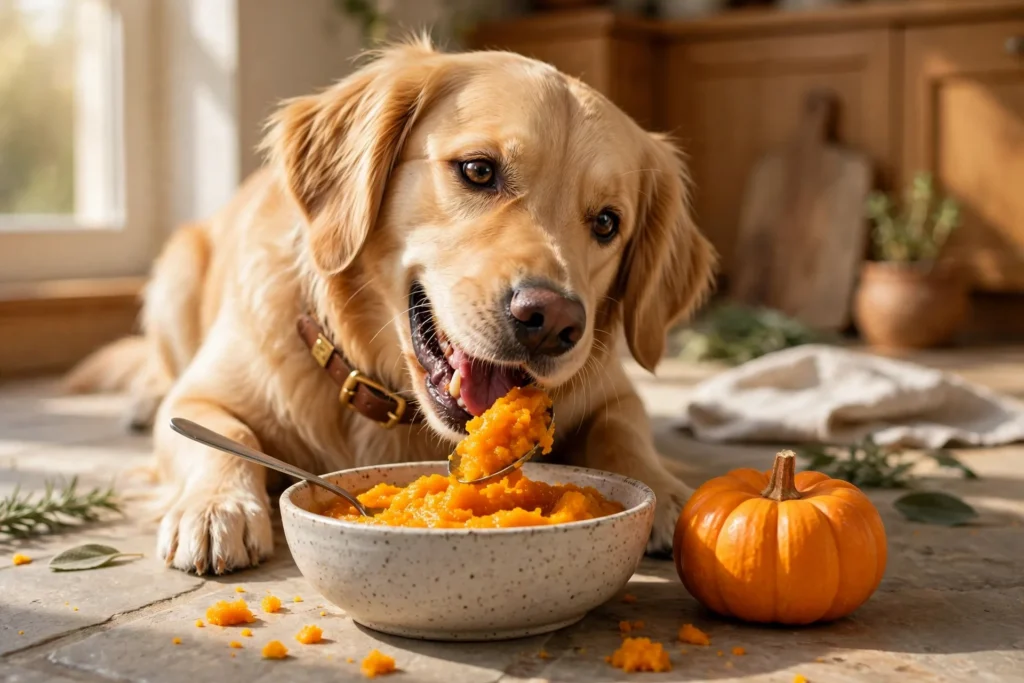
Picture a spoonful of bright orange puree landing on top of your dog’s dinner, and the tail starts going before the bowl even touches the floor. Owners often wonder, can dogs eat pumpkin without upsetting the stomach or piling on weight? Yes, dogs can eat pumpkin, and plain pumpkin is one of the best foods for a dog’s digestion. Few kitchen foods earn a place in the dog bowl as easily as this one. Pumpkin is gentle, filling and rich in the kind of fibre that settles troubled stomachs, and most dogs genuinely love the soft, slightly sweet taste. Vets reach for it so often that many owners keep a tin in the cupboard ready for the next loose stool or stubborn bout of constipation. There are still rules worth knowing before you open that tin. The wrong product, the wrong part of the plant or a serving spoon that never stops can turn a healthy extra into a problem. This guide walks through the benefits, the right portions for every size of dog, the canned versus fresh question, and the one pumpkin product that must stay on the shop shelf.
Why Pumpkin Is Good for Dogs
Plain pumpkin feeds a dog fibre, vitamins and minerals for very few calories. A cup of canned pumpkin puree holds about 7 grams of fibre, and fibre is the nutrient that does most of the heavy lifting in this food. Alongside the fibre comes beta carotene, the plant pigment that gives pumpkin its deep orange colour and converts into vitamin A inside the body. Vitamin A supports sharp vision, healthy skin and a strong immune system, and dog owners often notice a richer, glossier coat after a few weeks of small daily spoonfuls. Potassium is in there too, helping muscles work properly and supporting healthy blood pressure and fluid balance. Smaller amounts of vitamin C, iron and zinc round out the picture, with zinc playing a quiet role in skin repair and coat quality.
Water content deserves a mention of its own. Pumpkin flesh is around 90 percent water, so every spoonful helps hydration along, which matters for dogs that rarely drink enough and for dogs prone to urinary trouble. A hydrated gut also moves food along more smoothly. Then there is the weight angle. Because pumpkin is bulky and filling yet light on calories, a spoonful swapped into a meal helps a dog on a diet feel full on less food. Owners asking can dogs eat pumpkin for health reasons can feel confident about the answer: the benefits are real, they are measurable, and they arrive in a food most dogs eat with enthusiasm. Other gentle vegetables work in a similar way, and carrots are another crunchy, low calorie option many dogs enjoy as a regular topper.
Pumpkin for Diarrhea and Constipation
Plain pumpkin can firm up loose stool and soften hard stool, because its soluble fibre absorbs water and adds gentle bulk in the gut. That two way action sounds like a magic trick, yet the explanation is simple. Soluble fibre soaks up extra water like a sponge. In a dog with diarrhea, that sponging effect pulls surplus water out of the stool, and the result is a firmer, easier to pass motion. In a constipated dog, the same fibre holds water inside the stool and adds bulk, which softens the motion and nudges the bowel into moving. One food, two opposite problems, and a single mechanism behind both.
This is why vets so often suggest pumpkin as the first home step for mild tummy trouble. A dog that has eaten something questionable at the park, or one adjusting to a new food, frequently settles within a day or two once small amounts of puree join the bowl. Pumpkin also sits comfortably next to other bland recovery foods, and it gives owners something useful to do while they watch and wait. Senior dogs benefit in a particular way, since sluggish bowels are common in older pets and a daily spoonful keeps things regular without medication.
Know the limits, though. Pumpkin supports mild, short lived digestive upsets, and it does not treat disease. Diarrhea that lasts beyond 48 hours, stool with blood in it, vomiting alongside the loose stool, or a puppy or elderly dog going downhill all call for a vet visit rather than another spoonful. Parasites, infections and swallowed objects all hide behind ordinary looking symptoms, and pumpkin cannot fix any of those. Use it as support, not as a diagnosis.
How Much Pumpkin Can a Dog Eat
Most dogs do well on one to four spoonfuls of plain pumpkin per meal, scaled to body size. Portion control is where can dogs eat pumpkin stops being a simple yes and becomes a how much question. The table below gives a sensible starting point for healthy adult dogs, mixed into a normal meal once or twice a day.
| Dog size | Typical weight | Plain pumpkin per meal |
|---|---|---|
| Toy dogs | Under 10 lb (4.5 kg) | 1 teaspoon |
| Small dogs | 10 to 25 lb (4.5 to 11 kg) | 1 to 2 teaspoons |
| Medium dogs | 25 to 50 lb (11 to 23 kg) | 1 to 2 tablespoons |
| Large dogs | Over 50 lb (23 kg) | 3 to 4 tablespoons |
Start smaller than the table suggests and build up over three or four days. A gut that has never met pumpkin needs time to adjust, and a slow introduction lets you spot any reaction early. Too much fibre backfires in a predictable way: excess gas, a gurgling belly, loose stool or a plain tummy ache, which is the opposite of what you were aiming for. If stools soften too much, drop back to half the amount and hold there for a few days.
Count pumpkin as part of the day’s food, not as a free extra on top. When a spoonful goes in, a spoonful of regular food can come out, especially for dogs watching their waistline. The standard treat rule applies here too: extras like pumpkin should stay within about 10 percent of daily calories. An opened tin keeps in the fridge for around five days, and leftover puree freezes neatly in an ice cube tray, giving you ready made single portions for small dogs.

Canned Pumpkin Versus Fresh Pumpkin
Plain canned pumpkin puree and home cooked fresh pumpkin are both safe, as long as the tin or the fruit contains pumpkin and nothing else. Canned puree is the convenient winner for most households. It is consistent from tin to tin, ready the moment you open it, and gentle on digestion because the flesh is already fully cooked and smoothly mashed. Fresh pumpkin asks for a little kitchen work, yet plenty of owners enjoy preparing it, and dogs go wild for the smell of it baking.
Pick a plain cooking pumpkin from the shop, the smaller and heavier sort sold for pies and roasting, rather than a giant display fruit. Wash it, cut it in half, and scoop out the seeds and the stringy pulp with a sturdy spoon. Save the seeds if you like, because they have their own section below. Lay the halves cut side down on a lined baking tray and bake at 350 degrees Fahrenheit (175 degrees Celsius) until the flesh yields to a fork, usually 45 to 60 minutes. Scoop the soft flesh away from the skin, mash it, and let it cool before serving.
Serve fresh pumpkin cooked, not raw. Raw flesh is dense and harder for a dog to break down, and a determined dog chewing a raw chunk risks an upset stomach or worse. The skin and the stem stay out of the bowl at all times, since both are tough, hard to digest and a choking hazard in pieces. Decorative pumpkins that have sat carved on a doorstep belong in the bin, not the bowl: a cut pumpkin at room temperature gathers mould and bacteria quickly, and a dog that raids one can end up properly ill. The same care applies to other firm produce, and owners curious about fruit options can read up on apples and how to serve them safely.
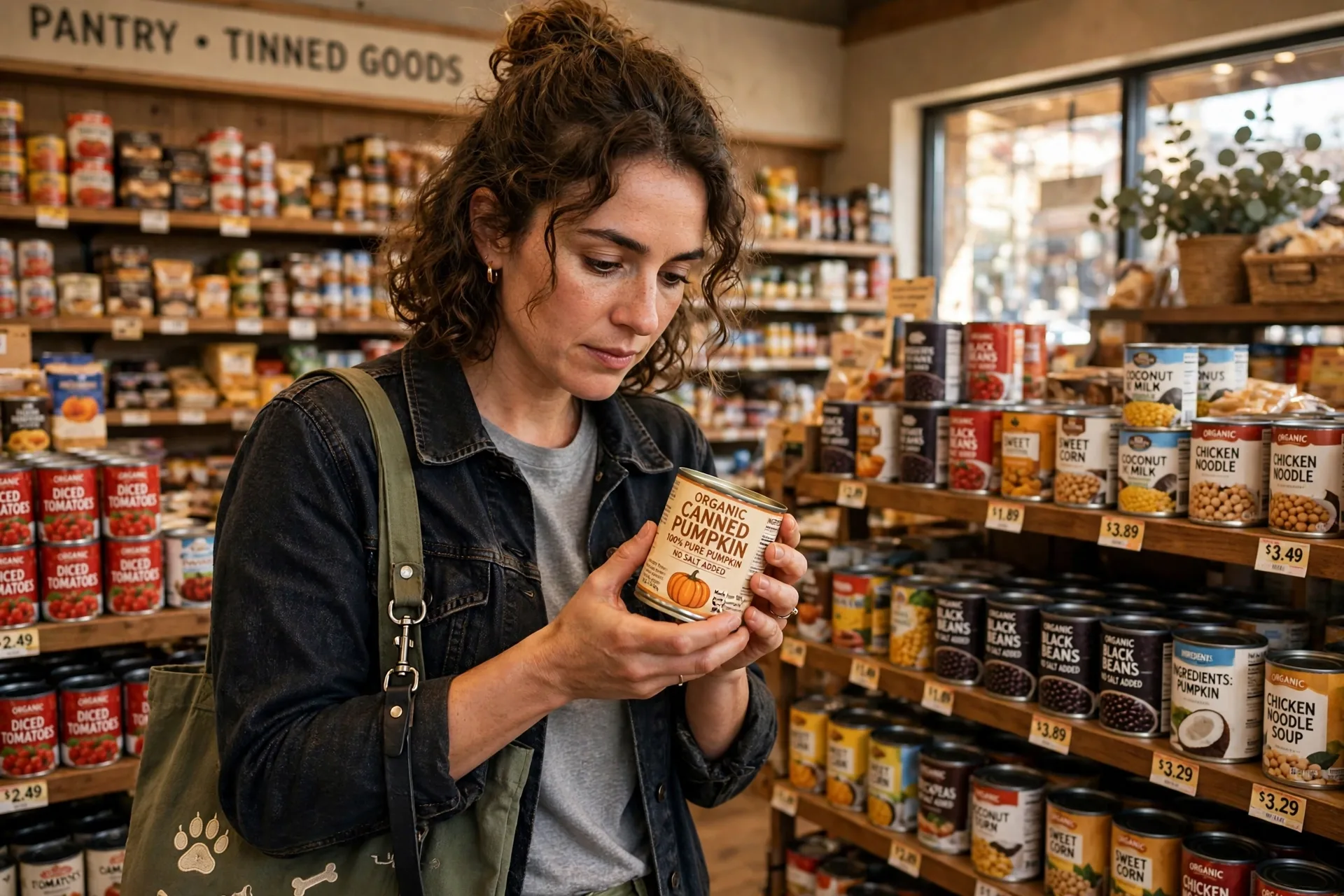
The Pumpkin Pie Filling Trap
Pumpkin pie filling is not safe for dogs, and it should never reach the bowl. This is the one place where can dogs eat pumpkin turns into a firm no, and it catches people out because the two tins sit side by side on the shelf in near identical labels. Plain pumpkin puree lists one ingredient: pumpkin. Pie filling, sometimes labelled pie mix, lists a crowd: sugar, cinnamon, nutmeg, ginger and cloves, all blended and sweetened for dessert.
Each addition causes its own trouble. Sugar loads a dog with calories it does not need and feeds dental decay. Nutmeg contains a compound called myristicin, which is toxic to dogs in quantity, and while a single stolen lick rarely amounts to an emergency, spiced filling is food designed for people, not pets. The darkest risk hides in the sugar free versions, because some are sweetened with xylitol, also sold as birch sugar. Xylitol is extremely poisonous to dogs, triggering a rapid insulin release that can crash blood sugar and damage the liver, and even a small amount counts as an emergency.
Build one habit and the trap closes: read the ingredient list every time, even on a brand you trust, because recipes change. If the list says anything beyond pumpkin, put the tin back. And if your dog ever raids the baking cupboard and gets into pie filling, check the label for xylitol first, then call your vet for advice rather than waiting for symptoms.

Can Dogs Eat Pumpkin Seeds
Plain pumpkin seeds are safe for dogs when the seeds are cleaned, roasted and ground or finely chopped before serving. Seeds pulled fresh from a cooking pumpkin carry a tidy bundle of nutrition: plant protein, magnesium, zinc and healthy fats in a very small package. Traditional pet keeping has long valued ground pumpkin seeds as a gut health extra, and many owners stir a little into food during a seasonal digestive reset. The seeds must be plain, with no salt, no oil and no flavouring of any kind.
Preparation is the part that matters. Rinse the seeds clean of pulp, spread them on a tray, and roast them plain until dry and crisp. Then grind them in a blender or chop them very finely. Whole seeds are the risk in this section: a small dog can choke on one, and hard whole seeds often pass through a dog undigested anyway, hull and all, which wastes the nutrition entirely. Shop bought roasted seeds are usually salted, so home prepared seeds are the safer route.
A little goes a long way. A pinch of ground seed over food suits a small dog, and a teaspoon suits a large one, a few times a week rather than at every meal. Introduce seeds the same gradual way as the flesh, and store the ground batch in a sealed jar in the fridge so the natural oils stay fresh.
How to Serve Pumpkin to Your Dog
The safest way to serve pumpkin is plain, cooked and spooned over regular food in a small measured amount. The simplest method is also the best: stir the puree through kibble or wet food and let the orange coating do its work, since even picky dogs tend to lick the bowl clean. Frozen pumpkin is a summer favourite, spooned into ice cube trays or silicone moulds and served as a cool, slow treat on a hot afternoon. A lick mat smeared with puree buys you ten quiet minutes and gives an anxious dog something soothing to focus on.
Home bakers can fold puree into simple dog biscuits with oat flour and an egg, baking a batch that keeps well in a tin. Variety keeps things interesting across the week, and pumpkin pairs happily with other dog safe produce: try rotating it with mashed sweet potatoes for a change of flavour and nutrients. Whatever form it takes, keep the pumpkin plain. No syrup, no marshmallow, no whipped cream, no spice blends. The moment toppings for people join the bowl, a healthy food stops being one.
A final serving note: fresh bowls beat leftovers left sitting out. Serve pumpkin at room temperature or lightly warmed, never hot from the oven, and wash the bowl after meals as you would with any fresh food. Keep the tin or the frozen cubes in rotation, watch the stool, and you have a routine that supports your dog’s digestion all year round.
FAQs
Can dogs eat pumpkin every day?
Yes, small measured amounts of plain pumpkin are fine every day for most healthy dogs. Keep it as a topper within the portion table, not a meal replacement, and build up gradually when you first start.
Can puppies eat pumpkin?
Yes, puppies can have plain cooked pumpkin in tiny amounts, starting with a quarter to half a teaspoon for the smallest pups. It can settle mild tummy upsets, though a vet should guide feeding for very young puppies.
Can dogs eat raw pumpkin?
Small nibbles of raw flesh are unlikely to cause serious harm, but raw pumpkin is dense and harder to digest. Cooked pumpkin is the safer choice. Always keep the skin, stem and stringy pulp out of the bowl.
Is canned pumpkin the same as pumpkin pie filling?
No. Canned pumpkin puree contains only pumpkin, while pie filling adds sugar, spices such as nutmeg, and sometimes xylitol in sugar free versions. Always check the ingredient list before buying or serving.
Can dogs eat seeds from a carved pumpkin?
No, seeds from a carved display pumpkin are best avoided, because a cut pumpkin left sitting out gathers mould and bacteria. Use seeds from a fresh cooking pumpkin instead, cleaned, roasted plain, and ground before serving.
How much pumpkin should I give my dog for diarrhea?
Start with the amounts in the portion table, once or twice a day with meals. Mild cases often settle within a day or two. If diarrhea lasts beyond 48 hours or includes blood, see your vet.
Can pumpkin help my dog lose weight?
Yes. Swapping a spoonful of regular food for pumpkin adds filling fibre for far fewer calories, so your dog feels satisfied on less. Pair it with measured meals, steady exercise and regular weigh ins for steady results.
Sources:
ASPCA – People Foods to Avoid Feeding Your Pets
ASPCA – General Dog Care