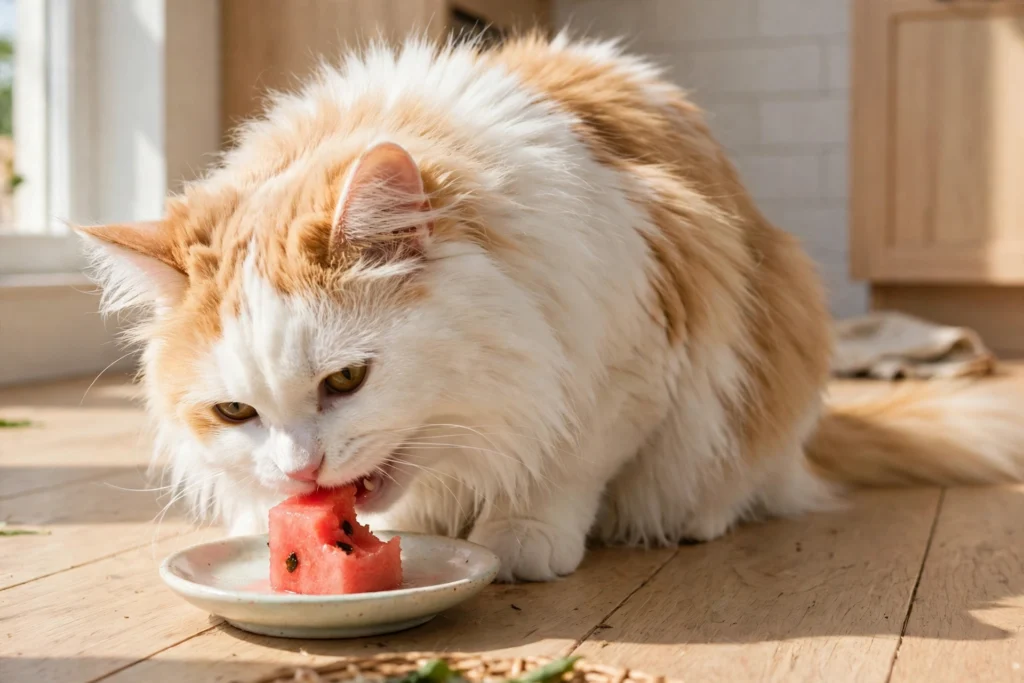
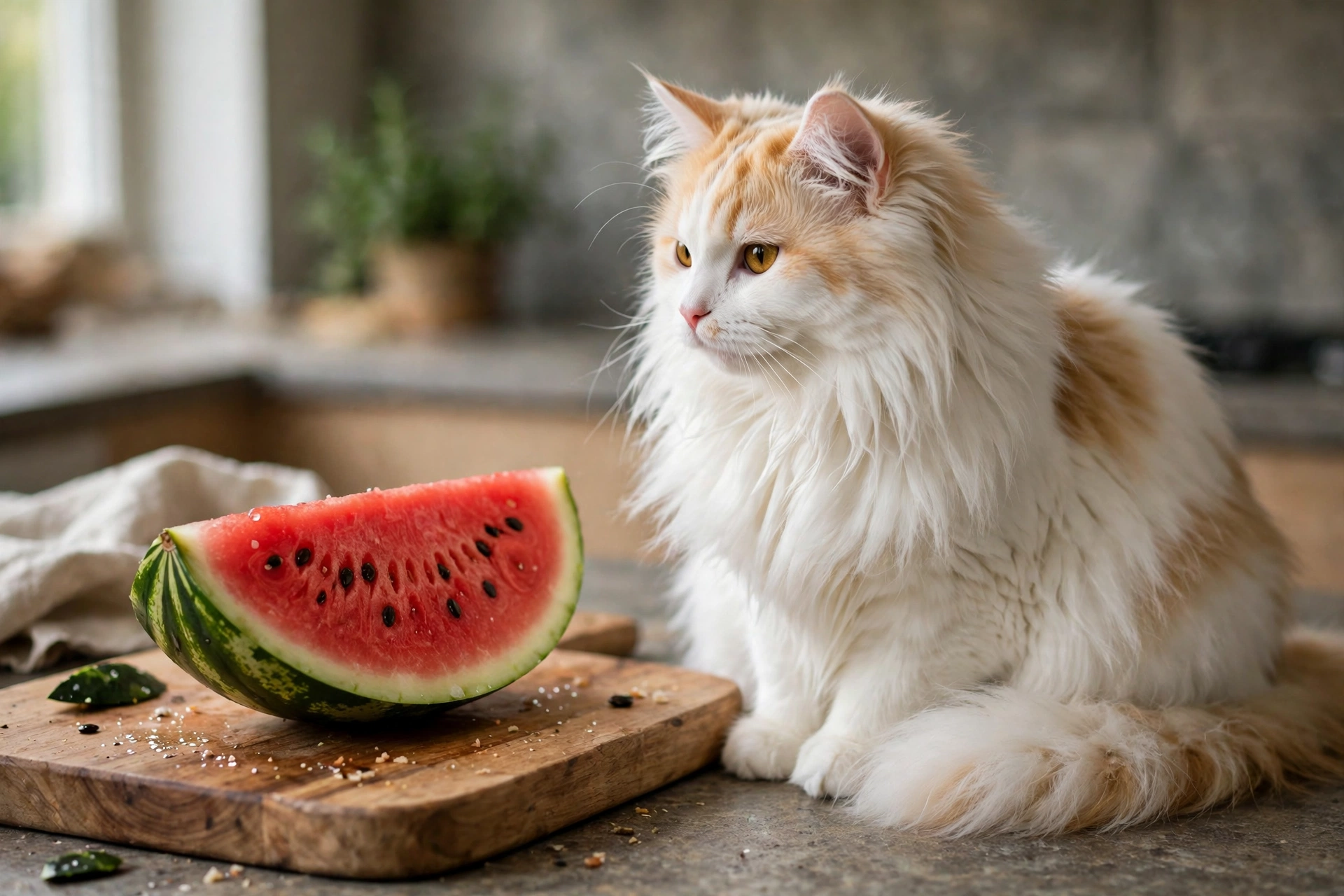
You are cutting a watermelon on a hot afternoon, and your cat has arrived to supervise. Juice pools on the board, pink cubes tumble across the counter, and one hopeful face tracks every slice. So, can cats eat watermelon, or does the fruit bowl stay off limits? Yes, cats can eat watermelon flesh in small amounts, as long as every seed is removed and no rind is attached. Watermelon flesh is not toxic to cats, and the fruit is about 92 percent water, so a few small cubes make a hydrating summer treat for a healthy adult cat. Portion size decides whether the treat stays safe. Seeds can choke a cat or block the gut, the rind resists digestion, and the natural sugar rules watermelon out for diabetic and overweight cats. This guide sets out the nutrients in the flesh, the serving size that fits each cat weight, the parts to keep away from your cat, and the warning signs that call for a vet visit.
Is Watermelon Safe for Cats?
Plain watermelon flesh is safe for healthy cats in small amounts, served seedless and with the rind cut away. The American Society for the Prevention of Cruelty to Animals (ASPCA) lists watermelon as non-toxic to cats, and PetMD gives the same answer for the flesh. Type “can cats eat watermelon” into any vet-run site and the answer comes back with the same conditions attached: small pieces, no seeds, no rind, not often.
Your cat is an obligate carnivore, which means the feline digestive system is built to run on animal protein. Fruit supplies nothing a cat needs to live. A complete and balanced cat food already covers protein, taurine, fats, vitamins and minerals in the ratios a feline body uses. Watermelon sits outside that system as an extra, and extras follow one rule: all treats together stay under 10 percent of daily calories.
Some cats sniff a cube once and walk away. Others sit by the fridge and beg every time the fruit comes out. Both reactions are normal, because interest in watermelon has nothing to do with hunger. A cat that ignores the cube is not missing out on anything, and a cat that loves the cube gains nothing beyond a few sips of water in solid form.
Not every fruit on the counter earns the same verdict, and the contrast is worth knowing before you share anything from a fruit bowl. Grapes and raisins can poison cats and can trigger kidney failure, so those stay out of reach entirely, skins, seeds and all. Citrus fruit upsets feline stomachs, and avocado carries a fat load no cat needs. Watermelon flesh carries no toxin of that kind, which is exactly why vets place the melon on the safe list and the grape on the never list. Safe still comes with the seed, rind and portion rules in the sections below.
Watermelon Nutrition: What a Cat Actually Gets
Watermelon delivers water first and nutrients second, and the nutrient share matters far less to a cat than the numbers suggest. A 100 gram (3.5 ounce) serving of raw flesh, roughly two thirds of a cup diced, breaks down like this:
| Nutrient | Amount per 100 g of watermelon flesh |
|---|---|
| Water | 91.4 g |
| Calories | 30 kcal |
| Sugar | 6.2 g |
| Protein | 0.6 g |
| Fibre | 0.4 g |
| Potassium | 112 mg |
| Vitamin C | 8.1 mg |
| Vitamin A | 28 mcg |
| Lycopene | 4,530 mcg |
Vitamin C looks impressive on paper, yet cats produce their own vitamin C in the liver, so the fruit adds a nutrient your cat already manufactures. Vitamin A comes with a similar catch. Cats need preformed vitamin A from animal tissue and convert plant pigments poorly, which makes the melon a weak source for a carnivore. Potassium is present in a useful amount, but a complete cat food already supplies potassium in balanced form. Lycopene, the pigment that turns the flesh red, is an antioxidant studied mostly in people, and no study shows a proven benefit in cats.
Hydration is the one honest plus. A cat that laps at a water bowl only twice a day still takes in fluid from a couple of juicy cubes, and warm weather raises the value of that fluid. Treat the cubes as a bonus on top of fresh drinking water, never as a replacement for the bowl. A 30 calorie serving per 100 grams also keeps watermelon light next to commercial treats, provided the serving stays small.

How Much Watermelon Can a Cat Eat?
One or two small cubes, close to the size of a pair of dice, make a full serving for an average adult cat. The question after can cats eat watermelon is always how much, and weight gives the cleanest answer:
- Kittens under six months: skip watermelon entirely. Growing bodies need balanced kitten food, and young stomachs upset easily.
- Kittens over six months: one pea-sized piece of seedless flesh, once in a while, is plenty.
- Small cats under 8 pounds (3.6 kg): one small cube, about 1 teaspoon diced.
- Average cats from 8 to 12 pounds (3.6 to 5.4 kg): one to two cubes of about 1 inch (2.5 cm), each cut into bite-sized pieces, roughly 1 tablespoon in total.
- Large cats over 12 pounds (5.4 kg): two cubes at most, cut small.
Frequency matters as much as size. Offer watermelon once or twice a week at most, not daily. The calorie maths explains why: an average indoor cat eats roughly 200 to 250 calories a day, so the full treat budget is 20 to 25 calories. Fifteen grams of watermelon carries about 5 calories, which fits the budget neatly at cube size and breaks it fast at wedge size. If you want exact numbers for your own cat, our pet calculators work out daily calories and treat allowances by weight and activity.
First servings follow a test rule. Give one small piece, then watch your cat for 12 to 24 hours before offering more. A cat that eats the piece and stays normal in appetite, energy and litter tray habits has passed the test.
The Parts to Never Feed: Seeds and Rind
Watermelon Seeds
No cat should eat watermelon seeds, and every seed should come out before serving. The seeds hold amygdalin, a compound that releases trace amounts of cyanide when a seed is chewed and broken down. Mature black seeds carry more of the compound than the soft white seeds found in seedless varieties. One seed swallowed whole by an average adult cat rarely causes harm, because the hard coat often passes through intact. The risk climbs with quantity, and the risk climbs faster in kittens and small cats.
Cyanide is only half the problem. Seeds are hard, smooth and exactly the size to lodge in a small throat, which makes choking a direct hazard at feeding time. Swallowed seeds can gather in the intestine and form a blockage, a condition vets call an intestinal obstruction. Fruit sold as seedless still hides pale seeds in the flesh, so run a fingertip across each cube and pick out anything you find.
Watermelon Rind
Watermelon rind should never reach your cat, green skin and pale layer alike. Rind is tough and fibrous, and a feline gut cannot break that fibre down. Pieces that go down whole move slowly through the digestive tract and can stop moving at all. A blocked intestine is a surgical emergency, not a wait-and-see problem.
Cats that chew rind without swallowing much still pay a price. The fibrous material irritates the stomach lining and commonly triggers vomiting or diarrhoea within hours. Cut the flesh well clear of the white layer when you prepare a serving, and bin the rind where your cat cannot raid it. A wedge left on a low table invites exactly the grazing you are trying to prevent.
Sugar, Weight and the Cats Who Should Skip It
Diabetes flips the answer to can cats eat watermelon from yes to no. Watermelon flesh holds 6.2 grams of natural sugar per 100 grams. A healthy cat handles a cube of that sugar without trouble. A diabetic cat runs on tight blood sugar control, and fruit sugar works directly against the treatment plan, so vets advise no watermelon at all for diabetic cats.
Overweight cats sit in the same caution group. Sugar and carbohydrate calories push against a weight loss target, and a cat on a measured diet gains nothing from the cubes. Cats on a prescription diet follow a stricter rule still: no food outside the prescribed plan unless the treating vet approves the addition first.
One fact surprises many owners: your cat cannot taste the sweetness anyway. Cats carry a broken copy of the Tas1r2 gene, one half of the receptor pair that detects sweet flavours, so the sugar registers as nothing. Cats that enjoy watermelon respond to the moisture, the cool temperature and the soft texture. You are never depriving a cat of a sweet experience by keeping the fruit in the fridge, because the experience was never sweet to begin with.

How to Serve Watermelon to Your Cat
Preparation takes two minutes and removes every hazard covered above:
- Wash the outside of the melon before cutting, so the knife does not carry surface dirt into the flesh.
- Choose a seedless variety when you can, since fewer seeds means less picking.
- Cut the red or yellow flesh away from the rind, leaving the white layer behind with the skin.
- Pick out every seed you can see, black and white alike.
- Cut the flesh into bite-sized cubes of 1 inch (2.5 cm) or smaller, and dice finer for small cats.
- Serve the cubes plain in a clean dish, at room temperature, with nothing added.
Plain means plain. Never offer watermelon with sugar, salt or syrup, and never offer watermelon sweets, drinks or ice lollies made for people, because sweetened products can carry ingredients that harm cats. Fresh flesh from a melon you cut yourself is the only version that belongs in the dish.
Leftover cubes keep well for a short window. Store prepared cubes in a covered container in the fridge and use them within two days, and discard any piece that has sat in the dish at room temperature for more than a couple of hours. Serve fridge-cold cubes after a few minutes on the counter if your cat dislikes very cold food on the teeth.
Frozen Watermelon Cubes for Hot Days
Freezing turns the same safe flesh into a slower, colder treat. Spread seedless, rind-free cubes on a tray, freeze them for two to three hours, then offer one cube and let the surface soften for a few minutes first. A cat licks and nibbles a softened cube instead of gulping a rock-hard piece whole. Blended flesh frozen in an ice cube tray gives even smaller portions for small cats. Frozen cubes obey the same limits as fresh ones: one or two pieces, once or twice a week, counted inside the daily treat budget.
Signs Watermelon Does Not Suit Your Cat
Most cats that overdo watermelon show it within a few hours. Vomiting, diarrhoea, gas, bloating and a skipped next meal are the common signs of gastrointestinal (GI) upset. Stop the watermelon, offer plain water and the normal diet, and the signs usually clear within a day. A cat that reacts once to a single cube has given you a clear answer: leave watermelon off that cat’s treat list for good.
Some signs need a vet the same day. Repeated vomiting, lethargy, straining in the litter tray, a swollen belly or a complete loss of appetite can point to a blockage, especially after seeds or rind were eaten. Watch any cat that raids a wedge or a bin for 24 to 48 hours after the event. The ASPCA Animal Poison Control Center can also advise on (888) 426-4435 if you cannot reach your own vet.
The Bottom Line
So, can cats eat watermelon? Yes, in the narrow version this guide spells out: plain flesh only, seeds and rind removed, one or two small cubes, once or twice a week, for a healthy adult cat. Diabetic cats, overweight cats and young kittens skip the fruit entirely. Other fruit treats follow the same pattern of small, rare and seed-free; our guide to can cats eat bananas sets out the portions for that one. A complete and balanced cat food remains the only food your cat actually needs.
FAQs
Can cats eat watermelon every day?
No. Watermelon is a treat, not a daily food. Offer a cube or two once or twice a week at most, and keep all treats under 10 percent of daily calories.
Can cats eat watermelon seeds?
No. Seeds hold trace cyanide compounds and can choke a cat or block the intestine. Pick out black and white seeds alike, even from fruit sold as seedless.
Can cats eat watermelon rind?
No. Rind is tough, fibrous and hard for a feline gut to break down. Swallowed pieces can trigger vomiting or an intestinal blockage, so cut every green and white layer away.
Can kittens eat watermelon?
Kittens over six months can try one pea-sized piece of seedless flesh, once in a while. Younger kittens should skip fruit entirely, because growing bodies need balanced kitten food, not sugar and water.
Can diabetic cats eat watermelon?
No. The natural sugar in watermelon can disturb blood sugar control, so diabetic cats should not eat the fruit at all. Ask your vet to suggest a treat that fits the treatment plan.
Can cats eat frozen watermelon?
Yes. Freeze seedless, rind-free cubes for two to three hours, then offer one small cube. Let the surface soften for a few minutes first, so your cat licks and nibbles instead of gulping.
What should I do if my cat eats a watermelon seed?
Watch your cat for 24 to 48 hours. One seed rarely harms an average adult cat, but repeated vomiting, straining, lethargy or a swollen belly means a vet visit the same day.
Sources:
ASPCA – People Foods to Avoid Feeding Your Pets
ASPCA – General Cat Care