
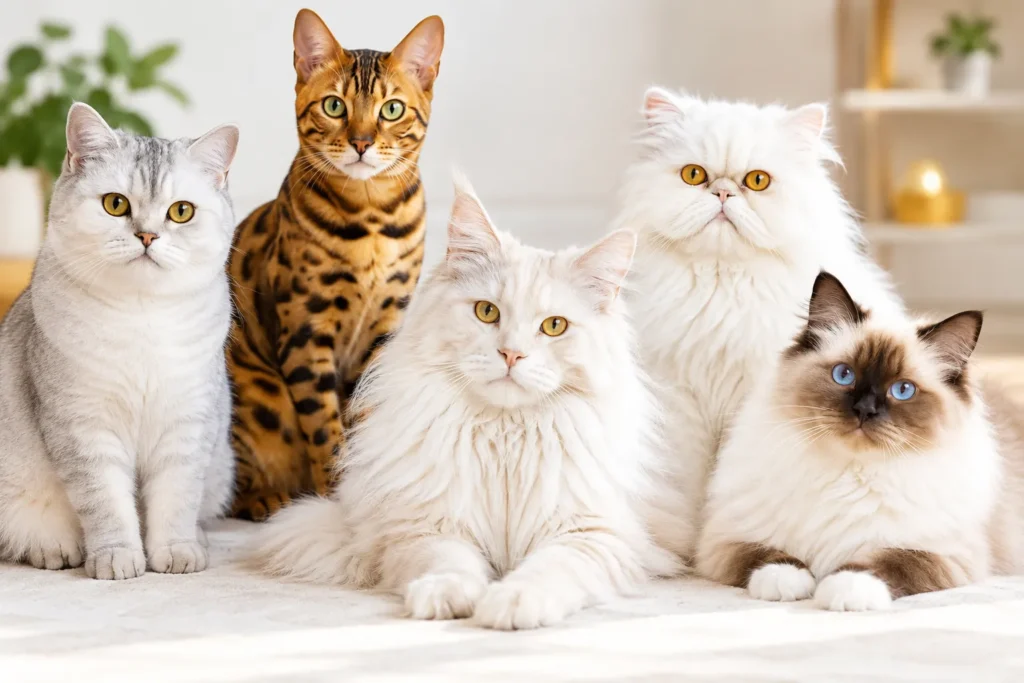
Picking a cat feels simple until you realize you’re choosing a roommate for the next 15 years. Some cats want your lap all day. Others would rather watch you from across the room. Some need brushing every evening, and a few will climb your bookshelf just to see what happens. This guide walks you through the real differences between breeds, from personality and grooming to health and cost, so you can find a cat that fits the life you actually live. .
Why Cat Breeds Matter
Most people think of cats as independent creatures that look roughly the same, but that’s where the story ends too quickly. Cat breeds carry predictable traits, health tendencies, and care requirements that affect your life for 12 to 18 years. A Bengal demands constant play and climbing structures; a British Shorthair thrives on quiet companionship. One breed sheds enough hair to fill a vacuum monthly, while another barely sheds at all. Knowing the difference before you commit changes everything.
You’ll find cost breakdowns, health screening recommendations, grooming time estimates, and a decision framework to match your lifestyle with the right breed, not just pretty pictures of cats.
Understanding Cat Breeds: What Makes Them Different
Cat breeds are selectively developed lines with consistent physical traits, personality patterns, and health predispositions. If you pick a Maine Coon, you’re getting a large, social, playful cat with a 10-13 year lifespan and a predisposition to heart disease. If you choose a Russian Blue, expect a quiet, reserved cat that loves one person intensely and avoids strangers, with a 15-20 year lifespan and minimal genetic health risks.
Domestic shorthairs and longhairs dominate shelters, but pedigreed cats (registered breeds) carry specific expectations. The Cat Fanciers’ Association (CFA), founded in 1906, maintains official breed standards. These standards describe not just appearance but personality, size, and even voice quality. A Siamese is supposed to be vocal; a British Shorthair quiet.
Understanding this means you won’t be shocked when your Bengal kitten climbs your curtains at midnight or your Persian needs daily grooming or your Sphynx (hairless cat) demands a warm bed and skin care like a human baby.
Coat Types and Care Requirements by Breed
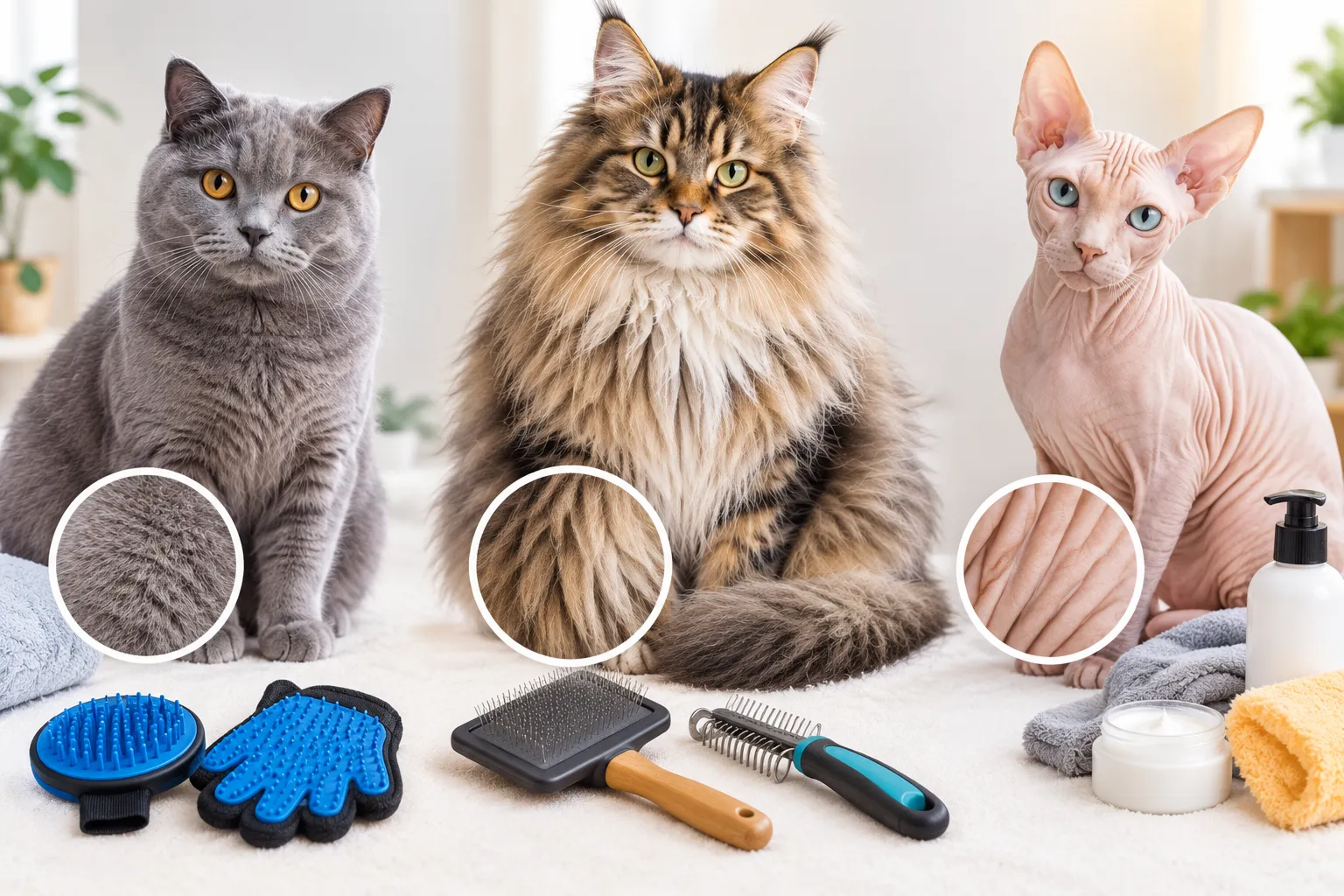
Three main coat categories exist: shorthair, longhair, and specialty coats (curly, wavy, or hairless). Each demands different grooming time, tools, and professional care costs.
Shorthaired Breeds
Abyssinians, American Shorthairs, Bombays, Burmese cats, and British Shorthairs fall here. Grooming time: 10-15 minutes weekly brushing prevents matting and reduces shedding by 30-40%. Use a rubber curry brush (costs $8-12) or grooming mitt ($10-18) to loosen dead skin and direct shedding toward a brush instead of your furniture. Short coats rarely need professional grooming unless matting occurs.
Longhaired Breeds
Maine Coons, Norwegian Forest Cats, Persians, Ragdolls, and Turkish Angoras need daily attention. Grooming time: 30-60 minutes daily brushing, or mats form within 2-3 days. A single mat caught early takes 5 minutes to untangle; a matted cat costs $100-200 for professional grooming to prevent shaving the entire coat. Investment in a slicker brush ($15-30) and undercoat rake ($12-20) becomes non-negotiable.
Specialty Coats
Devon Rex and Cornish Rex cats have curly or wavy coats requiring gentle care with a soft brush (costs $10-15) to avoid damaging the delicate texture. Sphynx cats, the hairless breed, need weekly baths, skin moisturizing, and protection from sun exposure and cold. They’re not low-maintenance despite lacking fur.
Health Screening and Genetic Considerations
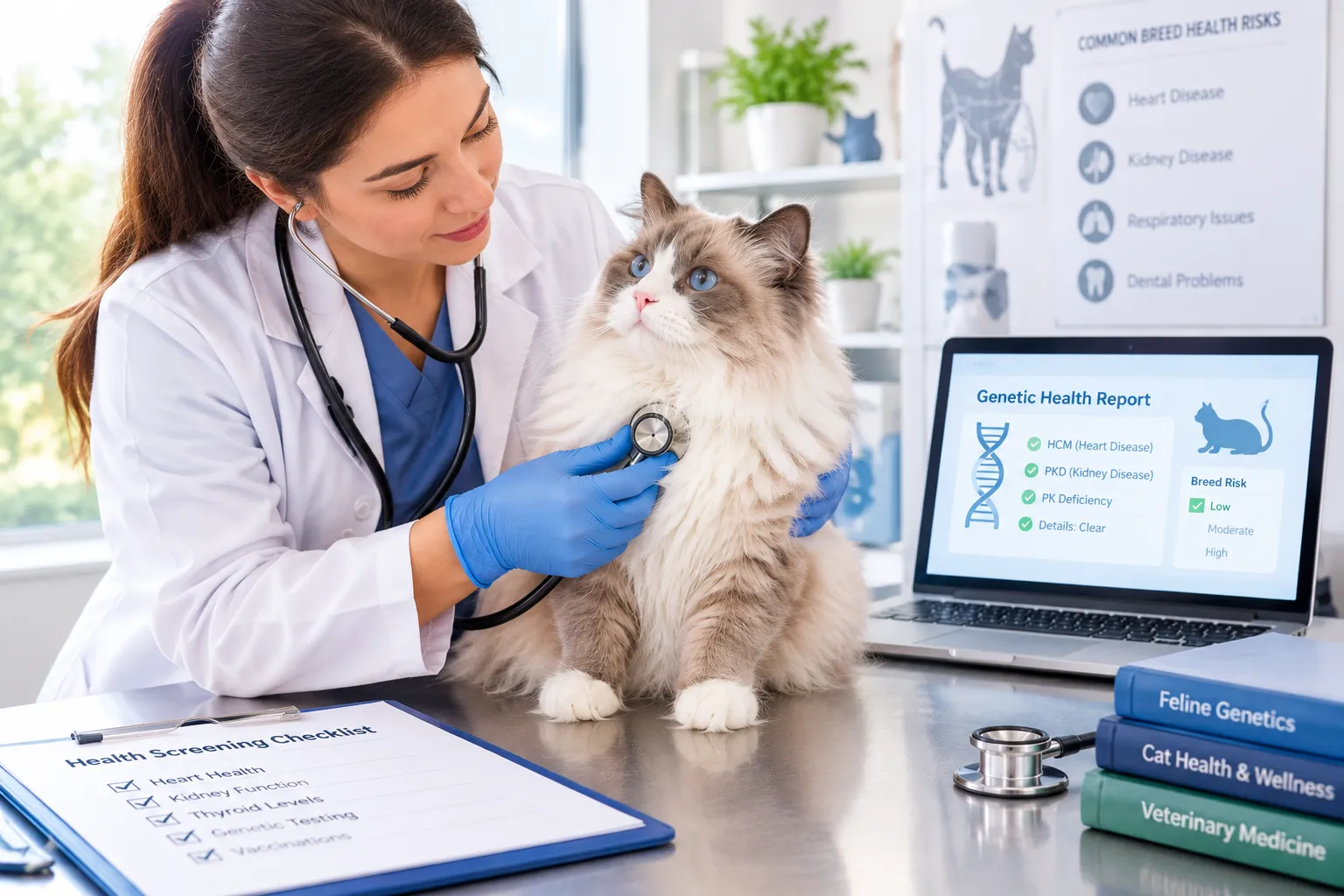
Different cat breeds carry predictable genetic health risks, and knowing them before adoption lets you screen and prepare. This is where responsible breeders differ from backyard breeding: health testing.
Common Breed-Specific Conditions
Persians and Himalayans frequently develop polycystic kidney disease (PKD), inherited through genes. Reputable breeders test parent cats with ultrasound before breeding. Maine Coons, Ragdolls, and Bengals carry hypertrophic cardiomyopathy (HCM), a heart condition. Breeders screen with echocardiograms. Abyssinians and Siamese have progressive retinal atrophy (PRA), causing blindness. Genetic testing prevents breeding affected cats.
Manx cats, famous for their taillessness, carry spinal abnormalities linked to the same gene. Responsible breeders avoid mating two Manx cats together, which increases severe disability risk to 25%.
Health Screening Recommendations
Before adopting from a breeder, ask for health test results. Legitimate breeders willingly share them; breeders who refuse are red flags. Request:
- Genetic testing results (DNA tests for breed-specific conditions)
- Ultrasound or cardiac screening results (for heart conditions)
- Pedigree documentation showing no line breeding (breeding closely related cats increases genetic problems)
If adopting from shelters, your veterinarian can screen for common issues during wellness exams.
The Real Cost of Cat Ownership by Breed
Total cat ownership costs range from $1,500 to $5,000 annually, depending on breed, and multiply dramatically over a 15-year lifespan. Here’s the breakdown competitors avoid discussing entirely.
Acquisition Cost
Domestic shorthairs (mixed breeds) from shelters: $50-150 adoption fee. Pedigreed cats from responsible breeders: $400-3,000+ (Bengals, Sphynx, Maine Coons cost more). Pet-quality pedigrees (no show rights): $400-1,200. Show-quality pedigrees: $1,500-5,000+.
Cheap breeders ($100-300) often produce unhealthy kittens, leading to surprise vet bills that dwarf the initial savings.
Annual Veterinary Care
Wellness exams: $200-400 (two visits yearly recommended). Vaccinations and preventive care: $100-200. Dental cleaning (needed by age 3-5): $200-400 per cleaning, every 1-2 years. Emergency care (average incident): $1,000-3,000. Chronic condition management (diabetes, kidney disease, hyperthyroidism): $50-300 monthly.
Older cats (over 10 years) often develop multiple conditions, pushing annual vet costs to $2,000+.
Food and Litter
Quality cat food: $30-80 monthly ($360-960 annually). Premium or prescription diets (for kidney disease, urinary issues, allergies): $60-150 monthly. Litter: $20-40 monthly, depending on type and frequency of changes. Combined food and litter: $600-2,280 annually.
Grooming
- Shorthaired breeds grooming at home: brush and comb costs $25-40 (one-time), then 10 minutes weekly of your time.
- Longhaired breeds grooming at home: brushes and tools: $40-70 (one-time), 30-60 minutes daily.
- Professional grooming: $50-150 per visit (4-12 times yearly for longhaired breeds): $200-1,800 annually.
10-Year Total Cost Estimate
- Domestic shorthair: $8,000-12,000 ($800-1,200 yearly)
- Pedigreed shorthair (British Shorthair, Burmese): $12,000-18,000 ($1,200-1,800 yearly)
- Longhaired breed (Persian, Maine Coon): $15,000-24,000 ($1,500-2,400 yearly)
- High-maintenance breeds (Sphynx, Bengal): $18,000-30,000+ ($1,800-3,000+ yearly)
Personality and Temperament Matching
Personality varies wildly among cat breeds, and choosing the wrong one leads to frustration or rehoming. Understanding temperament categories helps match you with the right cat.
Affectionate and Social Breeds
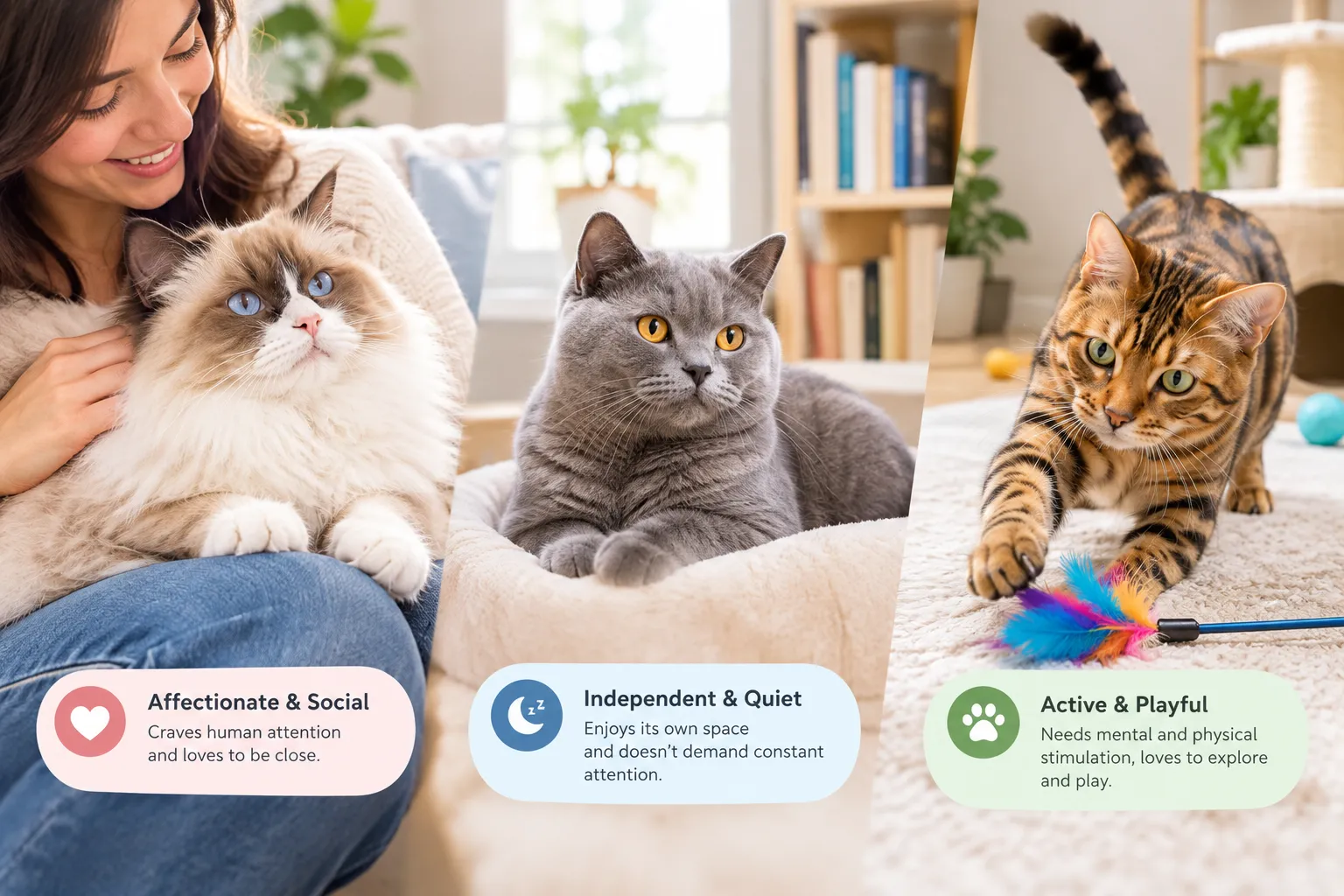
Birmans, Burmese cats, Ragdolls, and Siamese crave human interaction and become anxious if left alone 8+ hours daily. These breeds are “velcro cats”: they follow you room to room and sit on your lap while you work. If you travel frequently or work 12-hour shifts, these breeds aren’t your match. They do best in homes where someone’s present most days.
Independent and Quiet Breeds
Russian Blues, British Shorthairs, and Chartreux prefer observation to interaction. They’re content alone during workdays and don’t demand constant attention. These breeds suit busy professionals or people who value peace and quiet. They’ll bond with you, but on their terms, not yours.
Active and Playful Breeds
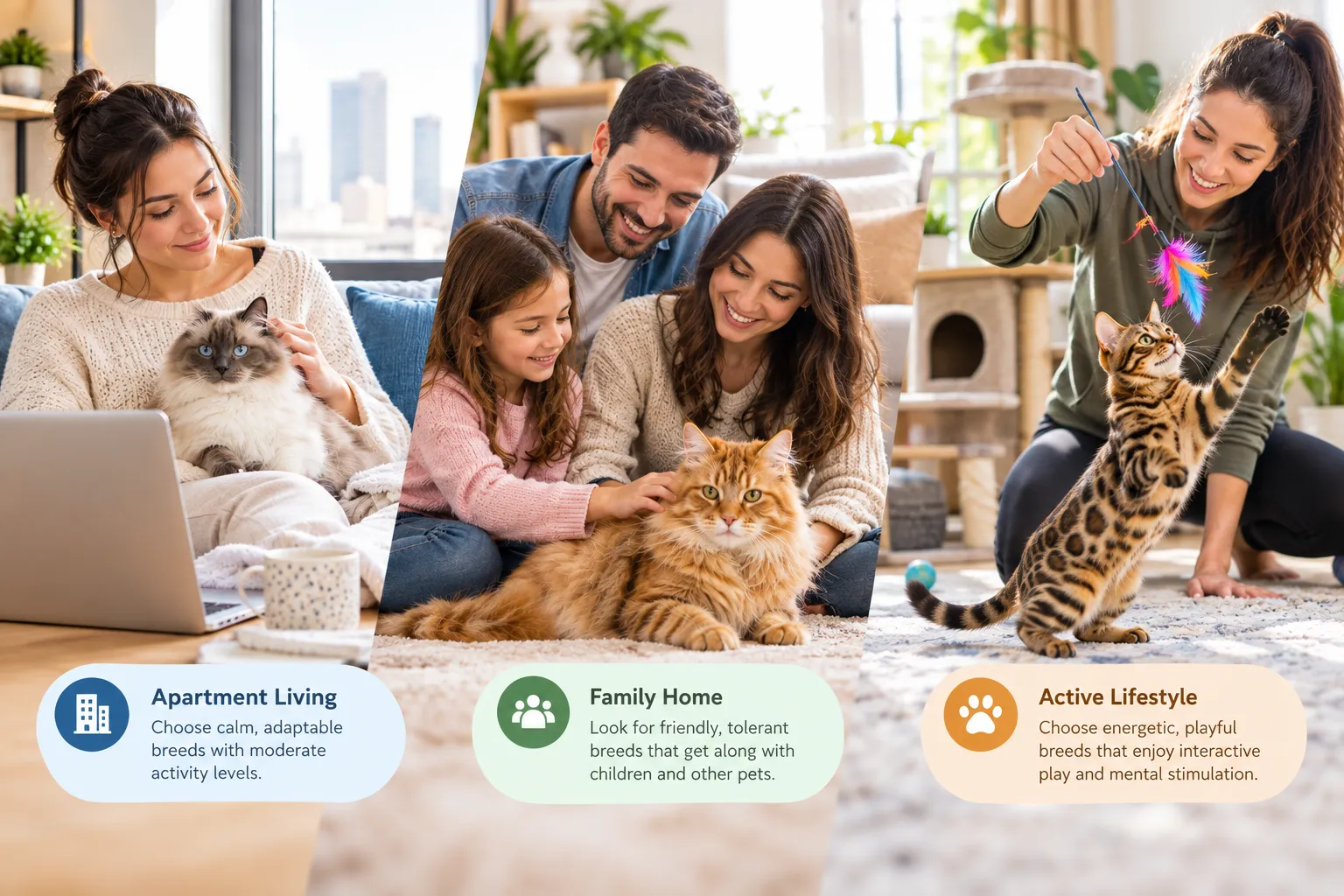
Abyssinians, Bengals, and Egyptian Maus are relentless hunters. Daily playtime: 45-60 minutes of interactive play (with wand toys or laser pointers) prevents destructive behavior. Without adequate stimulation, they knock items off shelves, scratch furniture, and drive you to frustration. These breeds aren’t beginner cats; they’re for people who actively engage with their pets.
Calm and Laid-Back Breeds
British Shorthairs, Exotics, and some Persians are content to lounge and observe. They play occasionally but don’t demand constant entertainment. These breeds suit seniors, people with mobility issues, or anyone wanting a low-energy companion.
Grooming: Time, Tools, and Professional vs. DIY
Grooming time transforms from a weekend chore into a daily commitment depending on your breed choice. Knowing this before adoption prevents resentment and neglect.
DIY Grooming
Tools needed:
- Shorthaired breeds: Curry brush ($8-12), slicker brush ($15-25), nail clippers ($10-15), file ($5-10). Total: $40-60.
- Longhaired breeds: Pin brush ($15-25), slicker brush ($15-30), undercoat rake ($12-20), comb ($8-15), nail clippers, file. Total: $70-120.
Time commitment:
- Shorthaired breeds: 10-15 minutes weekly.
- Longhaired breeds: 30-60 minutes daily (non-negotiable to prevent matting).
Cost savings: $200-1,800 annually by avoiding professional grooming.
Professional Grooming
Shorthaired breeds rarely need professional grooming unless severely matted. When needed: $50-75 per session.
Longhaired breeds benefit from professional help during heavy shedding seasons (spring/fall): 4-6 visits yearly at $75-150 each: $300-900 annually.
Hand-stripped breeds (some Terrier-like cats, though rare) need specialist groomers: $150-300 per session, 2-4 times yearly: $300-1,200 annually.
The Reality
Most people significantly underestimate grooming time when choosing a breed. A Persian adopted on impulse becomes a nightmare when daily brushing conflicts with work and life. Shelters fill with longhaired cats surrendered by owners who didn’t expect the commitment.
Breed Origins and History
Understanding where breeds come from illuminates why they behave and look the way they do. It’s not trivial trivia; it explains their drive and needs.
Siamese cats originated in Thailand (formerly Siam), where they were temple cats and royal companions. Their vocal nature, intense bonding, and slender elegance reflect centuries of selective breeding for companionship rather than hunting.
Maine Coons developed in Maine, USA, as working cats on ships and farms. Their large size, dense coats, and independent nature evolved to survive harsh winters. They’re not inherently affectionate; they’re workers.
Persians came from Persia (Iran) as luxury companions. Their flat faces and long coats were bred for beauty, not function, which is why they require daily grooming and face respiratory challenges. Their calm nature evolved for lap-sitting, not outdoor hunting.
Bengals, developed in the 1960s, blend Asian Leopard Cats with domestic Shorthairs. Their wild appearance and high energy reflect their recent genetic closeness to wild ancestors (often only 3-4 generations back). They’re not tame versions of wild cats; they’re highly energetic, intelligent domestics that demand professional handling.
Egyptian Maus are the only naturally spotted breed (all other spotted breeds are human-created). Ancient Egyptians valued them for hunting rodents. Their genetic drive to chase remains strong 3,000 years later.
Common Misconceptions About Cat Breeds
Hairless Cats Don’t Need Grooming
False. Sphynx cats need weekly baths, skin care, ear cleaning, and nail trimming. Their exposed skin accumulates oils, requires moisturizing, and sunburns easily. They’re high-maintenance, not low-maintenance.
Hypoallergenic Cat Breeds Exist
False. No cat breed is truly hypoallergenic. Allergies stem from the Fel d 1 protein in cat saliva and skin oils, not fur length. Some people experience fewer symptoms with certain breeds (Sphynx, Bengal, Russian Blue, Devon Rex), but these are “lower-allergen,” not allergen-free. If someone has severe cat allergies, no breed is safe.
Male Cats Are Always More Affectionate Than Females
False. Affection depends on breed, individual personality, and early socialization, not sex. Some female Siamese are intensely bonded; some male British Shorthairs are aloof.
Pedigreed Cats Are Healthier Than Shelter Cats
False. Responsible breeders health-test and produce healthier cats than backyard breeders. But many shelter cats are healthier than pedigreed cats from irresponsible sources. Health depends on breeder practices, not pedigree status. Adopt from responsible breeders or shelters, and avoid both irresponsible breeders and presuming shelter cats are sicker.
Long-Haired Cats Are Always More Difficult Than Short-Haired Cats
False. A short-haired Bengal requires more time, energy, and engagement than a long-haired British Shorthair. Difficulty comes from personality and exercise needs, not coat length.
Lifestyle and Environment: Finding Your Fit
Your living situation, work schedule, and activity level determine which cat breed thrives with you. Mismatch here creates stress for both cat and owner.
Apartment Living
Apartment cats need breeds comfortable in confined spaces without constant outdoor access. Best fits: British Shorthairs, Russian Blues, Ragdolls, Persians. These breeds don’t require yards or outdoor hunting. They adapt to 600-900 square feet and thrive on indoor enrichment.
Avoid: Bengals, Abyssinians, Egyptian Maus. These need space and intensive play or they become destructive.
Homes with Families and Children
Families with young children need patient, sturdy breeds tolerant of handling. Best fits: Maine Coons, Birmans, British Shorthairs, Ragdolls. These breeds tolerate playing, petting, and occasional rough handling without becoming aggressive. They’re large enough that children can’t accidentally injure them.
Avoid: Siamese, Devon Rex, Sphynx. These are demanding, sensitive cats that dislike chaotic environments.
Busy Professionals
If you work 9-5 or travel frequently, choose independent, lower-energy breeds: British Shorthairs, Russian Blues, Chartreux. These cats entertain themselves, don’t develop separation anxiety, and thrive alone during workdays.
Avoid: Siamese, Bengals, Birmans. These need human interaction 4+ hours daily or become destructive and anxious.
Seniors and People with Mobility Issues
Low-energy, affectionate breeds work best: Persians, British Shorthairs, Exotics, Ragdolls (if helped with grooming). These cats are content in laps and don’t demand extensive playtime.
Avoid: Bengals, Abyssinians, active breeds that frustrate people unable to meet their play needs.
Adoption vs. Breeders: Both Paths Explained
Adoption from Shelters and Rescues
Costs: $50-150 adoption fee. Shelters cover vaccines, spay/neuter, and microchipping in this fee.
Advantages: Mature cats (1-10+ years) with personalities you see immediately. No kitten surprise behavior. Staff can tell you the cat’s personality. Cost-effective.
Disadvantages: Often domestic shorthairs/longhairs without predictable traits. Limited information on lineage or genetic health risks. Behavioral issues (fear, aggression, litter box problems) sometimes appear after adoption.
Adoption from Breed-Specific Rescues
Costs: $100-300 adoption fee. Specialized rescues focus on single breeds (Persian rescue, Siamese rescue, Bengal rescue).
Advantages: You get predictable breed traits and personality. Rescue staff know the breed intimately. Health histories often available. Lower costs than breeders.
Disadvantages: Limited cats available. Often older cats (5+ years). Sometimes surrendered for behavioral reasons.
Adoption from Responsible Breeders
Costs: $400-3,000+ depending on breed. Responsible breeders health-test parents, provide contracts, and offer lifetime support.
Advantages: Kittens from health-tested parents. Genetic predispositions documented. Breeders answer questions for the cat’s lifetime. Personality and looks align with expectations.
Disadvantages: High upfront cost. Long waitlists (reputable breeders often have 6-12 month waiting lists). Require detailed home visits and interviews.
Red flags in breeders: No health testing, unwilling to share vet references, multiple litters available simultaneously, no contract, sells through pet shops.
The Adoption Advantage
Rescue cats often exhibit “second cat syndrome”: they’re calmer, more grateful, and more adaptable than breeders expect. A 5-year-old shelter Siamese may be cheaper and less demanding than a kitten while offering the same 10+ years of companionship.
Creating Your Breed Selection Framework
Choosing the right cat involves matching five factors: lifestyle, personality preference, health tolerance, grooming commitment, and budget. Use this framework to narrow options.
Step 1: Assess Your Lifestyle
- Work hours: If you’re away 8+ hours daily, avoid high-need breeds (Siamese, Bengal, Sphynx). Choose independent breeds (British Shorthair, Russian Blue).
- Space: Apartment (under 800 sq ft) or house (800+ sq ft)? Large breeds like Maine Coons and Norwegian Forest Cats need space.
- Activity level: Active person who engages in interactive play daily? Or prefer a cat that entertains itself? Match your energy to the breed’s energy.
- Family situation: Kids under 8, elderly residents, and people with mobility issues all affect breed suitability.
Step 2: Determine Personality Preference
- Affectionate and social: Siamese, Birman, Ragdoll, Burmese
- Independent and quiet: Russian Blue, British Shorthair, Chartreux
- Active and playful: Bengal, Abyssinian, Devon Rex, Egyptian Mau
- Calm and laid-back: Persian, Exotic, British Shorthair
Step 3: Evaluate Health Tolerance
Research genetic health risks for breeds you’re considering. If you can’t afford $1,000-2,000 emergency vet care, avoid breeds with higher health issue rates (Persians, Maine Coons). Consider pet insurance ($15-30 monthly) if choosing a health-risk breed.
Step 4: Commit to Grooming Reality
- Shorthaired breeds: 10-15 minutes weekly.
- Longhaired breeds: 30-60 minutes daily (no compromise).
- Specialty coats: 30-45 minutes weekly plus professional grooming.
If daily grooming isn’t realistic, don’t adopt a longhaired breed.
Step 5: Calculate and Approve Budget
Add annual costs:
- Adoption/breeder fee amortized over 15 years
- Vet care ($600-1,500 annually)
- Food and litter ($600-1,200 annually)
- Grooming ($0-1,800 annually)
- Unexpected emergencies ($500-1,000 set aside annually)
If the total exceeds your budget, choose a less expensive breed or rescue instead of a breeder.
FAQs
Which cat breed is best for first-time owners?
British Shorthairs and American Shorthairs are forgiving, independent, and low-maintenance. They tolerate handling mistakes, don’t demand constant attention, and adapt to various homes. If you want affection, Birmans and Ragdolls suit first-timers better but require more engagement.
Do cat breeds really have different personalities?
Yes, dramatically. Siamese are intensely vocal and social. Russian Blues are quiet and reserved. Bengals are relentless hunters. Personality isn’t 100% genetic (socialization matters), but breed tendency is real and observable across thousands of cats. Ignoring it leads to mismatches.
How much does a cat breed typically cost over its lifetime?
A rescue domestic cat: $8,000-12,000 over 15 years. A pedigreed breed from a responsible breeder: $12,000-30,000 depending on health needs and grooming. Budget $1,000-2,000 annually for any cat.
Are shelter cats healthier than pedigreed cats?
No direct correlation. A shelter domestic cat from a healthy stray is often healthier than a pedigreed cat from a backyard breeder. A cat from a responsible breeder health-tested for genetic issues is healthier than most shelter cats. Quality depends on source, not whether the cat is pedigreed.
What’s the easiest cat breed to care for?
British Shorthairs top the list: short coat (brushing optional), calm personality, independent nature, minimal health issues, 15-20 year lifespan. American Shorthairs are similar. Both cost less than $1,200 annually for typical owners.
Conclusion
Choosing a cat breed is a 15-year commitment affecting daily life, finances, and emotional energy. The difference between a Bengal and a British Shorthair isn’t cosmetic. It’s behavioral, financial, and practical. Responsible ownership means matching your lifestyle to a breed’s actual needs, not its Instagram photos.
This guide covers what competitors avoid: costs, grooming reality, health screening, lifestyle matching, and honest discussion of which breeds suit which people. Use the selection framework in Section 12 to narrow your options systematically. Visit shelters for domestic cats or responsible breeders for pedigreed cats, and avoid the middle ground of backyard breeders and pet shops selling kittens with undisclosed health risks.
Your perfect cat exists. Finding them means knowing what to look for.