Loose or watery stool passed more often than normal counts as diarrhea, and most single episodes in a healthy adult cat settle within 24 to 48 hours. Owners searching cat diarrhea usually stand over a litter box at feeding time, comparing a soft pile against the firm logs a healthy cat produces. Colour, consistency and company signs decide the response. A 4.5 kilogram (10 pound) adult cat, for example a healthy 4 year old indoor tabby named Milo, can pass one soft stool after a food change and return to firm stool the next day without treatment.
Diarrhea lasting under 2 weeks counts as acute diarrhea, and diarrhea lasting 3 weeks or longer counts as chronic diarrhea under the PetMD definition.
What Is Cat Diarrhea?
Diarrhea is stool that moves through the intestines too fast for full water and nutrient absorption. The Cornell Feline Health Center describes the same mechanism in plain terms: rapid transit leaves stool soft, watery and sometimes streaked with mucus or blood. Frequency rises beside water content, so a cat with diarrhea visits the litter box 4 to 6 times a day instead of the usual 1 to 2 times. A single soft stool after a stressful car ride, for example a 30 minute drive to a boarding facility, often needs no action beyond watching the next stool. A written note of time, colour and consistency gives a veterinarian usable facts at any later visit.

How Do You Read Cat Stool Colour and Consistency?
Brown and firm is the healthy standard, and colour shifts plus consistency grades tell an owner where a problem may sit and how fast to act. Small bowel diarrhea arrives in larger volumes, and blood in small bowel stool turns black and tarry after digestion, a form named melena. Large bowel diarrhea arrives in smaller, more frequent piles, often with mucus, straining and bright red blood on the surface. The table below pairs 9 common litter box findings with the meaning each finding usually carries and the action each finding demands. Owners should photograph an abnormal stool before scooping, for example a phone photo of a black tarry pile beside a coin for scale, because the photo answers clinic questions about colour better than memory does.
| Stool appearance | What the appearance usually points to | Action |
|---|---|---|
| Brown, firm log that holds shape | Normal digestion | No action, keep the usual diet |
| Brown, soft blobs that lose shape | Mild gut upset, often diet change or stress | Home care and watch for 24 hours |
| Fully liquid, watery stool | Fast transit, infection or toxin load | Call a veterinarian the same day |
| Yellow or green tint | Stool moved fast, bile passed through partly unused | Home care, call a veterinarian after 24 hours without improvement |
| Orange tint | Bile flow or liver involvement is a possibility | Veterinarian visit within 24 hours |
| Black and tarry | Digested blood from the stomach or small intestine | Emergency veterinarian visit the same day |
| Bright red streaks on the surface | Fresh blood from the large intestine or rectum | Veterinarian visit the same day |
| Mucus coating or jelly like layer | Large bowel irritation, colitis pattern | Veterinarian visit within 24 to 48 hours |
| White specks or rice like segments | Tapeworm segments or worm material in stool | Veterinarian visit and fecal test |
Consistency grades carry equal weight with colour: a stool that pours like water removes fluid faster than a soft blob, and fluid loss drives the dehydration risk covered later in this guide.
Can a Sudden Diet Change or Food Intolerance Cause Cat Diarrhea?
Yes, a sudden diet change is the most common household cause of short diarrhea episodes in cats. A gut tuned to one food needs 7 to 10 days of gradual mixing to accept a new food, and a same day switch to a new brand, for example a full bowl of a new salmon recipe replacing a chicken recipe overnight, commonly produces soft stool within 12 to 24 hours. Food intolerance is a reaction to one ingredient rather than a brand, and lactose in cow milk is the classic case: adult cats lose the enzyme that digests milk sugar after weaning, so a saucer of milk can produce gas and loose stool within hours. True food allergy involves the immune system and needs a veterinarian guided diet trial of 3 to 8 weeks on one novel protein food. Spoiled food forms a third route: wet food left out over 2 hours at room temperature grows bacteria. Owners should return to the previous food, if soft stool follows a switch, and restart the change at a 25 percent new food share across the first 3 days.
Can Parasites and Infections Cause Cat Diarrhea?
Yes, intestinal parasites and infections cause a large share of diarrhea cases in kittens and outdoor cats. Roundworms live in the small intestine and pass eggs in stool, and heavy loads in kittens produce a pot belly, poor growth and loose stool. Giardia is a single celled parasite that damages the gut lining, and Giardia stool often arrives soft, pale and greasy in waves across several weeks. Tritrichomonas foetus is a protozoal parasite of young cats from multi-cat homes and shelters, and the parasite produces foul smelling diarrhea that resists standard wormers. Bacterial infections with Salmonella or Campylobacter follow raw food diets and contaminated water. Feline panleukopenia is a viral infection that attacks the gut and the white blood cells, and unvaccinated kittens face the highest death rate from panleukopenia diarrhea combined with vomiting and fever. A fecal test at a clinic checks for worm eggs and Giardia in one sample, for example a 5 gram (0.18 ounce) stool sample collected the same morning, and results steer the exact treatment.
Can Disease, Toxins or Stress Cause Cat Diarrhea?
Yes, diseases outside the gut, swallowed toxins and household stress each produce diarrhea through separate routes. Inflammatory bowel disease (IBD) is chronic inflammation of the gut wall, and IBD cats typically show loose stool plus vomiting and weight loss across 3 weeks or longer, with a gut biopsy as the confirming test. Hyperthyroidism is an overactive thyroid gland in cats over 8 years old, and the disease speeds the whole body, so a cat like a 12 year old Siamese can lose weight while eating more and passing soft stool daily. A total thyroxine (T4) blood test confirms the thyroid route. Toxins act faster than diseases: lily plant material, human pain medicines, cleaning fluids and some essential oils can trigger diarrhea within hours of swallowing, and owners in the United States can call the ASPCA (American Society for the Prevention of Cruelty to Animals) Animal Poison Control Center at (888) 426-4435 for toxin cases at any hour. Stress works through gut speed rather than damage: a house move, a new pet or a weekend at a boarding cattery can loosen stool for 1 to 2 days in a sensitive cat.
What Home Care Helps a Cat With Diarrhea?
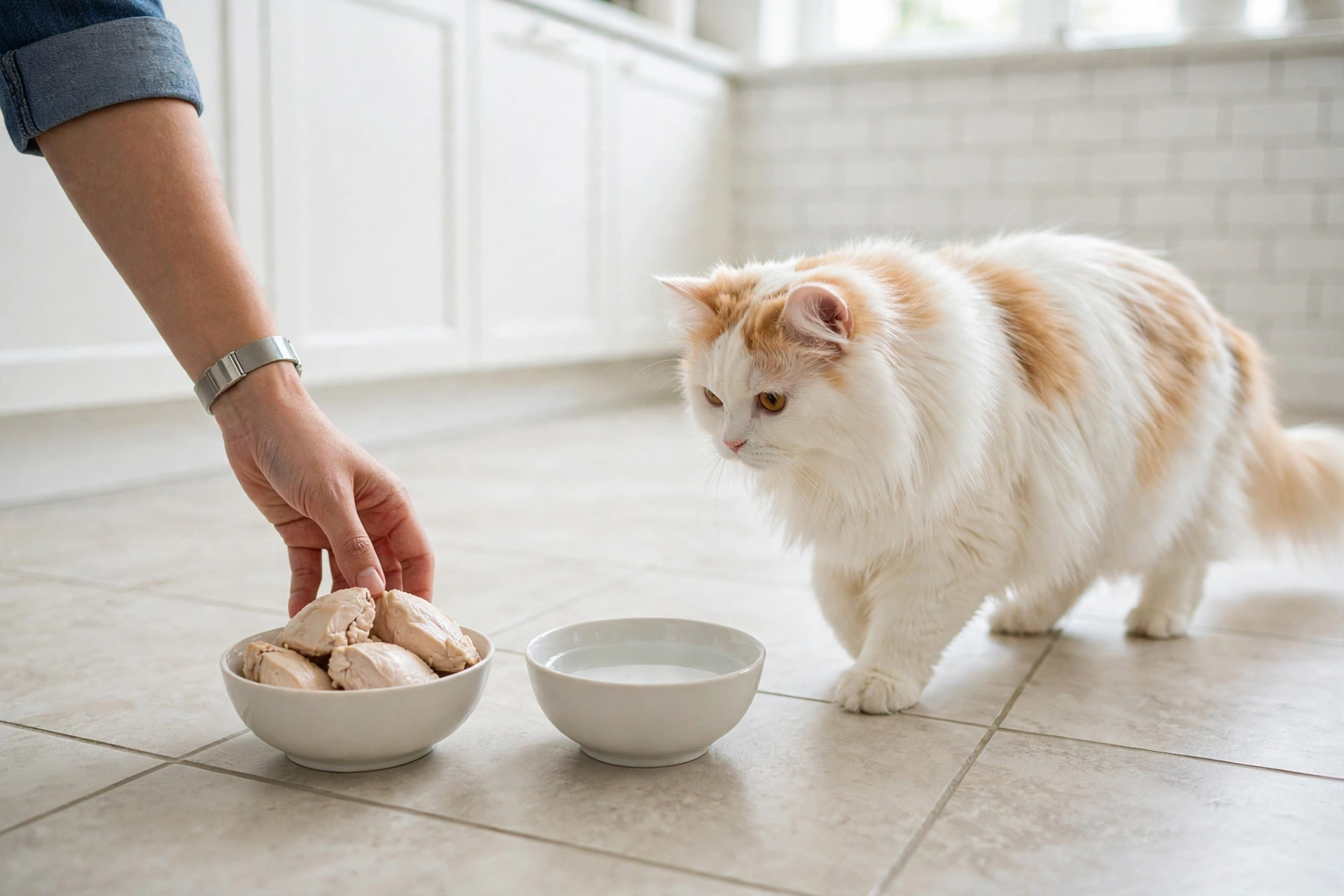
Home care means small bland meals, constant fresh water and close watching, and home care never means fasting a cat. Owners fast dogs for stomach upsets, and the same fast is dangerous for cats: an overweight cat that stops eating can develop hepatic lipidosis, a fatty liver disease, after as little as 48 hours without food. Food stays available in small portions instead. A bland meal of plain boiled chicken breast or white fish, skin and bones removed, weighs 30 grams (1.1 ounces) per meal for an average 4.5 kilogram (10 pound) adult cat, and 4 to 5 small meals across the day suit an upset gut better than 2 large meals. Plain canned pumpkin, never pumpkin pie filling, adds soluble fibre at 1 teaspoon, about 5 grams (0.18 ounces), mixed into a bland meal once or twice a day. Probiotic pastes and powders made for cats can support gut bacteria during a short episode, as general guidance only, and product choice belongs to a veterinarian for any cat on other medicine.
- Remove the suspected food and return to the previous diet or a bland meal
- Serve 30 grams (1.1 ounces) of bland food per meal, 4 to 5 times a day
- Keep fresh water available at all hours and note the drinking amount
- Record stool time, colour and consistency after every litter box visit
- Check gums and skin daily for dehydration signs
Human anti-diarrhea medicines stay out of the plan entirely. PetMD warns that products such as Pepto Bismol and Imodium can cause severe side effects in cats, and no home dose makes a human product safe without veterinarian direction.
How Do You Check a Cat for Dehydration at Home?
Two checks give a fast dehydration reading at home: the skin tent test and the gum check. For the skin tent test, an owner lifts the skin over the shoulder blades gently, releases the skin, and counts the return time: healthy skin snaps back in under 1 second, and skin that stands or sinks back over 2 seconds signals dehydration. Gum checks add a second reading in the same minute. Healthy gums feel moist and slick under a fingertip, and dry or tacky gums signal fluid loss. A fingertip press on the gum that blanches the spot white should see pink return in under 2 seconds, a measure named capillary refill time, and a slower return supports the dehydration reading. A 0.9 kilogram (2 pound) kitten, for example a 10 week old kitten named Peanut, loses fluid at a rate the kitten body cannot match, so any positive check in a kitten ends home care at once.
When Does Cat Diarrhea Need a Veterinarian?
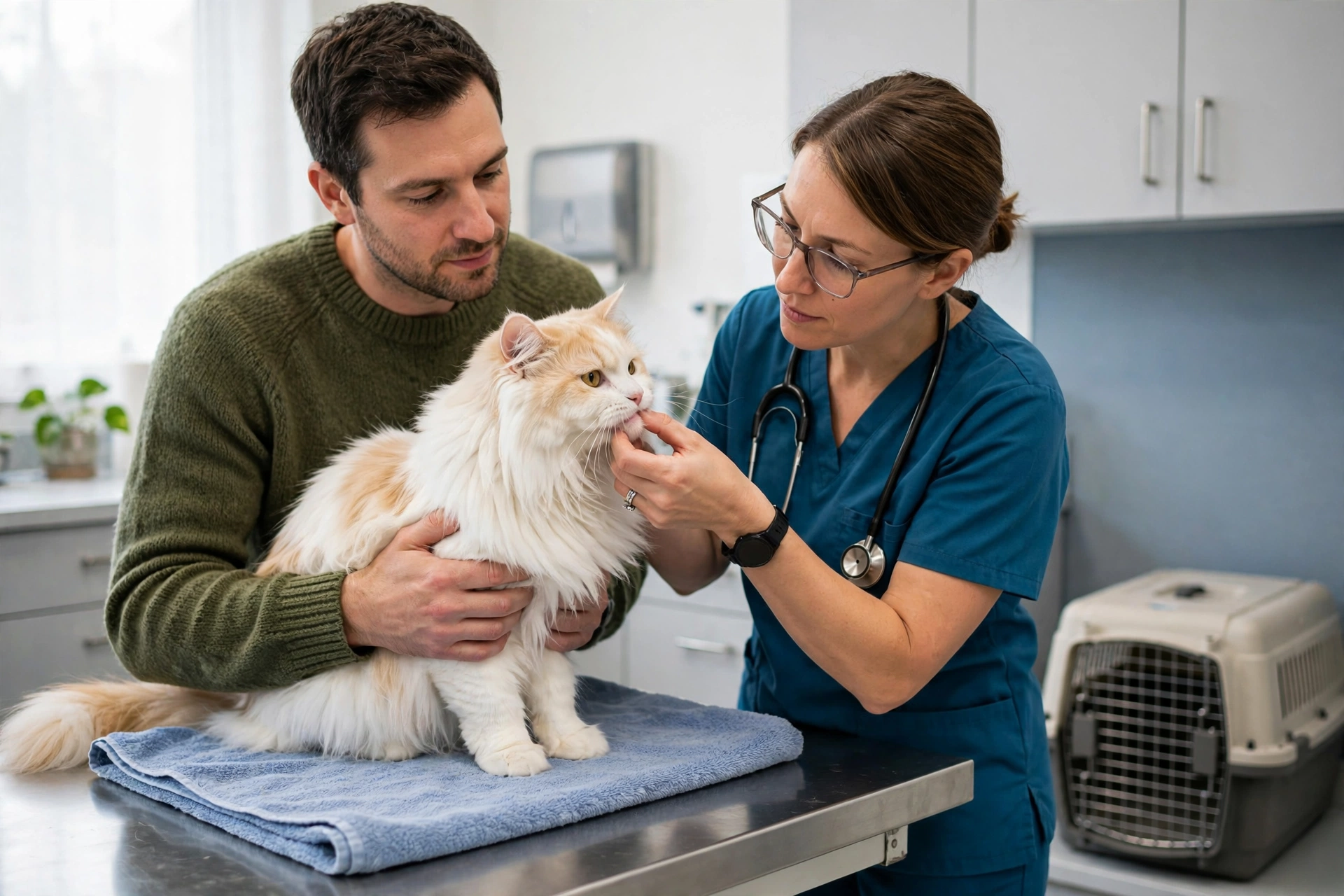
Same day veterinarian care applies after blood in stool, vomiting beside diarrhea, refusal of food over 24 hours, or diarrhea in any kitten. The full threshold list below converts worry into a decision, and one single threshold from the list is enough reason to book the visit.
- Any kitten under 6 months has diarrhea, at any severity
- Blood appears in the stool, red streaks or black tarry form
- Vomiting joins the diarrhea
- The cat eats nothing for over 24 hours
- Diarrhea lasts over 24 to 48 hours in an adult cat
- Gums feel dry or skin stays tented over 2 seconds
- The cat is lethargic, hides or cries when the belly is touched
- A toxin exposure is known or suspected, plants or medicine included
- The cat is over 10 years old or carries kidney, liver or thyroid disease
Kittens dehydrate within hours, overweight cats that stop eating move toward hepatic lipidosis, and black tarry stool can mark internal bleeding that home care cannot stop. Owners should bring a fresh stool sample and the stool record to the visit, because both items shorten the path to a cause.
What Will a Veterinarian Check for Cat Diarrhea?
A veterinarian visit combines a physical examination, a fecal test and blood work matched to the age and history of the cat. The fecal test screens a stool sample for worm eggs, Giardia and other parasites under a microscope and by antigen tests. Blood work checks organ function, blood cell counts and, for cats over 8 years, the total thyroxine (T4) level for hyperthyroidism. Fluid support forms the first treatment layer for a dehydrated cat, given under the skin or by intravenous (IV) line at the clinic. Treatment after fluids follows the found cause: a dewormer for worms, an antibiotic course for a confirmed bacterial infection, a diet trial for suspected food allergy, or thyroid medicine for hyperthyroidism. Owners should treat every cause in this guide as a possibility to raise at the visit rather than a verdict reached at home.
How Can Owners Lower the Chances of Cat Diarrhea?
Gradual food changes, current vaccinations, routine deworming and prompt litter box cleaning remove the most common triggers. Food changes follow the 7 to 10 day mixing schedule, starting at 25 percent new food and rising across the week. Kittens receive core vaccinations that include feline panleukopenia protection, and adult cats stay current on booster dates set by the clinic. Deworming follows the schedule a veterinarian sets for the household, with indoor cats still covered, for example a 5 kilogram (11 pound) indoor cat treated at the interval on the product label. Wet food bowls get washed and refilled rather than topped up across a day. Owners who scoop the box daily spot colour changes on day one, and early spotting is the cheapest diagnostic step in the whole guide.
Conclusion
Most short episodes of loose stool in an adult cat come from food changes, mild infections or stress, and the litter box record decides whether home care or a clinic visit follows. Bland meals at 30 grams (1.1 ounces), constant water and daily gum and skin checks form the safe home plan, and fasting forms no part of the plan for any cat. Blood, vomiting, food refusal over 24 hours and any kitten case move a cat to a veterinarian the same day. A healthy 4.5 kilogram (10 pound) indoor cat with 1 day of soft stool after a food switch is a home care case, and a cat with black tarry stool is a clinic case on the first sighting.
Keep exploring: try our cat food calculator, see best cat food, and read can cats eat eggs.
Frequently Asked Questions
Should you stop feeding a cat with diarrhea?
No, owners should not stop feeding a cat with diarrhea. Cats face hepatic lipidosis after days without food, and overweight cats carry the highest risk. Small bland meals of 30 grams (1.1 ounces) rest the gut safely.
How long can cat diarrhea last before a vet visit?
An adult cat with no other signs gets 24 to 48 hours of home care at most. Kittens, senior cats and cats with blood, vomiting or food refusal need a veterinarian the same day.
What should you feed a cat with diarrhea?
Plain boiled chicken breast or white fish, skin and bones removed, is the standard bland choice. Serve 30 grams (1.1 ounces) per meal, 4 to 5 times a day, for 1 to 2 days.
Is blood in cat stool an emergency?
Yes, blood in cat stool needs a veterinarian visit the same day. Black tarry stool signals digested blood and possible internal bleeding. Bright red streaks point to large bowel bleeding or irritation.
Can milk give a cat diarrhea?
Yes, cow milk commonly gives adult cats diarrhea. Adult cats lose the enzyme for milk sugar after weaning, and lactose passes through undigested. Gas and loose stool follow within hours of drinking milk.
Can stress cause diarrhea in cats?
Yes, stress can cause diarrhea in cats. House moves, new pets, visitors and boarding stays speed the gut in sensitive cats. Stress episodes usually settle in 1 to 2 days without other signs.
Can pumpkin help a cat with diarrhea?
Yes, plain canned pumpkin can help firm soft stool in cats. Soluble fibre absorbs water in the gut. Mix 1 teaspoon, about 5 grams (0.18 ounces), into a bland meal once or twice daily.
Sources:
ASPCA – Common Cat Diseases
ASPCA – General Cat Care