Finding a wet patch on the rug leads most owners to the same search: “why is my cat peeing outside the litter box”. The honest answer is that cats stop using the box for a reason they can feel, and the top three are pain, a box that no longer works for them, and stress at home. Cats don’t pee on laundry out of spite. A sore bladder, stiff joints, a dirty tray or a new pet can each push a cat to find another toilet.
Your first move matters more than any cleaning spray. Book a vet visit before you retrain, buy new litter or move a single box. A cat who hurts inside the box often blames the box itself long after the pain fades.
Why Is My Cat Peeing Outside the Litter Box All of a Sudden?
A sudden change almost always starts with the body, not with attitude. If your cat used the box reliably for months or years, something in his health, his home or his toilet setup shifted first. Kittens, new adoptions and seniors are the exception, since they often miss for access or learning reasons.
Posture tells you which problem you are looking at. A cat who squats low and leaves a large puddle on a floor, bed or bath mat is emptying a full bladder in the wrong place. Spraying looks nothing like that, because a spraying cat stands, lifts a quivering tail and releases a small amount of urine onto a wall or door.
Take Biscuit, a six year old indoor cat who began peeing on a hallway runner after three accident free years. His owner tracked the spots for five days and noticed small, frequent puddles near the box. A urine test confirmed bladder inflammation, which settled with treatment inside two weeks.
Medical Reasons Your Cat May Pee Outside the Litter Box
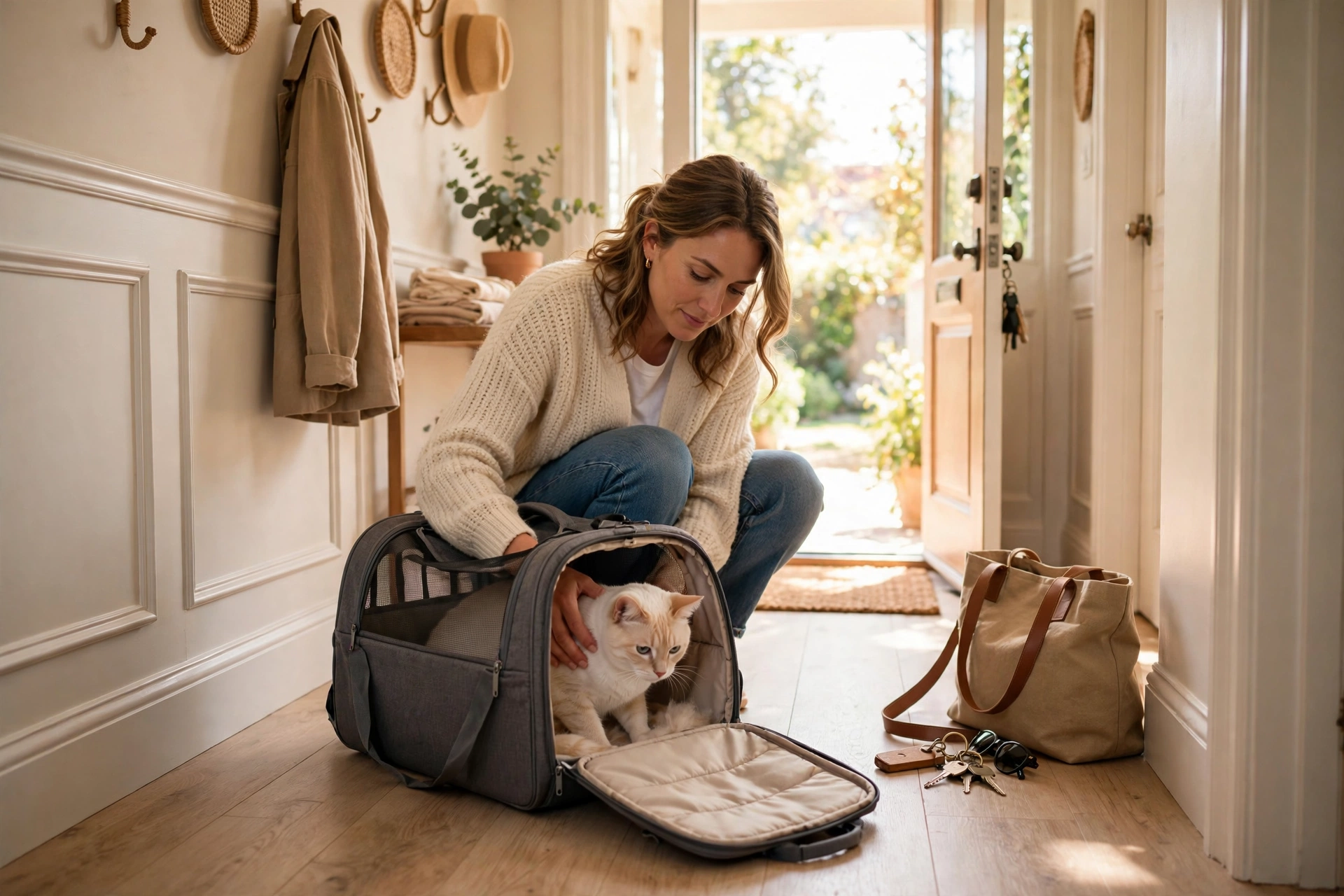
See a vet first, before you change anything at home. If urine and blood tests come back clear, you can work on behavior with confidence. A standard workup includes an exam, a urinalysis and blood work.
Urinary tract infection, cystitis and crystals
Bladder pain is the single most common medical cause of accidents in adult cats. If the bladder wall is inflamed, your cat feels an urge to pee every few minutes and often cannot reach the box in time. Bacterial urinary tract infections occur more often in senior cats and in cats with kidney disease or diabetes. Younger cats more often develop feline idiopathic cystitis, a stress linked bladder inflammation with identical signs and no bacteria.
Urinary crystals form in urine that is too concentrated or at the wrong pH. Crystals scrape the bladder lining and can clump into bladder stones over time. Watch for frequent trips with small results, straining, crying in the box, blood in the urine and licking under the tail. A cat passing only drops across five or six visits in one hour needs a same day appointment.
Conditions that make your cat produce more urine
Kidney disease, diabetes and an overactive thyroid each fill the bladder faster than normal. If your cat drinks far more than usual and leaves large puddles just outside the box, volume may be the real issue rather than avoidance. Senior cats develop chronic kidney disease at high rates, and their kidneys lose the ability to concentrate urine.
Your vet can spot all three conditions on routine blood work. One cat with untreated diabetes can soak a standard box twice as fast as a healthy cat, so early treatment usually cuts the accident count within the first month.
Pain, arthritis and mobility problems
Arthritis affects an estimated 90 percent of cats over 12 years old, and sore joints turn a high sided box into an obstacle. If your senior cat pees beside the box, on a low rug or near the stairs, entry pain deserves a close look. Covered boxes add a second barrier, since a stiff cat must duck, turn and climb in one movement.
| Cause | Signs you may see | First fix |
|---|---|---|
| Urinary tract infection | Frequent small puddles, straining, blood in urine | Urinalysis and culture, antibiotics only if bacteria are confirmed |
| Feline idiopathic cystitis | Frequent small puddles in stressful weeks, no bacteria on tests | Vet guided pain relief, more water, stress reduction |
| Urinary crystals or bladder stones | Straining, crying in the box, drops of urine, blood | Urinalysis and imaging, prescription urinary diet |
| Kidney disease or diabetes | Very large puddles, drinking much more, weight loss | Blood work, disease treatment, extra boxes, more scooping |
| Arthritis | Accidents beside the box, trouble with stairs or high sides | Low entry box on each floor, pain management |
| Litter box avoidance | Normal urine volume, healthy tests, one preferred accident spot | Box audit, cleaning reset, step by step plan below |
When Peeing Outside the Box Is an Emergency
Straining with little or no urine is an emergency, day or night. If your male cat keeps crouching, cries and produces nothing, a urethral blockage may be stopping urine flow. Blocked cats can die within 24 to 48 hours, and males face the highest risk because their urethra is narrow.
Call an emergency clinic at once if you spot any of these red flags:
- Your cat strains for several minutes and passes drops or nothing.
- Vomiting or a painful, tight belly appears alongside the straining.
- Hiding, weakness or appetite loss develops on the same day.
- Blood clots show up in the urine.
- No urine has appeared in the box across a full 12 hours.
Picture a three year old neutered male who visited his box nine times in one evening and left it dry each time. His owner called the emergency line at 10 p.m., and the team unblocked him that night.
Litter Box Setup Mistakes That Push Cats Elsewhere
One box per cat plus one extra is the rule that fixes more cases than any product on the shelf. If you keep two cats, you need three boxes, placed in separate spots rather than in a row. Boxes side by side count as one toilet zone to a cat, and one confident cat can guard the whole row.
Cleanliness and litter depth
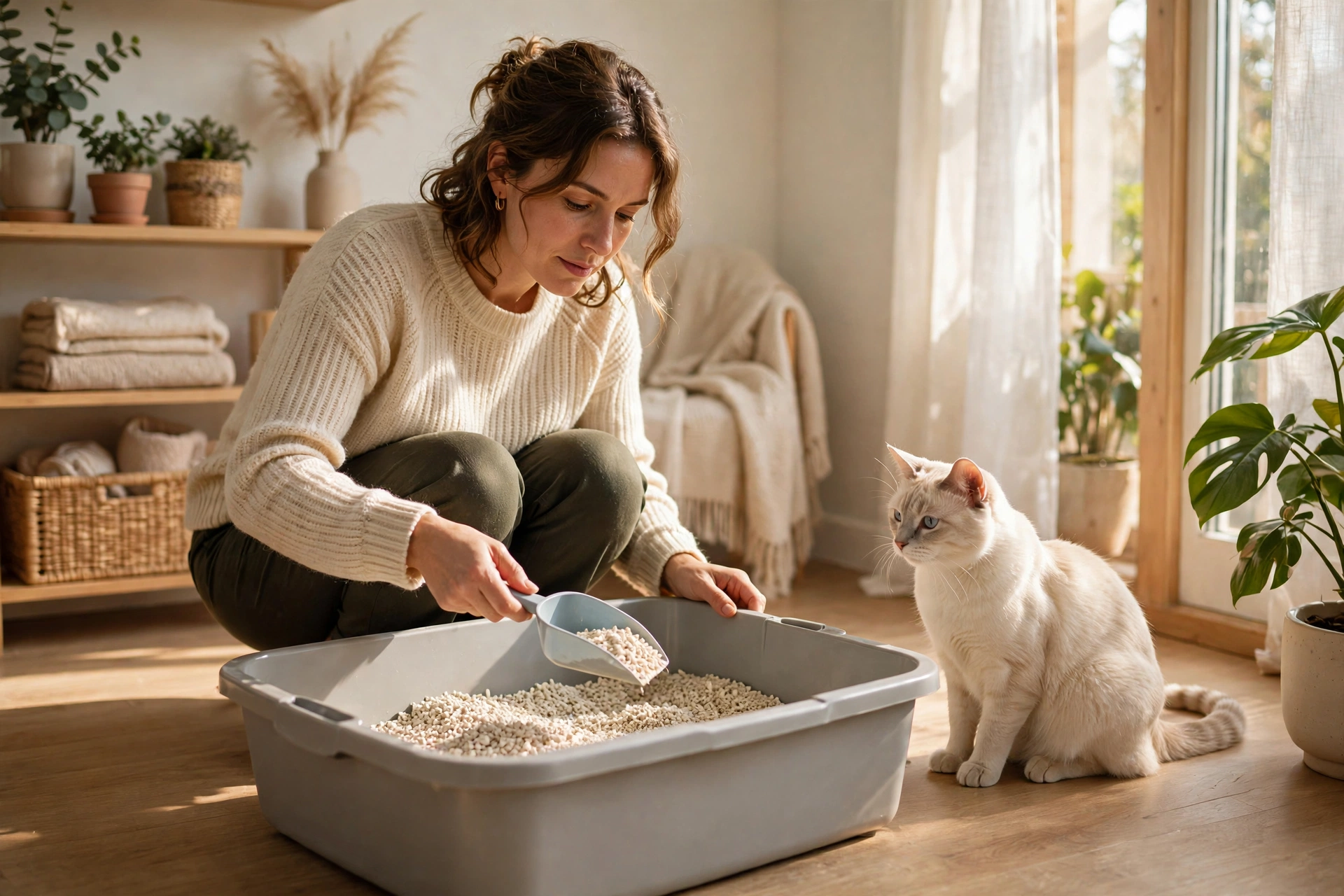
Most cats reject a box that smells used, even when it looks fine to you. If you scoop once a day, step up to twice a day during a retraining period. Wash each box with hot water and mild unscented soap every one to two weeks, and keep the litter depth at two to three inches so your cat can dig without hitting bare plastic.
Box size, style and location
A box should measure about one and a half times your cat’s body length, nose to tail base. If he cannot turn around inside it, he will perch on the edge and miss the litter. Open boxes beat covered boxes for most cats, since covers trap odor and block the view of approaching pets. Place boxes in quiet, low traffic spots away from food bowls, washing machines and furnace noise.
Seniors and kittens need one entry side cut low, around three inches high. Consider one hooded box beside a running dryer, shared by two cats in a three cat home. Spreading three open boxes across two floors resolves the access, odor and guarding problems in one move.
Litter choice matters too. Most cats prefer a fine, unscented, clumping litter. If you must switch brands, mix the new litter into the old across seven to ten days.
Stress, Spraying and Conflict Between Cats
Stress changes bladder behavior, and a stressed cat often pees on soft items that carry your scent. If accidents keep landing on beds, sofas or worn laundry, look for a trigger that started within the same two or three weeks. Common triggers include a house move, a new baby, building work and outdoor cats at windows after dark.
Spraying serves communication rather than toilet needs. Intact males spray the most, and neutering reduces spraying in the large majority of them. Neutered cats still spray when they feel insecure, so a vertical wet patch at nose height tells you to work on confidence and territory, not box hygiene.
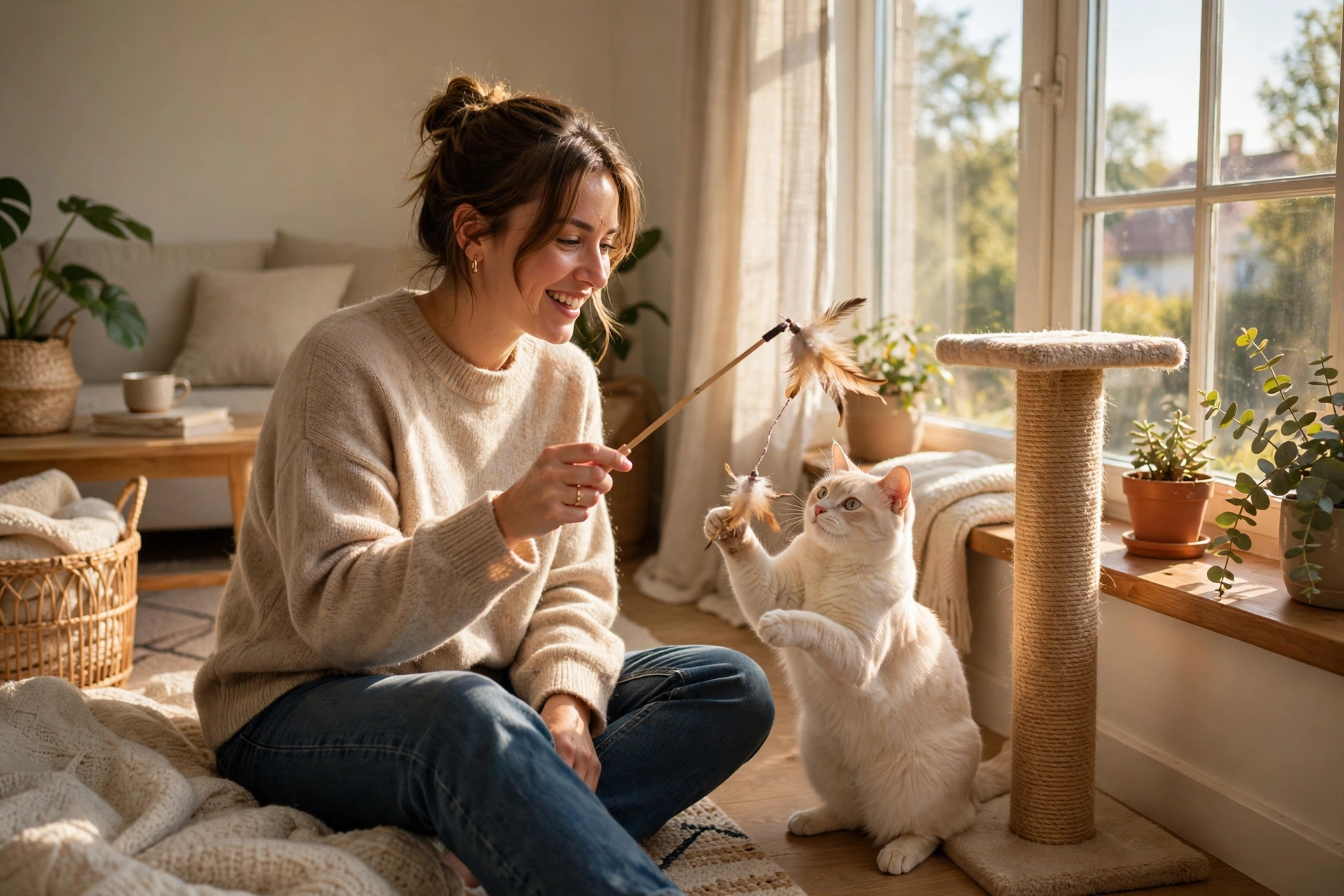
Conflict between cats hides well. One cat may sit in a doorway and block box access with a long stare, while the nervous cat holds on and then pees in a quiet bedroom. Separate the resources, with feeding stations, resting spots and boxes in different rooms, and add play sessions of 10 to 15 minutes twice a day. A pheromone diffuser near the main box area can ease tension across a 30 day trial.
Milo, a four year old, started spraying the front door two weeks after a neighbor’s cat began visiting the porch each evening. His owner closed the blinds at dusk, played with him before dinner and cleaned the door with an enzymatic cleaner. Spraying dropped from nightly to once in a month.
A Step by Step Plan to Stop the Accidents
Work in this order: vet check, written log, deep clean, box upgrade, then two to four weeks of steady follow through. Owners who ask why is my cat peeing outside the litter box usually get their answer somewhere inside these six steps.
- Book the vet visit within 48 hours of the first accident, sooner if you see straining or blood.
- Start a log with the date, place, surface and rough amount of each accident.
- Clean every known spot with an enzymatic cleaner, following the label dwell time.
- Audit your boxes against the numbers above: count, size, entry height, depth and location.
- Place a temporary box where your cat keeps going, then shift it a few inches a day toward your preferred spot once he uses it for a week.
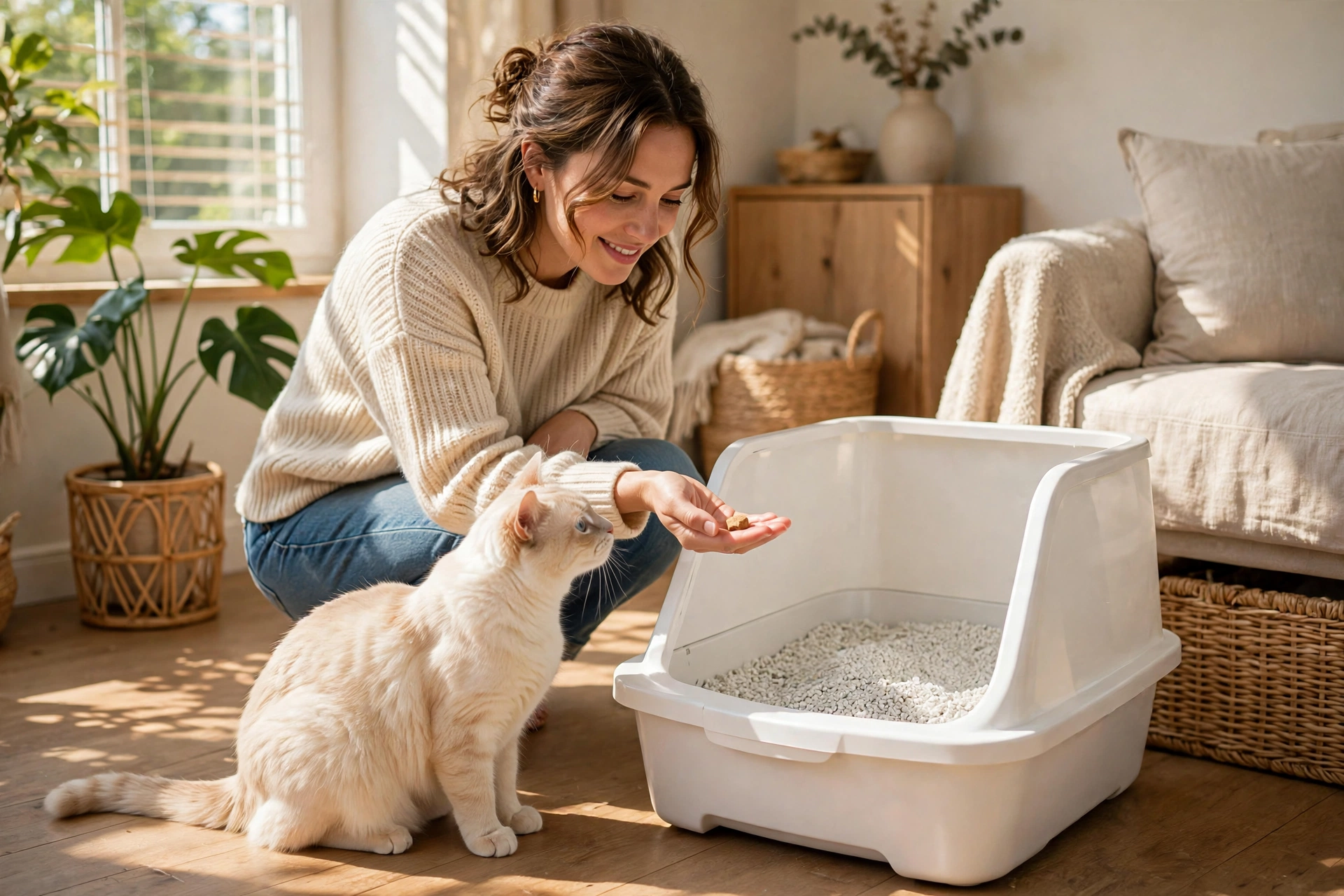
- Reward calm box use with a small treat or quiet praise within seconds, and keep the routine identical daily.
Progress rarely runs in a straight line. Many cats cut accidents by half inside the first week once pain is treated and the boxes improve, then need two or three more weeks to rebuild the habit. Take a two cat home where accidents fell from six a week to one in week three, after the owners added a third box and treated a bladder infection. If your log shows no improvement after two weeks, ask your vet about a behavior referral.
How to Clean Cat Urine So Your Cat Does Not Return
An enzymatic cleaner is the only type that breaks down the uric acid that draws cats back to the same spot. If a bottle lists ammonia as an ingredient, leave it on the shelf, since the smell can read as a toilet signpost to your cat. Bleach based sprays mask odor for human noses only.
Blot fresh urine with paper towels until they come away almost dry, then soak the area with enzymatic cleaner beyond the visible edge of the stain. Padding holds urine below carpet, so treat a wider circle than the surface mark suggests. Give the product its full dwell time, often 10 to 15 minutes. A handheld black light in a dark room reveals older spots as a yellow green glow.
Laundry needs the same treatment before a normal wash. Soak peed on bedding in enzymatic solution for 30 minutes, then wash on the hottest cycle the fabric allows. One owner washed a duvet cover three times with scented detergent and her cat returned each week, yet one enzymatic soak ended the cycle.
What Not to Do When Your Cat Pees Outside the Box
Never punish your cat, rub his nose in urine or shout when you find a puddle. If you punish him hours later, he cannot connect the scolding to the accident, and he will connect it to you instead. Fear raises stress, and stress inflames bladders.
Skip the other common traps as well. Moving every box in one weekend, swapping litter brands overnight and spraying your cat with water each create new problems while the original one stays unsolved. Human pain medicines are dangerous for cats, and a single dose of some common tablets can cause organ damage. Confinement only helps as a short, planned retraining step with a clean box, water, food, a bed and toys in place.
Calm handling works better in practice. When you find a puddle, clean it without comment, check the log for a pattern and adjust one variable at a time. One owner swapped shouting for a treat after each correct box visit, and her cat returned to the box within ten days.
Frequently Asked Questions
Most owners ask the same handful of questions, and the short answers below point to the right first step.
Why is my cat peeing outside the litter box but pooping in it?
This split pattern often points to a urinary problem, since pooping does not hurt while peeing does. Book a vet visit for a urinalysis, and check box cleanliness while you wait.
Why did my cat suddenly start peeing on my bed?
Beds carry your scent and offer a soft, absorbent surface, so stressed or sore cats pick them often. Rule out bladder pain first, wash bedding with an enzymatic soak, and close the bedroom door.
Can a urinary tract infection cause peeing outside the box?
Yes. Infection inflames the bladder, creates urgency and makes peeing painful, so cats rush and miss. A urinalysis and culture confirm it, and antibiotics help only when bacteria are present.
How many litter boxes do I need for two cats?
Three. The rule is one box per cat plus one extra, spread across separate rooms rather than in a row, with one box per floor.
Will neutering stop my cat from spraying?
Neutering reduces spraying in most intact males, often within a few weeks of surgery. It works best before spraying becomes a habit, and stress control still matters afterward.
How long does it take to retrain a cat to use the box?
Most cats improve within two to four weeks once pain is treated and the box setup is fixed. Long standing habits take longer.
Should I use a covered litter box?
Most cats prefer open boxes, since covers trap odor and block sight lines in multi cat homes. Offer one of each in different rooms and keep the style your cat uses.
When should I call the vet the same day?
Call at once if your cat strains and passes little or no urine, cries in the box, vomits or hides. A blocked bladder in a male cat becomes life threatening within 24 to 48 hours.
Conclusion
Most cats return to the litter box once pain, box access and stress are fixed together. If you treat only one of the three, the accidents usually continue at a lower rate and the habit hardens. Start with the vet, keep a two week log and change one setup detail at a time so you can see what worked. A cat who strains and passes no urine needs emergency veterinary care on the same day.
Sources:
ASPCA – General Cat Care
VCA Animal Hospitals – Know Your Pet Library