
An occasional sneeze is normal, and repeated sneezing over several days points to irritation or infection inside the nose. Owners searching cat sneezing usually hear 3 or 4 sneezes in a row and need a line between harmless and sick. Dust, a litter change and strong scents explain most single episodes in a healthy adult cat. Sneezing that returns every day, sneezing with discharge, or sneezing with appetite loss belongs to a different class. Upper respiratory infections cause most repeated cases in cats, and two viruses drive the group. A 4.5 kilogram (10 pound) indoor cat, for example, sneezes twice after a dusty litter change and needs no treatment at all.
Pattern beats panic in every case. One sneeze after a new scented candle is an event. Ten sneezes a day for 3 days is a symptom.
Is Occasional Cat Sneezing Normal?
Yes, an occasional sneeze is a normal nose clearing reflex in cats. A sneeze forces air out of the nose and mouth and expels an irritant from the nasal lining. Dust from a shaken rug, pollen through an open window and powder from a fresh bag of litter all trigger single sneezes in healthy cats. Reverse sneezing looks alarming yet stays harmless in most cases: a cat stretches the neck, pulls air in with a snorting sound, and returns to normal within 1 minute. Coughing, gagging, wheezing and retching are separate sounds with separate cause lists, so owners should record a 20 second video of any episode a veterinarian needs to judge.

What Is an Upper Respiratory Infection in Cats?
An upper respiratory infection is an infection of the nasal passages, sinuses, throat and voice box, and infection is the most common cause of repeated sneezing in cats. PetMD and the Cornell Feline Health Center place two viruses at about 90 percent of feline upper respiratory infections combined. Shelters, boarding facilities and multi-cat homes carry the highest spread rates, because the viruses travel in saliva, eye fluid and nasal fluid between cats in close contact. Signs build over 1 to 3 days: sneezing fits, clear discharge turning cloudy, watery eyes, congestion and reduced appetite. Most uncomplicated cases in healthy adult cats clear in 7 to 10 days, and stubborn cases can run 21 days. A newly adopted shelter kitten, for example, often starts sneezing on day 2 in a new home because shelter exposure and rehoming stress arrive together.
Feline Herpesvirus and Feline Calicivirus
Feline herpesvirus (FHV-1) and feline calicivirus (FCV) are the two dominant viral causes of sneezing in cats. FHV-1, also called feline viral rhinotracheitis, produces sneezing attacks, eye inflammation and clear discharge that later turns cloudy. Infection with FHV-1 lasts for life. The virus hides in nerve tissue during quiet periods and reactivates under stress, so boarding, moving house or a new pet can restart sneezing in a cat infected years earlier. FCV adds mouth ulcers and gum soreness to the respiratory signs, and some strains cause limping in young cats. Kittens between 8 and 16 weeks carry the highest risk in both infections, because maternal antibody protection fades during those weeks. A 1 kilogram (2.2 pound) kitten with FHV-1, for example, can develop a corneal ulcer (an open sore on the surface of the eye) within days.
Bacterial Causes of Cat Sneezing
Chlamydia felis, Bordetella bronchiseptica and Mycoplasma species are the bacterial causes a veterinarian names most often in a sneezing cat. Chlamydia felis starts in the eyes in most cases, with red swollen conjunctiva (the membrane lining the eyelids) and watery eye discharge, then reaches the nose and adds sneezing. Bordetella bronchiseptica spreads fast in shelters and multi-cat homes and can move into the chest, a rare path in single indoor cats. Yellow or green discharge signals bacteria at work, because white blood cells and bacterial debris colour the mucus. Antibiotics treat bacterial causes, and a veterinarian picks the drug after an exam, since antibiotics do nothing against FHV-1 or FCV themselves. Owners never dose a cat with leftover antibiotics from another pet, because drug choice and dose depend on body weight in kilograms and pounds.
Allergies and Household Irritants
Allergies and household irritants cause sneezing with clear discharge and no fever in most cats. Pollen, dust mites and mould spores lead the allergy list. Cigarette smoke, scented candles, air freshener sprays, cleaning sprays and dusty clay litter lead the irritant list. Timing gives the clue an owner can test: sneezing that starts within minutes of a litter change or a cleaning session, then fades within hours, points to an irritant rather than an infection. A cat that sneezes only in one room, for example a bathroom cleaned with a strong spray, hands the owner a direct fix. Remove the product, switch to an unscented low dust litter, and track the sneeze count for 3 days before booking a clinic visit on allergy grounds.
Nasal Foreign Bodies in Cats
A nasal foreign body causes sudden violent sneezing fits with discharge from one nostril only. Grass seeds, grass blades and plant awns enter the nose of outdoor cats during sniffing in long grass. Pawing at the nose and rubbing the face on the floor travel with the fits. One-sided discharge is the marker: infection usually involves both nostrils, while a lodged object blocks and irritates a single side. Home probing pushes a lodged object deeper. A veterinarian removes the object under anesthesia (controlled unconsciousness) with forceps or a nasal flush, and a cat goes home the same day in most cases, if the owner books the visit within 24 hours of the first fit.
Dental Disease and Cat Sneezing
Dental disease in an upper tooth can cause sneezing, because the roots of the upper teeth sit directly beside the nasal passages. A tooth root abscess (a pocket of infection at the root tip) can break through the thin bone between the tooth socket and the nose. Food and bacteria then pass into the nasal passage, and sneezing follows meals in many cases. Bad breath, drooling, dropping food and chewing on one side point to the mouth as the source. Senior cats carry the highest dental risk, and a 12 year old cat with new sneezing needs a mouth exam before a virus verdict.
Chronic Rhinitis in Cats
Chronic rhinitis is long term inflammation of the nasal lining that keeps sneezing going for months after the first infection ends. A severe FHV-1 or FCV infection can scar the turbinates (fine bony scrolls inside the nose that filter air) and damage the lining beyond full repair. Bacteria then colonise the damaged passages, and the cat cycles through sneezing, cloudy discharge and congestion in repeated flare-ups. Management aims at fewer and milder episodes rather than a cure: daily discharge cleaning, humid air, stress control and antibiotics during bacterial flare-ups. A cat with chronic rhinitis, for example a rescued adult with 3 years of on and off sneezing, still eats well and lives a normal indoor life between episodes.
Signs That Need a Veterinarian
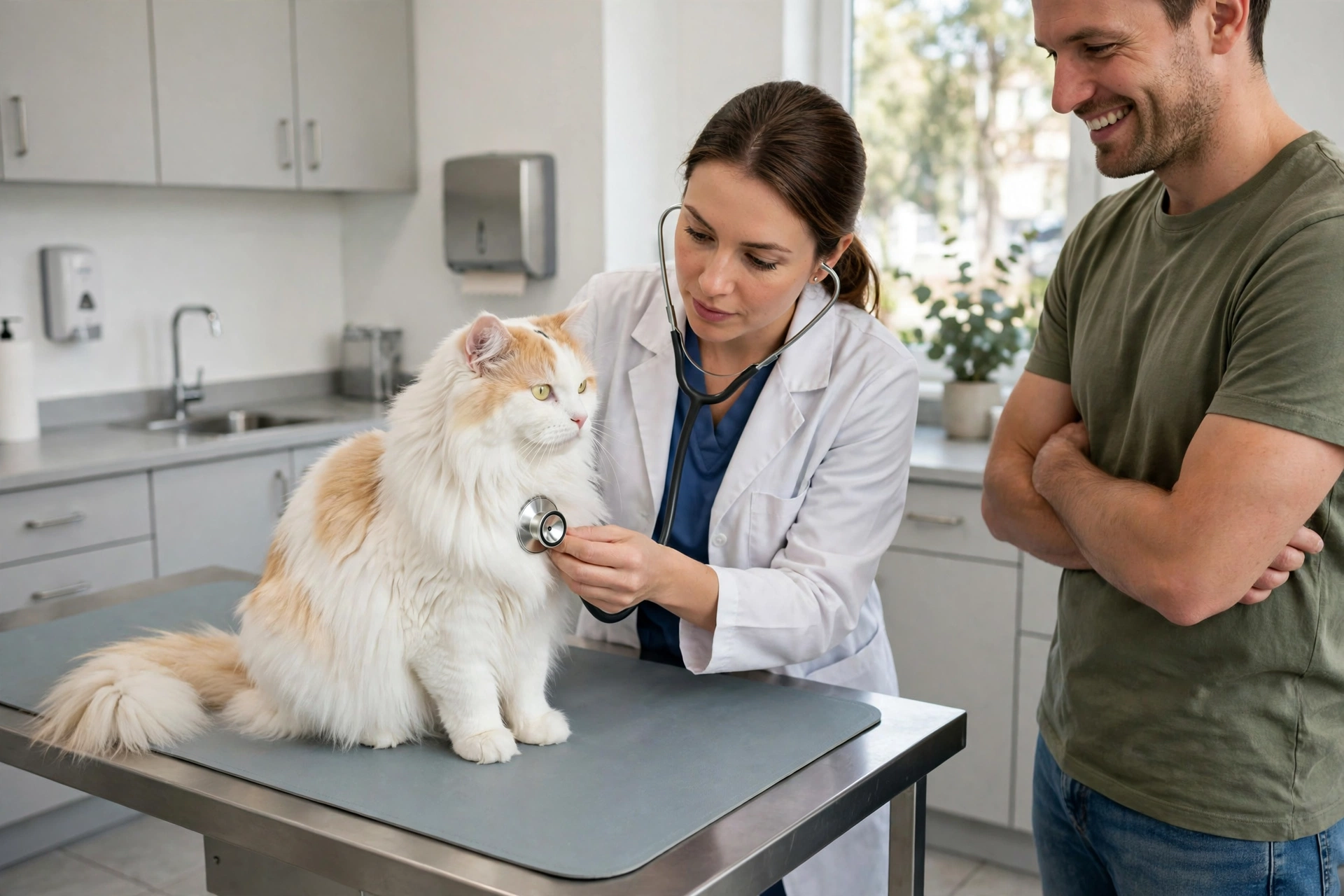
Sneezing lasting over a few days, coloured discharge, eye damage, appetite loss over 24 hours or any breathing difficulty needs a veterinarian. Time limits turn worry into a decision. A healthy adult cat that sneezes for 3 days without improvement has passed the home watching window. Kittens get a shorter window: any kitten with sneezing plus discharge or a missed meal needs a same day call, because kittens dehydrate and lose body heat fast at weights under 2 kilograms (4.4 pounds). The table below matches each sign to a response speed.
| Sign | What the Sign Can Point To | Response |
|---|---|---|
| Sneezing beyond 3 days | Established upper respiratory infection | Book a veterinarian visit |
| Yellow or green discharge | Bacterial infection on top of a virus | Book a veterinarian visit |
| Blood in discharge | Foreign body, tumour or severe inflammation | Same day veterinarian visit |
| Swollen or squinting eyes, eye ulcer | FHV-1 eye damage | Same day veterinarian visit |
| No food for over 24 hours | Blocked nose, mouth ulcers, feeling ill | Same day veterinarian visit |
| Kitten sneezing with discharge | Viral infection in an immature immune system | Same day veterinarian call |
| Open mouth breathing or noisy breathing | Blocked nose or chest involvement | Emergency care at once |
Owners should photograph discharge and record a sneezing video before the visit. A discharge photo and a 20 second video hand the veterinarian day 1 evidence even when a cat refuses to sneeze inside the clinic.
How Do Veterinarians Find the Cause?
Veterinarians find the cause through a physical exam first, then targeted tests such as a swab panel, imaging, dental X-rays or rhinoscopy. The exam covers the nose, eyes, mouth, teeth, chest sounds and body temperature. A respiratory panel swab from the nose, eyes or throat can identify FHV-1, FCV, Chlamydia felis, Bordetella bronchiseptica and Mycoplasma in one sample. Skull X-rays and dental X-rays expose tooth root abscesses and sinus fluid. Rhinoscopy places a small camera inside the nasal passages under anesthesia and finds foreign bodies, fungal plaques and tumours that an exam cannot reach. A nasal biopsy (a small tissue sample) settles inflammation versus tumour questions in chronic cases.

Home Care for a Sneezing Cat
Home care rests on humid air, gentle cleaning, appetite support and isolation, and home care supports recovery while a mild infection runs a 7 to 10 day course. Each step below names a task an owner can finish today.
- Run a humidifier near the resting area, or sit the cat in a closed bathroom with a hot shower running for 10 to 15 minutes twice a day.
- Wipe nose and eye discharge away 2 to 3 times a day with a soft cloth dampened in warm water.
- Warm wet food to about 38 degrees Celsius (100 degrees Fahrenheit) before serving, because warmth releases smell and a blocked nose blocks appetite.
- Offer small meals 3 to 4 times a day instead of 2 large meals during the sick week.
- Keep the sick cat in one room away from other cats, with separate bowls and a separate litter box, until 7 days after the last sneeze.
- Wash hands between handling a sick cat and a healthy cat, and wash bowls daily in hot soapy water.
Appetite is the number an owner tracks twice a day. A cat that refuses food for 24 hours leaves home care and goes to a clinic, and a kitten that refuses 2 meals in a row goes the same day.
Can You Give a Cat Human Cold Medicine?
No, owners must never give human cold medicine to a cat. Human cold and flu products contain acetaminophen (paracetamol), pseudoephedrine, phenylephrine and antihistamines at doses built for human bodies. Acetaminophen destroys red blood cells in cats at small doses, because a cat liver cannot break the drug down, and a single standard tablet can kill a 4.5 kilogram (10 pound) cat. Decongestants overstimulate the heart and nervous system of a cat. No human cold product treats FHV-1 or FCV, so the risk buys zero benefit. A cat that swallows any human cold medicine needs an emergency call to a veterinarian or the ASPCA (American Society for the Prevention of Cruelty to Animals) Animal Poison Control Center at (888) 426-4435 at once, before signs appear.
How Can Owners Lower the Risk of Cat Sneezing?
Vaccination, quarantine of new cats and low stress housing lower the risk, and no step removes the risk completely. The FVRCP vaccine (feline viral rhinotracheitis, calicivirus and panleukopenia vaccine) is a core vaccine for every cat. Kittens start FVRCP at 6 to 8 weeks, with boosters every 3 to 4 weeks until 16 weeks of age. Adult cats receive boosters at intervals a veterinarian sets, commonly every 1 to 3 years. Vaccination reduces the severity of FHV-1 and FCV disease rather than blocking infection fully, so a vaccinated cat can still sneeze during a flare-up, with milder signs. New cats stay in a separate room for 10 to 14 days before meeting resident cats, and a sneezing new cat stays separate until 7 days after the last sneeze.
Conclusion
Repeated sneezing in a cat is a symptom with a cause a veterinarian can name, and single sneezes after dust or a litter change need no treatment. FHV-1 and FCV drive most repeated cases in 2026 guidance, home care covers mild adult cases for up to 3 days, and the 24 hour appetite rule plus same day signs in the table set the clinic line. A sneezing cat that eats, drinks and breathes through the nose stays home under watch.
Keep exploring: try our cat Benadryl dosage calculator, and read about cat coughing.
Frequently Asked Questions
Why is my cat sneezing but acting normal?
Dust, a litter change or a new scent explains most sneezing in a cat that eats and plays normally. Watch the pattern for 2 to 3 days. Book a veterinarian visit when discharge turns yellow or green.
How long does an upper respiratory infection last in cats?
Most uncomplicated infections clear in 7 to 10 days. Stubborn cases can run 21 days. FHV-1 stays in the body for life after recovery, and stress can restart sneezing weeks or years later without a new exposure.
Can a sneezing cat infect other cats?
Yes, FHV-1 and FCV spread between cats through saliva, eye fluid and nasal fluid. Keep a sneezing cat in a separate room with separate bowls and a litter box until 7 days after the last sneeze.
Can cats catch a cold from humans?
No, FHV-1 and FCV do not pass between humans and cats. Human cold viruses target human airways. A person in the house with a cold poses no respiratory infection risk to a healthy indoor cat.
Should a sneezing kitten see a veterinarian?
Yes, a sneezing kitten needs a veterinarian call the same day. Kittens dehydrate fast and FHV-1 can scar kitten eyes within days. A kitten that misses 2 meals in a row needs a clinic visit, not home watching.
Can I give my cat Benadryl or cold medicine for sneezing?
No, never give human cold medicine to a cat without a veterinarian order. Acetaminophen in cold products can kill a cat at a fraction of a human dose. A veterinarian can prescribe a cat safe drug when needed.
Does the FVRCP vaccine stop cat sneezing?
No, the FVRCP vaccine reduces disease severity rather than blocking every infection. Vaccinated cats can still catch FHV-1 or FCV. Signs in a vaccinated cat usually stay milder and clear faster than signs in an unvaccinated cat.
Sources:
ASPCA – Common Cat Diseases
ASPCA – General Cat Care