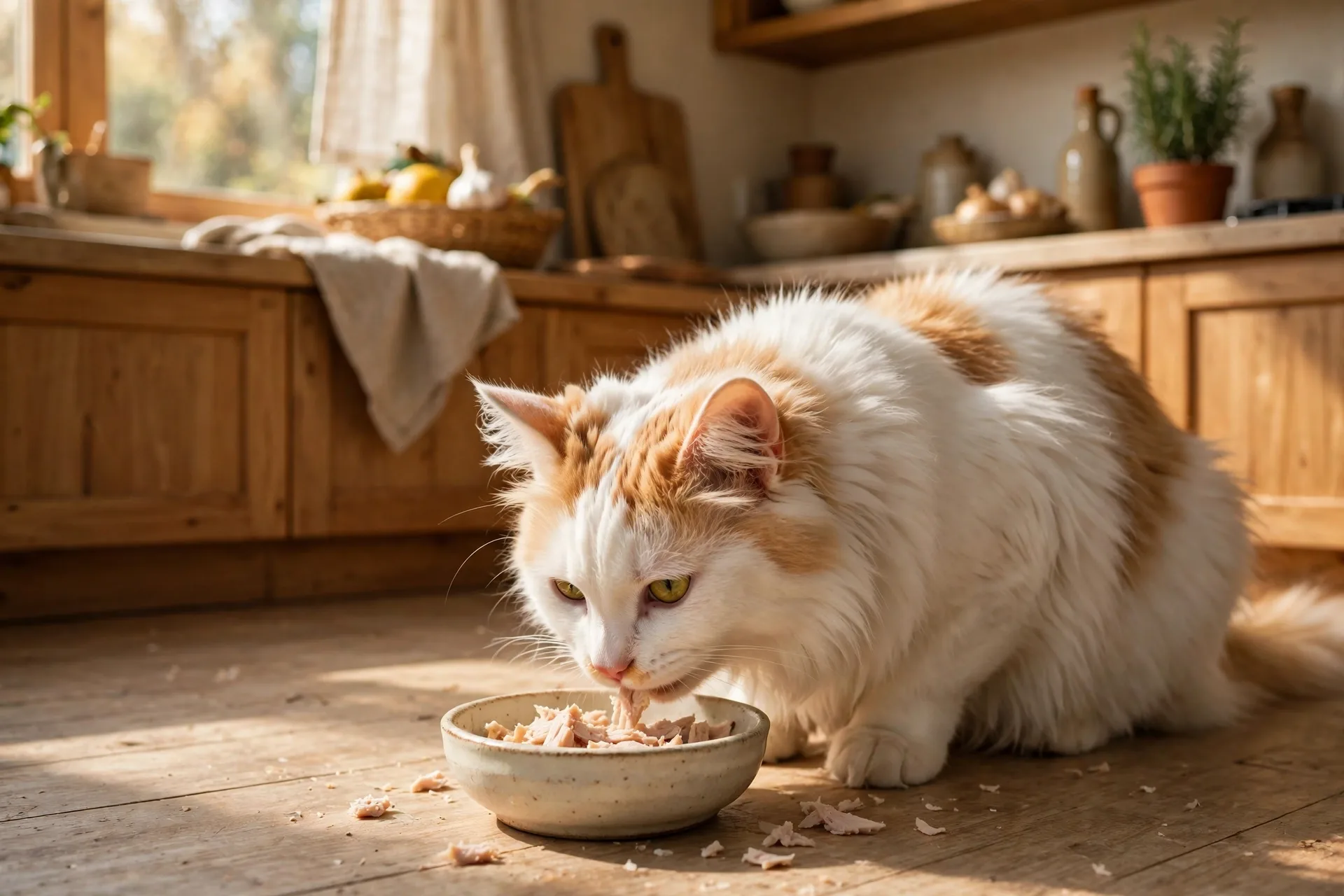

Cat training works because cats repeat any behavior that earns them something they want, and they drop behaviors that earn nothing. Your cat already trains this way every day. A meow at 6 a.m. that produces a full food bowl is a learned behavior, and it proves your cat can connect an action with a result. Formal training simply puts that learning to work on skills you choose, such as coming when called, sitting on cue, or walking into a carrier without a fight. This guide covers the tools, the rules, and the exact steps for the first cues, plus a 7-day plan that takes a complete beginner from day one to a cat that responds on cue.
Can Cats Really Be Trained?
Yes, cats can learn named cues, daily routines, and practical skills through reward-based training. Cats learn by association, so a behavior followed within seconds by food becomes a behavior they offer again on purpose. They are not stubborn students. Most cats simply see no reason to work for praise alone, which is why food rewards matter far more with cats than with dogs. Sessions also stay short because a cat’s focus fades faster than a dog’s. One more difference matters in practice: cats connect a cue to one place at first. A cat that sits reliably in your kitchen may ignore the same cue in the hallway until you practice 5 or 6 repetitions there too.
What You Need to Start Cat Training
You need a clicker or a marker word, pea-sized high-value treats, a target stick, and one quiet room. Treat choice decides whether training works at all, so test 3 or 4 options and keep the one your cat chooses fastest. Freeze-dried chicken, freeze-dried salmon, lickable treat paste, and tiny pieces of cooked chicken all rank high with most cats. Keep every piece pea-sized, since a single session can use 15 to 20 rewards. Treats should stay under 10 percent of daily calories, which means about 20 to 25 treat calories a day for an average 10-pound indoor cat eating 200 to 250 calories. Buy a soft-sounding clicker made for cats if standard clickers make your cat flinch, and use a chopstick or a pencil as your first target stick.
The Rules That Make Cat Training Work
Five rules drive results: reward wanted behavior only, keep sessions at 1 to 5 minutes, deliver rewards within 1 second, end after a success, and teach one behavior at a time. Punishment has no place in cat training because spraying water, shouting, or tapping a cat teaches fear of you rather than a new skill. Short sessions protect motivation, and 2 or 3 sessions of 3 minutes teach more than one session of 15 minutes ever will. Timing carries the lesson, so a treat that arrives 5 seconds late rewards whatever your cat did last, which might be looking at the window. End while your cat still wants more. For example, stop right after the fifth clean sit instead of pushing for a tenth repetition that turns sloppy.

How Clicker Training Works, Step by Step
Clicker training first teaches your cat that a click means a treat, then uses that click to mark the exact moment your cat does something right. The sound is identical every time, faster than your voice, and free of mood, which is why the marker speeds up early learning. A unique sound that never occurs outside training also stays meaningful. Follow these steps to charge the clicker in your first session.
- Click once and hand over a treat straight away. Repeat 10 to 15 times in one sitting.
- Watch for the sign that the link has formed: your cat hears the click and looks at your treat hand before you move it.
- Move to a simple behavior such as eye contact. Click the instant your cat looks at you, then treat.
- Add the verbal cue only after the behavior looks reliable, saying the word just before your cat offers the action.
- Keep clicking every correct repetition while the skill is new, because steady rewards build the habit faster than early fading.
A marker word does the same job when you have no clicker handy. Say “yes” in a bright, consistent tone at the exact moment of the wanted action, then pay with a treat within 1 second. Whichever marker you choose, the rule never changes: mark first, treat second, every time.

Target Training: The First Skill to Teach
Target training teaches your cat to touch a target stick with the nose, and that one skill later moves your cat onto scales, into carriers, and through simple tricks. Hold the stick 1 to 2 inches from your cat’s nose. Most cats sniff it out of plain curiosity. Click and treat the second the nose makes contact. Move the stick a few inches left, right, up, and down across 3 sessions until your cat follows it with intent. A cat that follows a stick can be guided onto a weighing scale at the vet, steered away from the front door, or led into a carrier with no grabbing at all. Targeting also gives shy cats a job that builds confidence, because the rules stay clear and every attempt earns either a click or a quiet reset.
Three Starter Cues: Sit, Come, and High Five
Sit, come, and high five are the best first cues because each one builds on natural movement, pays fast wins, and stays useful for life. Teach them one at a time, in this order, and give each cue 3 to 4 short sessions before you add the next. Success in this order comes down to mechanics: lure position, instant marking, and treat delivery that keeps your cat in position.
Teach Sit With a Food Lure
- Hold a treat just above your cat’s nose, close enough to sniff but not grab.
- Move the treat slowly up and back over the head. The head rises, and the rear end lowers on its own.
- Click and treat the moment the rear touches the floor.
- Repeat 5 to 10 times per session, then repeat the same hand motion with an empty hand and pay from the other hand.
- Say “sit” just before the motion once the empty-hand version works 8 times out of 10.
Teach Come for a Reliable Recall
- Stand 3 to 4 feet away, say your cat’s name plus “come” once, then show a treat.
- Click and treat on arrival, every single time during the first week.
- Add distance gradually, asking from the next room after 3 or 4 successful days.
- Pay with a top-value treat for recalls, since this cue can pull your cat out from under a bed before a vet visit.
- Never call your cat for nail trims, baths, or medication, because one bad payoff weakens the cue faster than 20 good ones build it.
Teach High Five From a Paw Touch
- Hide a treat in your closed fist and hold the fist at your cat’s paw height.
- Wait for a paw to tap your hand, then click and open the fist to pay.
- Raise the fist slightly higher across repetitions so the paw lifts to shoulder height.
- Swap the fist for a flat, raised palm and click every touch of paw to palm.
- Add the words “high five” once your cat touches the flat palm 8 times out of 10.
Your First Week: A 7-Day Beginner Training Plan
A 7-day plan that adds one small step per day takes most cats from never trained to responding to 2 or 3 cues within a week. Run 2 sessions a day of 2 to 5 minutes each, ideally before meals when food motivation peaks. Repeat a day rather than advancing when your cat scores under 7 out of 10, because one extra day at a level costs nothing and a skipped step shows up later as confusion.
| Day | Focus | Practice (2 sessions) | Goal by end of day |
|---|---|---|---|
| 1 | Charge the clicker | Click and treat, 10 to 15 reps per session | Cat looks for the treat the moment the click sounds |
| 2 | Target stick basics | Stick held 1 to 2 inches from the nose, click every touch | 8 to 10 clean nose touches per session |
| 3 | Follow the target | Move the stick 6 to 12 inches, click and treat each follow | Cat follows the stick in every direction |
| 4 | Sit with a lure | Treat moved up and back over the head, 5 to 10 reps | Sit lands on the lure motion alone |
| 5 | Sit with a hand signal | Empty-hand motion, treat paid from the other hand | Cat sits on the hand signal 8 times out of 10 |
| 6 | Come from short range | Name plus “come” from 3 to 4 feet, top-value treat | Cat arrives on the first call, 9 times out of 10 |
| 7 | Mix and review | Alternate target, sit, and come, 3 to 5 reps each | Cat switches between cues with no confusion |

Carrier Training That Makes Vet Trips Easier
Carrier training works when the carrier stays out full-time as furniture and your cat earns treats inside it daily, so the box predicts food instead of car rides. Set the carrier in a room your cat uses, door open or removed, with a familiar blanket inside. Feed one meal a day beside it, then inside it, across 4 or 5 days. Use your target stick to lead your cat in, click, and treat, then let your cat walk out freely. Add 10 seconds of closed door while your cat eats a treat, and build to 1 minute, then 5 minutes, over a week. Pick the carrier up for a few steps, set it down, and pay again. Cats trained this way enter the carrier in under a minute on vet day, and many walk in on their own when they see the treat pouch.
Harness and Leash Training Basics
Harness training starts indoors with the harness treated as a scent object first, then as clothing, and only later as walking gear. Leave the harness beside your cat’s bed for 2 days so it picks up home smells. Drape it over your cat’s back for 5 seconds during a meal, click, and treat, then remove it. Build to a fitted harness worn for 1 minute, then 5, then 15 minutes of normal indoor play across a week. Attach the leash indoors and let it drag while your cat follows the target stick. Move to a quiet garden or hallway for the first outdoor sessions, keep them under 10 minutes, and let your cat choose the direction at first. Forward motion on a leash is a separate skill from wearing the gear, so expect the first outdoor week to cover very little ground.
Kitten vs Adult Cat Training: What Changes
Kittens learn cues faster in the first months of life, while adult cats learn just as reliably with shorter steps and better pay. The socialization window runs from about 2 to 9 weeks, and kittens in that phase accept new objects, sounds, and handling with little fear, so carrier and harness work goes quickly. Attention is the trade-off: kittens focus for 1 to 2 minutes, then need play. Adult cats focus longer but arrive with habits, so budget extra sessions for unlearning. A senior cat may need softer treats and floor-level work that spares the joints. The method itself never changes at any age: mark the behavior, pay within 1 second, and finish while your cat still wants another round.

Common Cat Training Mistakes to Avoid
Most stalled training traces back to 5 fixable errors: long sessions, late treats, training after meals, repeating a cue, and reaching for the cat. A session that runs past 5 minutes ends in refusals that teach your cat to opt out. A treat that lands late marks the wrong action. A full cat rates your treats near zero, so schedule sessions before meals instead of after. Say each cue once and wait, because “come, come, come” teaches your cat that the first two calls mean nothing. Grabbing or cornering a cat that walks away ends the lesson and costs trust, so let your cat leave and shorten the next session. Fix one variable at a time and most plateaus clear within 2 or 3 sessions.
Frequently Asked Questions
These answers cover the questions new trainers ask most about timing, treats, and what a cat can learn. Each answer gives the working rule first, then the reason behind it.
How long should a cat training session last?
Keep sessions between 1 and 5 minutes. Two or three short sessions a day teach more than one long one because a cat’s focus and motivation fade quickly, and ending early leaves your cat eager for the next round.
What treats work best for training a cat?
Soft, smelly, pea-sized treats work best. Freeze-dried chicken or salmon, lickable pastes, and tiny pieces of cooked chicken all rank high. Test 3 or 4 options and keep the one your cat picks fastest, and count treats inside the daily limit of 10 percent of calories.
Can an older cat still learn new cues?
Yes. Adult and senior cats learn reliably with reward-based training. Progress runs slower than with kittens, and steps need to be smaller, but the method stays the same. Use softer treats and floor-level exercises for cats with stiff joints.
Do I need a clicker, or can I use my voice?
A clicker is optional. A short marker word such as “yes,” said in the same tone every time, marks behavior nearly as well. A clicker wins on precision and consistency, which is why first-time trainers often progress faster with one.
How many cues can a cat learn?
Most cats can learn 10 to 25 cues and routines across their lifetime, including sit, come, high five, target follows, and carrier entry. Teach one cue at a time, and proof each cue in 2 or 3 rooms before adding the next.
Why does my cat ignore training some days?
Full stomachs, distractions, stress, and low-value treats cause most off days. Train before meals, lower the difficulty, and raise the treat value before you assume the cue is lost. A cat that walks away twice is asking for a shorter session, not a louder one.
Is it too late to train a cat that has never been trained?
No. Cats with no training history still learn by association at any age. Start with charging a clicker or marker word, then teach target training, and expect the first cue to take about a week of short daily sessions.
Conclusion
Cat training succeeds on short sessions, fast rewards, and one clear step at a time. Charge your clicker today, teach target touches this week, and let sit, come, and high five follow in order. Keep every session under 5 minutes, pay within 1 second, and end on a win. Within a few weeks your cat will work for cues in more than one room, enter the carrier with far less stress, and look to you for the next game — which is the real goal: a cat that chooses to join in.
Sources:
American Kennel Club (AKC) – Dog Training Advice
ASPCA – General Dog Care