Crate training a puppy means teaching your puppy to treat a crate as a calm, safe place to rest, and most puppies learn it in a week to several weeks when you go slowly and reward every step.
A crate suits puppies because it gives them a quiet spot to sleep and gives you a safe way to manage short periods when you cannot watch them. The method is simple, but the details matter: crate size, timing, location and how long a puppy can stay inside.
This guide gives a step-by-step plan, a time limit table, a night routine and answers to the most common problems.
Why Use a Crate for a Puppy?
A crate gives a puppy a den-like resting place and helps with housetraining, as long as it stays a positive space.
Crate training mimics the close quarters of a wolf’s den and uses a dog’s natural reluctance to soil its sleeping area. That instinct is why a correctly sized crate supports toilet training. A puppy learns that the crate is the place for naps, nighttime and quiet time.
Downtime matters as much as socialization for a young dog. A crate makes that rest easy to schedule, and a puppy that settles well in one usually copes better with vet visits and travel later on.
What Crate Size and Type Does a Puppy Need?
Choose a crate large enough for your puppy to stand up, turn around and lie down comfortably.
That rule is the standard test for crate size. A longer version says your dog should be able to stand and sit without touching the top, and have room to turn around, lie down, wag a tail and stretch out fully.
Puppies grow quickly, so buy for the adult size and use a divider to shrink the space for now. A divider lets you adjust the space as your puppy grows. Too large a crate may let a puppy have an accident in one corner and sleep in another.
Wire crates are better for puppies than fabric ones, because needle-sharp puppy teeth can tear material. The crate needs room for a bed, bowls and toys as well.

What Do You Need Before You Start?
You need a crate, comfortable bedding, chew toys, small treats and a good spot for the crate.
- Crate with a divider: Wire crates resist chewing, and a divider lets the space grow with your puppy.
- Bedding: A comfy bed and blankets help, and a blanket over the top adds extra coziness.
- Chew toys: A long-lasting chew or Kong toy encourages relaxation.
- Treats: Small rewards help your puppy link the crate with good things.
- Water: Place water in the crate along with the bedding and toys.
Where Should You Put the Crate?
Put the crate in a quiet, draught-free spot, out of direct sunlight, where your puppy can still feel part of the family.
A good spot lets a dog see everything and feel included while still having a calm space. Choose a quiet area away from people passing by, and avoid direct heat and draughts. A busy hallway fails both tests.

How Do You Start Crate Training a Puppy?
Start crate training a puppy by making the crate comfortable, then close the door for one minute and build up slowly.
The timings below suit most puppies, and you can adjust them to the pace of your puppy.
- Make the crate comfortable with bedding and a toy, and leave the door open so your puppy can walk in and out. The introduction can take as little as a few minutes or as long as several days.
- Drop treats near the door, then just inside, then at the back. Reward every voluntary step inside.
- Feed meals in the crate, since it ties the crate to something good.
- Close the door for 1 minute while your puppy eats or chews, then work up to about 10 minutes.
- Practice leaving the room for short periods, then build toward about 30 minutes before you leave the house.
- Crate your puppy when you go out, and get ready 5 to 20 minutes before leaving so the crate does not become a sign that you are about to disappear.
Stay calm at each step. Avoid being overly enthusiastic when you return, and never force a puppy inside. If your puppy shows distress, go back to the previous step and move more slowly.
Before each longer stay, give your puppy a toilet trip and some exercise so it is ready to rest. Leave a safe chew inside, keep goodbyes calm and avoid a fuss when you come back. Over time, the crate becomes part of the routine rather than a signal that something exciting is ending.
How Long Can a Puppy Stay in a Crate?
Puppies under six months should stay in a crate for no more than three or four hours at a time, and young puppies need much shorter stays.
| Situation | Guide |
|---|---|
| Puppy under 8 weeks | Potty break at least every hour |
| Puppy under 6 months | No more than three or four hours at a time |
| Puppy age rule | Age in months plus one hour as the maximum |
| Any dog (stricter guide) | Never more than three hours at a time |
| Around 4 months | Most puppies sleep through the night without a potty break |
| Adult dog | No more than 4 to 5 hours during the day |
Use the shortest limit that fits your puppy. Take your puppy outside every time you let it out of the crate, so the crate and the toilet spot stay linked. Never leave a puppy in a crate all day, and give plenty of bathroom breaks, play and meal time.
What Does a Daily Crate Routine Look Like?
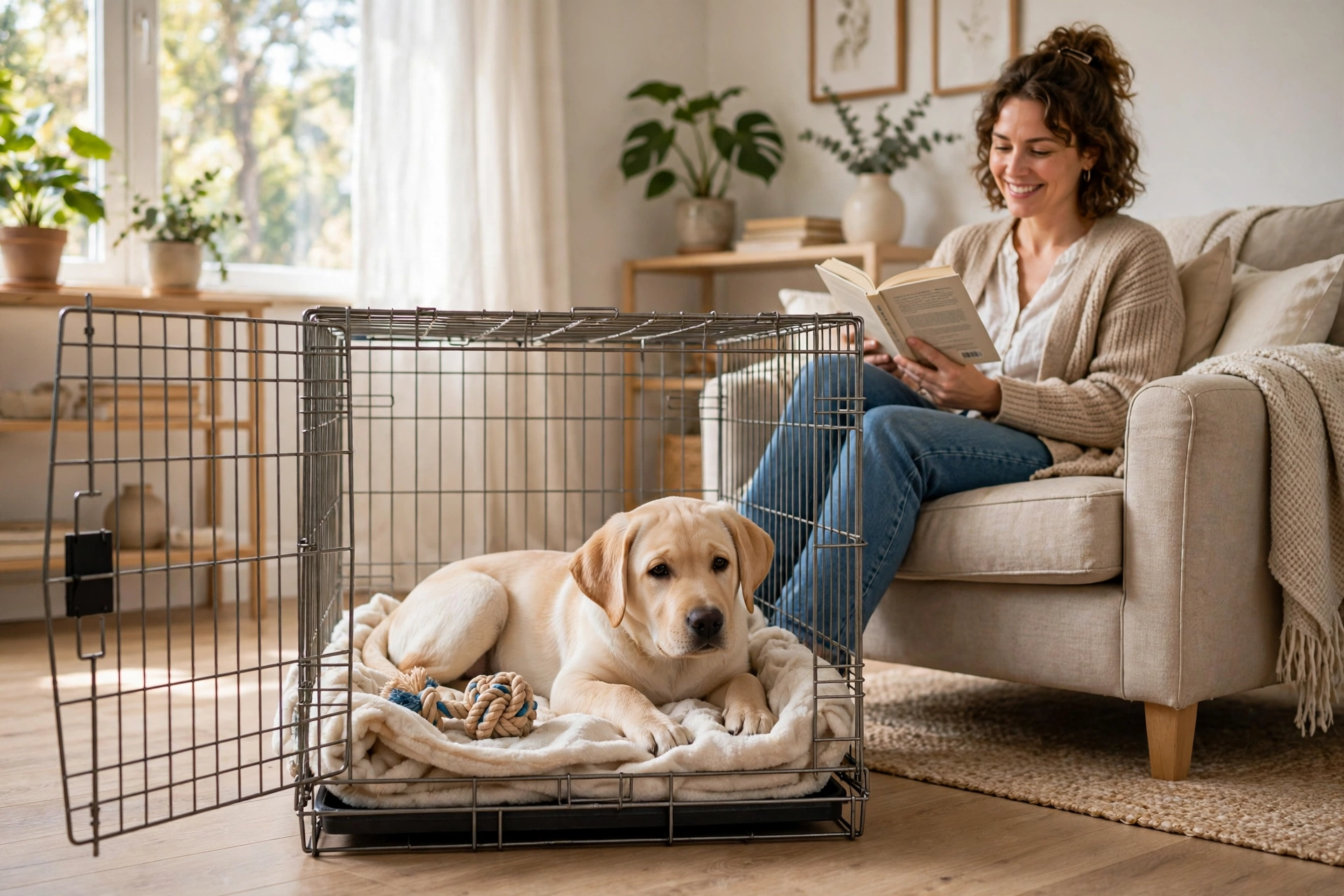
A simple routine pairs the crate with meals, naps and a toilet trip every time your puppy comes out.
Use the crate for naps, nighttime and quiet time, and take your puppy straight outside after crate time. Puppies need several bathroom breaks plus play and feeding times, so the crate should fill only part of the day.
Here is one example pattern, not a fixed rule. Take your puppy outside, play for a while, serve a meal in the crate, then let your puppy nap inside with the door closed. Repeat the cycle through the day and stay inside the time limits for your puppy’s age. A predictable rhythm helps your puppy relax faster, since nothing about the crate feels like a surprise.
How Do You Handle Crate Training at Night?
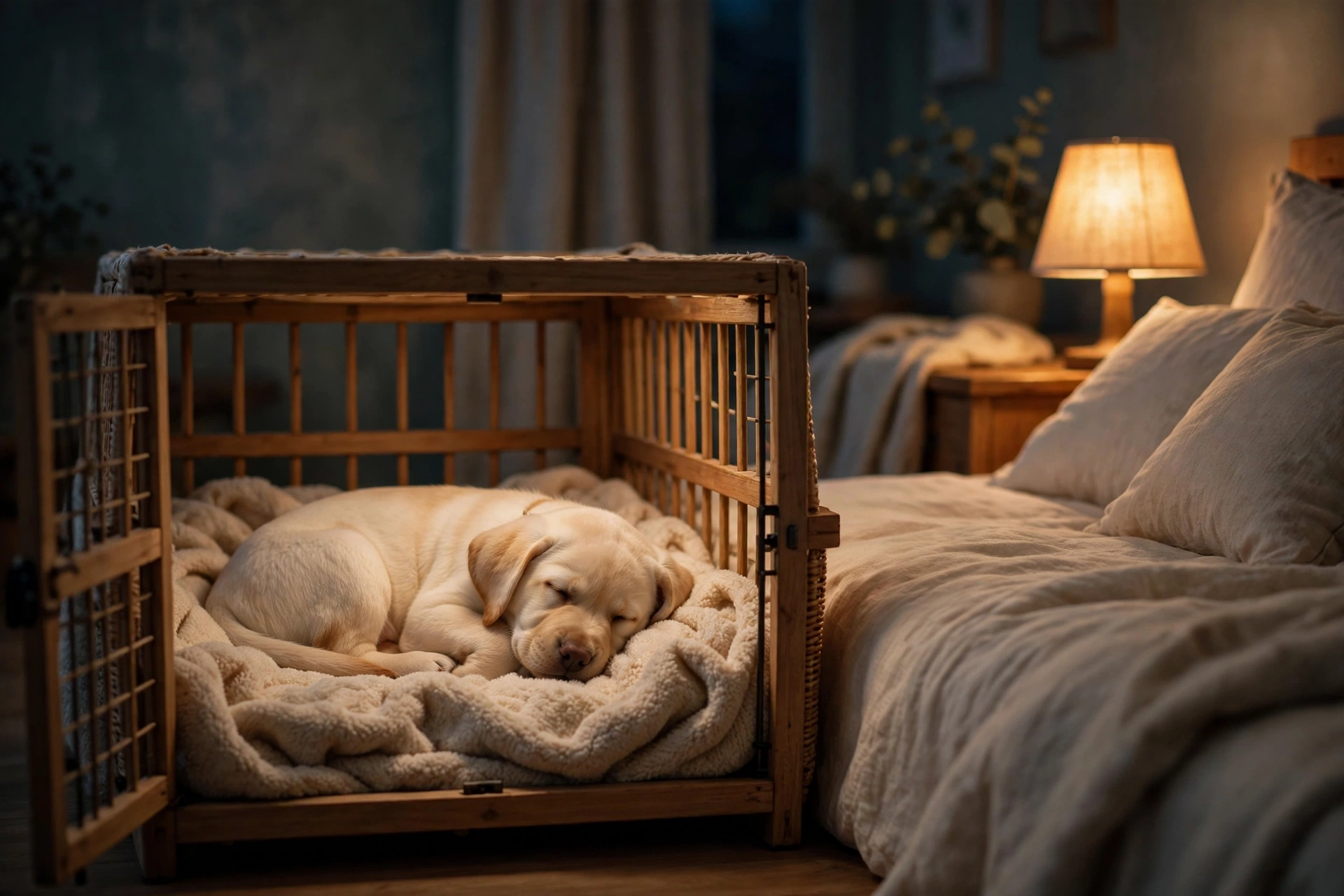
Keep your puppy in the crate overnight, and expect some crying for the first night or two.
Overnight crating is helpful, and puppies may cry for the first night or two. Place the crate where your puppy can settle, and plan a late toilet trip before bed. Treat the night as its own step, after daytime crating is going well.
Keep the lights low and the routine boring. A calm, predictable bedtime teaches your puppy that night is for sleep, and a late toilet trip before bed lowers the chance of an early wake-up.
Remember the age limits. A puppy under 8 weeks needs a potty break at least every hour, so very young puppies may need a night trip. Most puppies sleep through without a break by about 4 months.
What Should You Do If a Puppy Cries in the Crate?
Check for a toilet need first, then stay calm and keep the crate a positive place.
It can be hard to tell whether a puppy is crying to be let out or because it needs the toilet. Young puppies often do need the toilet, so a quick, quiet trip outside is the safest first response. Return the puppy to the crate without play or fuss.
If the crying continues across several days, you may have moved too fast. Rushing the process is a common mistake. Go back to shorter periods with the door open, and give a chew or Kong to build calm.
What Mistakes Should You Avoid?
Never use the crate as punishment, never force your puppy inside and never leave a puppy crated all day.
- Punishment: The crate should be a haven for your pup, not a jail cell, so never use it to punish.
- Forcing the puppy in: Reward-based steps work better than force.
- Going too fast: Move at the pace of your puppy, and go back a step if distress shows up.
- Long stays: Check the time limits table above, because an overlong stay leads to accidents and stress.
- Disturbing a resting dog: Leave a dog alone while it rests in the crate.
When Is a Crate the Wrong Choice?
A crate is the wrong choice for a dog with separation anxiety or one that needs constant company.
Separation anxiety is a case where a crate may not work, and an anxious dog needs professional guidance before it is left for extended periods. If your puppy panics, drools or tries hard to escape, stop and talk to your vet or a qualified trainer.
Older dogs are another question. The same slow, reward-based method applies, but expect the process to take longer.
How Long Does Crate Training Take?
Crate training a puppy takes about a week for some dogs and several weeks or longer for others.
Progress depends on your puppy’s age, temperament and past experiences. Keep sessions short, reward often and repeat the routine daily. Once your puppy is comfortable, practice in new places by moving the crate to a bedroom, the car or a hotel room so the skill holds up in real life. Add the cues from our dog training basics once your puppy settles.
Crate Training a Puppy FAQs
How long does crate training a puppy take?
Some puppies learn within a week, while others need several weeks or longer. Go at your puppy’s pace and avoid rushing the steps.
How long can a puppy stay in a crate?
Puppies under six months need breaks every three or four hours. A stricter guide caps any dog at three hours, so the shorter figure is safer.
Is crate training cruel?
No, not when the crate stays a positive place used for sensible periods and never for punishment. That one rule makes the difference.
Should a puppy sleep in a crate at night?
Yes, overnight crating helps. Expect some crying for the first night or two, and plan toilet trips for very young puppies.
What size crate does a puppy need?
Pick a crate where your puppy can stand, turn around and lie down. Use a divider to reduce the space while your puppy is small.
Why is my puppy crying in the crate?
A young puppy may need the toilet, since puppies under 8 weeks need a break at least hourly. Some crying in the first night or two is normal.
Can you crate train an older dog?
Yes, older dogs can learn too. Use the same gradual, reward-based steps and never push the dog inside.
Conclusion
Crate training a puppy works best with a correctly sized wire crate, a quiet spot and small steps that start at one minute with the door closed. Reward every step, avoid punishment and keep stays short. Seek help from your vet or a trainer if your puppy shows real distress.
Use the strictest limit as your guide: the age in months plus one hour rule gives a 3-month-old puppy a maximum of four hours, while a stricter guide caps any dog at three hours.
Sources:
American Kennel Club (AKC) – Dog Training Advice
ASPCA – General Dog Care