Learning how to bathe a dog at home takes about 20 to 30 minutes once your supplies sit within arm’s reach. A calm setup, lukewarm water and shampoo made for dogs protect the skin while you wash away dirt, loose hair and odor. This guide follows one fixed order, from the brush-out before the bath to drying by coat type.
Most healthy adult dogs handle a home bath without trouble. Puppies younger than 8 weeks, dogs with open wounds and dogs with a diagnosed skin condition need a vet’s guidance first, because their skin and body temperature control work differently.
What Supplies Do You Need to Bathe a Dog?
Nine basic supplies cover almost every home dog bath. Gather all of them before your dog steps into the tub, because a wet dog left alone for ten seconds can shake water across the whole room. For a 55 pound Labrador, set out two large towels: the first soaks up most of the water, and the second finishes the job.
| Supply | What It Does |
|---|---|
| Dog shampoo | Cleans the coat at a pH level that matches dog skin |
| Dog conditioner (optional) | Reduces tangles on long, curly or dry coats |
| Brush or comb | Removes loose hair and mats before water touches the coat |
| Cotton balls | Sit at the ear canal opening and block water from entering |
| Non-slip mat | Gives the dog steady footing inside a wet tub |
| Handheld sprayer or pitcher | Wets and rinses the coat with controlled water flow |
| Washcloth | Cleans the face without shampoo near the eyes |
| Two large towels | Remove most of the water before air or dryer time |
| Small treats | Reward calm behavior during and after the bath |
Pick the shampoo formula by your dog’s skin, not by scent: oatmeal for a dog that scratches often, hypoallergenic for puppies and sensitive skin. Knowing how to bathe a dog starts with this setup, long before the water runs.
What Is the Right Water Temperature for Bathing a Dog?
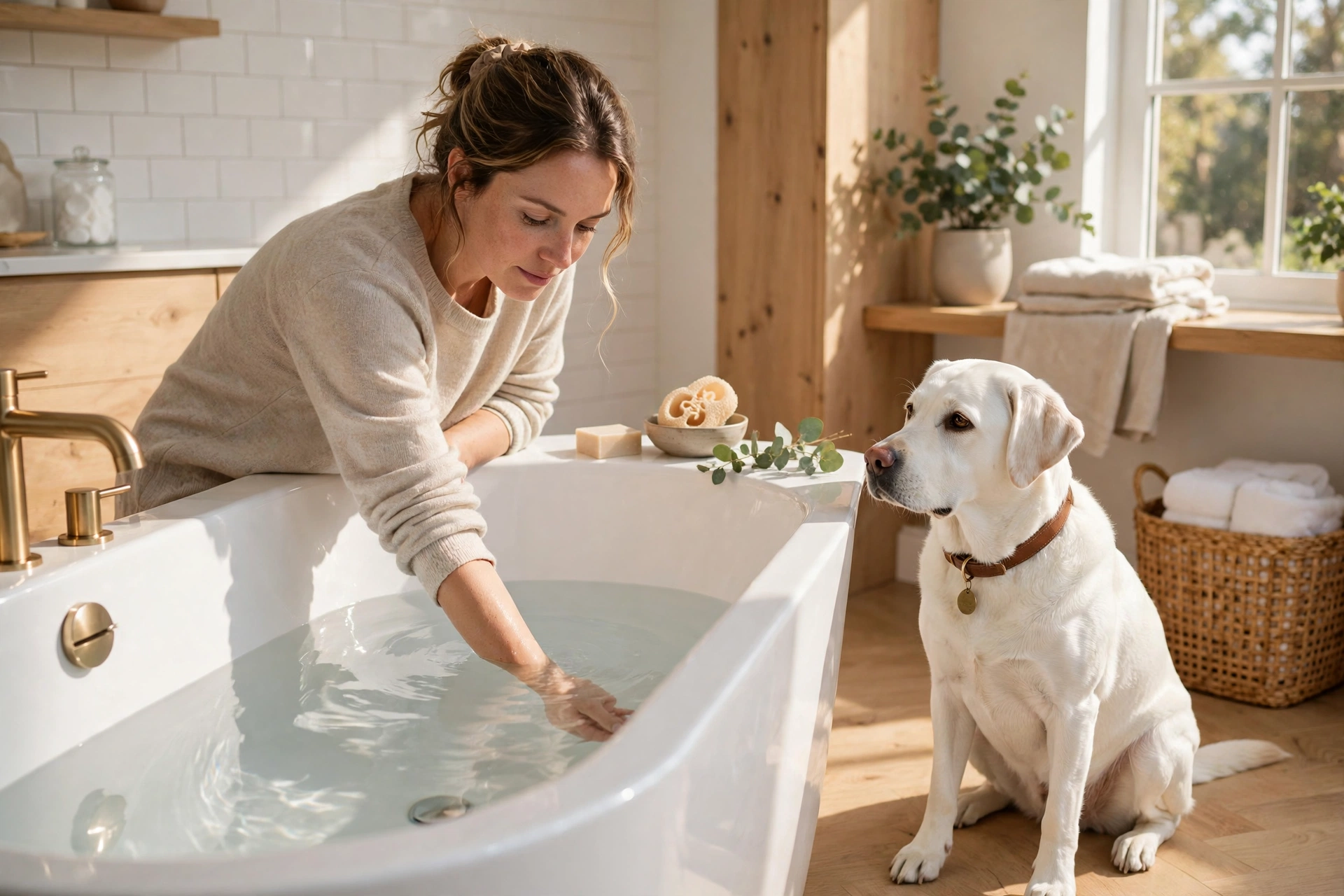
Lukewarm water at about 100°F (37 to 38°C) is right for nearly every dog. Test the stream on the inside of your wrist or elbow and adjust until it feels warm but never hot. Fill the tub with 3 to 4 inches of water before the dog gets in, so the level reaches the belly on a medium dog.
Hot water dries the skin and can raise a dog’s body temperature too fast. Cold water triggers shivering, and a shivering dog fights the bath instead of standing through it. Small dogs lose body heat faster than large dogs, so a 12 pound terrier needs the warmer end of the range and a warm room afterward.
How to Bathe a Dog Step by Step
Wash in this order every time: brush, wet, lather, face, rinse, and dry. One fixed order means no patch of coat gets skipped. A full wash for a medium short-haired dog takes 10 to 15 minutes of water time, not counting the brush-out and drying.
Step 1: Brush the Coat Before Any Water
Spend 5 minutes brushing out loose hair, dirt and mats while the coat stays dry. Mats tighten once wet and become painful to remove, so work through tangles with your fingers or a comb first. Run your hands over the whole body, checking for fleas, ticks, lumps or sore spots. A Golden Retriever can drop a full handful of loose hair here alone.
Step 2: Set Up the Tub and Protect the Ears
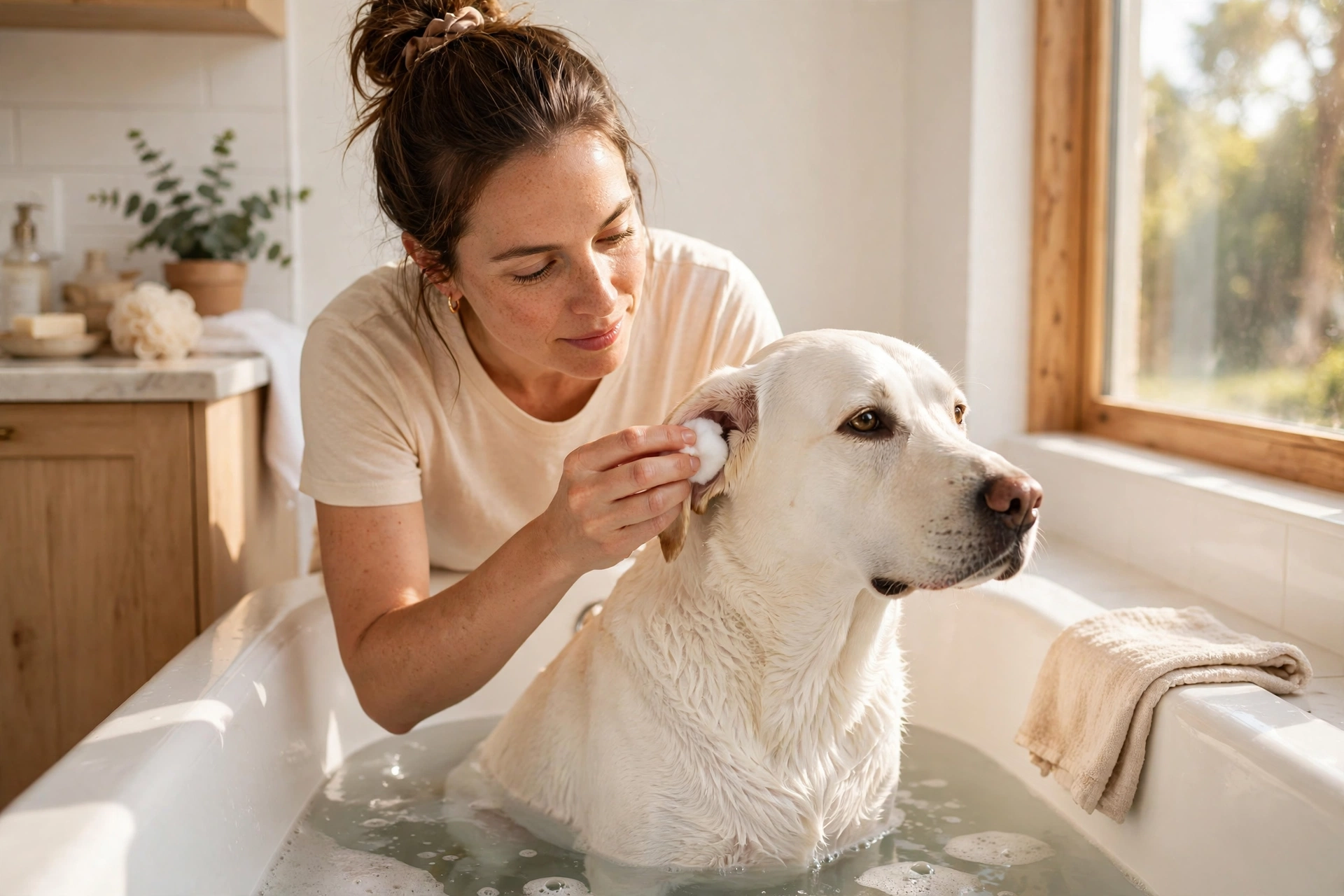
Lay the non-slip mat inside the tub and place one cotton ball loosely at the opening of each ear canal. Press the cotton only into the outer ear, never deep inside, and swap in dry cotton if the first pair soaks through. Lift your dog in once the water sits ready, supporting a small dog with both hands.
Step 3: Wet the Coat From the Neck Down
Hold the sprayer close to the body and wet the coat from the neck toward the tail, saving the head for last. Push water down to the skin rather than skimming the surface, because shampoo cannot clean a coat that stays dry underneath. Thick double coats need 2 to 3 minutes of wetting before the skin gets damp at all.
Step 4: Lather With Dog Shampoo
Work a line of dog shampoo along the back and massage it through the coat with your fingertips for 3 to 5 minutes. Follow the direction of hair growth on long coats to limit tangles. Wash the neck under the collar, the belly, the armpits, all four paws and the skin under the tail, since these spots hold the most dirt. Add small amounts of shampoo as you go, and keep the lather off the face entirely.
Step 5: Wash the Face With a Washcloth
Wet a clean washcloth with plain water and wipe the muzzle, forehead and the area around the eyes, moving outward from each eye. Dogs with facial folds, such as Pugs and Shar Peis, need each fold wiped and dried fully after the bath, because trapped moisture inside a fold feeds skin irritation.
Step 6: Rinse Until the Water Runs Clear
Rinse from the neck down with lukewarm water until the runoff carries no bubbles and the coat no longer feels slick. Shampoo residue causes itching, flaking and a dull look within a day or two. Run your fingers through the belly, armpits and groin while rinsing, since foam hides in those warm folds. Rinse for as many minutes as you spent lathering, then add one extra minute.
Step 7: Condition Long or Dry Coats if Needed
Apply dog conditioner only if your dog has a long, curly or dry coat, wait the label’s 2 to 3 minutes, then rinse it out fully. Short-coated dogs with healthy skin can skip this step and go straight to drying.
How Do You Protect Your Dog’s Face and Ears During a Bath?
Keep all water and shampoo out of the ear canals and away from the eyes for the whole bath. Cotton balls block the ear openings during washing, and a washcloth handles the face, so no stream of water ever pours over the head. Tilt the head slightly downward while rinsing nearby areas and cup one hand over the ears as a shield.
Water inside an ear canal creates the warm, damp space where bacteria and yeast grow. Floppy-eared breeds such as Cocker Spaniels trap that moisture longer than upright-eared breeds, so dry their ears carefully with a soft cloth after the bath. Remove both cotton balls once rinsing ends and check each ear for redness or a sour smell. Book a vet visit if your dog shakes its head the next day, scratches one ear, or shows dark discharge.
Why Should You Only Use Dog Shampoo on a Dog?
Dog skin sits near a neutral pH of about 6.2 to 7.4, while human skin averages about 5.5, so the two shampoos are built for different skin. Human shampoo targets more acidic skin and strips the natural oils, called sebum, that keep a dog’s coat water-resistant and the skin barrier intact. Repeated washes leave many dogs dry, flaky and itchy within weeks.
Baby shampoo still misses the mark on pH, even though it stings eyes less than adult formulas. Dish soap cuts grease hard enough to damage the skin barrier, and groomers save it for rare skunk or oil emergencies rather than routine baths. Take a Beagle washed weekly in human shampoo as a warning: the coat often turns dull and the skin starts flaking within a month. Choose a dog shampoo matched to the job instead, such as an oatmeal formula for itchy skin or a hypoallergenic formula for puppies, and use a medicated formula only when your vet prescribes one. Dilute any concentrated dog shampoo exactly as its label directs.
How Do You Dry a Dog After a Bath?
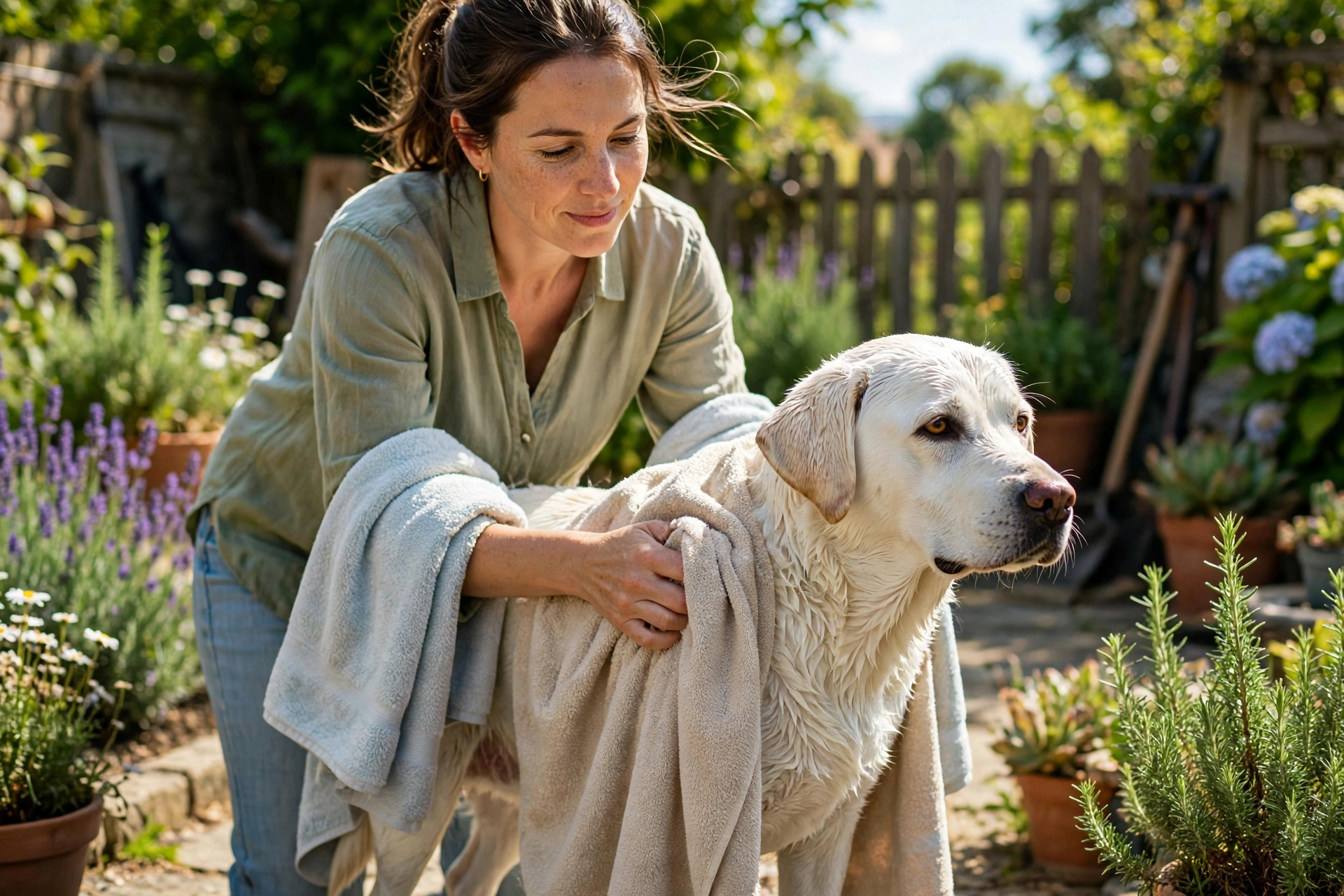
Towel dry first, then finish the job according to coat type. Let your dog shake off inside the tub before you reach for a towel, because one good shake removes much of the surface water. Keep the dog in a warm room until fully dry, and never send a damp dog out in cold weather.
Short coats need the least work. Two towels and 15 to 20 minutes of air drying in a warm room finish a Beagle or Boxer completely. Double coats need more patience: towel first, then use a dryer on its cool or lowest heat setting while brushing the undercoat loose, which takes 30 to 45 minutes on a Labrador or Husky. Long and curly coats tangle when rubbed, so blot the hair with the towel instead, then dry in sections on low heat while brushing each section straight. Hold any dryer nozzle at least 12 inches from the skin and keep it moving. A damp undercoat can develop a sour odor and sore hot spots within 24 hours, so check behind the ears and under the collar by hand before calling the bath done.
How Often Should You Bathe a Dog?
Most dogs need a bath every 4 to 6 weeks. Coat type, skin oil level and daily activity move that number up or down. The ASPCA sets a floor of one bath every 3 months, while a dog that swims or rolls outdoors needs washing far more often.
| Coat Type | Bath Frequency | Notes |
|---|---|---|
| Short and smooth (Boxer, Beagle) | Every 6 to 8 weeks | Weekly brushing handles most dirt between baths |
| Thick double coat (Labrador, Husky) | Every 4 to 6 weeks | Brush out the undercoat before every bath |
| Long and silky (Yorkshire Terrier, Collie) | Every 3 to 4 weeks | Conditioner helps prevent mats and breakage |
| Curly (Poodle, Bichon Frise) | Every 3 to 4 weeks | Dry in sections to keep curls from matting |
| Oily coat (Basset Hound) | As often as once a week | Use a gentle dog shampoo made for frequent washing |
| Hairless (Chinese Crested) | Every 1 to 2 weeks | Exposed skin collects oil and dirt quickly |
Bathing more often than the skin allows strips protective oils and backfires as dryness and extra scratching. Rinse muddy paws and bellies with plain water between full baths instead of shampooing again. Follow your vet’s schedule over this table for medicated shampoo, since treatment baths often run weekly. Once you know how to bathe a dog, this schedule is the only part you need to adjust.
How Do You Bathe a Puppy for the First Time?
A puppy can take a first full bath at about 8 weeks of age. Before that age, the mother cleans the litter and a young puppy cannot hold body heat well in water. Bathe an 8 to 12 week old puppy in a sink with 2 to 3 inches of lukewarm water, puppy shampoo and one hand under the chest for support.
Keep the first bath short, at 5 to 10 minutes from wetting to towel. Warm the room first, speak in a steady voice and let the puppy stand on a non-slip surface so its feet never slide. A floating toy gives a wiggly puppy something legal to mouth instead of your fingers. Never leave a puppy unattended in water, not even in 2 inches, because a tired puppy can slip under in seconds. Dry the puppy fully, then play for a few minutes and offer a treat, so the first bath ends as a good memory.

What Can You Do if Your Dog Hates Baths?
Build up to the bath in short, rewarded sessions spread over several days instead of forcing one full wash. Start with treats and praise for standing in the empty tub on day one, wet only the paws on day two, and add a partial wash on day three. A dog that learns each step pays off stops bracing for a fight at the bathroom door.
Small changes inside the bath help just as much. Smear a lick mat with xylitol-free peanut butter and stick it to the tub wall, since licking gives a nervous dog a job for the full 10 minutes. Tire your dog out with a walk or play session an hour before the bath, because a dog that has burned off energy stands still longer. Swap the sprayer for a quiet pitcher if the noise sets your dog off; one rescue dog that panicked at spray sound stood calmly for water poured from a cup. Use a waterless foam shampoo between attempts, and ask your vet or groomer for help if panic continues past three or four sessions.
Frequently Asked Questions About Bathing a Dog
Can I use human shampoo on my dog in an emergency?
One emergency wash will not poison your dog, but human shampoo sits at the wrong pH and strips protective oils. Rinse extra well, then return to dog shampoo next time.
How warm should the water be for a dog bath?
Keep the water lukewarm at about 100°F (37 to 38°C). Test it on your inner wrist first. Water that feels hot to you can dry and irritate your dog’s skin.
How long does it take to bathe a dog?
Plan 20 to 30 minutes total for a short-coated dog, including drying. Thick double and long coats can take 45 to 60 minutes, because wetting and drying each need more time.
Can I bathe my dog once a week?
Yes, weekly baths suit oily-coated and very active dogs when you use a gentle dog shampoo. Cut back to every 2 to 4 weeks if you notice dry skin, flaking or new scratching.
At what age can a puppy have its first bath?
Wait until your puppy reaches about 8 weeks old. Younger puppies chill quickly and still rely on their mother for cleaning. Keep that first bath under 10 minutes in shallow, lukewarm water.
Should I walk my dog before or after a bath?
Walk and play first, bathe second. Exercise burns off energy, so your dog stands calmer in the tub, and a post-bath dog stays clean instead of rolling straight into the grass.
How do I keep water out of my dog’s ears while bathing?
Place one cotton ball loosely at each ear canal opening before wetting, and never pour water over the head. Remove the cotton after rinsing and dry the outer ear with a soft cloth.
Why does my dog still smell after a bath?
Leftover shampoo, wet ears, dirty teeth or full anal glands cause most post-bath odor. Dry the ears and coat fully, and book a vet visit if the smell returns within a few days.
Conclusion
A good dog bath rests on four habits: prepare the supplies, use lukewarm water, wash in a fixed order, and rinse longer than feels necessary. Those habits protect skin at a different pH from yours and keep water out of ears that trap moisture. A healthy dog washed with dog shampoo at about 100°F, rinsed until the water runs clear and dried fully stays clean and comfortable for 4 to 6 weeks.
Sources:
ASPCA – Dog Grooming Tips
ASPCA – General Dog Care