You can cut your dog’s nails safely at home in about 10 minutes with sharp clippers, good light, and small slices taken at a 45-degree angle. Learning how to cut dog nails comes down to one skill: finding the quick and stopping short of it. The quick is the living core of the nail, and it holds blood vessels and nerves. A nick hurts and bleeds, yet it stays easy to avoid once you know what the cut surface should look like. This guide covers the tools, the step-by-step technique for light and dark nails, puppy training, grinder use, and first aid for a nicked quick. A healthy adult dog with trimmed nails stands on its paw pads, walks without clicking on hard floors, and puts even pressure through each toe.
What Tools Do You Need to Cut Dog Nails?
You need size-matched dog nail clippers or a nail grinder, styptic powder, treats, and a towel or non-slip mat. Human nail clippers stay in the drawer, since their flat blades crush the curved shape of a dog’s nail and can split the keratin shell. Scissor-style clippers suit small dogs up to about 20 pounds and give clean cuts on thin nails. Plier-style clippers carry a stronger spring, so they handle the thick nails of medium and large breeds. Guillotine clippers take the nail through a metal ring, though many vets skip them because the cutting point is harder to judge. A nail file smooths rough edges after clipping, and bright light from a lamp or phone torch helps you read the nail on dark-coated dogs. Styptic powder belongs within arm’s reach before the first cut, not in a cupboard down the hall. One owner in a first session layout keeps clippers in the right hand, styptic powder in an open dish on the left, and six pea-sized treats in a small bowl between them.
| Feature | Dog Nail Clippers | Nail Grinder |
|---|---|---|
| How it works | Cuts the tip off in one squeeze | Files the nail down with a rotating stone |
| Speed per paw | About 1 to 2 minutes | About 3 to 5 minutes |
| Best for | Calm dogs, routine trims, thick nails | Dark nails, nervous dogs, smooth finish |
| Main risk | Taking too much off in one cut | Heat build-up if held on one spot over 3 seconds |
| Noise level | One short click per nail | Steady motor hum during use |
| Typical price | $8 to $20 | $20 to $45 |
Sharp blades matter more than brand names during a trim. A dull clipper squeezes the nail before it cuts, and that pressure travels straight to the quick. Replace or sharpen blades once cuts start leaving crushed, flaky edges instead of a clean slice.
Where Is the Quick on Light and Dark Nails?
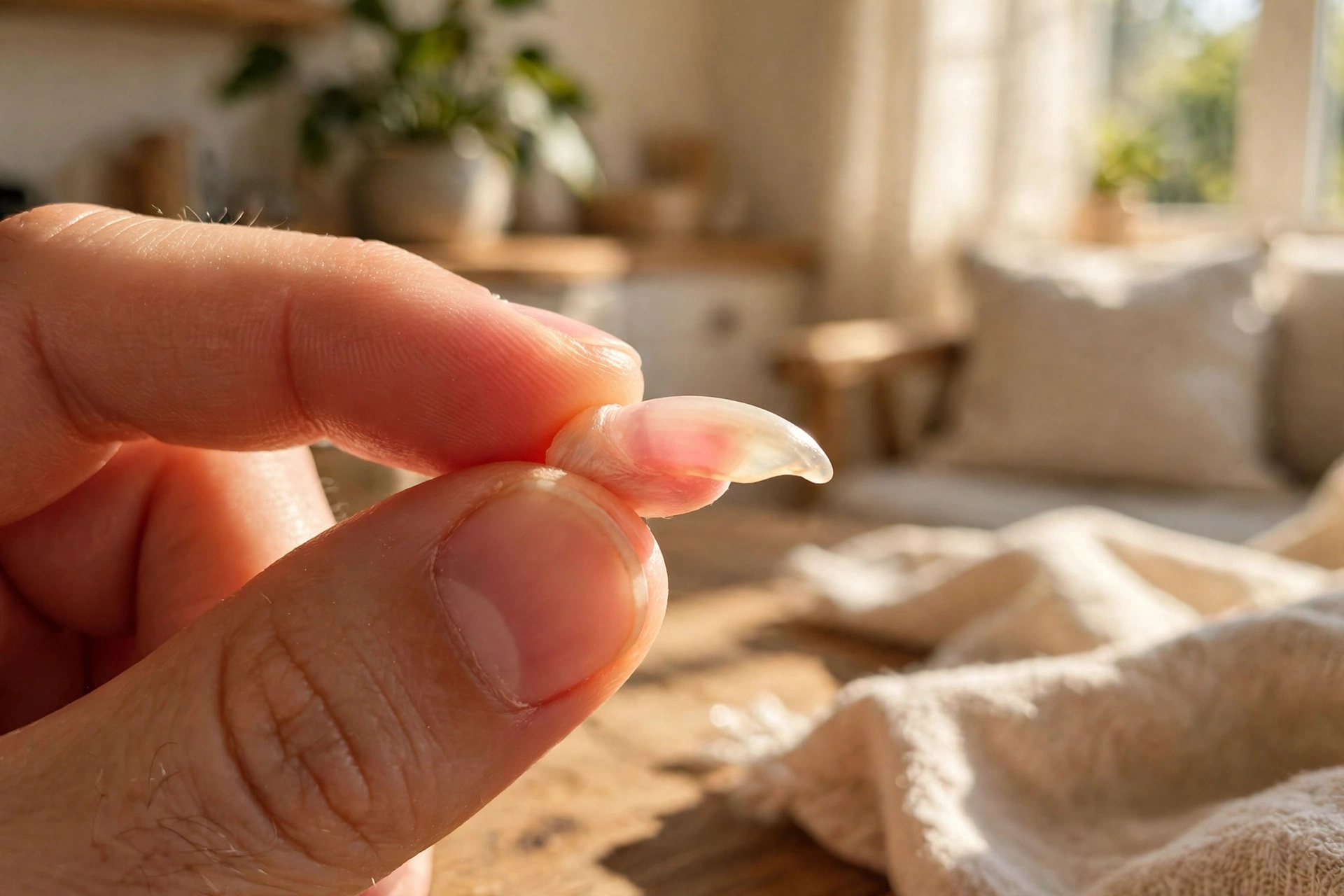
The quick sits in the center of the nail, shows pink through light nails, and reveals itself on dark nails as a dark dot in the middle of the cut surface. Hold a light nail up to a lamp and the pink band is clear: stop at least 2 millimeters before it. Dark nails hide the quick completely, so your guide is the cross-section you create as you slice. The first slice off a dark nail shows a dry, pale surface of white or gray. Each next slice moves the center closer to the quick, and the middle turns soft gray, then shows a small dark dot. That dot is your stop signal, because the living tissue sits directly behind it. Owners of black-nailed dogs get a second clue from touch, since the nail feels firm out at the dead tip and slightly softer near the quick. Work under steady light and check the face of the nail after every slice. A Labrador with black nails, for example, may need 4 or 5 thin slices per nail, while a spaniel with clear nails may need only 2.

How to Cut Dog Nails Step by Step
Hold the paw steady, extend one nail at a time, and cut thin slices at a 45-degree angle until the cut surface tells you to stop. Pick a quiet room and a time when your dog is settled, such as after a walk or an evening meal. Small dogs can sit on a table on a non-slip mat, while large dogs usually do better lying on their side on the floor. Ask a second person to hold your dog and feed treats if your dog tends to pull away. Follow these steps for each paw:
- Place your thumb on the paw pad and your forefinger on top of the toe, then press gently so the nail extends forward.
- Push any long fur back from the nail so nothing blocks your view of the full nail.
- Position the clipper at a 45-degree angle to the nail, matching the angle the nail makes with the floor.
- Cut one thin slice, about 1 to 2 millimeters, with one firm squeeze rather than a slow squeeze.
- Check the cut surface for the pink area on light nails or the dark center dot on dark nails.
- Take another small slice only if the surface still looks dry and pale across the whole face.
- Feed a treat, praise your dog, and move to the next nail.
- Trim the dewclaws on the inner side of each leg last, since they never touch the ground and grow into curves.
Confidence in your squeeze gives a cleaner result than speed. Slow squeezing with a clipper pinches the nail and can crack it, so commit to each small cut once the blade is placed. Stop the session after one or two paws if your dog starts panting, licking its lips, or pulling hard against your hand. Finishing the remaining paws tomorrow beats wrestling through all 18 nails today, and your dog keeps a calmer memory of the process. Most owners complete all four paws in 8 to 10 minutes once the routine is familiar.
How Do You Trim Overgrown Dog Nails Safely?
Trim overgrown nails in small weekly sessions, because the quick grows long with the nail and only recedes when you trim little and often. A nail left for 3 months can carry a quick that reaches close to the curved tip, so a single big cut almost always draws blood. Take 1 to 2 millimeters off every 7 days instead, and the quick pulls back a little after each session. Six weekly trims can restore a neglected nail to a sound length without one painful cut. Watch for nails that click loudly, cross over the toe next to them, or push into the paw pad. A dewclaw that has curled into a full circle needs a vet visit before home trimming, since the tip may already sit inside the skin. Senior dogs and dogs recovering from injury often grow overgrown nails fast, because they walk less and wear nothing down on pavement.
How Do You Get a Puppy Used to Nail Trims?
Build the habit over 7 days: paw handling first, tool sounds next, and one real nail tip on day 5. Puppies between 8 and 16 weeks accept new handling fast, and two minutes of paw play a day during that window pays off for the dog’s whole life. Touch each toe, press the pad gently, and feed a treat for every paw your puppy offers without pulling away. Set the clippers on the floor on day 2 and reward your puppy for sniffing them. Day 3 adds sound: squeeze the clippers once near the paw, or switch the grinder on for five seconds, then treat. One real tip comes off a single front nail on day 5, followed by a favorite treat and a game. Add one or two nails per day after that until all paws are done by the end of the week. An adult rescue dog follows the same plan at a slower pace, often over 2 to 3 weeks, with the same reward after every step.
Should You Use a Nail Grinder Instead of Clippers?
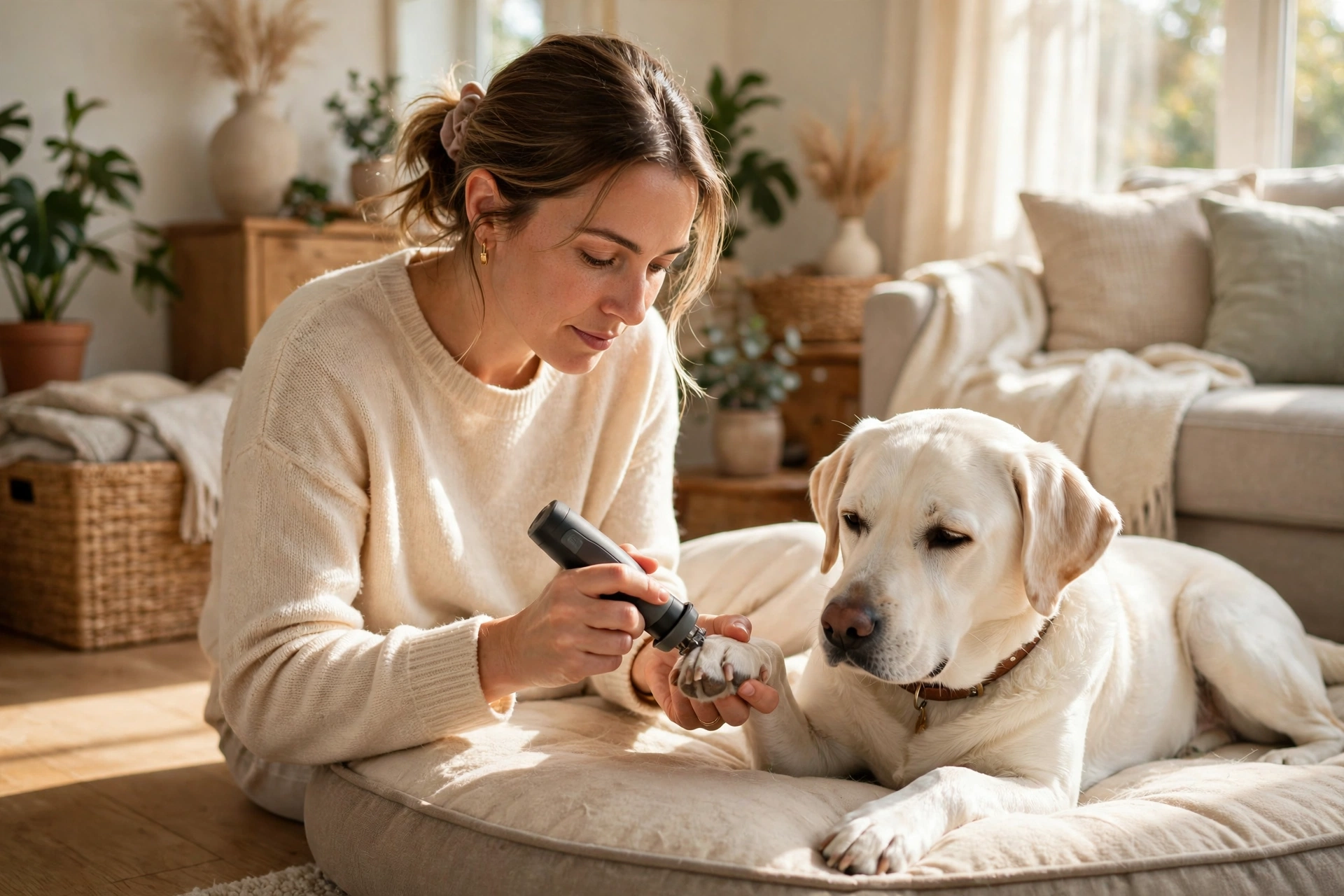
A grinder suits dogs with dark nails or clipper fear, since it removes the nail in tiny layers and rarely reaches the quick in one pass. Hold the toe firmly, rest the rotating stone on the nail tip for 2 to 3 seconds, then lift it away to check your progress. Work around the tip in short touches, grinding the bottom edge first and the top edge second, until the nail reaches the length you want. Heat builds fast on one spot, so never hold the stone still for longer than 3 seconds. Long fur needs tying back or holding with a thin stocking pulled over the paw, with the nails poked through, so strands stay clear of the spinning head. Some dogs dislike the hum and vibration more than a clipper’s click, and a sound test on day one tells you which tool your dog accepts. Many owners clip first and grind second, using the grinder only to round the sharp edges the clipper leaves behind.
How Often Should You Cut Your Dog’s Nails?
Most dogs need a nail trim every 3 to 4 weeks, and the clicking sound on hard floors is the clearest sign a trim is due. Dogs that walk daily on concrete wear their nails down between sessions and may stretch to every 6 weeks. Indoor dogs, senior dogs, and small breeds grow long nails faster because they put less weight and friction through each toe. Dewclaws never touch the ground, so they need cutting on the full schedule even when the other nails look fine. Put a repeating reminder on your calendar rather than waiting for the clicking to start.
| Dog type | Trim interval | Notes |
|---|---|---|
| Puppies under 6 months | Every 1 to 2 weeks | Soft, fast-growing nails; tips only |
| Active adult dogs on pavement | Every 4 to 6 weeks | Walking wears the tips down |
| Indoor or senior dogs | Every 2 to 3 weeks | Little natural wear |
| Dewclaws, all dogs | Every 3 to 4 weeks | No ground contact, curl if missed |
What Should You Do If You Cut the Quick?
Stay calm, press styptic powder into the nail tip with firm pressure, and hold it there for about 30 seconds. Your dog reads your reaction in the first seconds after a nick, and a steady voice keeps the paw still while you work. Scoop a pinch of styptic powder onto your fingertip, press it directly into the cut end, and keep pressure on while you count slowly to 30. Cornstarch or plain flour pressed into the tip works as a backup if no styptic powder is in the house, though it seals more slowly. Most nicked nails stop bleeding within 5 to 10 minutes. Keep your dog quiet on a lead for the next hour, since running and scrabbling on hard ground can reopen the seal. Call your vet the same day if bleeding runs past 20 minutes, the nail hangs at an odd angle, or the toe swells and your dog refuses to bear weight on it. Skip the next planned slice on that nail and end the session with a treat, so the last memory of the day stays positive.

When Should a Groomer or Vet Cut Your Dog’s Nails?
Book a professional when your dog bites or thrashes during trims, when nails have curled into the pad, or when a nail is cracked, split, or bleeding before you start. A groomer charges about $10 to $25 for a nail trim and finishes in minutes with a second pair of hands on the dog. Vet clinics charge about $15 to $30 and can examine any nail that looks infected, smells bad, or grows at a strange angle. Dogs with a past nail injury often stay calmer on a grooming table than on the living room floor, because the setting and routine are new. Ask the groomer or vet tech to show you their grip and cutting angle during the visit, then copy that hold at home next time. One failed home session is no reason to quit, yet two or three battles in a row tell you the job belongs with a professional for now.
Frequently Asked Questions About How to Cut Dog Nails
How much should you take off a dog’s nail at one time?
Take off 1 to 2 millimeters per slice. Stop at least 2 millimeters before the pink quick on light nails, or as soon as a dark center dot appears on dark nails.
Can you use human nail clippers on a dog?
No. Human clippers have flat blades built for flat nails, and they crush the curved dog nail instead of slicing it. That pressure can split the nail and frighten your dog.
How do you cut black dog nails without hurting your dog?
Slice thin pieces and read the cut surface after each one. The center turns gray, then shows a dark dot as you near the quick. Stop at the dot and move on.
What if my dog will not sit still for nail trims?
Trim one or two nails per session and reward each one. A lick mat with peanut butter, a helper holding your dog, and shorter sessions rebuild cooperation over one to two weeks.
Do dewclaws really need trimming?
Yes. Dewclaws never touch the ground, so nothing wears them down. A missed dewclaw can curl into a full circle and grow into the pad, which causes pain and infection.
How long does it take for a cut quick to stop bleeding?
Most nicked nails stop within 5 to 10 minutes with styptic powder and steady pressure. Bleeding that continues past 20 minutes needs a vet call the same day.
Is a grinder or clippers better for a nervous dog?
It depends on the dog. Grinders remove tiny layers and suit clipper-shy dogs, while the motor hum bothers sound-sensitive dogs. Test both tools without cutting and keep the one your dog accepts.
How much does a professional nail trim cost?
Groomers usually charge $10 to $25 and vet clinics $15 to $30 per trim. Prices vary by region and dog size, and some clinics include the trim free during a wellness visit.
Conclusion
Short nails keep a dog’s weight on its paw pads, protect its joints, and make every walk more comfortable. Once you know how to cut dog nails, the whole job rests on four habits: sharp tools, a 45-degree cut, thin slices, and a treat after every paw. Your dog’s nails grow every week of its life, and a calm 10-minute trim every 3 to 4 weeks keeps them at the right length.
Sources:
ASPCA – Dog Grooming Tips
ASPCA – General Dog Care