Most cats wash themselves so well that a full bath is a rare event. Still, there are days when a sink of lukewarm water is the only fix, such as the morning a cat comes in wearing half the garden. Learning how to give a cat a bath ahead of time keeps the job short, calm, and safe for you both. This guide covers when a bath is needed, what to gather, and every step from first wetting to final towel dry.
When Does a Cat Need a Bath?
A healthy indoor cat needs a bath only when its coat holds something its tongue cannot remove, if it has rolled in grease, picked up fleas, or a vet has prescribed a medicated wash. Cats spend much of their waking hours grooming, and a barbed tongue lifts loose hair, dust, and surface oil with each pass. Weekly brushing supports that routine and keeps most coats clean for months at a time.
Certain situations do call for water. Dirt packed into the fur needs rinsing out before the cat licks it down, and grease or oil will not shift with licking at all. Flea infestations call for a bath that kills the fleas on the body that day. Skin conditions such as ringworm need medicated shampoo on a vet’s schedule. Hairless breeds run on a different timetable, because a Sphynx builds up skin oil and toe grime and needs a bath about once a week. Overweight and arthritic cats need help too, since stiff or heavy bodies cannot reach the back and rear end.
A long-haired cat that backs into a tray of wet paint shows the point. Brushing will not shift paint, and the cat swallows some at its next grooming session, so a prompt bath protects coat and stomach. The table below sorts the common situations into bath and no-bath calls.
| Situation | Does the cat need a bath? | Better action |
|---|---|---|
| Rolled in soil, litter dust, or garden dirt | Yes | Full or partial bath with cat shampoo |
| Grease, oil, paint, or a sticky substance on the coat | Yes | Bath the same day, before the cat licks the coat |
| Fleas found in the fur | Yes | Flea bath, then a vet-approved flea treatment |
| Ringworm or a diagnosed skin condition | Yes | Medicated bath on the schedule your vet sets |
| Hairless breed such as a Sphynx | Yes, regularly | Weekly bath to clear skin oil and toe grime |
| Healthy indoor cat with light dust or loose hair | No | Brush the coat once or twice a week |
| Small dirty patch on one paw or the tail tip | No | Wipe the spot with a damp cloth or grooming wipe |
What Supplies Do You Need to Bathe a Cat?
You need cat shampoo, two large towels, a non-slip mat, a pitcher or gentle spray nozzle, a brush, nail clippers, cotton balls, and a few treats, if every item sits within arm’s reach before the cat enters the room. Leaving the sink area mid-bath to fetch a towel gives a wet cat its chance to bolt. Lay everything out in the order you will use it.
- Cat shampoo: a mild, unscented formula made for cats, or a medicated shampoo your vet has prescribed
- Non-slip mat or folded towel: gives the cat a steady grip in the sink or tub
- Pitcher, unbreakable cup, or handheld spray nozzle: for wetting and rinsing with a controlled flow
- Two large towels: one for the first wrap and one dry towel to finish with
- Brush or comb: clears loose hair and mats before the bath
- Cat nail clippers: for trimming the sharp tips before bath day
- Cotton balls and a soft washcloth: cotton for the outer ears, the cloth for the face
- Treats: a small pile of favourites to reward the cat at the end
One owner once set her cat in the sink, then remembered the shampoo sat in another bathroom; her cat was under a bed within ten seconds.
How Do You Prepare a Cat for a Bath?
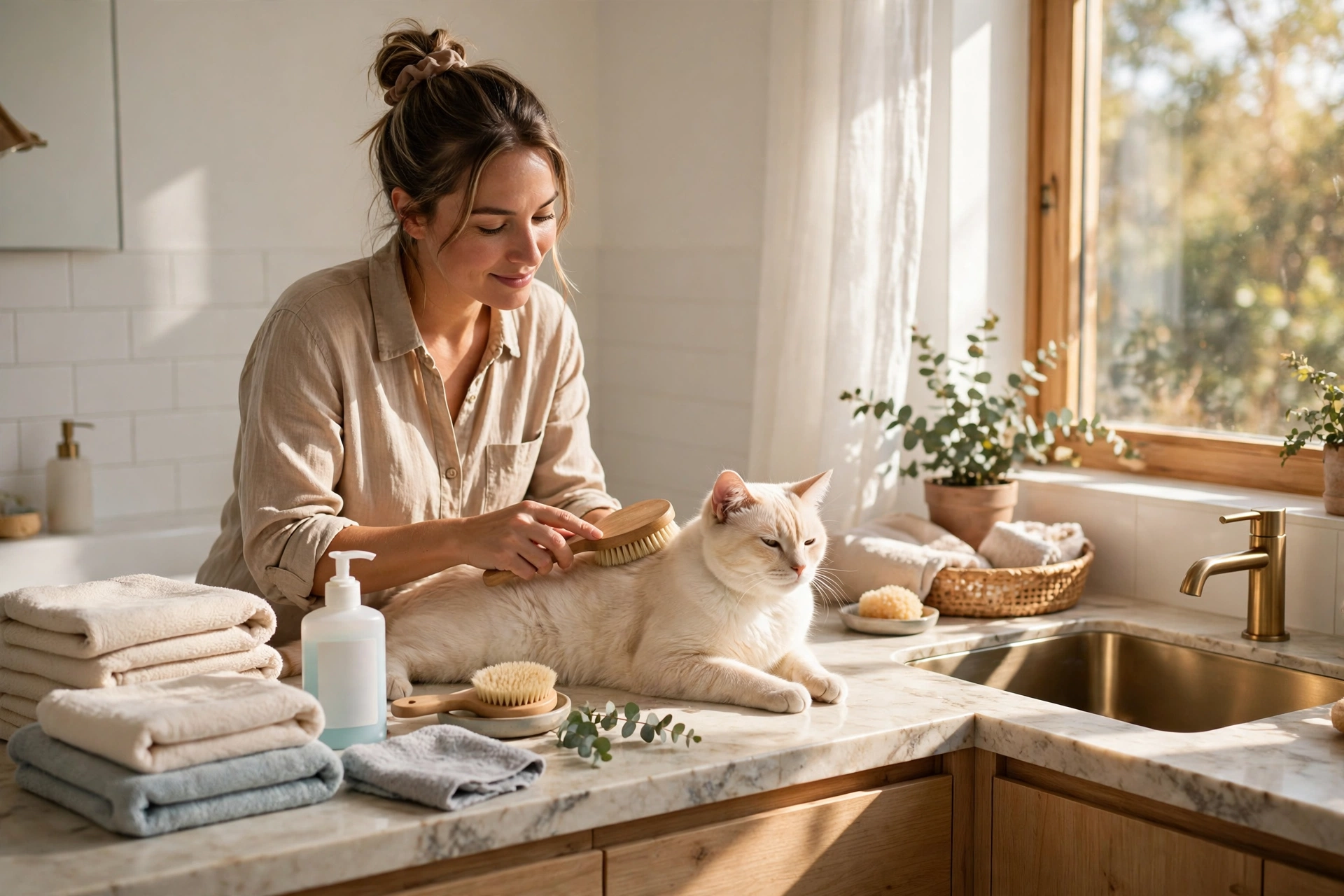
Trim the nails and brush the coat earlier the same day, if you want the bath itself to stay under ten minutes and free of scratches. Start with a play session of ten to fifteen minutes, because a cat that has chased a wand toy settles faster than a cat pulled straight from a nap. Trim only the sharp nail tips, then give the cat a break and a treat.
Brush the coat next and work out every mat you find. Water tightens a mat into a hard knot, and a wet matted coat dries slowly and pulls. A Persian with three small mats behind the ears can end up needing those spots shaved after a bath, while ten minutes with a comb beforehand saves them.
Close the bathroom door, lay the mat in the sink or tub, and fill it with three to four inches of lukewarm water before you bring the cat in. Running taps frighten many cats, so pre-fill the sink. Test the water on your inner wrist; it should feel warm, never hot. Add cotton balls at the ear openings only if your cat tolerates them, and keep your voice low and steady throughout.
How to Give a Cat a Bath Step by Step
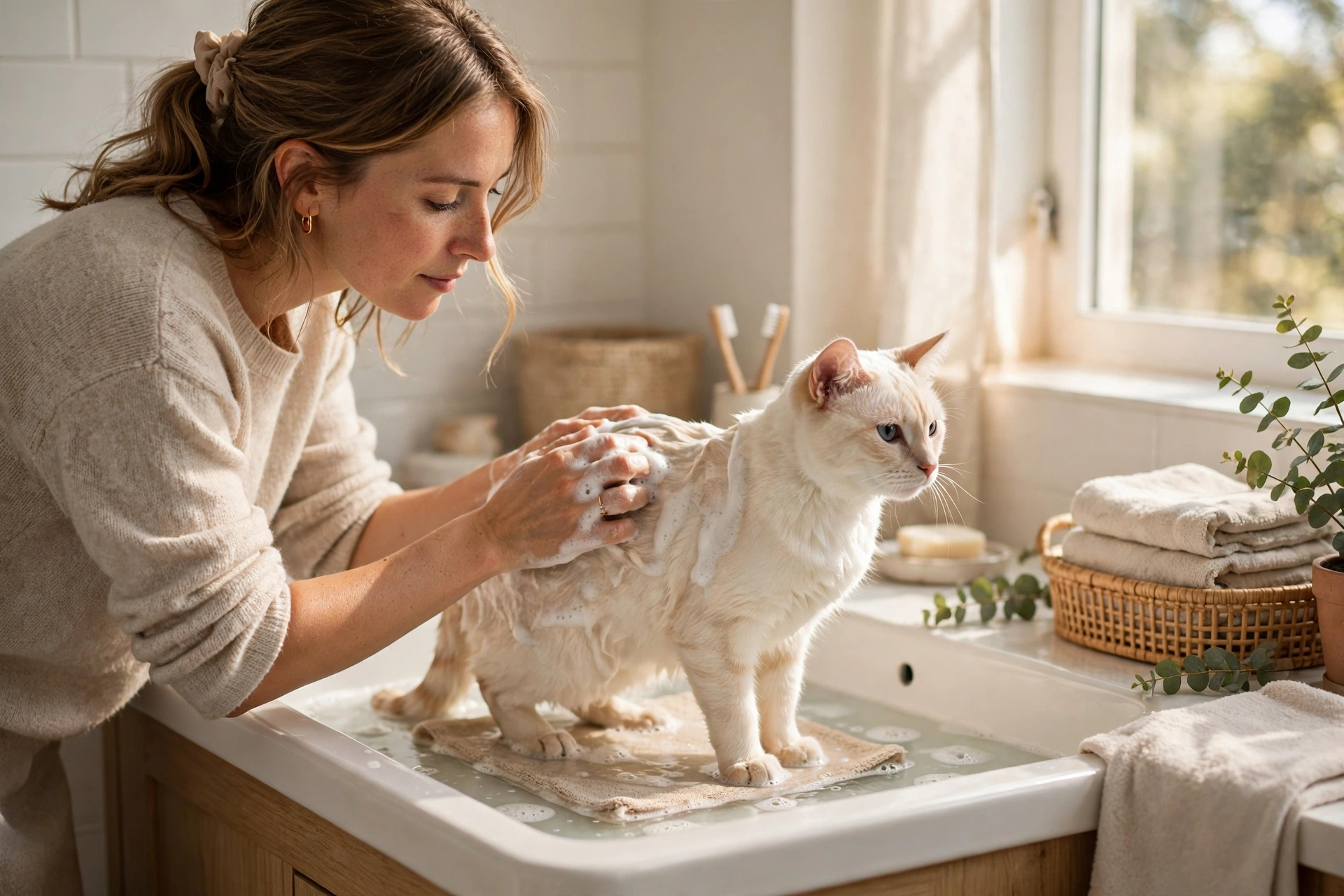
Work from the neck down, keep the face completely dry, and finish within five to ten minutes, if the water stays lukewarm and you rinse until it runs clear. Speed matters more than perfection here. The seven steps below show exactly how to give a cat a bath in a sink or a tub. A second pair of hands helps with a nervous cat, one person holding gently while the other washes.
- Set the cat in the water. Lower the cat into the sink or tub facing away from you, and let it stand on the mat. Many cats settle when their front paws rest on the rim while the back feet stay on the mat.
- Wet the coat from the shoulders to the tail. Pour water over the body with the pitcher or a gentle spray, keeping the flow off the head. Work the water down to the skin on thick coats.
- Lather with diluted cat shampoo. Mix one part cat shampoo to five parts water, then massage the solution through the coat in the direction the hair grows. Use a small amount, because excess shampoo doubles your rinsing time.
- Wash the belly and legs last. Lift each paw briefly and clean the legs, then run a soapy hand along the belly once. Most cats guard the stomach, so keep this part brief.
- Rinse until the water runs clear. Pour or spray clean lukewarm water over the whole body, then rinse once more. Leftover shampoo dries the skin, and the cat licks the residue off later.
- Wipe the face with a damp washcloth. Use plain water on the cloth and wipe the cheeks, chin, and forehead. Never pour water over the face, and keep water out of the eyes, ears, and nose.
- Lift the cat straight onto a towel. Squeeze the coat gently to press out water, then set the cat on the towel and wrap it.
| Stage | What happens | Typical time |
|---|---|---|
| Wetting | Coat soaked from shoulders to tail | 1 minute |
| Lathering | Diluted shampoo massaged through the coat | 2 minutes |
| Rinsing | Water poured or sprayed until it runs clear | 2 to 3 minutes |
| Face wipe | Damp washcloth over cheeks, chin, and forehead | 30 seconds |
| Towel dry | Wrap, squeeze, and pat the coat dry | 3 to 5 minutes |

How Do You Dry a Cat After a Bath?
Wrap the cat in a large towel the moment it leaves the water and keep it in a warm, draft-free room until the coat is dry to the skin, if you want to prevent a chill and post-bath shivering. Press and pat rather than rubbing, since rubbing tangles long hair and can start a wrestling match. Swap to the dry towel once the first one feels soaked.
Some cats accept a blow dryer on its lowest, coolest setting; others run at the sound and should air-dry in the warm room instead. Brush long coats while they are still slightly damp, because a coat left to dry in clumps forms mats by evening. A longhair named Milo dries tangle-free in twenty minutes when brushed during drying, yet needs a comb-out the next day when left alone. Offer the promised treats once the cat is settled, then let it leave the room on its own terms.
How Do You Give a Cat a Flea Bath?
A flea bath kills the fleas on your cat that day, if you lather the neck first and follow up with a vet-approved flea treatment for lasting control. Wet the cat and build a thick ring of shampoo lather around the neck before you wet the rest of the body. Fleas run from water toward the head, and the soapy ring traps them before they reach the dry face. Use only a flea shampoo labelled for cats, and check its minimum age before bathing a young cat.
Never use a dog flea product on a cat. Many dog flea treatments contain permethrin, which is poisonous to cats and can cause tremors and seizures. Work the lather over the body for the contact time printed on the bottle, usually five to ten minutes, then rinse fully. Run a flea comb through the damp coat over a white towel to count what comes off. A rescued stray carrying forty fleas leaves the bath clean, yet flea eggs in its bedding hatch within weeks. Wash bedding in hot water, vacuum carpets, and start the monthly treatment your vet recommends.
What Can You Use Instead of a Full Bath?
Unscented grooming wipes, waterless foam shampoo, and a plain damp cloth handle most everyday messes, if the dirt sits in one small area instead of across the whole coat. A full bath is the last resort for a cat that panics in water. Wipes lift litter dust, food smears, and light grime from the fur in under a minute. Pick unscented wipes made for cats, because strong fragrances bother a cat’s nose and encourage frantic licking.
Waterless foam works a step deeper. Pump the foam into your hands, massage it through the dirty patch, and towel the coat dry; no rinsing is needed. Owners of elderly cats often keep a bottle by the sofa for rear-end cleanups between vet visits. A warm, damp cloth on its own handles muddy paws at the door. Any of these options beats a forced bath for a cat that bit or scratched hard last time; a groomer who handles nervous cats is the safer route for a full clean.

How Does Bathing Differ for Kittens and Senior Cats?
Kittens and senior cats both need shorter baths, shallower water, and warmer rooms than a healthy adult, if they are to stay warm and steady from the first minute to the last. Young and old bodies lose heat fast in water, so keep every stage brief.
Kittens
Wait until a kitten is at least eight weeks old before its first real bath. Younger kittens cannot hold their body temperature in water, and their mother handles cleaning during those weeks. Use two inches of lukewarm water in a small sink, choose a shampoo labelled for kittens, and keep the whole bath under five minutes. Support the kitten’s chest with one hand the entire time. A nine-week-old kitten that fell into a food bowl needs only a quick rinse of the chest and legs, not a full soak. Dry the kitten at once and return it to a warm bed.
Senior Cats
Older cats often have arthritis, thinner skin, and less body fat, so they chill quickly and slip more easily. Give a senior cat extra grip with a thick mat, support its body when you lift it, and consider a partial bath for the areas it can no longer reach. Keep the room warm for an hour after the bath. Watch for heavy panting or shaking, and stop the bath if either appears. A fifteen-year-old cat with stiff hips usually does best with a five-minute wash of the back and rear while standing on a mat, followed by a long rest in a heated room.
Frequently Asked Questions
Most cat bath questions come down to how often bathing is safe, which shampoo a cat can tolerate, and what the water temperature should be.
How often should I bathe my cat?
Most cats need a bath only when the coat gets dirty or greasy, a few times a year at most. Hairless breeds are the exception and need one about once a week.
Can I use human shampoo or dog shampoo on my cat?
No. Human shampoo dries out a cat’s skin, and some dog products contain ingredients that are toxic to cats. Use a shampoo made and labelled for cats.
What temperature should the water be for a cat bath?
Use lukewarm water, around 100 degrees Fahrenheit or 38 degrees Celsius, tested on your inner wrist. Water that feels hot to you can scald a cat’s thinner skin.
How do I bathe a cat that hates water?
Prepare everything first, work fast, and keep the water shallow. Ask a second person to hold the cat gently. Stop and switch to wipes or waterless shampoo if the cat panics, bites, or pants heavily.
At what age can a kitten have its first bath?
A kitten can have its first bath at eight weeks old. Before that age, a kitten cannot regulate its body temperature in water, so clean small messes with a warm, damp cloth instead.
Does a bath get rid of fleas on a cat?
A flea bath kills the live fleas on the cat that day, and the lather drowns most of them within minutes. Eggs and pupae in bedding survive, so follow up with vet treatment and a hot bedding wash.
Why does my cat lick itself so much after a bath?
Post-bath licking is normal. Your cat is drying its coat, smoothing the fur, and restoring its own scent over the shampoo smell. It settles within a few hours.
Conclusion
A calm cat bath is decided before the water runs, if the nails are trimmed, the supplies are stacked on the counter, and the sink already holds four inches of lukewarm water. Owners who learn how to give a cat a bath on a quiet afternoon, rather than during a midnight mess, finish faster and keep the cat’s trust. Match the method to the cat in front of you: a full bath for grease or fleas, wipes for a dirty paw, a medicated wash when a vet prescribes one. A healthy cat with trimmed nails, a brushed coat, and a clean bill of health from the vet will rarely need more than two or three baths in a year.
Sources:
ASPCA – Cat Grooming Tips
ASPCA – General Cat Care