
Puppy biting is normal behavior, and you can reduce it by redirecting to a toy, pausing play after hard bites and keeping your puppy well rested. Puppies explore, play and soothe sore gums with their mouths, so the goal is to teach a softer mouth rather than to punish the habit. Most puppies calm down as their adult teeth finish coming in at around 6 to 8 months.
This guide explains why puppy biting happens, what the timeline looks like, and the exact steps that work. It ends with the warning signs that mean it is time to call a professional.

Why Do Puppies Bite?
Puppies bite because mouthing is how they explore the world, play with others and relieve teething pain. Seen this way, puppy biting is communication and curiosity, not aggression.
| Reason | What it looks like | Best response |
|---|---|---|
| Exploration | Mouthing hands, shoes and furniture | Offer a safe chew toy |
| Teething | Intense chewing, sore gums | Give cold or rubber teething toys |
| Play | Mouth wrestling, chase and grab | Switch to tug or fetch with a toy |
| Attention seeking | Nipping that gets a reaction | Stay calm and withdraw attention |
| Unmet needs or tiredness | Sudden frantic nipping | Check for a nap, meal, walk or toilet break |
Moving hands and feet can trigger a young dog’s chase instinct. That is why ankles and flapping sleeves become favorite targets.
Puppy Biting Timeline: When Does It Stop?
Biting usually peaks around 12 to 16 weeks and fades once adult teeth are in, at roughly 6 to 8 months. Sources give slightly different ranges, so treat these ages as a guide rather than a deadline.
| Age | What is happening |
|---|---|
| 8 to 12 weeks | 28 baby teeth, constant mouthing with low force |
| 12 to 16 weeks | Adult teeth start to emerge, chewing intensifies, biting often peaks |
| 4 to 6 months | Adult teeth keep coming in, often the hardest chewing phase |
| 6 to 8 months | Adult teeth are complete, frantic biting usually settles |
| After 8 months | Seek help if biting has not eased or comes with stiff body language |
Consistency changes the outcome. Puppies whose owners respond the same way every time tend to improve faster than puppies who get mixed messages.
What Is Bite Inhibition?
Bite inhibition is the ability to control how hard a puppy bites, and it is learned through play. When one puppy bites too hard, its playmate cries out and may stop playing, so the biter learns to soften its mouth.
You can continue this lesson at home. React calmly to a hard bite, end the game for a moment and return when the puppy is settled. Supervised play with other vaccinated puppies gives steady feedback that humans cannot easily copy.
Early socialization supports the same goal. Puppies are most open to learning how to handle new situations until about 16 to 20 weeks of age, so the early months matter.
How to Stop Puppy Biting Step by Step
The most reliable method is to redirect the mouth to a toy, withdraw attention after a hard bite and reward gentle behavior. Follow the same steps every time, and make sure everyone in the home does the same.
- Keep a toy within reach in every room, so you can offer it the moment a mouth moves toward skin.
- Praise your puppy when it chews the toy instead of your hand.
- Say a calm “ouch” after a hard bite, stop moving and stop the game.
- Step away for 10 to 30 seconds, such as to another room or behind a gate, then return.
- Offer a toy when your puppy comes back to you, and reward soft mouthing.
- Give a short break in a pen or crate with a chew if several pauses in a row do not help.
Stay still if your puppy grabs a hand or foot. Pulling away turns your body into a toy, while freezing and ending the game removes the reward.
Pair this plan with basic cues. Our dog training basics guide explains reward-based teaching that supports a “leave it” and a calm sit.
Best Toys and Teething Relief
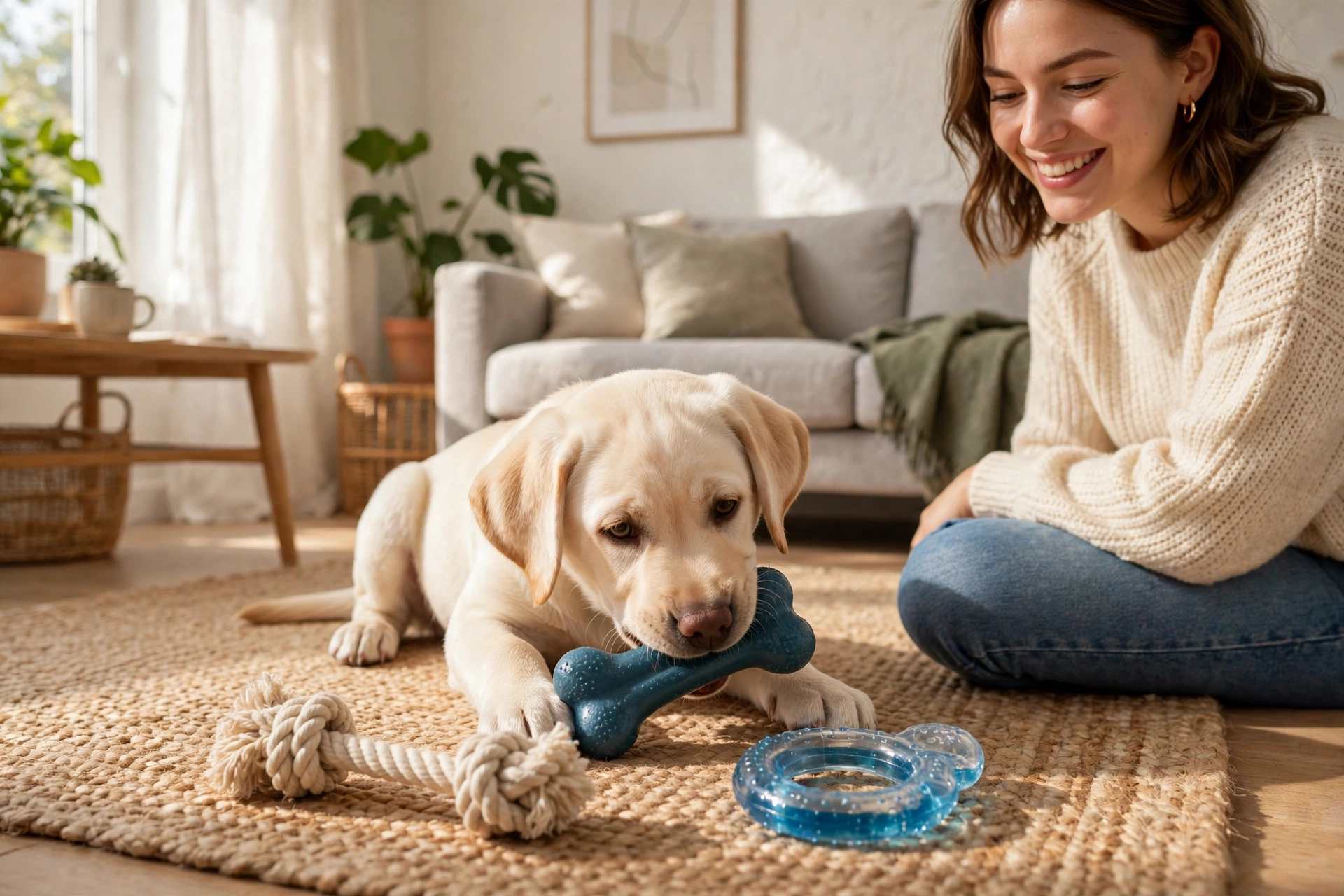
Rope, rubber and stuffed toys give puppies a safe target, and cold items soothe sore gums during teething. Chew toys that you can stuff with food keep a busy mouth occupied for longer.
| Item | Best for | Tip |
|---|---|---|
| Rubber teething toy | Sore gums | Chill it for extra relief |
| Rope toy | Tug play | Supervise and keep play gentle |
| Food-stuffed or dispensing toy | Calm chewing time | Use it during crate or pen breaks |
| Frozen damp washcloth | Teething relief | Watch for loose threads |
| Plush toy | Quick redirection | Keep several around the house |
Check toys often for wear. Retire any item that is breaking into pieces, since swallowed fragments can cause a blockage.
Handling Common Puppy Biting Situations
Most puppy biting happens in a few predictable moments, and a small change in routine can prevent them. Plan for these moments before they start.
- Overtired puppy: enforce naps, because tired puppies bite more.
- Children running and squealing: teach kids to stand still, and supervise all play.
- Biting ankles: keep a toy in your pocket and stop walking when it starts.
- Evening zoomies: offer a chew and calm activity before the wild hour begins.
- Greeting visitors: hand guests a toy so your puppy has something to hold.
Rough games can make things worse. Wrestling and games where the puppy chases your hands teach that skin is fair game.
Play Biting vs Aggressive Biting
Play biting is loose, bouncy and low in force, while aggressive biting is stiff, tense and aimed at stopping you. Reading the body language tells you which one you are seeing.
| Sign | Normal play biting | Needs professional help |
|---|---|---|
| Body | Loose, wiggly, bouncy | Stiff and tense |
| Face | Soft eyes, relaxed mouth | Hard stare |
| Sound | Playful growls during games | Deep growling, especially over food or toys |
| Bite style | Quick nips that stop when play stops | Holding with pressure or shaking the head side to side |
| Trigger | Excitement, hands, feet, toys | Handling, restraint, guarding |
Very little biting can be unusual too, so a puppy that never mouths anything may need a vet or behavior check.
A Daily Routine That Reduces Puppy Biting
A steady routine with naps, chews and short play sessions lowers the number of bites each day. Many nips come from boredom or exhaustion, both of which a plan can prevent.
- Start the day with a short play session using a toy, not hands.
- Follow with a chew in a pen or crate, so your puppy learns to settle.
- Schedule naps through the day, since overtired puppies bite more.
- Keep training sessions short and reward calm, soft mouthing.
- Offer a food-stuffed toy in the evening to meet the need to chew.
- End the day with quiet time instead of wild play.
Everyone in the household must follow the same plan. Mixed messages teach a puppy that biting works sometimes, which keeps the habit alive.

Puppy Biting and Children
Children and puppies need supervision together, because running, squealing and flapping hands trigger chasing and grabbing. A small change in how kids move can lower the number of bites quickly.
Teach children to stand still like a tree when the puppy grabs a sleeve or sock. Give them a toy to hold and let an adult guide the redirect. Short, calm sessions end better than long, excited ones.
Separate the two when the house is loud or the puppy is overtired. A pen with a chew toy gives everyone a break and protects small hands.
Socialization and Puppy Biting
Early, gentle socialization helps puppies learn manners with people and other dogs, and it lowers the risk of poor bite control later. The window is short, since puppies stay most receptive to new experiences until about 16 to 20 weeks of age.
Aim for many calm, positive meetings: friendly adults, children under supervision, different sounds and safe surfaces. Keep each outing short and stop while your puppy is still having fun.
Puppies with no socialization by 12 weeks are at higher risk of problems. Talk to your vet about safe ways to start before vaccines are complete.
Mistakes That Make Puppy Biting Worse
Harsh corrections make puppy biting worse because they create fear and anxiety instead of teaching a soft mouth. Skip any method that frightens or hurts your puppy.
- Holding the mouth shut, flicking the nose or spraying water.
- Pinning the puppy down or using leash jerks and shock collars.
- Yelling or shrieking, which can excite the puppy further.
- Letting the puppy chase hands or toes during play.
- Skipping naps and socialization.
Yelling stops the moment but teaches nothing, and it can raise the energy in the room. Calm and quiet work better.
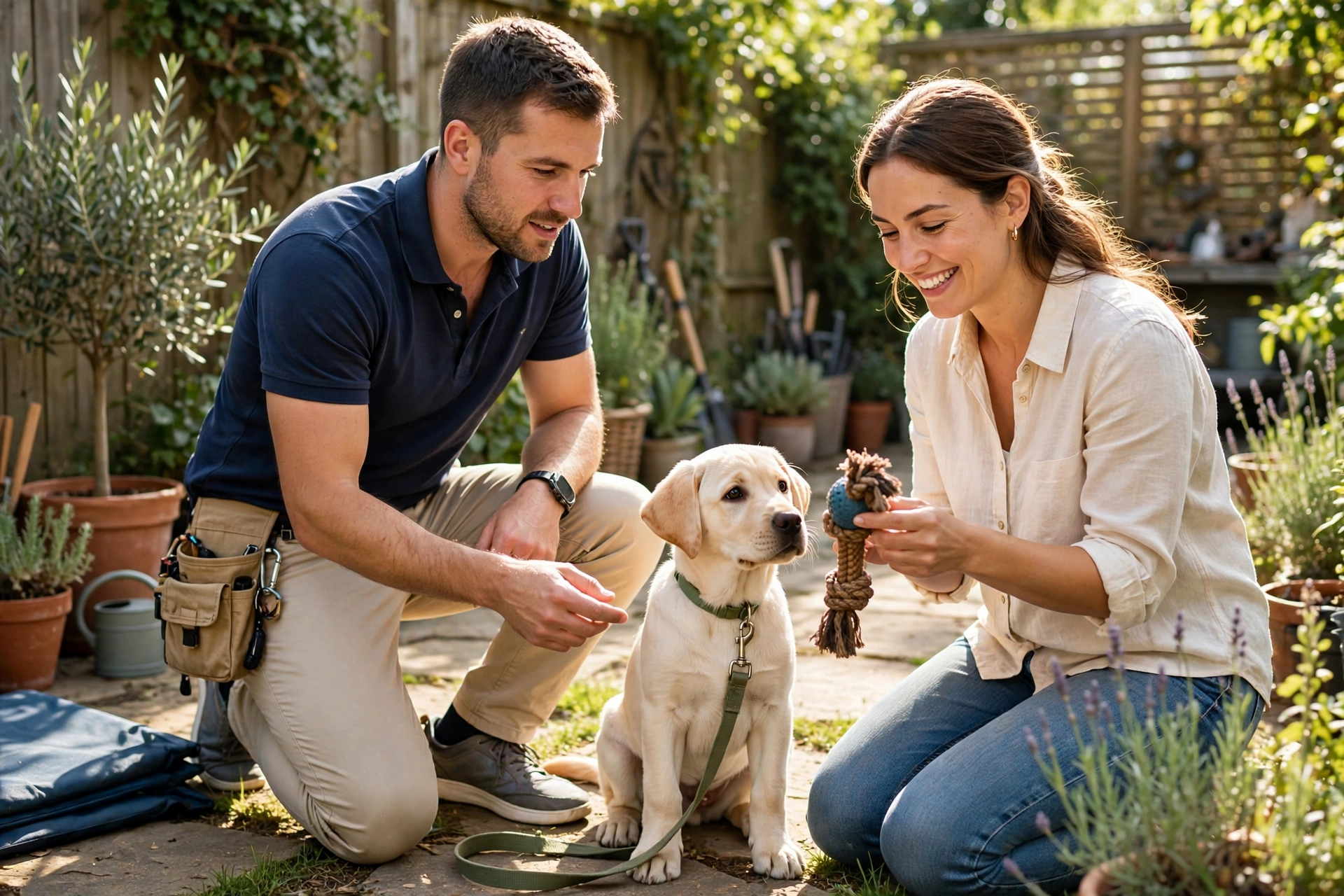
When to Get Professional Help
Get professional help if your puppy bites with a stiff body, hard stare, growling or pressure that breaks skin. These signs differ from normal play mouthing and call for a closer look.
- Biting while guarding food, toys or furniture.
- Biting when restrained, groomed or picked up, which can point to fear.
- Sudden aggression or discomfort when touched, which may signal pain or illness.
- Biting that has not eased after about 8 months.
- Little or no socialization by 12 weeks.
Start with your vet to rule out pain, then consider a certified trainer or behavior consultant who uses rewards. For background on normal development, read the veterinary guide to normal social behavior in dogs.
Frequently Asked Questions
Why does my puppy bite so much?
Puppies bite to explore, play and ease sore gums. Tiredness and attention seeking can raise the number of nips.
Is puppy biting normal?
Yes. Mouthing is normal puppy behavior and is not aggression. It becomes a concern only when it comes with growling, stiffness or hard bites.
When will my puppy stop biting?
Most puppies improve between 6 and 8 months, once adult teeth are in. Consistent training speeds the process.
Should I yelp when my puppy bites?
No, not if it excites your puppy. A calm “ouch” followed by a short pause usually works better than shrieking.
Does teething cause puppy biting?
Yes. Adult teeth start to emerge around 12 to 16 weeks, and sore gums make chewing more intense. Cold rubber toys help.
Can I punish a puppy for biting?
No. Punishment leads to fear and anxiety and can make biting worse. Redirect to a toy and reward gentle behavior.
How long should a biting time-out last?
Most guides suggest stepping away for about 10 to 30 seconds. Return calmly and offer a toy when your puppy settles.
Conclusion
Puppy biting is a phase, and the right response is calm, consistent and kind. Redirect to toys, pause play after hard bites, protect nap time and reward soft mouths from the first week.
Stay patient, because the habit fades as teeth settle. All adult teeth are typically in by around 7 months, and biting should begin to ease from that point.
Sources:
American Kennel Club (AKC) – Dog Training Advice
ASPCA – General Dog Care