
Puppy training starts the day your puppy comes home, usually at about 8 weeks old, and it works best in short, reward-based sessions of around five minutes. A puppy that earns a tiny treat for sitting at the door learns far faster than one that hears “no” after every mistake.
This guide gives a clear plan for the first months: a training timeline, potty training, a daily schedule, bite control, socialization and the mistakes that slow progress. The numbers follow widely used veterinary and animal welfare guidance, and your own vet has the final word on any health question.
When Should Puppy Training Start?
Puppy training should start as soon as you bring your puppy home, typically at about 8 weeks of age, because puppies between 6 and 16 weeks learn and retain the most. Every interaction teaches something, so even a quick meal or a trip to the garden counts as a lesson.
Formal puppy classes usually begin at 12 to 16 weeks and run for 4 to 6 weeks. Most puppies respond to everyday cues by 5 to 6 months of age, though training continues for life, and a dog keeps earning rewards in exchange for good work. Our dog training basics guide covers adult dogs too.
What Does a Puppy Training Timeline Look Like?
A puppy training timeline runs from home arrival at 8 weeks to reliable cues at 5 to 6 months, as the table below shows. Treat the ages as ranges, because each puppy learns at its own speed.
| Age | What happens | Training focus |
|---|---|---|
| About 8 weeks | Puppy comes home | Start training at once with short, rewarded sessions |
| 6 to 16 weeks | Best period for learning and retention | Name response, “watch” and sit |
| 7 to 14 weeks | Sensitive socialization window | Safe, positive introductions to people, sounds and places |
| 8 to 12 weeks | Potty training begins | Frequent trips to the same outdoor spot |
| 12 to 16 weeks | Formal classes usually begin | A class of 4 to 6 weeks |
| 5 to 6 months | Puppies respond to everyday cues | Practice cues around distractions |
| 4 to 6 months of training | Housetraining often becomes reliable | Keep the routine steady |
Guidance on housetraining varies, with some sources describing one week to one month for the first routine and others giving 4 to 6 months for full reliability. Both can be true, since a puppy may learn the routine quickly and still need months to stay consistent.

How Do Puppies Learn?
Puppies learn through association, so a behavior followed by a reward becomes more likely to repeat. Teaching puppies what to do through praise and rewards is the best practice, and it builds trust instead of fear.
- Luring: a treat guides the puppy into position like a magnet
- Capturing: you reward a behavior the puppy offers naturally, such as sitting
- Markers: a short signal such as “yes” or a clicker tells the puppy a reward is coming
- Shaping: you reward small steps toward a final behavior
Use tiny, high-value treats about the size of a pencil eraser. Most puppies switch from a food lure to an empty-hand gesture within 5 to 10 repetitions, and a cue is simply a signal that rewards are on the way, not a threat.
How Long Should a Puppy Training Session Last?
A puppy training session should last about five minutes, with a total of no more than 15 minutes of formal training per day. Short sessions suit a young puppy’s attention span and leave it eager for the next round.
Spread the lessons through the day, such as one in the morning, one after a meal and one in the evening. End each session on an easy success, and stop when the puppy loses interest.
How Do You Potty Train a Puppy?
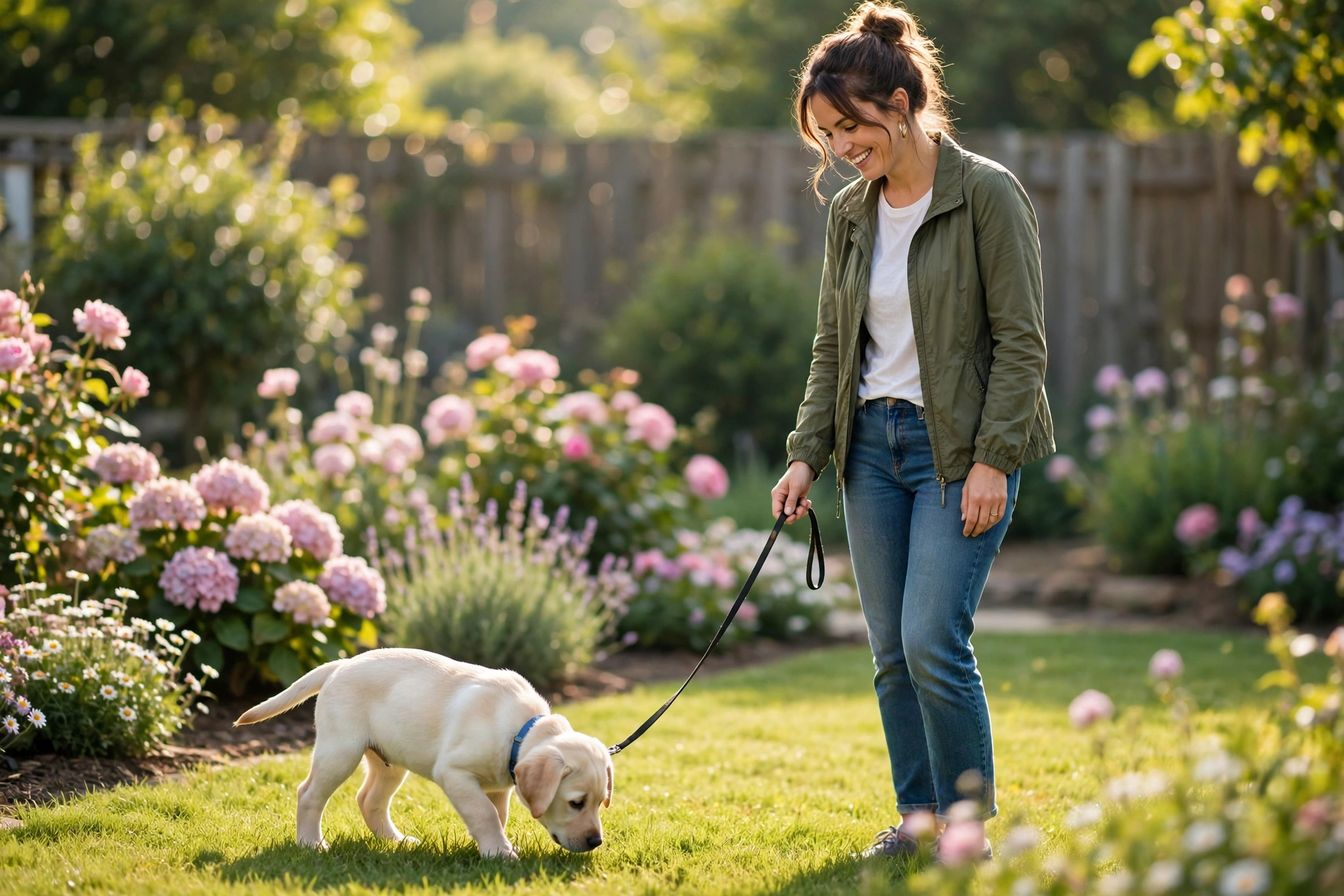
Potty train a puppy by taking it to the same outdoor spot at least every two hours, and after waking, playing, eating and drinking, then rewarding it right after it finishes. Consistency matters more than any single trick.
- Take the puppy out first thing in the morning, after meals, after naps, after play and last thing at night
- Go to the same spot each time, stand still and keep the mood calm
- Wait until the puppy has completely finished, then reward with praise and a treat straight away
- Supervise closely indoors, using a 6-foot leash to keep the puppy near you when you cannot watch it
- Confine the puppy to a small area when you cannot supervise
- Remove the water dish about two and a half hours before bedtime
A puppy can hold its bladder for about one hour for every month of age, so a 3-month-old may need to pee every 3 hours. Most puppies can sleep for about seven hours at night without a bathroom break once they are older, and a puppy left alone for more than four or five hours a day needs an alternative plan.
What Should You Do After a Potty Accident?
Clean the spot with an enzymatic cleaner and move on, because accidents are a normal part of training and punishment only creates fear. Other household cleaners and disinfectants do not remove the scent well enough, so the puppy may return to the same spot.
Never scold a puppy for going in the wrong place. A fuss after the fact can make the problem worse, and accidents should gradually decrease as the routine settles. Frequent accidents in an older puppy deserve a vet check, since urinary infections and other medical problems can play a part.
What Does a Daily Puppy Schedule Look Like?
A daily puppy schedule centers on three meals, a potty trip every two to four hours, short play and training sessions and plenty of sleep. Young puppies sleep 16 to 18 hours a day, so plan quiet nap times and let sleeping puppies rest.
- Meals: three times a day, with the food bowl left down for no longer than 15 minutes
- Potty breaks: every two to four hours, plus after waking, after meals and before bed
- Training: several sessions of about five minutes
- Play: several shorter sessions instead of one long one
- Sleep: 16 to 18 hours a day, in a quiet spot
Avoid sustained strenuous exercise until a puppy is about one year old. Short walks and play suit growing bodies better than long runs.
How Do You Stop Puppy Biting?
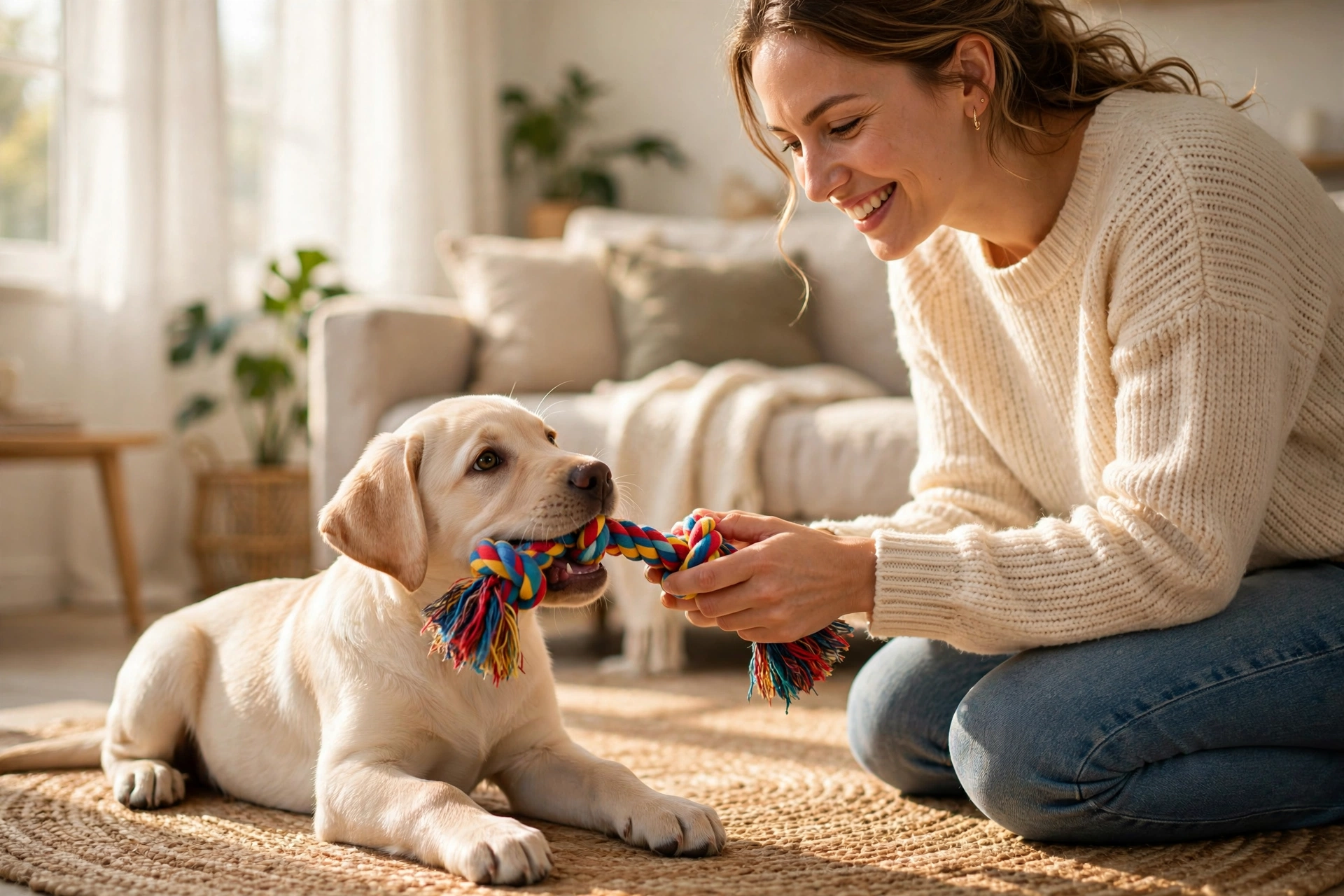
Stop puppy biting by teaching bite inhibition: yelp when the bite hurts, let your hand go limp and pause the game for 10 to 20 seconds. Mouthing is normal, since puppies explore with their needle-sharp teeth and all puppies chew while teething.
Bite inhibition is a dog’s ability to control the force of its mouthing, and puppies normally learn it from littermates that yelp and stop playing. You can repeat that lesson at home:
- Give a high-pitched yelp after a hard bite, then let your hand go limp
- Remove your hand and ignore the puppy for 10 to 20 seconds, or stand up and move away
- Limit this response to about three times in a 15-minute session
- Offer a chew toy or tug toy so the teeth have something better to hold
- Play non-contact games such as fetch instead of hand wrestling
Do not slap or hit a puppy for mouthing, because physical punishment can make it bite harder. Do not jerk your hand away either, since that can tear skin and encourages the puppy to chase. A puppy with a stiff, frozen body, bared teeth and growling is showing something different from play, and it needs a professional assessment.
How Do You Socialize a Puppy Safely?
Socialize a puppy by giving it short, positive introductions to new people, sounds, surfaces and friendly dogs during the sensitive window between 7 and 14 weeks. Earlier in puppyhood is better, and quick outings of about 10 to 15 minutes work well.
Safe contact means friendly, vaccinated adult dogs and well-run puppy classes, which suit puppies of 8 weeks and older. Ask your vet when your puppy may meet public spaces, because the vaccination series should be finished before busy dog areas. Playtime with other puppies tires a puppy out, which makes it less likely to play roughly with you. A veterinary behavior society publishes a position statement on puppy socialization.
What Puppy Training Mistakes Should You Avoid?
The most common puppy training mistakes are late rewards, long sessions, punishment and inconsistent rules. Each has a simple fix.
- Late rewards: deliver the treat within seconds, so the puppy links it with the right action
- Long sessions: stop at about five minutes, before frustration builds
- Punishment: skip scolding, slapping and scruff shaking, which add fear and can raise aggression
- Inconsistent rules: make sure every family member uses the same cues and the same routine
- Waiting too long: begin on day one, because the best learning window runs from 6 to 16 weeks

When Should You Hire a Puppy Trainer?
Hire a trainer who uses positive reinforcement when problems such as biting, fear or housetraining do not improve with home practice, or when you want structured help from week 12 onward. Group puppy classes combine training with safe socialization, and private lessons suit specific problems.
Seek help early for any aggression that looks different from play. Small problems tend to grow as a puppy gets bigger, and behavior that seemed cute at seven weeks can become a real issue at three or four months.
Frequently Asked Questions About Puppy Training
At what age should puppy training start?
Start at about 8 weeks, the day the puppy comes home. Puppies between 6 and 16 weeks learn and retain the most, and classes usually begin at 12 to 16 weeks.
How long should puppy training sessions be?
About five minutes each, with no more than 15 minutes of formal training per day. Several short sessions work better than one long one.
How often should a puppy go outside to pee?
At least every two hours, and after waking, playing, eating and drinking. A puppy holds its bladder for about one hour per month of age.
How long does it take to potty train a puppy?
The routine can take one week to one month to learn, while full reliability often takes 4 to 6 months. Accidents are normal and should decrease over time.
Is puppy biting normal?
Yes, mouthing and nipping are normal as puppies explore and teethe. Teach bite inhibition with a yelp and a short pause, and offer chew toys.
How much sleep does a puppy need?
Young puppies sleep 16 to 18 hours a day. Plan quiet nap times and avoid disturbing a sleeping puppy.
When should a puppy start training classes?
Classes suit puppies of 8 weeks and older, and formal training classes usually begin at 12 to 16 weeks. Most last 4 to 6 weeks.
Conclusion
Puppy training rests on four habits: start early, keep sessions short, reward quickly and stay consistent. A steady potty routine, a predictable daily schedule and calm handling of biting solve most early problems before they grow.
By 3 months old, a puppy can hold its bladder for about 3 hours, so a potty trip every two to three hours keeps the day on track until the habit sticks.
Sources:
American Kennel Club (AKC) – Dog Training Advice
ASPCA – General Dog Care