The breed is a large, athletic water retriever that stands over 15 inches (38.1 centimetres) at the shoulder, weighs 40 to 70 pounds (18.1 to 31.8 kilograms), and lives 10 to 18 years. Breeders in Germany developed the standard poodle as a duck hunting dog, and France refined the breed into a national dog. The American Kennel Club (AKC) recognized the breed in 1887 and places the breed in the Non-Sporting Group. Owners researching a standard poodle in 2026 need hard numbers on size, grooming hours, exercise time, health risks and cost, because a standard poodle is a 10 to 18 year commitment with a heavy coat care bill. Health facts in this guide match AKC and PetMD guidance.
Appearance misleads many buyers at first meetings. A show clip suggests a decorative lap dog, and the dog under the clip is a working retriever with strong jaws, webbed feet and a hunting drive.
Standard Poodle Quick Facts
The height rule alone defines the variety, and any poodle over 15 inches (38.1 centimetres) at the shoulder counts as a standard. Most adults grow well past the floor of the standard and land in large breed territory. The table below collects the core numbers in one place.
| Fact | Detail |
|---|---|
| Height | Over 15 inches (38.1 centimetres) at the shoulder; most adults stand 18 to 24 inches (45.7 to 61 centimetres) |
| Weight | Males 60 to 70 pounds (27.2 to 31.8 kilograms); females 40 to 50 pounds (18.1 to 22.7 kilograms) |
| Lifespan | 10 to 18 years |
| Coat | Single coat of dense curly hair, minimal shedding, hair grows without stopping |
| Colours | Black, white, brown, red, apricot, cream, silver, blue, gray, café-au-lait, and parti-colour (white with solid colour patches) |
| Group | Non-Sporting Group, American Kennel Club |
| Origin | Germany, developed as a water retriever and refined in France |
| Exercise | 1 to 2 hours of activity per day |
| Grooming | Brushing to the skin daily; professional clipping every 6 to 8 weeks |
A 10 week old puppy weighing 10 pounds (4.5 kilograms) can finish at 65 pounds (29.5 kilograms) as an adult male, so crate and car choices need adult numbers from day one.
Size and Appearance of the Standard Poodle
The body is square in outline, and body length from breastbone to rump roughly equals height at the shoulder. A long neck rises from sloping shoulders, and the back stays level during movement. Judges measure height at the withers (the highest point of the shoulder blades), and the 15 inch (38.1 centimetre) line separates this variety from smaller poodles in the show ring. Legs run long and straight, and feet stay compact with webbed toes built for swimming.
Head shape sets the breed apart in any crowd. A long, fine muzzle leads to dark oval eyes, and long ears hang close to the head. Tails stand upright, and many American dogs carry a docked tail.
Puppy hair feels soft and waves loosely, and adult curl arrives between 6 and 18 months of age during a phase groomers call coat change. Mats form fast during coat change, because shed puppy hair tangles inside the new adult curl.
Standard Poodle Temperament and Personality
The breed is intelligent, proud and people focused, and adults form close bonds with household members. Alertness makes the standard poodle a reliable watchdog, because adults bark at doors, gates and strange footsteps, then settle after a greeting. Aggression is rare in well bred adults, and shyness appears more often than sharpness in poorly socialized dogs. Owners describe a sensitive reader of moods, since the breed tracks tone of voice and household tension closely.
Company ranks as a need, not a bonus. Adults left alone for 8 to 10 hours daily can develop separation anxiety, and bored adults invent jobs such as barking, digging and chewing skirting boards. A dog named Clover, in one breeder example, learns the family schedule within weeks and waits by the door at school run time.
How Much Exercise Does a Standard Poodle Need?
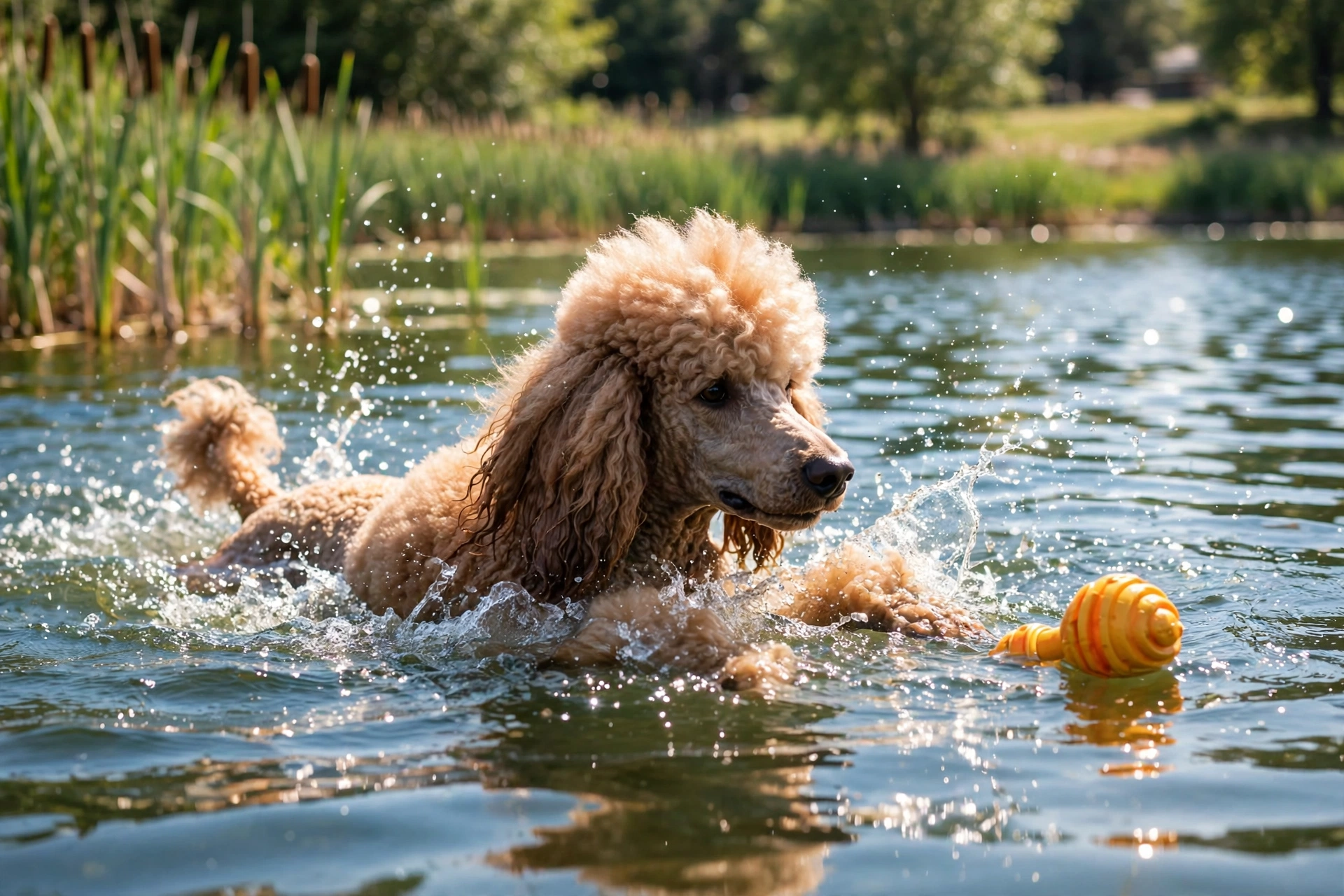
An adult needs 1 to 2 hours of activity every day, split across walks, play and training. PetMD sets the same 1 to 2 hour daily range for the breed. Swimming tops the activity list for a water retriever, and fetch, jogging, hiking and agility burn energy at the same rate. Most owners book a morning walk of 45 minutes and an evening session of games or training.
Puppies need a shorter, controlled load. Breeders apply a common guide of 5 minutes of exercise per month of age, twice a day, so a 4 month old puppy gets 20 minutes per session while growth plates stay open. Mental work tires this breed as fast as field work, and 15 minutes of scent games indoors can settle a restless evening dog. A 2 year old male named River swims twice a week, trains agility on Saturdays and still asks for a puzzle feeder at night.
Grooming and Coat Care for a Standard Poodle
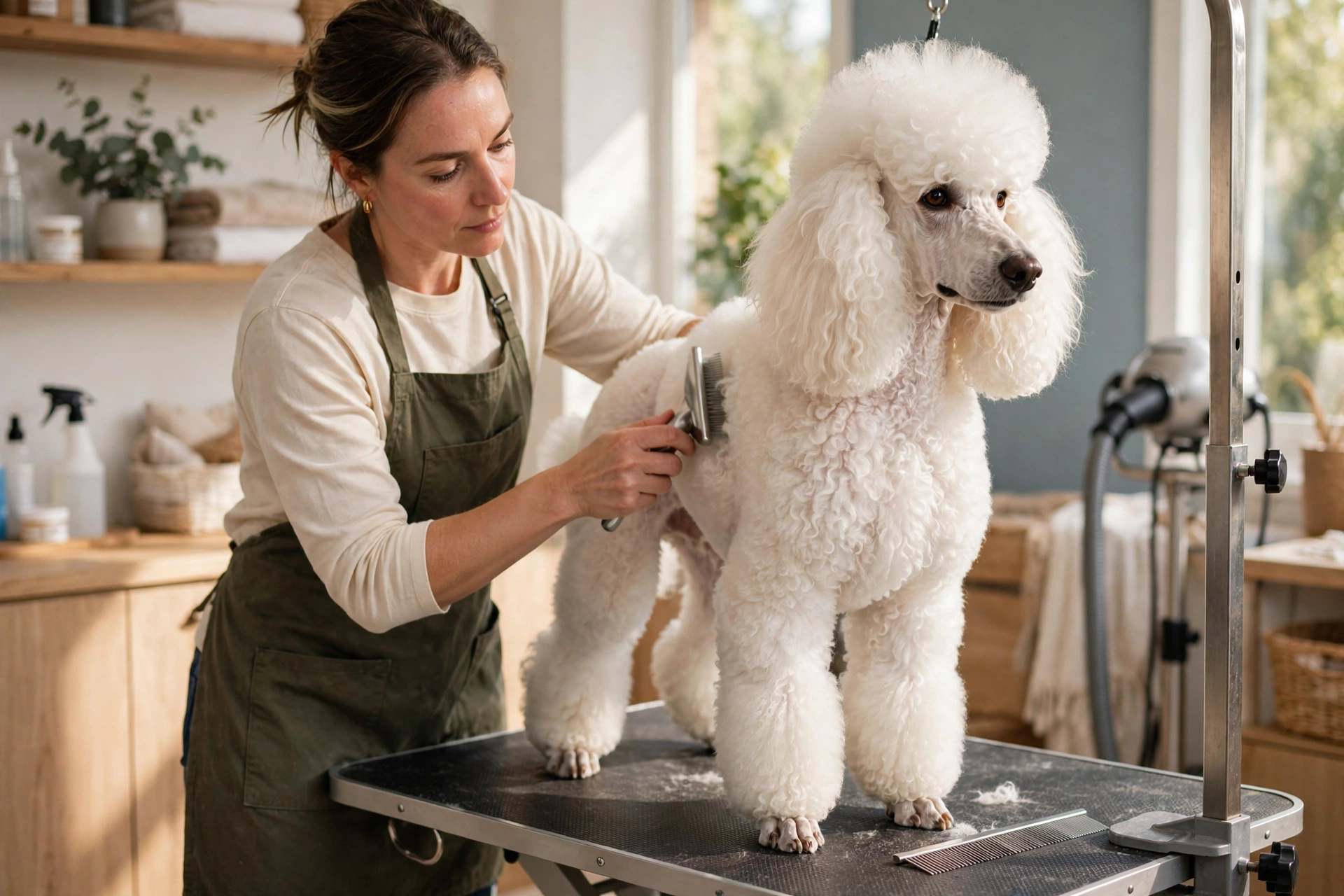
The coat is hair, not fur, and hair grows without stopping while shedding stays minimal. Shed hair does not fall to the floor, because loose strands catch inside the curls and form mats against the skin. Brushing to the skin with a slicker brush and a metal comb takes 15 to 20 minutes daily, and skipped days during coat change can force a groomer to shave the whole coat. Allergy households need time with adult dogs before buying a puppy, because no breed is fully hypoallergenic.
Professional appointments anchor the routine. Groomers clip most pet dogs every 6 to 8 weeks, and baths fall every 3 to 4 weeks. Ears need weekly checks, because hair grows inside the ear canal and long ear leathers trap moisture after swimming. Teeth need brushing several times a week, and nails need trimming every 3 to 4 weeks.
Clipping Styles Owners Choose
Three clips cover nearly every dog, and the sporting clip gives owners the lowest daily workload. Groomers cut the sporting clip to one short length over the body and legs, and owners brush the cut in minutes. The Continental clip is the show ring standard, with shaved hindquarters, bracelets of hair on the legs and full hair on the chest. Working history explains the Continental pattern, since shaved quarters cut drag in cold water and chest hair warmed the heart and lungs of a swimming retriever. Puppy clips leave young show dogs in longer, even hair, and a lamb clip keeps legs slightly fuller than the body for a softer outline.
Training and Intelligence of the Standard Poodle
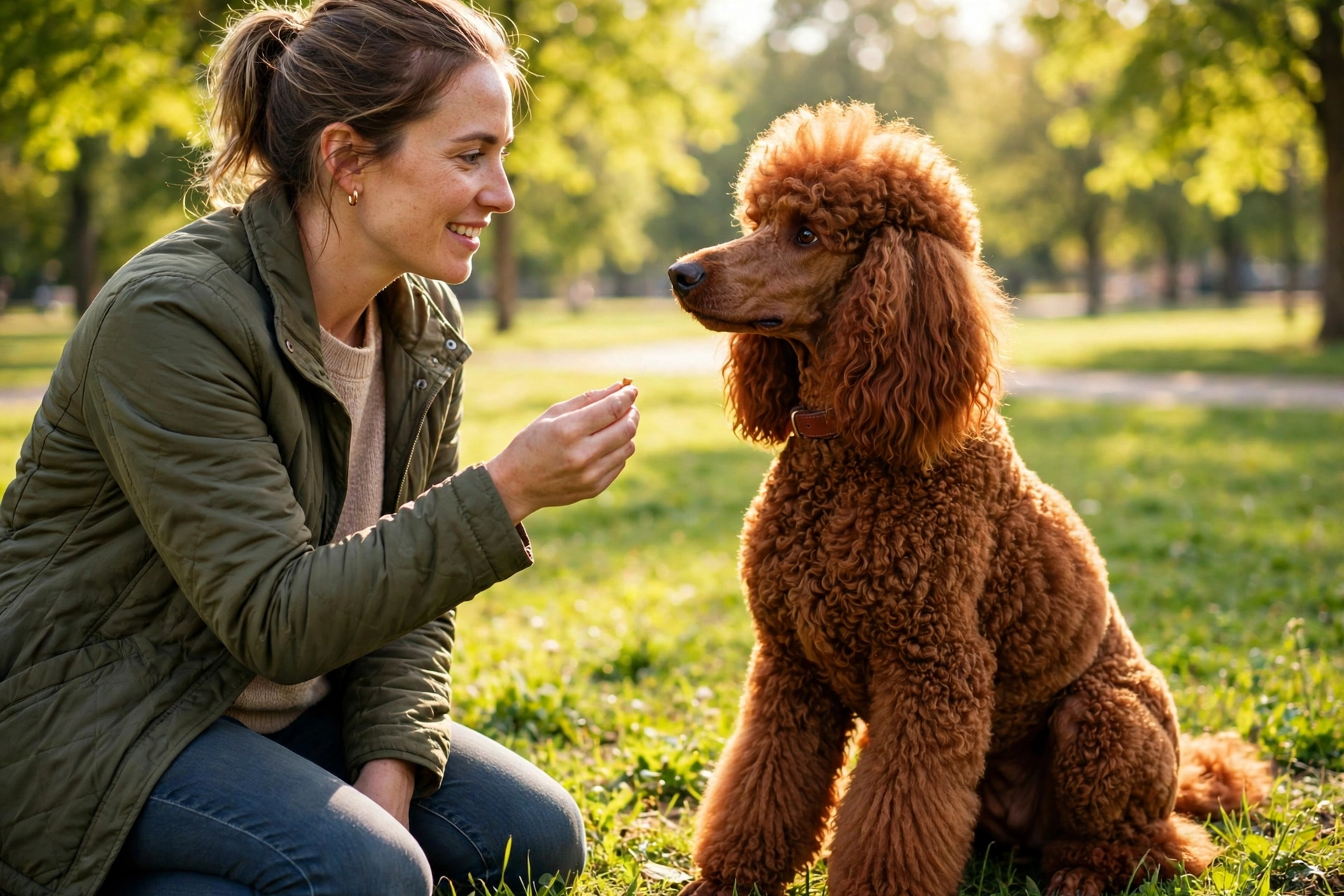
The breed learns commands at the top of the dog scale, and reward based training produces the fastest results. Psychologist Stanley Coren ranked the breed second only to the Border Collie for working and obedience intelligence. Harsh corrections backfire with a sensitive reader of tone, so food rewards, games and praise carry the training plan. Most adults master sit, down, stay and recall within the first 4 months of steady daily practice.
Socialization windows close early in puppyhood. Breeders start handling and sound exposure before 8 weeks of age, and owners continue meetings with strangers, children, traffic and other dogs through 16 weeks of age. Jobs suit this breed well after basic training, and graduates work as guide dogs, diabetic alert dogs, therapy dogs and hunting retrievers. Sport titles in agility, dock diving and obedience give adult brains a legal outlet.
Standard Poodle Health Issues and Lifespan
The lifespan of 10 to 18 years is long for a large breed, and screening by breeders keeps the range high. PetMD lists the breed as generally healthy, and AKC guidance names the same core conditions. Responsible breeders test hips, eyes and DNA (deoxyribonucleic acid) before breeding, and buyers should ask for Orthopedic Foundation for Animals (OFA) hip scores and eye examination records in writing.
Bloat and Gastric Dilatation-Volvulus
Bloat with stomach twisting is the top emergency risk, and a twisted stomach kills within hours without surgery. Gastric dilatation-volvulus (GDV) strikes deep chested breeds, and the stomach fills with gas, twists, and cuts off blood flow. Emergency signs are a swollen abdomen, drooling, pacing and retching that produces no vomit, and any dog with retching signs needs an emergency clinic at once. Surgeons can add a gastropexy during spay or neuter surgery, and a gastropexy fixes the stomach to the abdominal wall so the stomach cannot twist.
Addison Disease and Hormone Disorders
Adrenal gland failure appears in this breed at higher rates than in most breeds, and vague signs delay diagnosis for months in many cases. Addison’s disease, also called hypoadrenocorticism, develops after the adrenal glands stop making enough cortisol and aldosterone. Signs include low energy, vomiting, diarrhea, poor appetite and collapse during stress. Veterinarians confirm the disease with an ACTH (adrenocorticotropic hormone) stimulation test, and daily hormone replacement controls the disease for life after diagnosis. Hypothyroidism (an underactive thyroid gland) also appears in adults and answers to daily thyroid tablets.
Hips, Skin and Eyes
Hip dysplasia, sebaceous adenitis and inherited eye disease form the screening core for breeding dogs. Hip dysplasia is a loose hip joint that grinds into arthritis, and weight control plus joint supplements with glucosamine and chondroitin slow the damage in mild cases. Sebaceous adenitis is an autoimmune attack on the oil glands of the skin, and the attack causes scaling, hair loss and skin infection in young adults. Eye diseases include progressive retinal atrophy (PRA), an inherited degeneration that ends in blindness, plus cataracts. Idiopathic epilepsy (seizures with no found cause) also runs in the breed, with first seizures usually at 2 to 5 years of age, and von Willebrand disease is a clotting disorder a DNA test can flag before surgery.
What Should You Feed a Standard Poodle?
Adults eat a complete large breed food in 2 measured meals per day, and meal timing protects against bloat. A 60 pound (27.2 kilogram) adult needs roughly 1,300 kilocalories per day, and food bag charts give the cup count for a chosen food. Slow feeder bowls stretch meal time for fast eaters, and owners rest dogs for 1 hour before and 1 hour after meals. Raised feeding bowls raise bloat risk in deep chested breeds, so bowls stay on the floor.
Puppies eat large breed puppy food in 3 to 4 smaller meals, because controlled growth protects hips and growth plates. Treats stay at or below 10 percent of daily calories under the standard 10 percent treat rule, and table scraps stay out of the bowl. A veterinarian may add glucosamine and chondroitin for a dog with early hip changes, and dose follows body weight in kilograms.
Living With a Standard Poodle: Families, Children and Other Pets
The breed suits active families with older children, and size alone demands supervision around toddlers. A playful 65 pound (29.5 kilogram) adult can knock a small child flat during a doorway rush, so adults supervise every game until children pass 6 years of age. Early socialization produces adults that accept cats and other dogs calmly, and most households report peaceful multi pet living after structured introductions.
Apartment living works under strict conditions. A standard poodle accepts an apartment, if the owner delivers 1 to 2 hours of outdoor activity daily and books grooming on schedule. Barking stays moderate in exercised dogs, and adults belong inside with the family, not in a yard kennel.
How Much Does a Standard Poodle Cost?
First year costs commonly pass 4,000 dollars, and grooming is the line item buyers underestimate most. Puppies from breeders who run hip, eye and DNA tests cost 1,500 to 3,000 dollars in the United States in 2026. Professional grooming costs 75 to 120 dollars per session for a dog of this size, and 7 to 9 sessions per year put grooming near 600 to 1,000 dollars annually. Food for a large breed adult runs 60 to 90 dollars per month, and routine veterinary care runs 300 to 600 dollars per year.
A preventive gastropexy added to a spay or neuter surgery costs extra at the clinic, and emergency GDV surgery without the preventive step can cost 3,000 to 7,000 dollars. Training classes, crates, beds and toys add 300 to 500 dollars during the first year.
Conclusion
The breed rewards owners who fund grooming, training and screening, and the breed punishes owners who skip any of the three. Buyers get an athletic retriever with a 1 to 2 hour daily exercise need, a coat that mats without daily brushing and a health list headed by bloat and Addison’s disease. A healthy adult standard poodle stands 18 to 24 inches (45.7 to 61 centimetres) tall and weighs 40 to 70 pounds (18.1 to 31.8 kilograms).
Keep exploring: dog BMI calculator, miniature poodle guide and black poodle guide.
Frequently Asked Questions
Is a standard poodle a good family dog?
Yes, the breed suits active families well. Adults play gently with school age children and bond with every household member. Supervision is required around toddlers, because a large adult can knock a small child over.
Do standard poodles shed?
No, the breed sheds very little visible hair. Loose hair catches inside the curls instead of falling on floors and furniture. Trapped hair forms mats against the skin, so daily brushing to the skin is a duty for owners.
How big does a standard poodle get?
Adults stand over 15 inches (38.1 centimetres). Most adults reach 18 to 24 inches (45.7 to 61 centimetres). Males weigh 60 to 70 pounds (27.2 to 31.8 kilograms); females weigh 40 to 50 pounds (18.1 to 22.7 kilograms).
Are standard poodles hypoallergenic?
No dog is fully hypoallergenic, and this breed is a low shedding option only. The coat releases little hair and less dander than most large breeds. Allergy sufferers should spend time with adult dogs before paying a breeder deposit.
How long do standard poodles live?
The breed lives 10 to 18 years on average. Lifespan is long for a large breed, and screened parents raise the odds of the upper range. Weight control, dental care and bloat prevention protect the senior years.
How much exercise does a standard poodle need?
Adults need 1 to 2 hours of activity every day. Walking, swimming, fetch and training share the daily total across two or three sessions. Puppies follow a guide of 5 minutes per month of age, twice a day.
Are standard poodles easy to train?
Yes, the breed ranks near the top for obedience learning. Reward based methods with food, games and praise produce fast results. Harsh corrections slow progress, because adults read tone closely and shut down under shouting.
Sources:
ASPCA – General Dog Care
VCA Animal Hospitals – Know Your Pet Library