
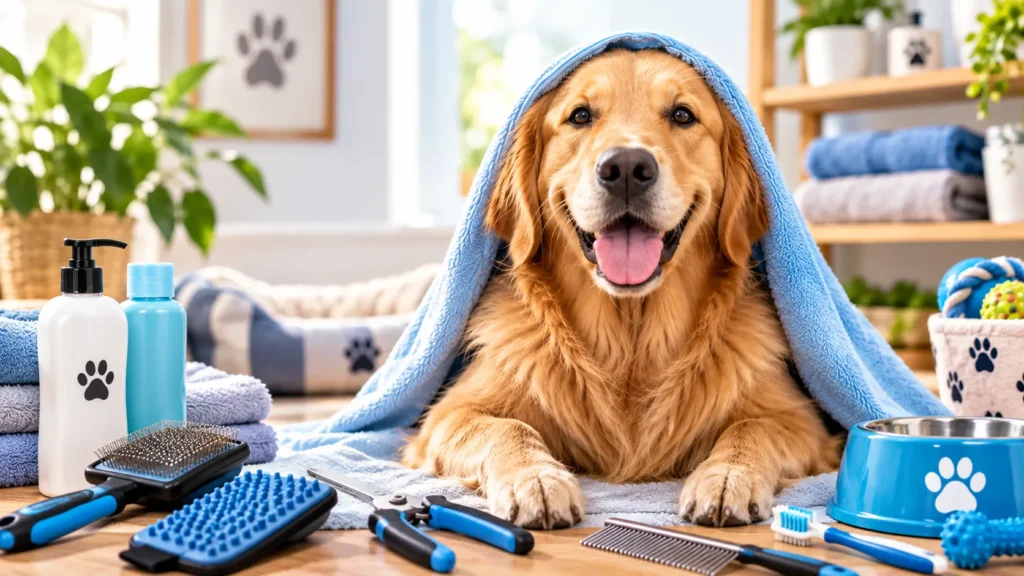
Most dog owners assume grooming means a trip to the groomer—expensive, time-consuming, and often stressful for their dog. But at-home grooming changes that equation entirely. You save hundreds of dollars annually, catch health problems before they become serious, and build a relationship with your dog based on trust and gentle handling. This guide walks you through every dog grooming tip you need, from basic bathing to preventing ear infections, without requiring professional tools or years of experience.
Why At-Home Dog Grooming Matters
Grooming your dog at home builds trust, saves money, and lets you catch health problems early.
Health and early detection:
- Regular bathing, brushing, and trimming let you monitor skin for lumps, bumps, or sores that signal a vet visit
- You catch ear infections, matting, and dental problems before they become serious
- Dogs who grow up with regular hands-on care from their owners accept handling better and experience less stress than those who see a groomer only once a year
Trust and relationship building:
- Grooming sessions create a foundation of gentle handling that carries into every aspect of your dog’s life
- Your hands become familiar rather than foreign, and your dog learns that being touched is safe
- This matters when a vet needs to examine them, when they’re injured, or when they’re nervous about fireworks or thunderstorms
Essential owner skills:
- Dog grooming tips aren’t luxury knowledge—they’re essential owner skills that prevent matting, reduce shedding on your furniture, and catch ear infections before they become serious
- You don’t need a professional groomer’s equipment or years of experience to keep your dog healthy and comfortable
- What you need is a system, the right tools, and an understanding of what your dog’s coat and body actually require
DIY vs. Professional Grooming: Cost Breakdown and When to Hire
Cost Comparison
At-home grooming costs $150-$400 per year in supplies, while professional grooming runs $50-$150 per visit every 6-8 weeks—totaling $300-$900 annually. The math shifts based on your dog’s size, coat type, and whether they need hand-stripping or specialty cuts.
| Grooming Approach | Initial Investment | Annual Cost | Best For | Dog Grooming Tips |
| DIY At-Home | $150-$250 | $150-$400 | Short coats, budget-conscious owners | Brush weekly, bathe every 2-4 months |
| Professional Only | $0 | $300-$900 | Anxious dogs, hand-stripping breeds, busy schedules | Full grooming every 4-8 weeks |
| Hybrid (DIY + Pro) | $150-$250 | $300-$500 | Most owners | At-home brushing + professional nail trims 2x/year |
| Professional Hand-Stripping | $0 | $600-$1,200 | Show dogs, specialty breeds | Hand-stripping every 6-12 weeks (Poodles, Terriers) |
Coat type and size determine your at-home grooming time and cost:
- Small dogs with short coats (Chihuahua, Beagle) — Minimal brushing and simple nail trims; cheapest to maintain at home
- Larger dogs or double-coated breeds (Retrievers, German Shepherds, Huskies) — Shed heavily; require 30-60 minutes weekly brushing versus 10-15 minutes for short-haired dogs
- Long-haired breeds (Poodles, Doodles, Yorkies) — Demand daily brushing or mat within days; time-intensive but cheaper than professional grooming every 4-6 weeks
- Lifetime cost difference — Saving $600-$1,200 annually compounds to $6,000-$12,000 over a 10-year period between DIY and professional grooming services
When to Hire a Professional Groomer
Hire a professional groomer if your dog has severe anxiety around grooming, if you lack time for weekly brushing, or if your dog’s coat requires hand-stripping or breed-standard cuts. Hand-stripping (removing dead coat by hand rather than clipping) is a specialty skill that professional groomers charge $200-$600 for, depending on breed and size. Show-quality Poodles, Terriers, and Wire-Haired breeds often need this service.
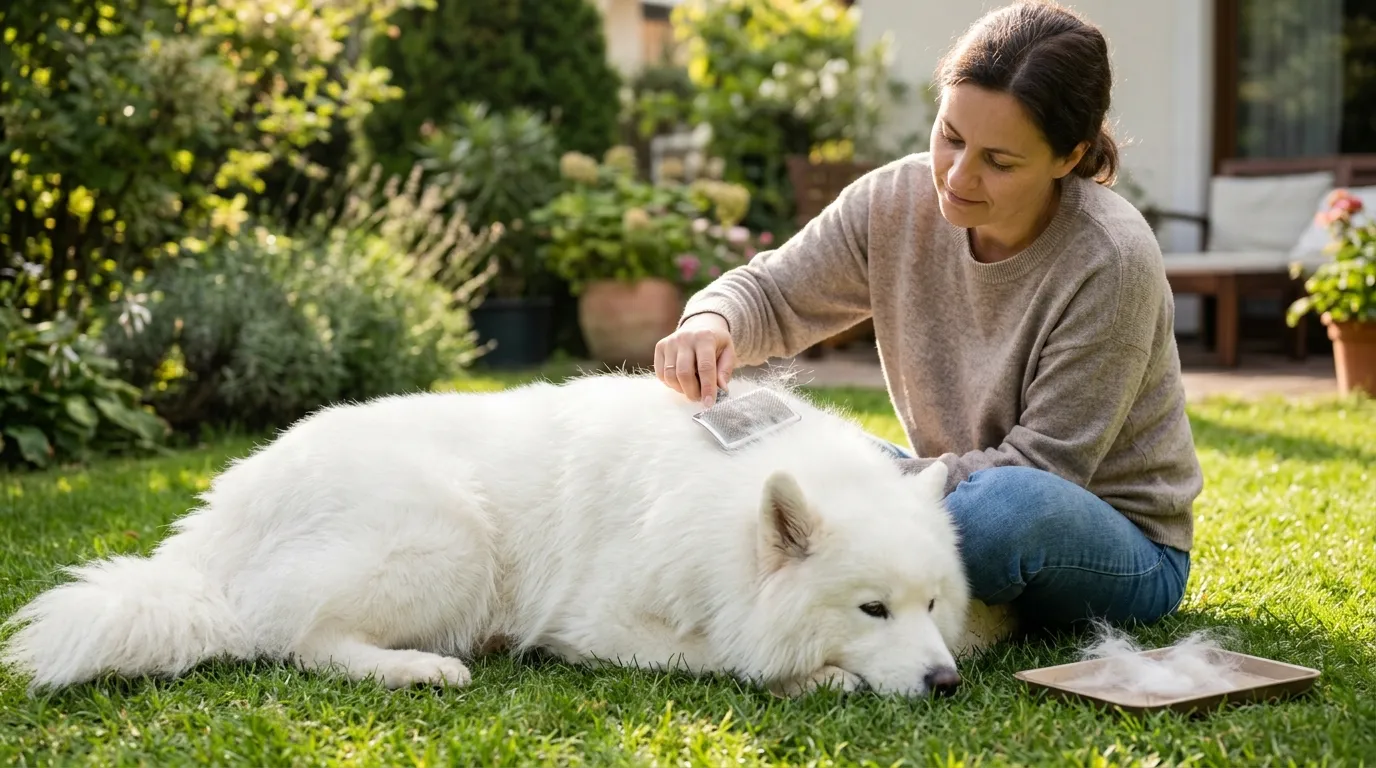
You don’t need to choose one path forever. Many owners bathe and brush their dogs at home but hire a groomer for nail trims every 8-12 weeks, or for full grooming twice a year. This hybrid approach costs $300-$500 annually and takes the pressure off if life gets hectic.
Grooming Supplies You Actually Need
Budget Breakdown
Budget $150-$250 to start grooming at home; high-quality setups run $250-$400. You don’t need every item on the internet—you need the right ones for your dog’s coat.
Bathing Supplies
Dog shampoo ($8-$15), non-slip mat ($10-$20), cup or pitcher ($5), towel ($free-$20 if buying new). Choose a shampoo formulated for dogs, not human shampoo, because dog skin is less acidic and human formulas can irritate. Avoid tearless shampoos marketed for puppies unless your dog has sensitive eyes; regular dog shampoos work fine if rinsed thoroughly.
Brushing Supplies
The brush you choose depends entirely on coat type. Short-haired dogs (Boxers, Labs) need a rubber curry brush ($8-$12) or grooming mitt ($10-$18). Medium-length and dense coats (Golden Retrievers, Corgis) require a slicker brush ($15-$30) and undercoat rake ($12-$20). Long, silky coats (Yorkies, Maltese) need a pin brush ($15-$25) and wide-tooth comb ($8-$15). Double-coated dogs shedding heavily benefit from a high-velocity dryer ($50-$200), which accelerates drying and removes loose coat without hand-drying for 30 minutes.
Nail Care Supplies
Clippers come in two styles: scissors-type ($10-$20) and guillotine-style ($8-$15). Both work equally well; choose based on hand comfort. Keep styptic powder ($5-$8) on hand to stop bleeding if you accidentally trim into the quick (the vein inside the nail). A nail file ($5-$10) smooths rough edges.
Ear and Dental Care Supplies
Ear cleaner solution ($8-$15), cotton balls ($2-$5), dog toothbrush ($6-$12), and dog toothpaste ($5-$10). Avoid using Q-tips inside ears; cotton balls and gauze are safer.
Optional but Useful
Detangler spray ($10-$15) for long coats, conditioner ($8-$12), nail grinder ($30-$100 for electric models), and ophthalmic ointment ($8-$15) to protect eyes during baths.
Starting supplies for a small, short-haired dog: shampoo, non-slip mat, scissors-type clippers, styptic powder, cotton balls, dog toothpaste—total around $60-$80. For a medium long-haired dog, add a slicker brush, pin brush, ear cleaner, and undercoat rake: $150-$200 total.
Bathing Your Dog: Step-by-Step Fundamentals
Bathing Frequency
Bathe your dog every 2-4 months if they’re indoor pets, or every 4-6 weeks if they spend time outside or have skin issues. Bathing too frequently (weekly) strips natural oils and dries out skin; too infrequently allows dirt and oil to accumulate.
Pre-Bath Brushing
Before the bath, brush your dog thoroughly to remove mats, tangles, and dead hair. Wet hair grabs onto mats like magnets, making them worse. If you skip brushing, you’ll end up with a damp dog that’s even more matted than before.
Water Temperature and Filling the Tub
Fill the tub with 3-4 inches of warm (not hot) water. Cold water stresses dogs and creates negative associations with bathing; warm water relaxes them. Test temperature on your inner wrist—it should feel pleasantly warm, not scalding.
Wetting and Shampooing
Wet your dog from the neck backward, avoiding the face. Use a cup, pitcher, or spray attachment to control water flow. Pour or spray gently; don’t blast ears or nose directly. Massage water into the coat as you go so it reaches the skin, not just the surface.
Apply shampoo and work it into a lather using your hands like you’re shampooing your own hair. Focus on the back, sides, legs, and rear end. Neck and chest come next. Leave the face for last, using a damp washcloth instead of pouring water directly.
Rinsing
Rinse completely. Residual shampoo causes flaking, itching, and dullness. Pour or spray water over your dog, starting at the neck and working downward, until water runs clear. If you see suds, rinse again. This step takes longer than you think and is non-negotiable.
Proper rinsing is important because shampoo residue can irritate the skin. The American Kennel Club also recommends thorough rinsing and using dog-specific shampoo.
Drying
Dry your dog thoroughly. For long-haired breeds, a high-velocity dryer ($80-$200) removes water and loose coat in 10-20 minutes. For short coats, a regular towel works fine. Rub gently; excessive rubbing irritates skin. Some dogs can chill easily, especially puppies, seniors, or toy breeds—dry them completely to prevent hypothermia.
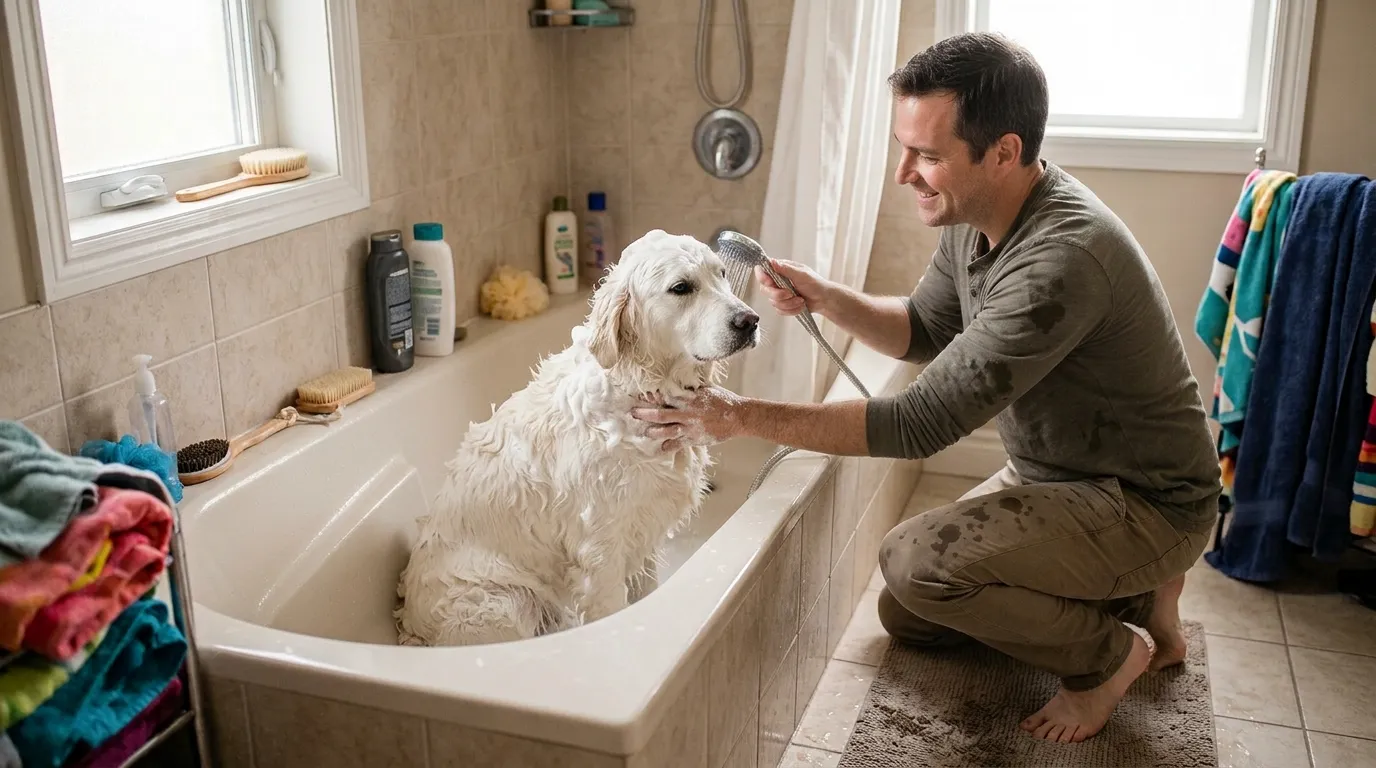
If your dog has skin folds or wrinkles (Shar Peis, Pugs, Bulldogs), dry between the folds with a towel or cloth. Trapped moisture breeds bacteria and yeast, causing infection and odor.
Brushing by Coat Type: Breed-Specific Strategies
The brush you use and how often you use it depend entirely on your dog’s coat structure. There’s no one-size-fits-all approach, and using the wrong brush wastes time and can irritate skin.
Short, Smooth Coats
Chihuahuas, Boxers, Basset Hounds, Beagles—Brush once weekly using a rubber curry brush or grooming mitt. These tools loosen dead skin and dirt, then a bristle brush removes dead hair. Finish with a chamois cloth for shine. Short-coated dogs shed, but brushing redirects the loose hair toward a brush instead of your couch.
Short, Dense Coats
Golden Retrievers, Labs, Corgis—Brush once weekly with a slicker brush to remove tangles, then use a bristle brush for dead hair. Dense undercoats trap moisture and dirt, so make sure you’re brushing all the way to the skin, not just the surface. If matting starts, stop and untangle it before the next bath; wet hair only makes matting worse.
Long, Silky Coats
Yorkshire Terriers, Maltese, Shih Tzus—These breeds need daily attention. Use a pin brush with long, thin wires to remove tangles, then a slicker brush for fine hairs. If tangles develop, spray with detangler and gently tease them apart; don’t pull. Long-haired dogs can mat within 2-3 days of missing a brushing, so consistency matters.
Long Coats with Dense Undercoats
Collies, Afghan Hounds, Old English Sheepdogs—Brush daily or every other day. Use a pin brush on the long outer coat, then an undercoat rake to remove dead hair from the dense undercoat beneath. During spring and fall shedding, you might rake out enough loose coat to fill a garbage bag. This isn’t excessive—it’s necessary to prevent matting and reduce shedding in your home.
Curly or Wire Coats
Poodles, Doodles, Terriers—Daily brushing or every other day using a slicker brush and metal comb. Curly coats mat faster than any other type because the structure traps dead hair. If matting starts, it becomes difficult to brush out without damaging the coat. Prevention—daily brushing—is far easier than trying to detangle a matted dog.
Gentle Brushing Technique
Brush gently, especially near the skin. Excessive pressure causes brush burn, a painful irritation that looks like a rash. If your dog flinches or yelps during brushing, ease up. Painful brushing teaches dogs to fear grooming, and undoing that fear takes months of positive conditioning.
Trimming Nails Safely: Handling Anxiety and Technique
Nail Trimming Frequency
Trim nails every 2-4 weeks, or whenever they click audibly on hard floors. Overgrown nails bend toes into unnatural positions over time, causing permanent deformity and pain. They also catch on carpets, break off, and bleed.
Pre-Trimming Conditioning
Before you touch clippers, spend a week just handling your dog’s paws. Rub their legs and gently press each toe while offering treats. If your dog has a history of fear around nail trims, this conditioning step matters. Dogs learn to trust touch through repetition, not pressure.
Choosing Clippers
Choose scissors-type or guillotine-type clippers based on hand comfort, not brand name. Both work equally. Guillotine clippers have a fixed opening that you insert the nail into; scissors-type give you more control and visibility. Try both styles before buying multiple pairs.
Trimming Technique
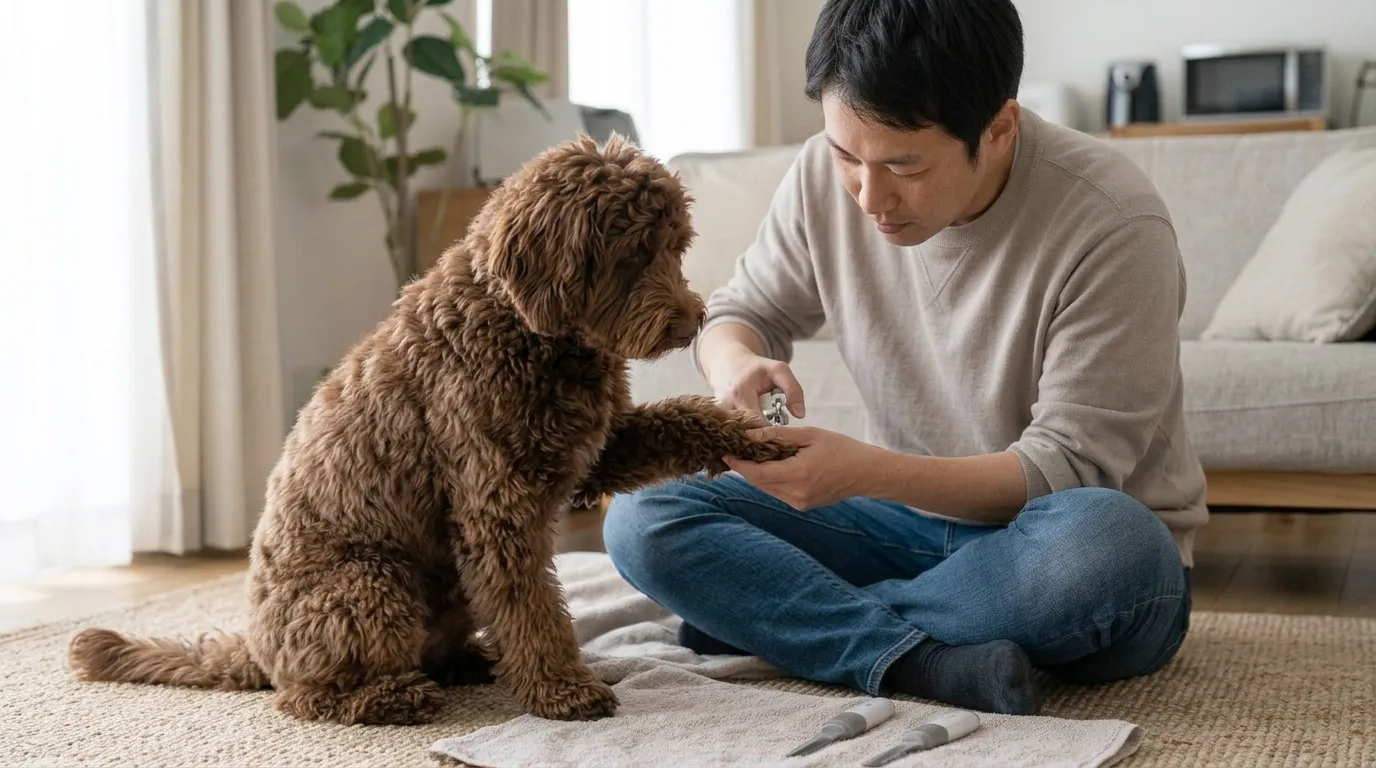
Hold your dog’s paw firmly but gently. Position the clippers so you’re cutting from top to bottom at a slight 45-degree angle, not straight across. Cut only the tip—insert a small length of nail through the opening and clip. You’re aiming to remove the clear or tan part of the nail; stop when you see a pale oval or circle in the center of the cut surface. That oval indicates you’re near the quick, the blood vessel inside the nail. Stop there.
Black nails hide the quick, so you can’t see it. Trim a tiny amount, look straight at the cut surface, and look for that pale circle. If you miss it and hit the quick, blood drips—don’t panic. Apply styptic powder (a hemostatic powder that stops bleeding) directly to the bleeding nail and press for 30 seconds. If bleeding continues for more than a minute, call your vet; it might indicate a clotting disorder.
Dewclaw Trimming
Don’t forget dewclaws, the small toes on the inside of the front legs. They don’t wear down from walking and grow into circles, sometimes piercing the pad. Trim them at the same angle and length as other nails.
Managing Nail Trim Anxiety
Reward heavily throughout. If your dog is anxious about nail trims, trim one nail per day for a week, giving treats between each nail. Your dog will eventually accept the process because positive experiences outweigh the fear.
Ear Cleaning: Prevention and Detection
Ear Cleaning Frequency and Technique
Clean your dog’s ears once weekly using a cotton ball or gauze dampened with ear cleaning solution. Dogs with floppy ears (Cocker Spaniels, Basset Hounds, Poodles) or those prone to ear infections need weekly attention. Erect-eared dogs like German Shepherds or Beagles often need cleaning only if visible debris appears.
Fold the ear back gently and wipe the inside surface, working from the base toward the tip. Lift dirt and wax out rather than rubbing it in. Don’t insert anything into the ear canal—your finger only goes as far as feels comfortable. The ear canal in dogs plunges downward then sideways, making it hard for trapped debris to escape without your help.
Never use Q-tips. Cotton swabs can reach too far into the canal and cause trauma or impaction. Cotton balls and gauze let you control depth and pressure.
Signs of Ear Infection
Watch for signs of infection. Brown, yellow, or bloody discharge; a foul smell; redness; or swelling mean an infection is developing. Dogs with ear infections scratch at their ears, shake their heads, or rub their ears on the ground. Any of these signs warrant a vet visit within a few days.
Ear Care for Swimming Dogs
If your dog swims or gets wet regularly, ask your vet about an ear-drying solution. Water trapped in the ear canal creates the perfect environment for yeast and bacterial infections. Alcohol-based solutions (often witch hazel) evaporate quickly and prevent infection. Apply the solution after baths or swimming, then let your dog shake their head to help it dry.
Dental Care: Building a Routine That Prevents Disease
Brushing Frequency and Importance
Brush your dog’s teeth 2-3 times weekly to prevent tartar buildup, gum disease, and tooth loss. Bacteria accumulate on teeth within hours, and plaque hardens into tartar within weeks. Once tartar sets in, only a professional cleaning under anesthesia can remove it.
Getting Your Dog Used to Brushing
Start slowly if your dog’s never had their teeth brushed. Spend a week just rubbing their gums with your finger to get them used to mouth handling. During the next week, put a tiny amount of dog toothpaste on your finger and let them lick it off—dog toothpaste is flavored (chicken, beef, mint) and tastes good to dogs. Never use human toothpaste; it foams excessively and upsets their stomach.
Brushing Technique
Use a toothbrush designed for dogs or a piece of gauze wrapped around your finger. Dog toothbrushes are smaller and have softer bristles than human brushes. Angle the brush at 45 degrees to the teeth and brush in small circular motions. Brush the outer surface of the teeth; the tongue naturally cleans the inner surfaces, so you don’t need to fight your dog on that.
Focus on the sides of the teeth, where the most tartar accumulates. Spend 30 seconds on each side of the mouth, top and bottom. The whole process takes 2-3 minutes once your dog accepts it.
Alternatives to Brushing
If your dog resists toothbrushing despite months of conditioning, offer dental chew toys designed to mechanically remove tartar. Bully sticks, raw bones, or rubber chew toys don’t replace brushing but reduce tartar development. Ask your vet which chews are safe for your dog.
Signs of Dental Disease
Bad breath isn’t normal and isn’t cute—it’s a sign of bacterial infection. Bad breath, excessive drooling, loose teeth, or red, swollen gums mean a vet visit is overdue. Bacteria from gum disease can enter the bloodstream and affect the heart, kidneys, and liver. Prevention through brushing is far cheaper than treating advanced dental disease.
Seasonal Grooming Adjustments: Spring, Summer, Fall, Winter
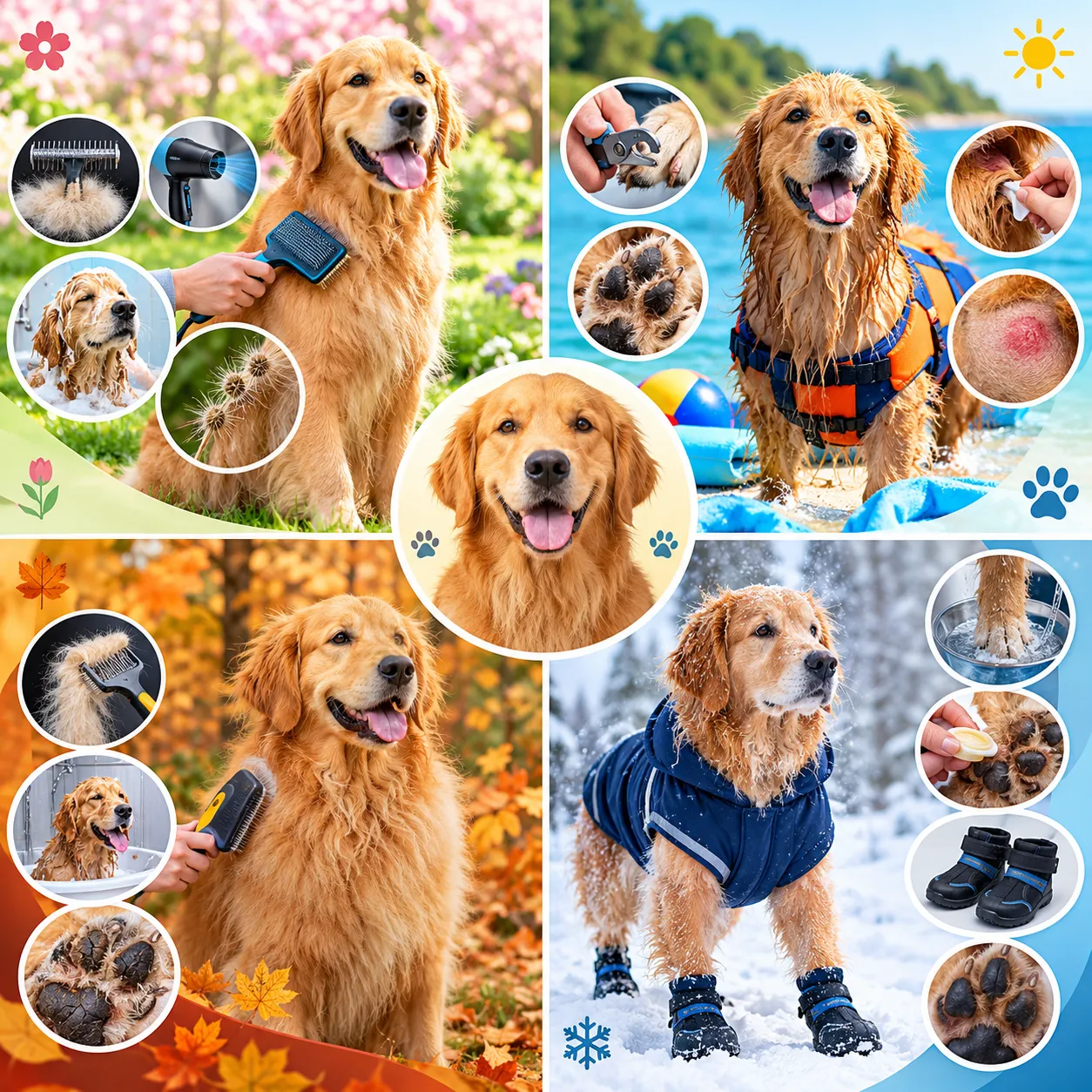
Spring Grooming
This is shedding season for double-coated dogs. Brush 3-4 times weekly instead of once weekly to keep up with loose coat. An undercoat rake or high-velocity dryer removes massive amounts of dead hair and speeds up the shedding process. Bathe your dog toward the end of shedding season (late May or early June) to rinse away the last loose hairs. Check paws for foxtails—seed pods that attach to fur and work into skin, causing infection.
Summer Grooming
Keep nails shorter during warm months because soft grass and soil don’t wear them down as much as concrete does. Short nails are less likely to catch on toys or furniture. Trim the hair between paw pads and around the feet so debris doesn’t collect there. If your dog swims, clean ears after every swim and dry them thoroughly. Watch for hot spots—red, moist lesions that appear suddenly, usually on the hip, head, or chest. Hot spots develop when dogs lick an irritated area repeatedly, and they can grow alarmingly fast. If you see one, call your vet same-day; antibiotics and a recovery collar might be needed.
Fall Grooming
As temperatures drop, your dog may shed their summer coat and grow a winter one. Increase brushing frequency again in early fall. This is also a good time for a full bath and groom before the winter season. Check your dog’s paw pads for cracking; dry fall air can crack skin.
Winter Grooming
Rock salt and chemical ice melters cause sores, infections, and blistering on paw pads. After outdoor walks on treated sidewalks, rinse your dog’s paws in warm water to remove salt and chemicals. Dry thoroughly and consider applying Vaseline or a paw balm before walks to create a barrier. Some dogs wear booties, which work well if your dog tolerates them. Never apply human hand lotion to paws—it softens the pads and increases injury risk. Keep nails at a reasonable length; overgrown nails pick up ice balls between the toes, which causes limping and pain.
Managing Anxiety and Fear During Grooming
Understanding Grooming Anxiety
Some dogs panic during grooming, not because they’re broken, but because they haven’t learned that grooming is safe. Fear isn’t something to fight through—it’s something to rebuild, slowly.
Starting with Familiar Tasks
Start with the least stressful grooming task. For many dogs, this is brushing. For others, it’s just having their paws touched. Whatever your dog tolerates best, start there. Spend 2-5 minutes on that task, offer treats, and stop. Success means ending before your dog is frustrated, not pushing through until they comply.
Building a Predictable Routine
Build a predictable routine. Groom at the same time each week. Cue your dog the same way: “Let’s brush” or “Nail time.” Predictability reduces anxiety because your dog knows what to expect. Surprise handling triggers fear; routine handling creates calm acceptance.
Never Force Compliance
Never force your dog into submission during grooming. If your dog is trembling, panting, or trying to escape, stop and step back. Forcing creates trauma, not compliance. A dog who associates grooming with fear will panic faster and harder next time, undoing months of conditioning.
When to Seek Professional Help
If your dog has severe anxiety that doesn’t improve with 2-3 months of positive conditioning, consider asking a professional groomer for a lesson. Some groomers are exceptionally skilled at handling fearful dogs, and watching them work gives you techniques and confidence. Alternatively, your vet can refer you to a Certified Applied Animal Behaviorist (CAAB) or Certified Professional Dog Trainer (CPDT) who specializes in handling anxiety.
The Role of Patience
Treats, praise, and calm handling matter far more than speed. You’re not trying to break a speed record; you’re building your dog’s trust that grooming is safe and that you’re the calm leader guiding them through it.
Creating a Grooming Schedule That Sticks
Task Frequency by Category
Map out your tasks by frequency:
- Weekly: Brushing (amount depends on coat type: 10 minutes for short coats, 30-60 minutes for long coats)
- Every 2 weeks: Nail trimming (5-10 minutes)
- Every 3-4 weeks: Ear cleaning (5 minutes)
- Every 2-3 months: Full bath (30-45 minutes depending on dog size and coat type)
- 2-3 times weekly: Tooth brushing (2-3 minutes)
Picking Days and Times
Pick specific days and times. Sunday mornings work well for many people because there’s less rush. Friday evenings don’t work for most because fatigue is high. Choose a time you’ll actually do it, not a time you think you should.
Batching Tasks
Batch tasks when possible. Bathe your dog, then brush while they’re damp or drying. Trim nails the same day. This reduces the number of “grooming sessions” and makes the routine feel less like constant work.
Using Reminders
Use a reminder system. Write grooming tasks in your calendar, set phone alarms, or create a checklist you post on the bathroom mirror. Without reminders, weeks slip by and suddenly your dog’s nails click on the floor and their ears smell off.
Handling Missed Sessions
If you miss a week, don’t catch up by doing twice as much the next week. Your dog doesn’t build character from extra brushing, and you’ll burn out. Just resume your normal schedule the next week. Consistency over time matters more than perfection.
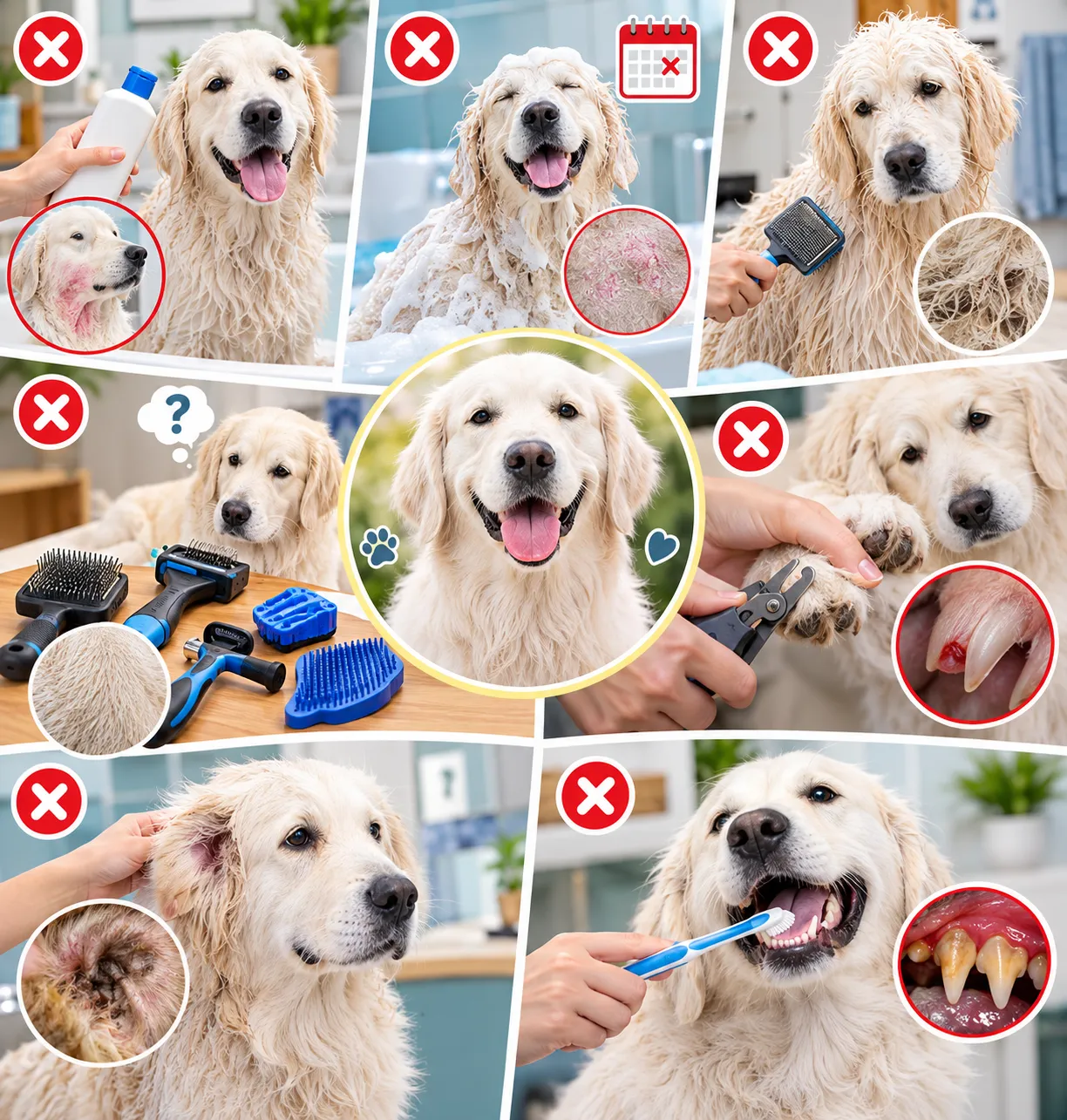
Common Grooming Mistakes and How to Avoid Them
Mistake: Using Human Shampoo
Using human shampoo because it’s cheaper or you ran out of dog shampoo. Human shampoo’s pH is too acidic for dog skin, causing irritation, flaking, and dryness. A bottle of dog shampoo costs $8-$15 and lasts 4-6 months. It’s cheaper than treating skin problems later.
Mistake: Bathing Too Frequently
Bathing your dog weekly because you think it keeps them clean. Weekly baths strip natural oils, causing dry, itchy, flaky skin. Once every 2-4 months is standard unless your dog has a skin condition. If your dog gets dirty often, brush thoroughly between baths instead of bathing.
Mistake: Brushing Right After a Bath
Brushing right after a bath, especially for long-haired dogs. Wet hair tangles easily and matts faster. Always brush before bathing. If your dog is already wet and matted, apply detangler, wait 5 minutes, then gently tease tangles apart. Don’t comb or brush aggressively—you’ll break the coat and cause pain.
Mistake: Using the Wrong Brush for Coat Type
Using the wrong brush for your dog’s coat type. A slicker brush doesn’t work on short coats, and a curry mitt won’t penetrate a double coat. You’re wasting time and potentially irritating skin. Know your dog’s coat type (ask your vet if unsure) and buy the right tool.
Mistake: Trimming Nails Too Short
Trimming nails too short because you want to “do it once” and not trim again soon. Nails grow at a consistent rate regardless of how short you trim them. Cutting into the quick causes pain and infection, and your dog will resist future trims. It’s better to trim a little every 3 weeks than to maim them once.
Mistake: Ignoring Ear Odor
Assuming your dog’s ear odor is normal or cosmetic. Smelly ears are a bacterial or yeast infection, not a scent issue. Your vet needs to examine them. Early treatment with medicated drops clears infections in 1-2 weeks; delayed treatment means weeks of oral antibiotics and possible permanent hearing loss.
Mistake: Skipping Dental Care
Skipping dental care because your dog’s teeth look fine. Disease starts below the gum line, invisible to the naked eye. By the time you see visible tartar, infection is already present. By the time your dog’s breath is noticeably bad, the disease is advanced. Brush preventively, not reactively.
FAQs
How often should I bathe my dog?
Bathe indoor dogs every 2-4 months. Dogs spending time outside may need baths every 4-6 weeks. More frequent bathing strips natural oils and dries skin. Skip weekly baths unless your vet recommends treatment for a skin condition.
What’s the best brush for my dog?
It depends on coat type. Short-haired dogs need a rubber curry or grooming mitt. Double-coated dogs need a slicker brush and undercoat rake. Long-haired breeds need a pin brush and wide-tooth comb. Ask your vet if you’re unsure of your dog’s coat type.
How do I know if my dog’s nails are too long?
Nails are too long when they click audibly on hard floors, catch on carpet, or bend your dog’s toes forward. Trim when you first hear clicking—don’t wait until nails curve or your dog limps.
Can I use human toothpaste on my dog?
No. Human toothpaste foams excessively and upsets dog stomachs. Use dog toothpaste, which is flavored for dogs and won’t cause digestive upset. Baking soda mixed with water works as an alternative.
Should I hire a professional groomer or groom at home?
Hire a professional if your dog has severe grooming anxiety, if your schedule doesn’t allow weekly brushing, or if your breed requires hand-stripping or specialty cuts. Otherwise, at-home grooming costs less and builds bonding. Many owners use both: grooming at home but hiring professionals for nail trims twice yearly.
Conclusion
Dog grooming tips let you detect ear infections, skin problems, dental disease, and lumps that vets can’t catch without your hands-on insight. Learning to bathe, brush, and trim at home costs $150-$250 annually versus $300-$900 for professional grooming—a difference that compounds over your dog’s lifetime.
Start with one task (brushing or nail trimming) that your dog already tolerates. By month three, you’ll have a functional routine. By month six, grooming feels normal. Dogs who grow up with regular handling from their owners develop trust that extends to vet exams, medication administration, and emergency care. That relationship has value no professional groomer provides.
Pick your schedule based on your dog’s coat type and your actual life. Consistency matters infinitely more than perfection. Build the routine gradually, reduce shedding on your furniture, and let your dog teach you what they tolerate best.
Your dog’s grooming routine is the foundation of preventive health care, built one brushing, bath, and nail trim at a time.