
Yes, a cat can drool for a happy reason, and new or heavy drooling in a cat signals a medical problem until a veterinarian finds the cause. Cats keep saliva far less visible than dogs, so a wet chin stands out within minutes. Drooling that starts suddenly, hangs in strings, or arrives with pawing at the mouth follows a medical pattern. Owners searching cat drooling usually need one decision: watch, book a visit, or drive to an emergency clinic. A 4.5 kilogram (10 pound) tabby, for example, dribbles a few drops on a lap every evening and eats a full dinner, and a second tabby in the same house starts drooling at breakfast beside dropped food and foul breath. The first cat matches the happy pattern. The second cat needs a mouth examination.
Pattern, timing and partner signs sort most cases before any test runs.
Is Cat Drooling Ever Normal?
Yes, drooling is normal for a cat in two narrow settings: deep relaxation during petting, and light drool during sleep in a cat with a lifelong pattern. Normal drooling stays small, clear and short. Normal drooling never travels with appetite loss, bad breath, gagging, pawing or a behavior change. Veterinarians use the medical word ptyalism (excessive saliva production) for drooling outside the normal pattern. A Siamese that has dribbled lightly during lap time since kittenhood, for example, sits inside the normal pattern at age 6, if meals, weight and energy stay steady. A brand new drool at age 6 sits outside the normal pattern.
What Does Happy Drooling Look Like?
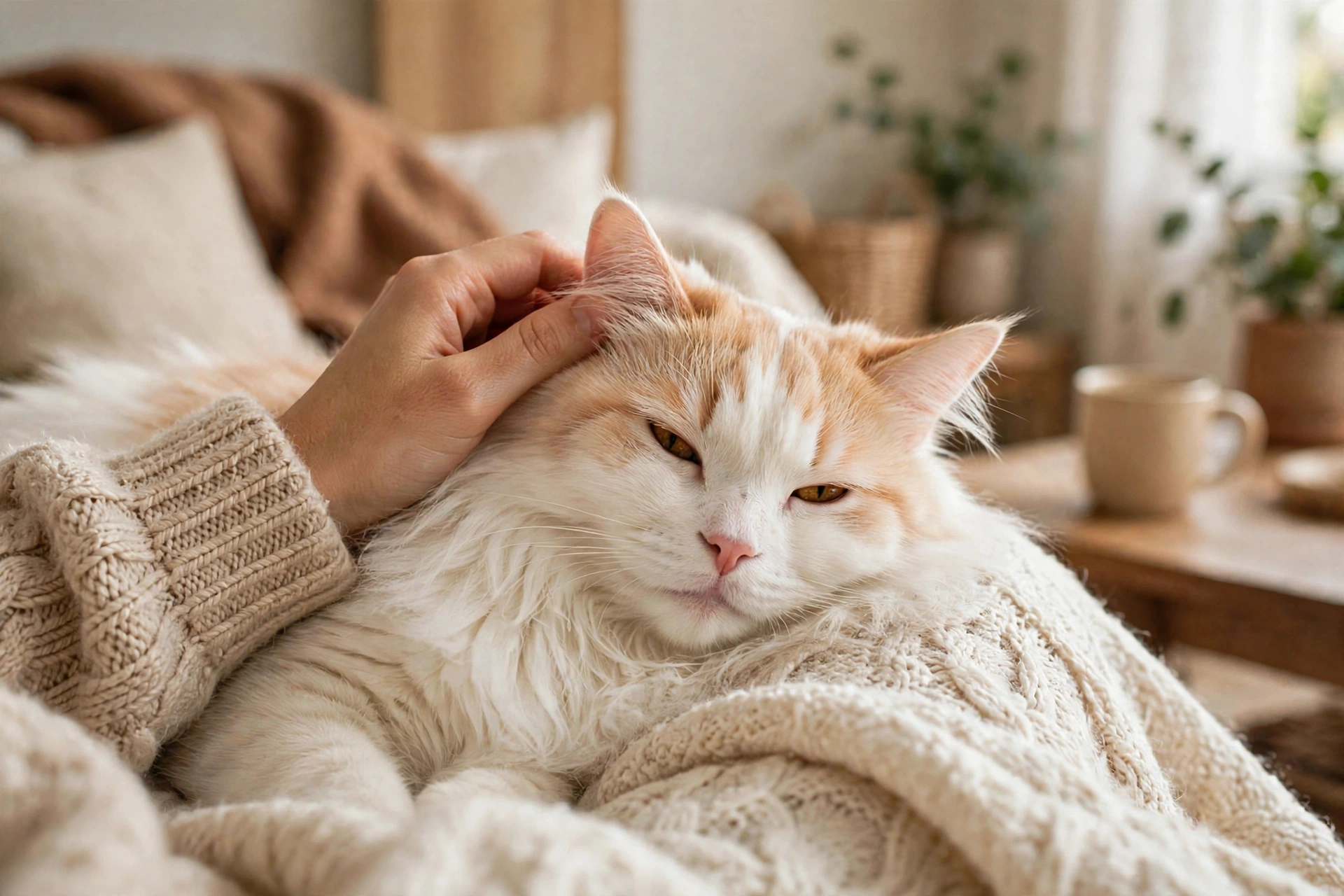
Happy drooling appears during purring and kneading, stays light, and stops within minutes after petting ends. Petting releases endorphins (natural feel good chemicals), and endorphins raise saliva flow in cats carrying the happy drooling trait. The trait links back to kittenhood, because kittens salivate while kneading and nursing. Owners typically report four shared features across happy droolers.
- Drooling starts only during petting, purring or kneading
- Saliva stays clear and forms a few drops, never strings or pools
- Drooling stops within minutes after the petting session ends
- Appetite, weight and energy stay normal every day
Miso, a 3 year old indoor cat at 4.1 kilograms (9 pounds), for example, drools 6 or 7 drops during a 10 minute evening petting session and then grooms and eats normally. Heavier volume, a new smell, or drooling that continues after the lap session ends moves a happy drooler into the medical pattern, and the cat needs an examination.

Dental Disease and Mouth Pain
Dental disease and mouth pain form the most common cause group behind new drooling in adult cats. PetMD reports that 50 to 90 percent of cats over 4 years of age carry some form of dental disease. Tartar buildup inflames the gums, a condition named gingivitis. Tooth resorption dissolves tooth structure from inside the tooth, and published studies place resorption in 20 to 60 percent of cats. Stomatitis (severe inflammation of the mouth lining) makes every swallow hurt. Mouth tumors, most often squamous cell carcinoma in older cats, complete the cause group.
- Bad breath that smells stronger than normal cat breath
- Food dropped from the mouth or chewing on one side only
- Red, swollen or bleeding gums along the tooth line
- Saliva tinged pink with blood
- Weight loss across weeks
An adult cat carries 30 teeth, and a mouth examination under sedation often reveals damage an awake check misses, for example a resorbing molar hidden under inflamed gum in a 9 year old Maine Coon at 6.8 kilograms (15 pounds).
Can Nausea Make a Cat Drool?
Yes, nausea raises saliva flow in cats, and nauseous drooling usually arrives minutes before vomiting. Nauseous cats also lick the lips repeatedly before vomiting. Motion sickness in a carrier explains most nausea drooling in young cats. Kidney disease and liver disease form the second cause group, because waste products in the blood trigger steady nausea across the whole day. A kitten drooling inside a carrier 10 minutes into a drive, for example, usually settles within 30 minutes after the car stops. A senior cat drooling at rest beside a water bowl, with no ride and no new food, needs blood tests rather than a wait and see plan, because organ disease sits high on the cause list at that age.
Foreign Objects Stuck in the Mouth
A foreign object stuck in the mouth causes sudden drooling with pawing, gagging and an open mouth. A length of sewing thread, tinsel or ribbon can loop around the base of the tongue, and the free end can thread into the stomach and intestines. Bone fragments and fish bones wedge across the roof of the mouth between the upper teeth. Plant material, such as a grass awn or a splinter of stick, lodges in the gum line or throat. Drooling from an object starts in seconds, and the cat often shakes the head or claws at the face. A cat that races from a craft table and starts drooling beside a missing length of thread, for example, needs a same day clinic visit, and the thread stays untouched at home. Pulling a string can cut the tongue base or saw through an intestinal wall.
Plants and Chemicals That Make a Cat Drool
True lilies and daylilies poison a cat at small doses, and lily exposure counts as a same day emergency. Lilies in the Lilium and Hemerocallis groups damage cat kidneys, and a cat can swallow a dangerous dose by chewing 1 or 2 leaves, licking pollen off the fur, or drinking vase water from cut lilies. Early signs start with drooling and vomiting, and kidney failure can follow within 24 to 72 hours after exposure, if treatment waits. Other houseplants, such as dieffenbachia and philodendron, carry insoluble calcium oxalate crystals that burn the mouth on contact and trigger instant drooling without the kidney risk. A cat that licks a floor cleaner, a laundry pod or an essential oil spill drools from chemical burning and nausea. Owners in the United States can call the ASPCA (American Society for the Prevention of Cruelty to Animals) Animal Poison Control Center at (888) 426-4435 at any hour after a suspected exposure.
Medicines and Flea Products
Bitter medicine causes brief drooling within minutes of a dose, and a dog flea product containing permethrin causes drooling that signals poisoning. Liquid medicines and crushed pills taste bitter to cats, and the taste switches saliva flow to full for 5 to 30 minutes. Metronidazole, an antibiotic prescribed for gut infections, holds a strong reputation for bitterness and foaming after a dose. A cat only flea product licked off a low application spot causes taste drooling and little more. A dog only spot-on product containing permethrin poisons the cat nervous system, and the PDSA (People’s Dispensary for Sick Animals) warns that signs usually start within a few hours, can take up to 36 hours, and can kill a cat without treatment. Drooling plus skin twitching over the back, tremors or a seizure after any flea product means an emergency clinic at once.
Heatstroke and Drooling
Heatstroke causes drooling with open mouth breathing, and heatstroke in a cat is an emergency from the first minute. A normal cat body temperature runs 38.1 to 39.2 degrees Celsius (100.5 to 102.5 degrees Fahrenheit), and heatstroke begins once body temperature climbs past 40 degrees Celsius (104 degrees Fahrenheit). Cats overheat in closed cars, sealed sunrooms and garages during heat waves. Signs build in a set order: restless behavior, panting or open mouth breathing, thick stringy drool, red gums, vomiting, wobbling and collapse. A Persian trapped in a sunroom at 35 degrees Celsius (95 degrees Fahrenheit), for example, can reach the danger zone within an hour on a still day. Move an overheated cat to a cool room, offer cool water, wet the paws and belly with cool water, and drive to an emergency clinic the same hour. Ice water and ice packs stay off the plan, because extreme cold slows cooling at the core.
Kidney Disease and Liver Disease
Kidney disease and liver disease cause steady drooling through nausea and mouth ulcers in older cats. Failing kidneys let urea (a waste product normally cleared in urine) build up in the blood, and urea irritates the stomach and the mouth lining, producing ulcers on the gums and the tongue tip. Partner signs point at the kidneys early: more drinking, larger urine volumes, weight loss and fading appetite. A failing liver clears toxins poorly, and nausea plus jaundice (yellowing of the gums, skin and eye whites) can develop together. A 13 year old cat at 3.4 kilograms (7.5 pounds) that drools daily beside a refilled water bowl, for example, needs blood and urine tests before any dental plan, because the drool in that pattern starts in the blood, not the teeth.
Rabies in Unvaccinated Cats
Rabies causes drooling in unvaccinated cats, and rabies stays rare in vaccinated pet cats in the United States. The rabies virus attacks the nervous system and paralyzes the throat muscles, so saliva pools and spills instead of going down in a swallow. Outdoor cats with wildlife contact carry the exposure risk, mainly through bats, raccoons and skunks. Behavior change travels with the drool in rabies cases: a friendly cat turns aggressive, or a bold cat turns dull and quiet. Rabies is fatal once signs appear, and no treatment reverses the disease. Never handle the mouth of a suspected cat, and call a veterinarian or the local animal control office at once after a possible exposure. Most states require rabies vaccination for pet cats by law, and an indoor cat still needs current vaccination, because bats enter houses.

What Should You Do at Home When a Cat Starts Drooling?
Home response starts with calm observation, a gentle lip lift check, and a written record, in that order. A home check answers three questions: does the mouth hold an obvious problem, does a recent event explain the drool, and does the cat show any emergency sign.
- Move the cat to a quiet room and keep handling slow and gentle
- Lift the lip on each side and look at the teeth and gums, only if the cat allows the check without a struggle
- Look for string, bone or plant pieces inside the mouth, and remove nothing stuck deep or looped under the tongue
- Write down the start time, the amount of drool, and every plant, product or food within reach that day
- Offer fresh water and watch eating, breathing and energy across the next 2 hours
- Call the clinic or the poison line at once, if any threshold sign in the next section appears
Forcing a mouth open helps no one. A resisting cat can bite through skin during a forced check, and a 30 second video of the episode gives the clinic the same information at zero risk.
When Does a Drooling Cat Need a Veterinarian?
A drooling cat needs a veterinarian the same day after drooling starts suddenly, follows a possible poison exposure, or travels with weakness or collapse.
- Drooling that starts suddenly in a cat that never drooled before
- Drooling with pawing at the mouth, gagging or a jaw hanging open
- Bad breath with dropped food or chewing on one side
- Drooling lasting over 2 hours, or drooling returning on 2 or more days in a row
- Drooling after a plant, chemical or flea product exposure
- Drooling with weakness, tremors, open mouth breathing or collapse
| Drooling pattern | Signs beside the drool | Action |
|---|---|---|
| Only during purring and kneading | Relaxed body, normal appetite, drooling stops after petting | Watch at home and mention the pattern at the next routine visit |
| Starts minutes after a pill or liquid dose | Bitter taste reaction, cat otherwise normal | Offer water, note the medicine name, and call the clinic, if drooling passes 1 hour |
| Daily drooling with bad breath | Dropped food, red gums, one sided chewing | Book a prompt visit for a mouth examination |
| Sudden drooling with pawing and gagging | Head shaking, open mouth, possible string or bone | Same day visit, and pull nothing from the mouth |
| Drooling after a plant, chemical or flea product | Vomiting, twitching, tremors or weakness | Emergency clinic or poison line at once |
| Drooling with open mouth breathing | Red gums, wobbling, collapse, hot environment | Emergency clinic at once, start cooling on the way |
Cats hide illness well, and a drooling cat that acts normal still earns a clinic call, if the drooling pattern is new for that cat. The clinic sorts the cause with an examination, blood tests or both.
Conclusion
Drooling in cats splits into a small happy pattern and a long medical list, and pattern plus partner signs make the call. Medical drooling starts suddenly, lasts for hours, or arrives with mouth, stomach or whole body signs. Dental disease leads the medical list, lilies and dog flea products lead the emergency list, and rabies closes the list as the rare fatal cause. A cat drooling today for the first time needs a clinic call today.
Keep exploring: read about cat panting and cat coughing, and try our pet health calculators.
Frequently Asked Questions
Do cats drool when they are happy?
Yes, some cats drool when they are happy. Purring and kneading during petting trigger small drops of saliva in cats with the happy drooling trait. Drooling stops soon after petting ends, and appetite and energy stay normal.
Why does my cat drool when I pet her?
Petting releases endorphins, and endorphins switch on extra saliva flow in some cats. The pattern links back to nursing, because kittens salivate while kneading and feeding. A cat with the trait starts young and keeps the pattern for life.
Is drooling an emergency for a cat?
Yes, drooling is an emergency after a possible poison exposure, and drooling with weakness, collapse, tremors or open mouth breathing also needs an emergency clinic. Sudden drooling without those signs needs a same day clinic call.
Can dental disease make a cat drool?
Yes, dental disease is the most common cause of new drooling in adult cats. Tartar, inflamed gums, tooth resorption and mouth ulcers all trigger extra saliva. Bad breath and dropped food point to the mouth as the source.
Why is my cat drooling after flea treatment?
A dog flea product containing permethrin poisons cats, and permethrin exposure is an emergency. A cat product licked off the neck causes short bitter taste drooling instead. Twitching or tremors after any flea product need an emergency clinic now.
Should I pull a string from a cat mouth?
No, never pull a string from a cat mouth. String can wrap around the tongue base or thread through the intestines, and pulling cuts tissue. Cut nothing, hold the cat, and let the clinic remove the string under sedation.
How long can drooling last before a cat needs a vet?
Drooling that lasts over 2 hours needs a clinic call the same day. Drooling after a bitter pill usually stops inside 1 hour. Drooling that returns daily needs a booked examination, even when the cat eats normally between episodes.
Sources:
ASPCA – General Cat Care
VCA Animal Hospitals – Know Your Pet Library