

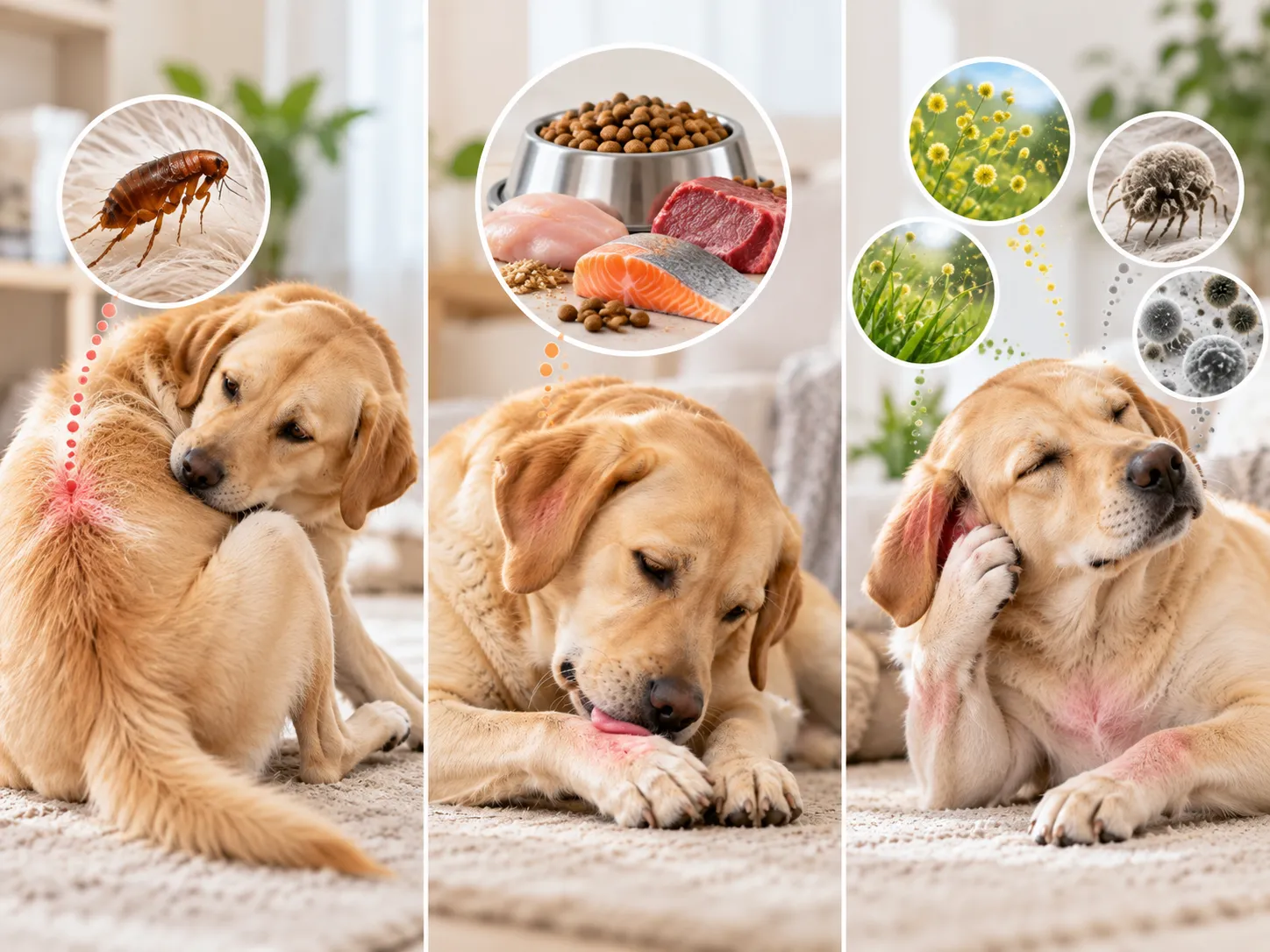
Dog allergies happen when a dog’s immune system overreacts to a harmless substance such as flea saliva, a food protein, pollen or mold. The reaction usually appears on the skin and ears rather than in the nose and throat, which is how hay fever works in people. A Labrador that chews its paws every evening and shakes its head after meals fits the pattern.
The cause decides the fix. Fleas call for strict parasite control, food reactions call for a diet trial lasting six to 12 weeks, and pollen or dust mite reactions call for long-term itch management. This guide covers the signs, the three main types, how vets diagnose each one, the treatments available in 2026 and the steps that cut allergen exposure at home.
What Are Dog Allergies?
Dog allergies are exaggerated immune responses to a specific trigger, called an allergen, and they rank among the most common reasons dogs visit a veterinarian. The immune system treats the allergen as a threat and launches a defense that causes inflammation, itching and swelling. Skin allergies, known as allergic dermatitis, make up the most common allergic condition in dogs.
Allergies can develop at any age. Signs of atopy, the inherited form, typically start between six months and three years of age, while food allergies and pollen allergies can appear well into adulthood. Bacterial or yeast infections often follow if a dog scratches until the skin breaks, and those infections need their own treatment on top of the allergy care.
Food Allergies
Food allergies in dogs are immune reactions to a protein in the diet, most often chicken or beef. Reactions to grains and other ingredients occur but are less common. Dogs usually react to a food they have eaten for a long time rather than a new one, and the allergy can develop at any age.

What Are the Signs of Dog Allergies?
The most common signs of dog allergies are itchy skin, constant licking or chewing, red or inflamed skin and recurring ear infections. Signs vary with the cause, and several types can overlap in the same dog.
Skin and ear signs include:
- Itching, either in one area or across the whole body
- Biting, licking or chewing at the skin
- Red, sore or broken skin
- Hives or a rash
- Hair loss
- Recurring ear infections
- Face rubbing on floors or furniture
Digestive signs, which point mostly to food allergies, include:
- Vomiting
- Diarrhea or loose stools
- Weight loss
- Reduced appetite
Itching concentrates on the paws, ears, face, belly, groin and inner thighs in dogs with atopy, while flea allergies hit the base of the tail, the back and the thighs. Dogs with a food allergy often chew at their paws and ears and can have stomach upset at the same time. Skin that smells, feels greasy or breaks out in a rash usually signals a secondary infection.
Stopping the scratching doesn’t stop the itch. A buster collar (cone) blocks a dog from reaching the skin, but the trigger keeps working, so the dog stays itchy with no way to relieve it. The better approach is to tackle the cause rather than only the scratching.
What Causes Dog Allergies?
Fleas, food ingredients and environmental allergens such as pollen, dust mites and mold cause most dog allergies. Medications, insect stings and vaccines trigger less common reactions, and a single dog can react to several triggers at once.
Flea Allergy Dermatitis
Flea allergy dermatitis is an allergy to proteins in flea saliva, and the bite of one or two fleas is enough to start intense itching. Redness, inflammation and scabbing gather around the base of the tail, the back and the thighs. Black specks that look like coffee grounds at the base of the fur are flea dirt, which is digested blood.
Live fleas don’t always show up on a dog with this allergy. Strict flea control is the foundation of treatment, so every dog and cat in the household needs year-round protection when one pet reacts. A fast-acting tablet such as Capstar (nitenpyram) starts working within 30 minutes when a dog needs quick relief from live fleas. Severe cases require treating the home too, with thorough vacuuming of carpets and bedding and an insecticide that contains an insect growth regulator to reach every flea life stage.
Signs include itchy ears and paws, hives, facial swelling and digestive upset. True food allergies are less common than many owners assume, so a diagnosis should come before any permanent diet change.
Environmental Allergies
Environmental allergies, called atopic dermatitis or atopy, are reactions to triggers such as pollen, dust mites, mold spores and plant fibers. Dogs inhale these allergens or absorb them through the skin when they touch grass, carpet or bedding.
Pollen reactions tend to peak in spring and summer, although a dog that rolls in grass or breathes pollen on a walk can react at any time of year. Dust mite and mold reactions can run all year. Atopy is inherited and affects many breeds, terriers especially, and no test confirms it on its own. Vets reach the diagnosis by ruling out every other cause of itching, and an intradermal skin test can then pinpoint the triggers.
How Do the Three Main Types of Dog Allergies Compare?
The three main types of dog allergies differ in trigger, timing, diagnosis and treatment, as the table below shows. Reading across a row helps owners match a dog’s pattern to the most likely type before the vet visit.
| Type | Common triggers | Typical signs and timing | How vets confirm it | Main treatment |
|---|---|---|---|---|
| Flea allergy dermatitis | Proteins in flea saliva | Intense itching, redness and scabbing at the tail base, back and thighs; occurs whenever fleas are present | Evidence of fleas plus improvement after flea control | Year-round flea control for every pet, home treatment, short-term anti-itch medication |
| Food allergy | Proteins such as chicken, beef, lamb or dairy | Itchy ears and paws, vomiting, loose stools; year-round because the trigger is in the daily diet | Diet trial of six to 12 weeks | Long-term avoidance of the trigger with a vet-selected diet |
| Environmental allergy (atopy) | Pollen, dust mites, mold spores | Itchy face, paws, belly and groin, recurring ear and skin infections; seasonal or year-round | Ruling out other causes, then an intradermal allergen test | Anti-itch medication, immunotherapy, medicated baths, allergen reduction at home |
Many dogs carry more than one type at once. A terrier with atopy can have a flea allergy too, which is why vets check flea control and run a diet trial before settling on an atopy diagnosis.
How Do Vets Diagnose Dog Allergies?
Vets diagnose dog allergies by ruling out other causes of itching first, then confirming the specific type with a flea control trial, a diet trial or an intradermal skin test. Allergy signs overlap with other medical conditions, so the order of the steps matters.
- A physical examination and a review of the dog’s medical history
- Skin samples to check for parasites and infections
- A flea control trial, with every pet in the household treated
- A diet trial of six to 12 weeks for suspected food allergy
- An intradermal allergen test (IDAT) when environmental allergies are suspected
The diet trial demands discipline. Dogs on the trial eat only the prescribed hypoallergenic food, with no treats, table scraps, dental chews or flavored medications, because one stray ingredient can ruin the result. Over-the-counter foods aren’t recommended for a proper trial, and veterinary diets built on a rare protein or a hydrolyzed protein (protein broken into very small pieces) lower the chance of a reaction.
Blood tests aren’t reliable for diagnosing allergies in dogs. Flea allergy is the easiest type to confirm, since symptoms clear up once the fleas are under control.
How Are Dog Allergies Treated?
Treatment for dog allergies depends on the cause: avoid the trigger when possible, then use medication, immunotherapy and skin care to control the remaining symptoms. No single treatment works for every dog, so vets tailor the plan and adjust it as symptoms shift over time.
Which Medications Control Itching in Dogs?
Vets prescribe antihistamines, corticosteroids, immunosuppressants such as Atopica, monoclonal antibodies such as Cytopoint and oral itch-control tablets such as Zenrelia. Zenrelia is a once-daily tablet designed to control allergic itch in dogs over 12 months of age. Steroids reduce the inflammation that drives itching, but vets avoid long-term use because of side effects.
Ear drops, antibiotics and antifungal medications treat the bacterial and yeast infections that scratching causes. Ask a veterinarian before giving any medication, including human antihistamines, because certain drugs can interfere with a food trial and make the results impossible to read.
What Are the Signs of a Severe Allergic Reaction in Dogs?
Hives, facial swelling and anaphylaxis are the three severe allergic reactions in dogs, and anaphylaxis is a medical emergency. Each reaction follows a different timeline.
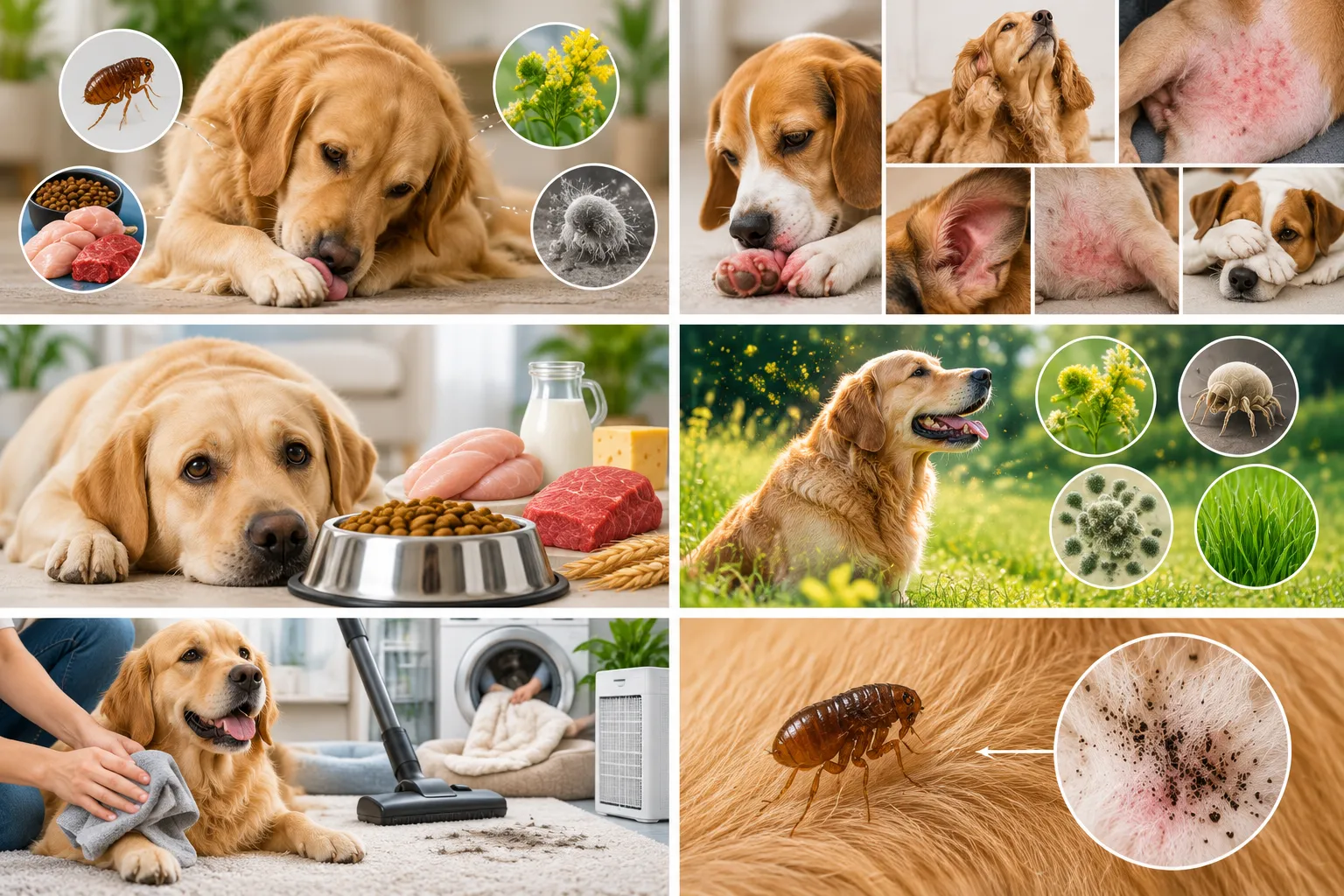
- Hives are raised, itchy bumps that appear within six to 24 hours after exposure and show up easiest on hairless or short-coated dogs, while long-coated dogs have bumps that are easier to feel than see.
- Facial swelling of the face, throat, eyelids or ear flaps develops 30 minutes to several hours after exposure and can take one to two days to clear without treatment.
- Anaphylaxis brings collapse, weakness, difficulty breathing, severe vomiting or diarrhea and a swollen muzzle, with bee stings, wasp stings, medications and vaccines as the typical triggers.
Call an emergency vet immediately if a dog collapses, struggles to breathe or develops a swollen muzzle after a sting or a new medication. A sudden drop in blood pressure causes the shock, and anaphylaxis can be fatal without immediate treatment.
Does Immunotherapy Work for Dog Allergies?
Yes, immunotherapy with allergy shots or oral drops can gradually desensitize a dog to environmental allergens, and noticeable improvement can take several months. Each formula is customized from the dog’s allergy test results, which is why testing comes first. Immunotherapy suits dogs that react to several substances at once, such as multiple pollens plus dust mites, because avoiding every trigger isn’t realistic.
Do Medicated Baths and Supplements Help?
Yes, medicated shampoos, wipes and sprays soothe irritated skin, and omega-3 fatty acid supplements support skin health, although the supplement effect is mild. Omega-3 and omega-6 fatty acids have a mild effect on atopy. Dogs on regular medicated baths may need a flea treatment other than a spot-on product, so ask the vet which option fits.
Product choice matters. Many shampoos, lotions, creams and natural remedies aren’t designed for allergic skin and can make inflamed skin worse. Stick with the products a vet recommends.
Can Dog Allergies Be Cured?
No, atopy has no cure and lasts for life, although flea allergies and food allergies can be controlled by avoiding the trigger. Dogs with a food allergy live a normal life when the problem food stays out of the bowl.
Vets may suggest neutering a female dog with atopy, since the procedure can reduce symptom severity. Breeding dogs with atopy isn’t advised because the condition is inherited and passes to puppies.
How Can You Reduce Allergens at Home?
Vacuuming, washing bedding, replacing air filters and wiping paws after walks reduce the allergens a dog meets each day. These steps don’t replace veterinary treatment, but they lower the daily allergen load.
- Vacuum floors and furniture frequently, and discard the vacuum bag right away when fleas are present
- Wash bedding at least weekly to limit dust mites
- Replace air filters on a regular schedule
- Close windows and doors when pollen counts run high
- Wipe paws and wash the coat after walks
- Walk in the early morning or early evening, when pollen counts are usually lowest

Checking the local pollen forecast before heading out gives a clear picture of the day’s risk. A wipe-down at the door removes pollen before the dog settles onto the sofa. Households with a dust mite allergy see the biggest gain from weekly bedding washes, since mites collect where the dog sleeps.
When Should You Take a Dog With Allergies to the Vet?
Book a vet visit when a dog scratches persistently, shows skin inflammation, has digestive problems or develops recurring ear infections. Early diagnosis shortens the time a dog spends itchy and lowers the risk of infection.
Prompt appointments make sense for these changes:
- Skin that smells, feels greasy or breaks out in a rash
- Scabs, red patches or hair loss
- Head shaking and itchy ears
- New or worsening signs after a treatment plan has started
Frequently Asked Questions About Dog Allergies
Can dogs have allergies?
Yes. Dogs react to fleas, foods, pollen, dust mites and mold. The reactions mostly show up on the skin and ears, and allergy visits rank among the most frequent reasons for veterinary appointments.
What is the most common dog allergy?
Skin allergies are the most common allergic condition in dogs. Flea allergy dermatitis is the most common skin disease, and a bite from one or two fleas can set off weeks of itching.
How long does a food elimination diet take?
A trial runs six to 12 weeks, depending on the vet’s plan. The dog eats only the prescribed food, then the vet judges whether symptoms improved.
Can I give my dog human antihistamines?
Ask a veterinarian first. The right product and amount depend on the individual dog, and certain medications interfere with a food trial.
Do blood tests diagnose dog allergies?
No. Blood tests are unreliable for this purpose. Vets use diet trials for food allergies and intradermal skin testing for environmental allergies.
Are dog allergies seasonal?
Some are. Pollen allergies peak in spring and summer, while dust mite, mold, flea and food allergies can cause signs in every month.
Are dog allergies hereditary?
Atopy is inherited. Signs usually begin between six months and three years of age, and terriers are especially affected.
Conclusion
Dog allergies come from three main sources: fleas, food and environmental triggers. Each source needs a different test and a different plan, so a vet visit comes before any experiments with shampoos or diets. Flea control, a diet trial and allergen reduction at home cover most of the groundwork, and medication or immunotherapy handles the rest.
Timing deserves attention too. A diet trial that starts on October 12, 2026 ends between November 23, 2026 and January 4, 2027.