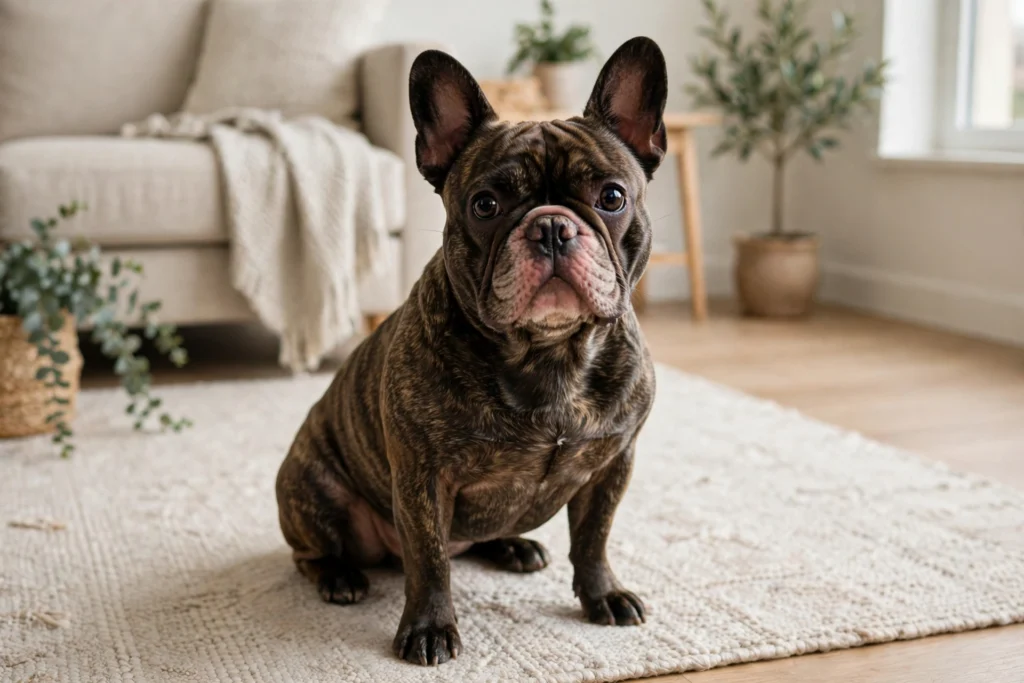
A French Bulldog fits you best if you want a small, people focused companion and you are home for much of the day. This French Bulldog breed guide gives the direct answer first: the breed suits calm apartment and family homes, not runners or owners gone for 8 to 10 hours. Heat rules out many plans. Flat faces, summer heat, and deep water all create risk, so you’ll need a cool home and short, steady activity. Readers who want a dog that plays for 20 minutes and then settles on a rug will find a strong match here.
Quick Facts
Lifespan for this breed is 10 to 12 years, with a height of about 11 to 13 inches and a weight under 28 pounds.
| Trait | Details |
| Lifespan | 10 to 12 years |
| Height | About 11 to 13 inches |
| Weight | Under 28 pounds, typical adults 16 to 28 pounds |
| Coat | Short, smooth and fine, in brindle, fawn, cream, white and pied |
| Temperament | Playful, alert, adaptable and people focused |
| Exercise Needs | Low, about 1 hour a day in short walks and play |
| Shedding | Moderate |
| Good With Kids | Yes, with supervision and gentle handling |
| Good With Other Dogs | Generally yes, with early social contact |
Temperament and Personality
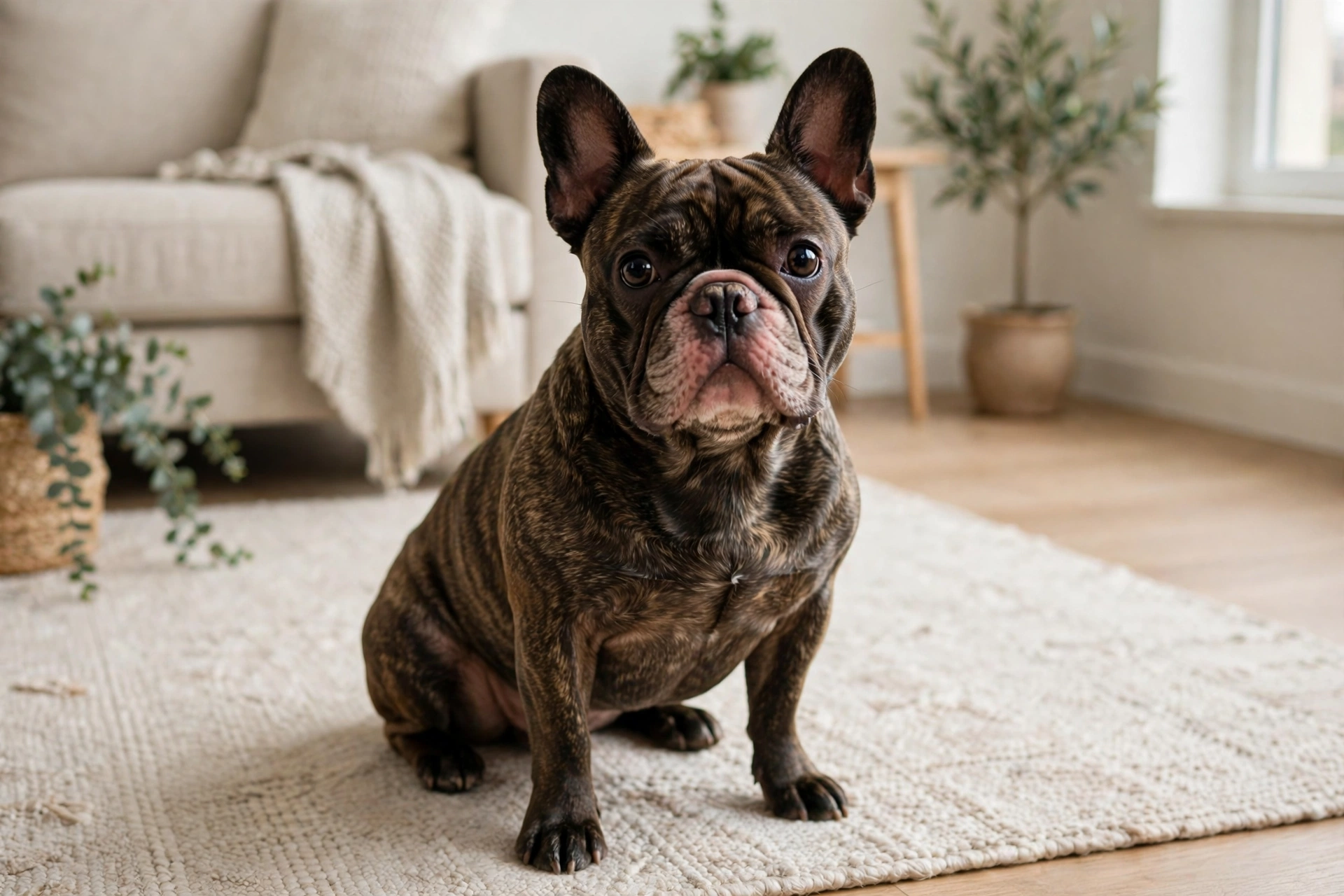
Playful, alert and adaptable in temperament, this breed acts as a clownish companion that prefers people over long solo time.
Families notice the comedy first. One dog will trot after a child for 10 minutes, then flop down and snore through a film. Your French Bulldog follows you from room to room, waits by doors, and picks a lap over a distant bed. Company is a basic need here, not a treat.
Strangers get a curious look, not sharp guarding. Most dogs bark once or twice at a hallway knock, greet the visitor, and then claim a cushion. Children aged 6 and older who sit on the floor and throw a soft ball get the best response. Adults should handle all lifting, since rough picking up can strain the back.
Being left alone is the hard part. Young dogs left for a full workday often chew, bark, or have toilet accidents by noon. Midday walkers, part time hours, or a person at home solves much of that problem in the first month.
Size and Appearance
Standing about 11 to 13 inches tall and weighing under 28 pounds, an adult has a compact muscular body and large bat ears.
The breed sits in the Non-Sporting Group and on most lists of best small dog breeds. Males and females share the height range, while typical adult weight runs from 16 to 28 pounds. Littermates can differ by 6 pounds at age 2 and both stay inside the normal range.
Shape stands out in any park. Broad shoulders, sturdy front legs, a short back, and a naturally short tail give a square, solid outline. Heads look large for the body, with a flat face, short muzzle, and wide set eyes. Bat ears stand upright and never flop over in a healthy adult.
Coat texture is short, smooth, and fine, lying flat over the body. Colors include brindle, fawn, cream, and white, plus pied patterns that mix white with a second color. Shedding is moderate all year, with a heavier drop for a few weeks in spring. Most puppies reach near adult height by 9 to 10 months and fill out by 18 months, so later weight gain usually means extra food, not growth.
Exercise and Training
Daily exercise totals about 1 hour in short walks and play, and hard effort in heat must be avoided at all times.
Morning outings work best in warm months. Try a 20 minute walk before 9 a.m., a short midday toilet walk, and 20 minutes of indoor play in the evening. Puppies need far more sleep, often 18 to 20 hours a day at 10 weeks old.
Heat sets a hard limit for flat faces. Panting cools the body poorly once air passes about 75 degrees Fahrenheit, so summer walks belong in shade and early hours. Owners in hot states switch to hallway fetch for 10 minutes at a time during July and August. Cars must never hold a waiting dog, even for 5 minutes.
Swimming is unsafe for most of this breed. Heavy heads and short legs make floating hard, and most dogs cannot swim without support. Life jackets help on a dock, but deep pools stay off limits without close holding.
Training works in tiny, fun blocks. Sessions of 3 to 5 minutes teach sit, stay, and come faster than one 30 minute drill. Puppies need toilet trips every 1 to 2 hours at first, and a treat within 2 seconds of the right act builds the habit fast.
Grooming
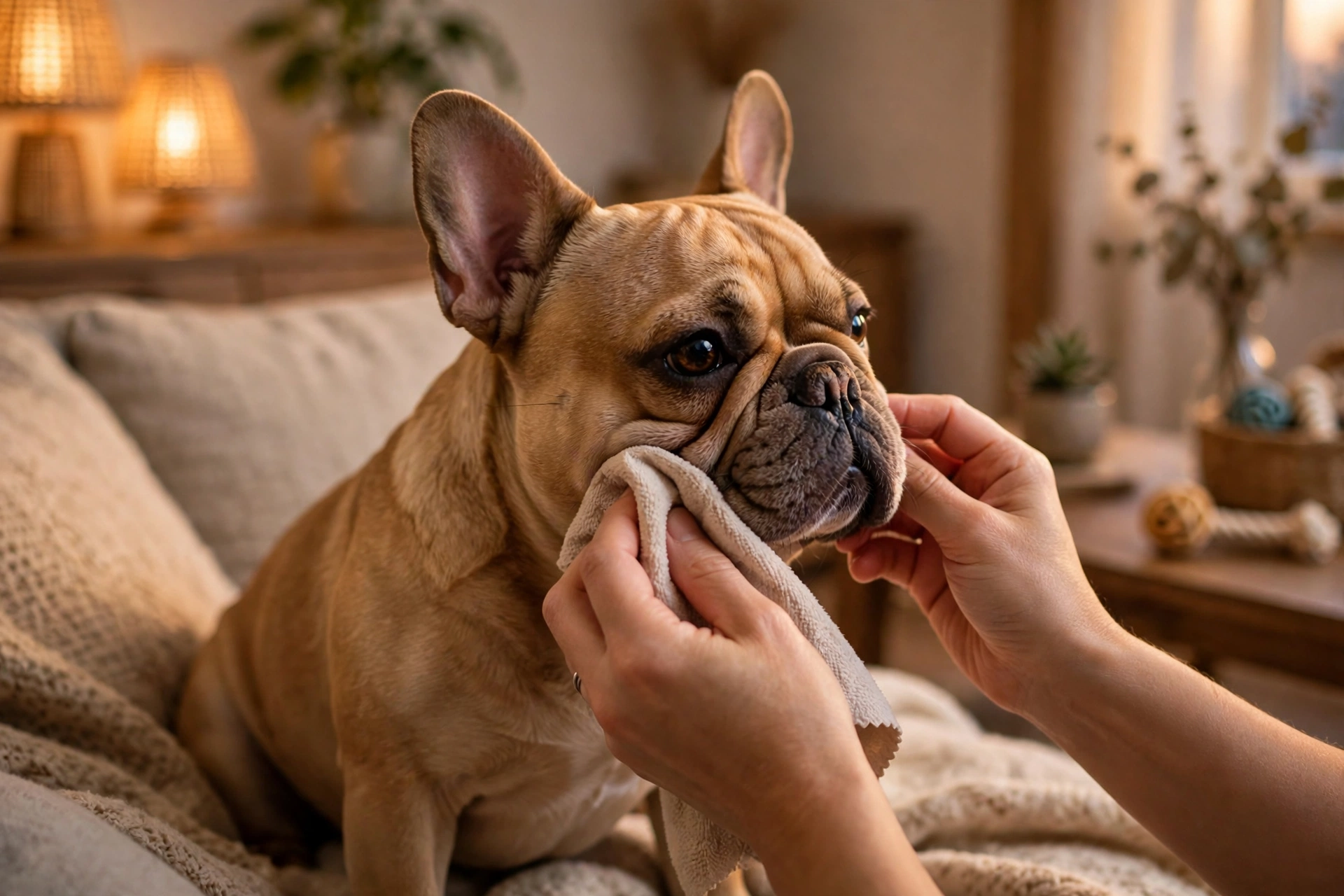
Weekly brushing, weekly fold cleaning, nail trims every 2 to 3 weeks, and a bath about once a month cover routine grooming.
Short hair still sheds onto sofas and car seats. Brushing once a week with a rubber mitt takes 5 minutes and removes loose hair before it spreads. Spring shedding calls for twice weekly brushing for about 3 weeks.
Folds need the closest watch in your routine. Dirt and moisture collect around the muzzle and under the tail, so clean folds 2 to 3 times a week with a damp cloth and dry each one fully. Redness, odor, or rubbing means a vet visit, and the steps in these dog grooming tips help owners keep folds dry.
Baths every 4 to 6 weeks suit most dogs, unless a vet sets a medicated wash for allergies. Ears need a weekly look for wax, redness, or head shaking. Teeth need brushing at least 3 times a week, since small mouths crowd teeth.
Feeding
Measured meals of a complete small breed food, split into 2 meals a day for adults, keep weight and energy steady.
Many adults at 20 to 24 pounds eat about 1 to 1.5 cups of dry food a day, but the bag guide is only a starting point. Rib checks every 2 weeks show the truth: ribs should feel easy under a thin fat cover. Adjust food by about 10 percent, then recheck after 14 days.
Owners comparing recipes can start with this guide to the best dog food for French Bulldogs and pick a complete diet with a named meat listed first. Treats should stay under 10 percent of daily calories, so five tiny training treats beat one large biscuit. Extra weight loads the airway, spine, and knees, and lean dogs breathe easier on a 15 minute walk.
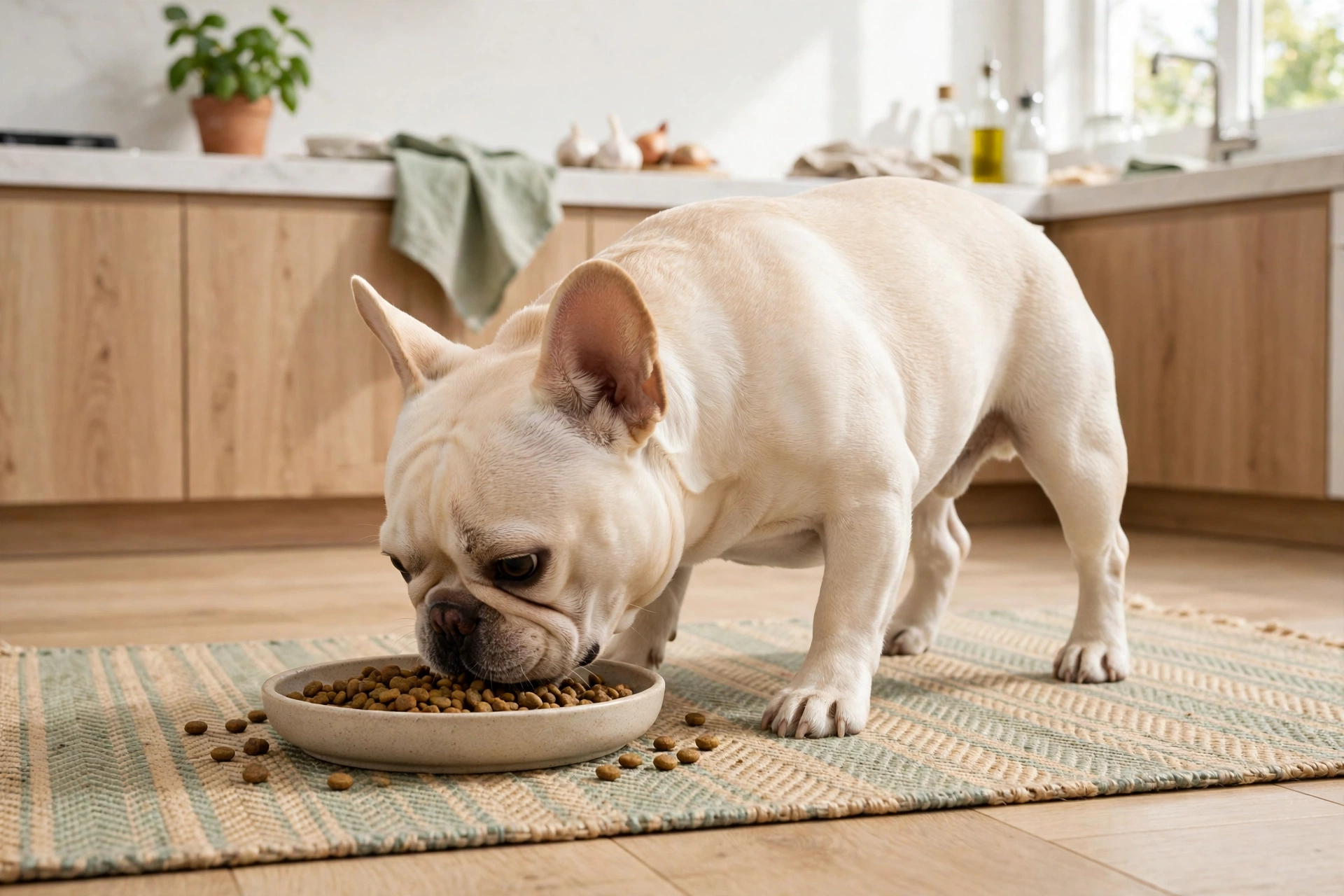
Flat faces push food around deep bowls, so a wide shallow bowl helps at meals. Fresh water must stay out all day, with an extra bowl in summer. Gulping is common, and a slow feeder can stretch a 2 minute meal to 6 minutes. Itchy paws, loose stool for more than 3 days, or repeat ear flare ups need a vet review and a 2 week food diary, not random food cuts.
Health and Lifespan
Lifespan runs 10 to 12 years, and major risks link to breathing, heat, the spine, skin and joints.
Breathing tops the risk list for flat faced dogs. Brachycephalic obstructive airway syndrome, called BOAS, means breathing difficulty from a shortened airway and narrow nostrils. Signs include loud snoring, noisy breathing at rest, and gagging after excitement. Dogs that struggle for air need urgent vet care on the same day, while mild cases need lean weight and calm handling.
Heatstroke can follow within minutes on a hot walk. Early signs include heavy panting, thick drool, bright red gums, and wobbling after 5 minutes outside. Cool the dog with lukewarm water and air movement, then see a vet even if signs fade. Prevention is simple: shade, water, rest, and no midday walks in summer.
Spine trouble appears more often here than in most small breeds. Intervertebral disc disease, called IVDD, occurs when a disc presses on the spinal cord, and some dogs have malformed vertebrae from birth. Back pain, crying when lifted, or dragging back feet needs a vet that day. Ramps and lean weight cut daily strain from jumps, sofa climbs, and stairs.
Skin, ears, and eyes need checks for life. Fold dermatitis grows in warm, damp folds, while allergies drive itching and repeat ear infections. Cherry eye shows as a red lump at the eye corner, and a squinting or cloudy eye needs care within 24 hours. Kneecaps can slip out of place, called patellar luxation, and hip dysplasia can cause aching after play. Good breeders screen breeding dogs for breathing, spine, hips, patellas, and eyes, and adult dogs need vet checks every 12 months.
Living With a French Bulldog
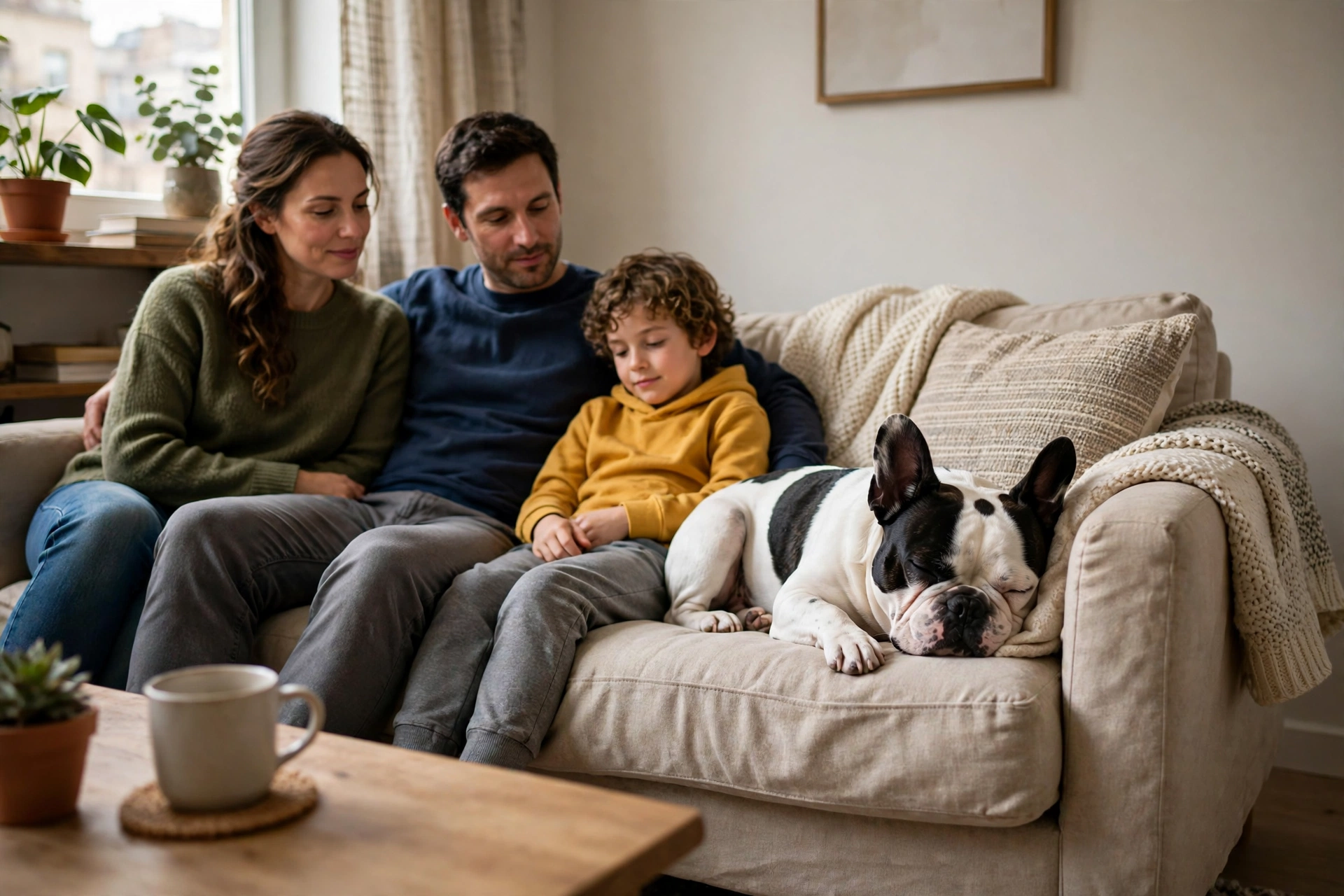
Apartment and family living suit this breed well, provided the home stays cool and someone is present for most of the day.
Space needs stay small in practice. Flats of 500 square feet work fine with 2 or 3 short outings a day and a bed in the main room. Barking stays occasional, so neighbors hear less than with most terriers. Stairs cause the main layout problem, and puppies should ride in arms in buildings with 3 flights and no lift.
Children aged 5 and older who play on the floor and stop when the dog walks away make the best match. Cats usually accept a calm dog after a 1 week staged intro at home. Daily rhythm settles fast: food at 7 a.m. and 6 p.m., a short walk, a long nap, and evening play on the rug. Snoring can fill a room at night, so light sleepers should place the bed outside the bedroom.
Travel needs extra care for flat faces. Car trips need air flow and stops every 2 hours, and many airlines restrict this breed group, so trusted sitters at home often beat boarding.
French Bulldog Puppy Costs and What to Know Before Buying
Puppy prices in the United States run roughly 3,000 to 6,000 dollars from most breeders, and the price varies widely by breeder, color and state.
Common colors from health tested parents may sit near 3,000 dollars in the Midwest. Rare colors in California or New York often pass 6,000 dollars and sometimes run higher, while rescue adoption costs a few hundred dollars in fees. Price alone proves nothing about health, since color and fame raise quotes without adding a single test.
First year costs surprise many new owners. Vaccines and vet checks run about 300 to 600 dollars, food costs 40 to 70 dollars a month, and a 6 week training course costs 150 to 300 dollars. Surgery for breathing or back problems can add thousands in one year, so a vet fund or insurance belongs in the budget from day one.
Breeder checks protect your money and the puppy. Good breeders show health records for both parents, let you meet the mother, and keep puppies with the litter until at least 8 weeks. Red flags include cash only sales in car parks, no parent records, and pressure to pay on the spot. Adult rescue dogs deserve a look too, since a 3 year old skips the 3 a.m. toilet trips and shows true temperament on day one.
Pros and Cons
Strong companionship and low exercise demand are the main gains, while health risk, heat limits and high cost are the main trade offs.
Pros:
- Small size fits flats, with adults under 28 pounds
- Low exercise need of about 1 hour a day
- Playful, loyal nature with close owner bonds
- Occasional barking, mostly short alerts at the door
- Short coat needing only weekly brushing
Cons:
- High puppy price of roughly 3,000 to 6,000 dollars
- Breathing and heat risk in summer and during travel
- Spine, skin, ear and eye problems needing lifelong vet watch
- Poor swimming ability in deep water
- Distress during long alone time on full workdays
FAQs
Seven common questions cover swimming, apartments, lifespan, shedding, children, exercise and cost, with direct facts first in each answer.
Can a French Bulldog swim?
No. Most cannot swim safely because heavy heads, short legs and dense bodies make floating hard. Always use a life jacket near water and hold your dog.
Is a French Bulldog good for apartments?
Yes. Adults weigh under 28 pounds, bark little and need about 1 hour of exercise a day. Cool rooms and lift access make daily apartment life easier.
How long does a French Bulldog live?
Lifespan is 10 to 12 years on average. Lean weight, cool housing and vet checks every 12 months give your dog the best chance of reaching 12 years.
Does a French Bulldog shed a lot?
No. Shedding is moderate, with short hairs all year and more in spring. Weekly brushing for 5 minutes controls most loose hair on sofas and clothes.
Is a French Bulldog good with children?
Yes, with supervision. The breed does well with children aged 5 and older who play gently. Adults should handle all lifting and stop ear pulling at once.
How much exercise does a French Bulldog need?
Daily need is about 1 hour, split into short walks and indoor play. Two 20 minute walks plus 20 minutes of play meet the need without heat strain.
How much does a French Bulldog puppy cost?
Cost varies widely by breeder, color and state. Most breeder puppies cost roughly 3,000 to 6,000 dollars, sometimes higher, while rescue fees run a few hundred dollars.
The Verdict
The right home for this breed wants a small, funny and loyal indoor companion and accepts heat limits, vet watch and a high puppy price.
Use this French Bulldog breed guide as a care and buying checklist before you pay any deposit. Cool rooms, daily company, and a real vet budget turn the breed into a calm partner for 10 to 12 years at under 28 pounds. Owners who need long hikes, pool days, or silent nights should choose another breed first. A lean, cool and vet checked French Bulldog lives as a settled apartment and family dog for a full decade or more.
Sources:
American Kennel Club (AKC) – French Bulldog breed profile
ASPCA – General Dog Care