
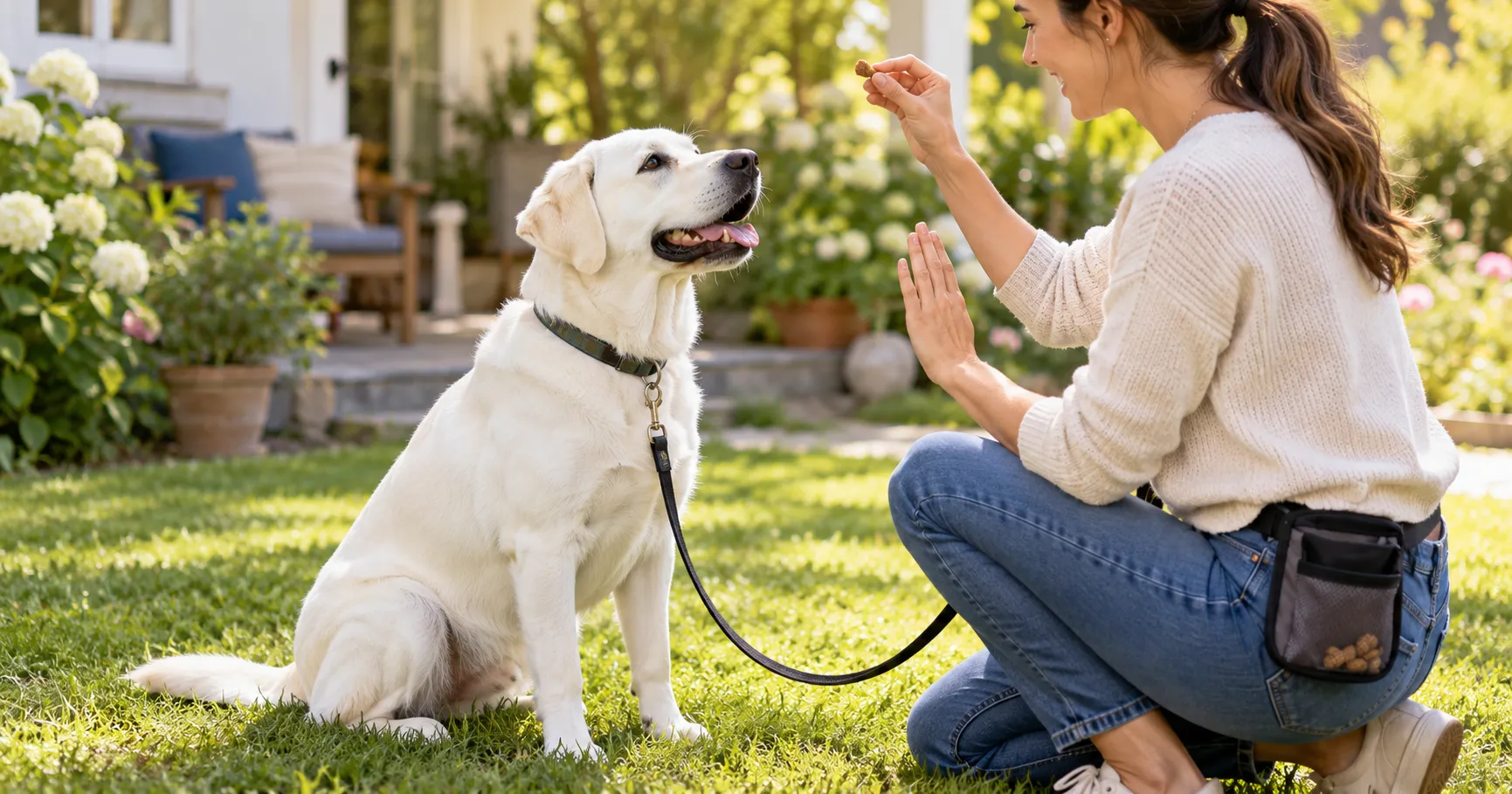
Dog training is the process of teaching a dog which behaviors earn rewards, and trainers and animal welfare groups widely recommend reward-based methods. A puppy that gets a piece of chicken for sitting at the front door learns that sitting opens the door to good things.
This guide explains when to start, which rewards and markers to use, how long sessions should run, how to teach sit, down, stay, loose lead walking and recall, and when a professional trainer is worth hiring. The numbers below follow widely used training guidance.
What Is Dog Training?
Dog training is the practice of teaching a dog cues, manners and good habits by rewarding the behaviors an owner wants to see repeated. Basic cues include sit, down, stay, leave and come when called. Mental stimulation is among the main benefits, and a trained dog earns more freedom, including off-lead walks and easier social outings.
Some cues protect a dog directly. Recall, the cue that brings a dog back on request, guards against accidental escapes, which makes it the most important skill to teach.
When Should You Start Dog Training?
Start dog training at 8 weeks old, when a puppy joins the family, because puppies between 6 and 16 weeks of age learn and retain the most. A good first cue is “watch,” which teaches the puppy to make eye contact when it hears its name.
Formal puppy classes usually begin at 12 to 16 weeks and run for four to six weeks. Puppies shouldn’t visit places crowded with other dogs until their puppy vaccinations are finished, so ask the vet how to socialize safely in the meantime. Most puppies respond reliably to everyday cues by five to six months of age, and training continues for life.
How Should You Prepare Your Home for Dog Training?
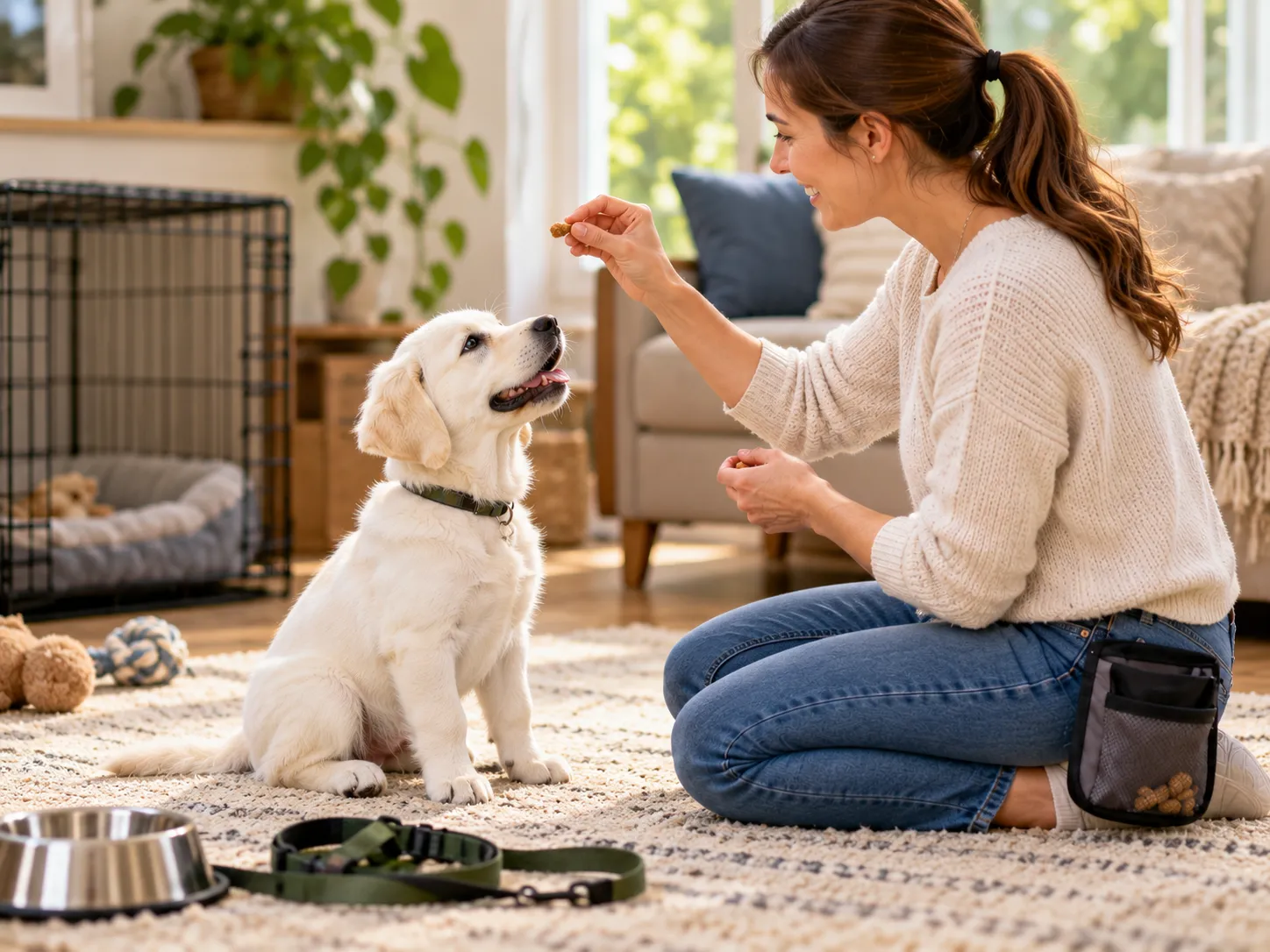
Prepare for dog training by puppy-proofing the house, gathering a few basic tools and setting expectations that match the dog’s age. Dog-proofing living spaces means a dog has fewer chances to practice unwanted habits, such as chewing cables or raiding bins.
Patience matters in the first weeks. Puppies and newly adopted adults both need time to settle, and the “puppy blues,” the tired, overwhelmed feeling many owners get early on, are normal. A starter kit stays small:
- A harness and leash for leash training
- An appropriately sized crate for crate training
- Soft, high-value treats such as chicken, cheese or liver
- A clicker, for owners who prefer it to a spoken marker
- Food puzzles for mental enrichment
How Do Dogs Learn?
Dogs learn through association and repetition, so a behavior followed by a reward becomes more likely to happen again. A dog rewarded for sitting at the door offers that sit more often, while a dog that never earns anything for it gradually stops trying.
Clear, consistent signals speed the process. Use the same word for each cue and the same hand movement every time, and reward within seconds.
Which Dog Training Method Works Best?
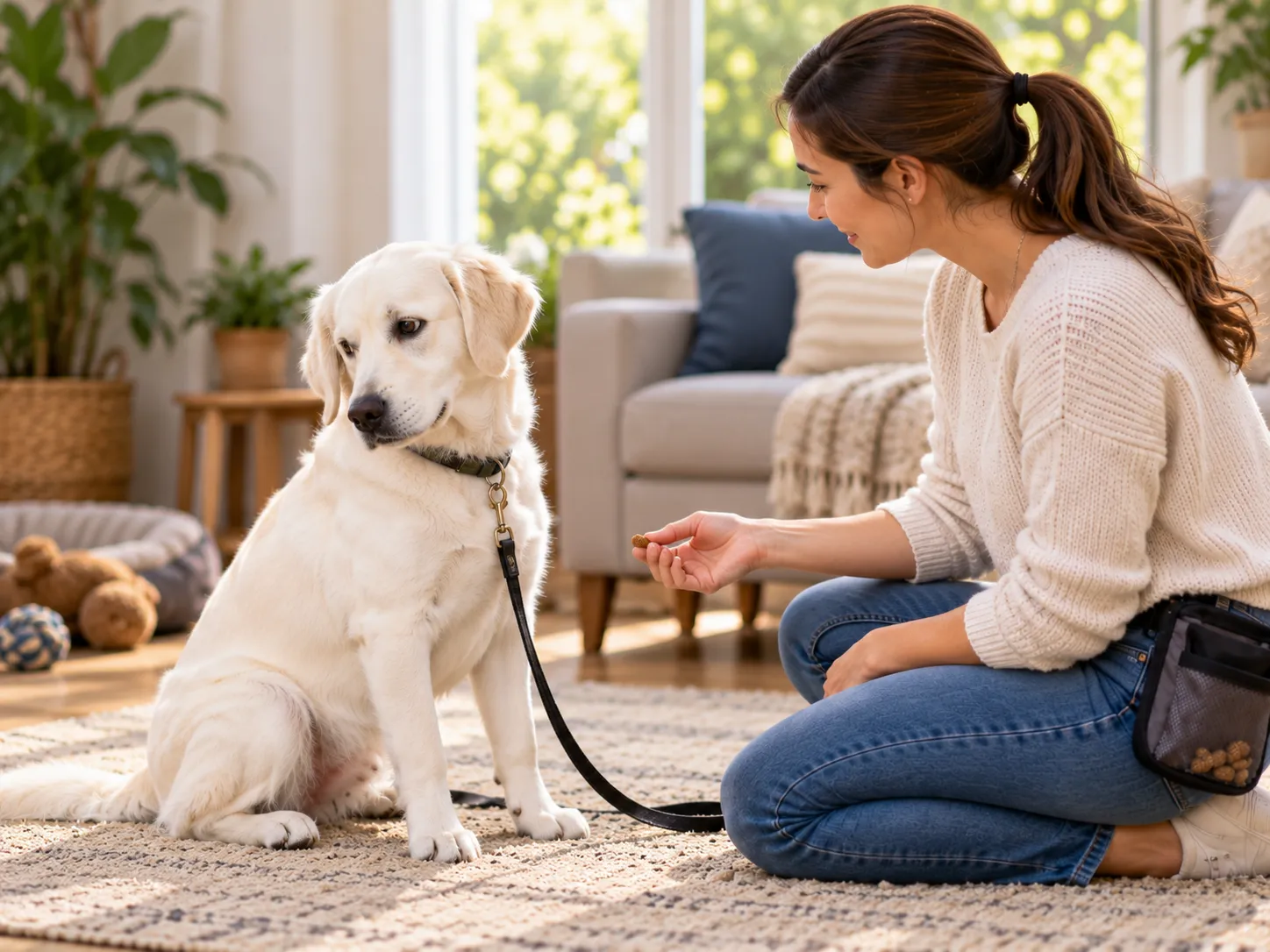
Positive reinforcement, which means rewarding wanted behavior right after it happens, is the method most trainers recommend. Timing decides whether a dog connects the reward with the right action. Deliver the treat within seconds, because a late reward can teach an unintended lesson, such as rewarding the jump that came after the sit.
Which Rewards Work Best for Dog Training?
Small, soft, high-value food rewards such as chicken breast, cheese or liver work best, and toys or praise suit dogs that care more about play. Soft pieces get eaten quickly, which keeps the dog focused on the next repetition.
Dogs with a strong appetite can work for part of their regular kibble. Training sessions packed with treats add calories, so reduce meal portions to match.
How Does a Reward Marker Work?
A reward marker is a short, consistent signal, such as the word “yes” or a clicker sound, that tells the dog the exact moment a behavior earned a treat. Pair the marker with a treat about 20 times at the start so the dog links the sound with food. Deaf or hard-of-hearing dogs can learn a visual marker such as a thumbs up.
How Long Should a Dog Training Session Last?
A dog training session should last two to five minutes, repeated several times a day. Two to five minutes works well, and about five minutes suits puppies. Short, positive sessions often produce more progress than pushing through frustration.
Location matters as much as length. A sit learned in the kitchen doesn’t automatically work at the park, so practice in different rooms, the garden and quiet streets, starting each new skill in a low-distraction spot.
How Do You Teach Basic Dog Commands?
Teach sit, down, stay, loose lead walking and recall with short, reward-marked steps, as the table below shows. Add the spoken cue only after the dog performs the behavior reliably.
| Cue | Core steps | Key tip |
|---|---|---|
| Sit | Hold a treat above the nose, move the hand back over the head, mark and reward when the bottom touches the floor, then add the word “sit” | Introduce the word only once the sit is reliable |
| Down | Hold a treat under the chin near the chest, lower it to the floor and slowly draw it forward, mark and reward when the dog lies down, then add the cue | Teach it after sit works |
| Wait or stay | Ask for a sit or down, pause a few seconds before rewarding, then say “wait” or “stay” during the pause | Lengthen the pause gradually |
| Loose lead walking | Ask for a sit before starting, walk slowly with frequent rewards, stop walking whenever the dog pulls ahead | Pulling should never move the walk forward |
| Recall (come when called) | Greet the dog warmly on arrival, use a cheerful tone, reward generously | A recall that ends the fun teaches the dog to stay away |
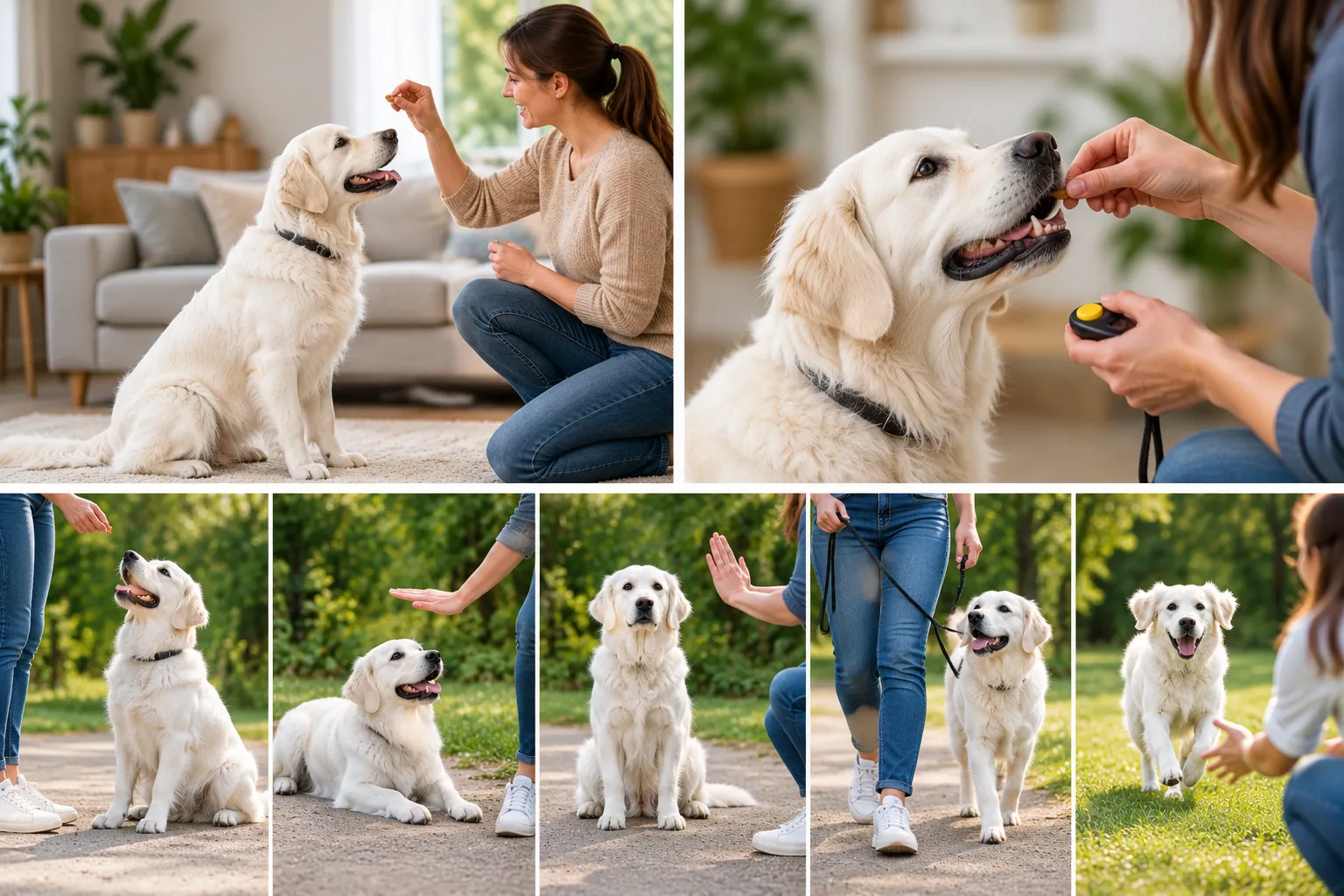
Begin each cue in a quiet room, then add distractions one at a time. Dogs avoid coming when earlier recalls felt unrewarding, so every successful return deserves a reward, even when the dog took its time.
How Long Does Dog Training Take?
Basic dog training takes weeks to months, and most puppies respond reliably to everyday cues by five to six months of age. Potty training runs one week to one month, and puppy classes run four to six weeks. Consistent practice over time beats quick fixes.
Dogs adopted as adults often seem unsettled during their first weeks while they adjust to new routines. Expect a slower start, keep sessions short and keep the household schedule steady.
Track progress in small wins. A dog that holds a sit for three seconds today and five seconds next week is moving in the right direction, even if the park still feels like a long way off.
How Do You Train a Puppy at Home?
Puppy training at home centers on three routines in the first weeks: crate training, potty training and leash training. Each routine builds on short, rewarded repetitions.
Crate Training
Crate training teaches a puppy to treat the crate as a safe space, supports potty training and can reduce separation anxiety. Choose an appropriately sized crate and place it in a quiet but accessible spot, such as a living room corner. Let the puppy explore first, then close the door for brief periods and extend the time as the puppy shows comfort.
Potty Training
Potty training can start at 8 to 12 weeks of age and typically takes from one week to one month. Take the puppy outside on a leash to the same spot, keep the mood calm and reward success with praise and a treat.
Leash Training
Leash training starts indoors, in a small quiet room, with the leash clipped to a harness. Take tiny steps, stop and start often so the puppy stays beside you, and reward each time the puppy holds position. Move to small outdoor spaces next, then to regular walks.
What Mistakes Slow Dog Training Down?
Late rewards, long sessions, practice in only one place and unrewarding recalls are four common mistakes that slow dog training. Each mistake has a simple fix:
- Late rewards: treats delivered more than a few seconds after the behavior, which confuses the dog about what earned them
- Long sessions: training that continues after the dog loses interest, which builds frustration
- One-location practice: cues taught only in the kitchen, which fall apart at the park
- Unrewarding recalls: calling the dog and then ending the fun, which teaches the dog to stay away
Can You Train an Older Dog?
Yes, dogs of any age can learn new cues, because reward-based training works for young and old dogs alike. Daily exercise and mental enrichment, such as food puzzles and scent games, support training at every age. For wider help with health and behavior at every life stage, see our dog care guide.
When Should You Hire a Dog Trainer?
Hire a trainer who uses positive reinforcement when problems such as housetraining, leash pulling, poor recall, excessive barking or fearfulness do not improve with home practice. Get help early, because small problems tend to grow into larger ones. Group classes and private lessons are the usual routes.
Why Does Dog Body Language Matter in Training?
Reading body language lets an owner spot stress, confusion or excitement early and adjust the session before the dog stops learning. Body language is two-way communication: owners send signals, and dogs send plenty back.
A dog that turns its head away or loses interest mid-session is telling the owner the exercise needs to be easier or shorter. Respond by lowering the difficulty, moving to a quieter spot or ending on an easy success.
Frequently Asked Questions
At what age should dog training start?
Training can start at 8 weeks old. Puppies between 6 and 16 weeks learn and retain the most, and formal classes typically begin at 12 to 16 weeks.
How long should I train my dog each day?
Sessions should last two to five minutes. Repeat them several times a day instead of running one long block, and finish while the dog still wants to work.
What is the first thing to teach a puppy?
Teach the “watch” cue first. The puppy learns to make eye contact when it hears its name, which builds the focus every later cue depends on.
Does dog training work without treats?
Yes. Toys and verbal praise work as rewards too, although food helps most while a dog learns a brand-new skill.
How do you stop a dog from pulling on the lead?
Ask for a sit before starting, walk slowly with frequent rewards and stop whenever the dog pulls ahead. Pulling then halts the walk instead of speeding it up.
How long does it take to train a puppy?
Basic cues take weeks to months. Most puppies respond reliably by five to six months of age, and potty training takes one week to one month.
When should an owner hire a dog trainer?
Hire one when housetraining, recall, leash pulling, barking or fear problems persist. Choose a trainer who uses positive reinforcement.
Conclusion
Dog training succeeds through three habits: reward quickly, practice briefly and repeat in new places. Short sessions, soft treats and a clear marker give a dog the fastest path to understanding what the owner wants.
A puppy that comes home at 8 weeks old can start two-minute sessions that same day and join a four to six week puppy class between 12 and 16 weeks of age.