A Dachshund is right for you if you want a small, brave and devoted dog and you can protect its long back with ramps, steady training and tight weight control. Owners who want an easy, quiet and fully obedient lap dog should look at another breed instead. This Dachshund breed guide covers temperament, size, grooming, feeding, health risks and real puppy costs in plain order. Expect a loud bark, a strong hunting drive and a mind that tests rules from the first week at home. Give the dog daily walks, scent games and clear limits, and life together runs smoothly for 12 to 16 years.
Quick Facts
The breed comes in two sizes and three coat types, with a lifespan of 12 to 16 years. Figures below follow American Kennel Club standards for Standard and Miniature dogs.
| Fact | Detail |
|---|---|
| Lifespan | 12 to 16 years |
| Height | Standard 8-9 inches, Miniature 5-6 inches |
| Weight | Standard 16-32 pounds, Miniature 11 pounds and under |
| Coat | Smooth, longhaired or wirehaired |
| Temperament | Lively, brave, stubborn, clever, devoted |
| Exercise Needs | About 1 hour a day for Standards, a bit less for Miniatures |
| Shedding | Moderate |
| Good With Kids | Yes, best with older, calm children |
| Good With Other Dogs | Yes, especially dogs raised in the same home |
Group placement is Hound, and German hunters bred the dog to chase badgers and other burrowing animals underground. That hunting past still explains the digging, chasing and bold attitude owners see in a modern home.
Temperament and Personality
Personality in this breed means lively, brave, clever and stubborn in equal measure, with deep devotion to its own people. Strangers often get a careful stare and a sharp bark before any welcome follows. Family members get a different dog, one that follows a favourite person from room to room and settles under a blanket beside them. Prey drive stays strong for life, so squirrels, rabbits and even fast toys can switch the dog into chase mode in seconds. Barking is another breed trait, and a dog this small can sound twice its size at the front door. Picture a 20 pound Standard alerting the whole house to a delivery driver, then returning to a lap within two minutes. Patience matters during house training, because progress can take months rather than weeks even with a strict routine. Owners who praise outdoor toileting every single time reach a clean house far sooner than owners who scold mistakes indoors. Early social lessons shape that bold nature into steady confidence rather than sharp suspicion of every visitor.

Size and Appearance
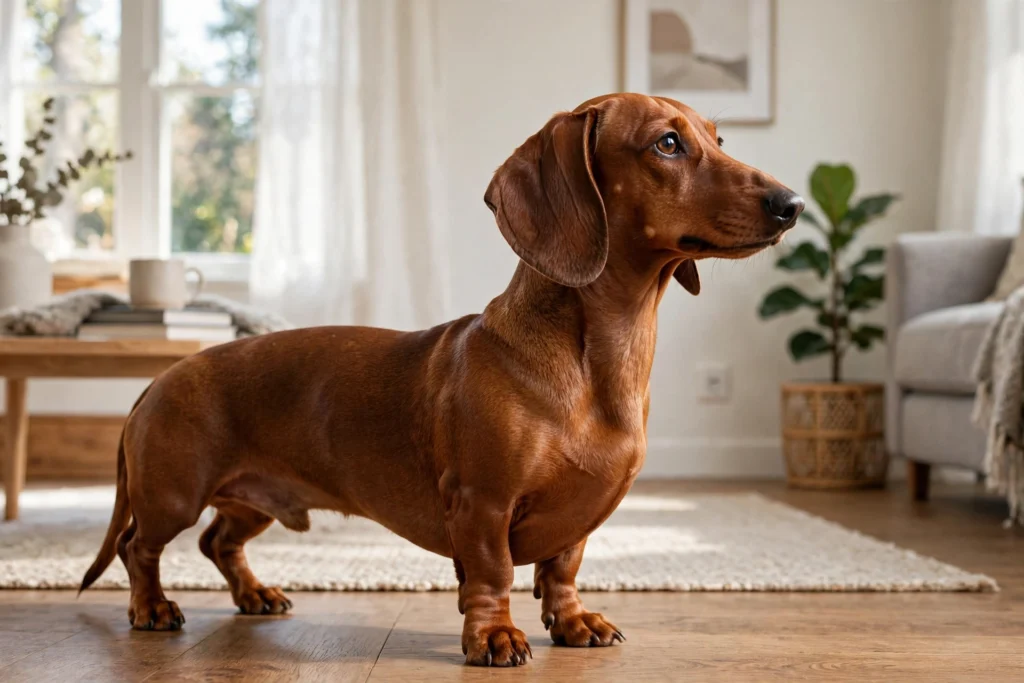
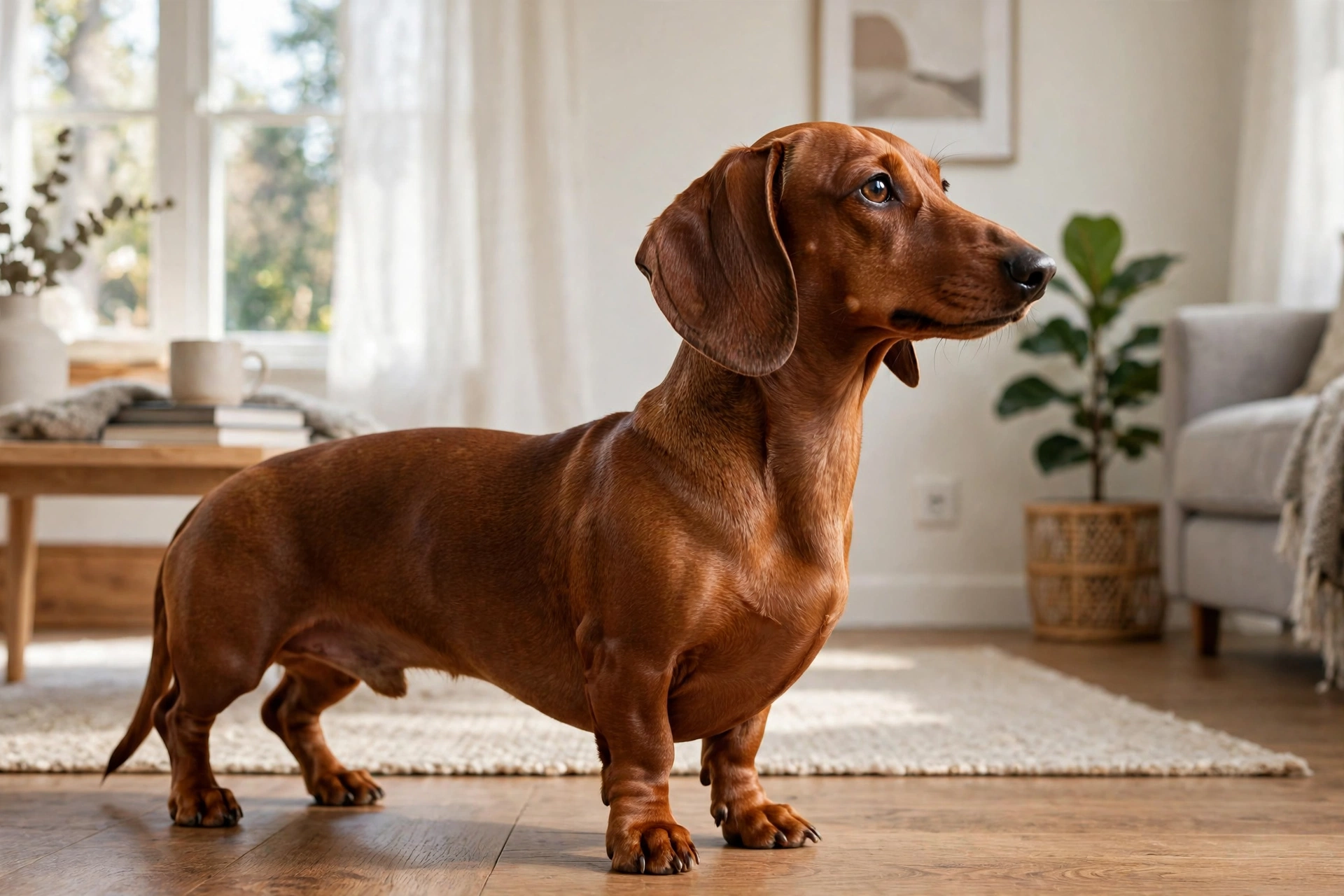
Size splits cleanly into Standard dogs at 8 to 9 inches and 16 to 32 pounds, and Miniature dogs at 5 to 6 inches and 11 pounds or under. Both sizes share the same long, low body, short legs, long ears and a tail carried in line with the back. Coat choice gives three looks, smooth, longhaired and wirehaired, each with the same body shape underneath. Smooth coats lie short and shiny, need little upkeep and show the clean outline of the dog best. Longhaired dogs carry soft, slightly wavy hair with feathering on the ears, chest, legs and tail. Wirehaired dogs wear a harsh outer coat with a softer undercoat, plus a beard and bushy eyebrows that give a wise, comic face. Color varies widely, from solid red or cream to black and tan, dapple patterns and brindle markings. Anyone choosing between sizes should weigh daily lifting, stair use and space, because a 30 pound Standard is a very different lift from a 9 pound Miniature. Movement should look free and flowing, with front legs reaching forward and strong push from the back legs.
Exercise and Training
Exercise needs sit at about 1 hour a day for Standards, split into walks and play, with a bit less for Miniatures. Two walks of 25 to 30 minutes suit most adults better than one long march, especially in hot weather. Play sessions at home add mental work, and ten minutes of scent games can tire a clever dog faster than extra road walking. Weight control protects the long back, so exercise is health care as much as entertainment for this breed. Training works best in short, food rewarded sessions, because a stubborn dog shuts down under harsh handling and repeats nothing. Start house rules, recall and lead manners early, following a steady puppy training routine from the first week home. Social time with calm dogs and varied people during puppyhood lowers barking and suspicion later in life. For example, five minutes of training before breakfast often earns sharper focus than a long evening session after a full meal. Rest days still need toilet breaks and gentle play, because a bored dog digs cushions, barks and begs for food.
Grooming
Grooming demand depends on coat type, with smooth dogs needing the least work and wirehaired dogs needing the most. Shedding stays moderate across all three coats, with loose hair rising in spring and autumn. Brush a smooth coat once a week with a soft brush to lift loose hair and spread skin oils. Longhaired coats need brushing two or three times a week to stop mats forming behind the ears and under the legs. Wirehaired coats need hand stripping two or three times a year, plus weekly brushing, to keep the harsh texture. Baths every four to six weeks suit most dogs, unless mud, digging or a rolled in smell forces an earlier wash. Nails grow fast on a light dog and need trimming every three to four weeks, before clicking on hard floors begins. Teeth need daily attention in a breed prone to dental disease, and even three brushings a week beat none at all. Budget for professional help with a clear view of dog grooming cost figures, since wirehaired stripping and dental care add up over a year. Ears need a weekly check and gentle clean, since long, covered ears trap moisture after baths and wet walks.
Feeding
Feeding amounts stay small, measured and fixed, because extra weight strains the long back and raises injury risk. Most adults do well on two measured meals a day, with total food matched to size, age and daily activity. A 20 pound Standard in light activity often eats around 1 to 1.5 cups of quality dry food daily, split across both meals. Miniatures need less, often near half to three quarters of a cup daily, adjusted against ribs you can feel under a thin fat cover. Treats should stay under 10 percent of daily calories, and baby carrots or green beans make safer extras than cheese or sausage. Puppies eat three to four small meals a day until about six months, then move to the adult two meal pattern. Water must stay fresh and available all day, indoors and after every walk in warm weather. Check body shape weekly from above, looking for a visible waist behind the ribs rather than a straight tube shape. Ask your vet to set a target weight at each check, then hold that line even when the dog begs at the table. Senior dogs often need fewer calories and softer food if teeth wear down, so review portions after age 10.

Health and Lifespan
Health planning starts with the back, because intervertebral disc disease affects roughly 1 in 4 Dachshunds during life. Known as IVDD, the condition damages discs in the spine and can cause pain, weak legs or loss of walking ability. Obesity sharply raises back strain, so a lean dog carries a real advantage every single day. Ramps beside sofas and beds replace jumping, and a ramp at the car boot removes another risky leap. Eyes need watching too, since progressive retinal atrophy can reduce night vision first and progress over time. Lafora disease, a form of epilepsy found in Miniature Wirehaired dogs, has a DNA test that breeders can use before mating. Knees can slip in this breed through patellar luxation, which may show as a skipping step on a back leg. Dental disease ranks among the most common problems, making tooth brushing and vet dental checks part of normal care. Regular vet checks once a year, and twice a year for seniors, catch weight gain, teeth trouble and eye change early. Lifespan runs 12 to 16 years, and lean, active dogs with protected backs often reach the upper end of that range. Signs such as back pain, dragging feet, yelping when lifted or sudden refusal to walk need same day vet care.
Living With a Dachshund
Apartment life suits this breed well, provided daily walks, play and bark control get real attention. Space demands stay low thanks to small size, and a Miniature fits a studio flat as long as outdoor time stays generous. Stairs pose the main housing risk, so ground floor homes or carried trips on long stair runs protect the back. Families with older, calm children usually do well, because respectful handling keeps a small dog with a sore back safe. Toddlers need close supervision around any dog, and rough grabs or falls onto the dog can injure its spine. Other dogs usually get along well with housemates raised beside them, especially another Dachshund for shared play and rest. Cats can live peacefully with a dog raised alongside them, though prey drive means introductions need care and time. Anyone comparing options can place the breed against other best small dog breeds before deciding on size and energy fit. Daily life runs on routine: morning walk, midday toilet break, evening play and a blanket burrow at night. Noise control training matters in shared buildings, where a sharp bark at hallway sounds can strain neighbor relations fast.
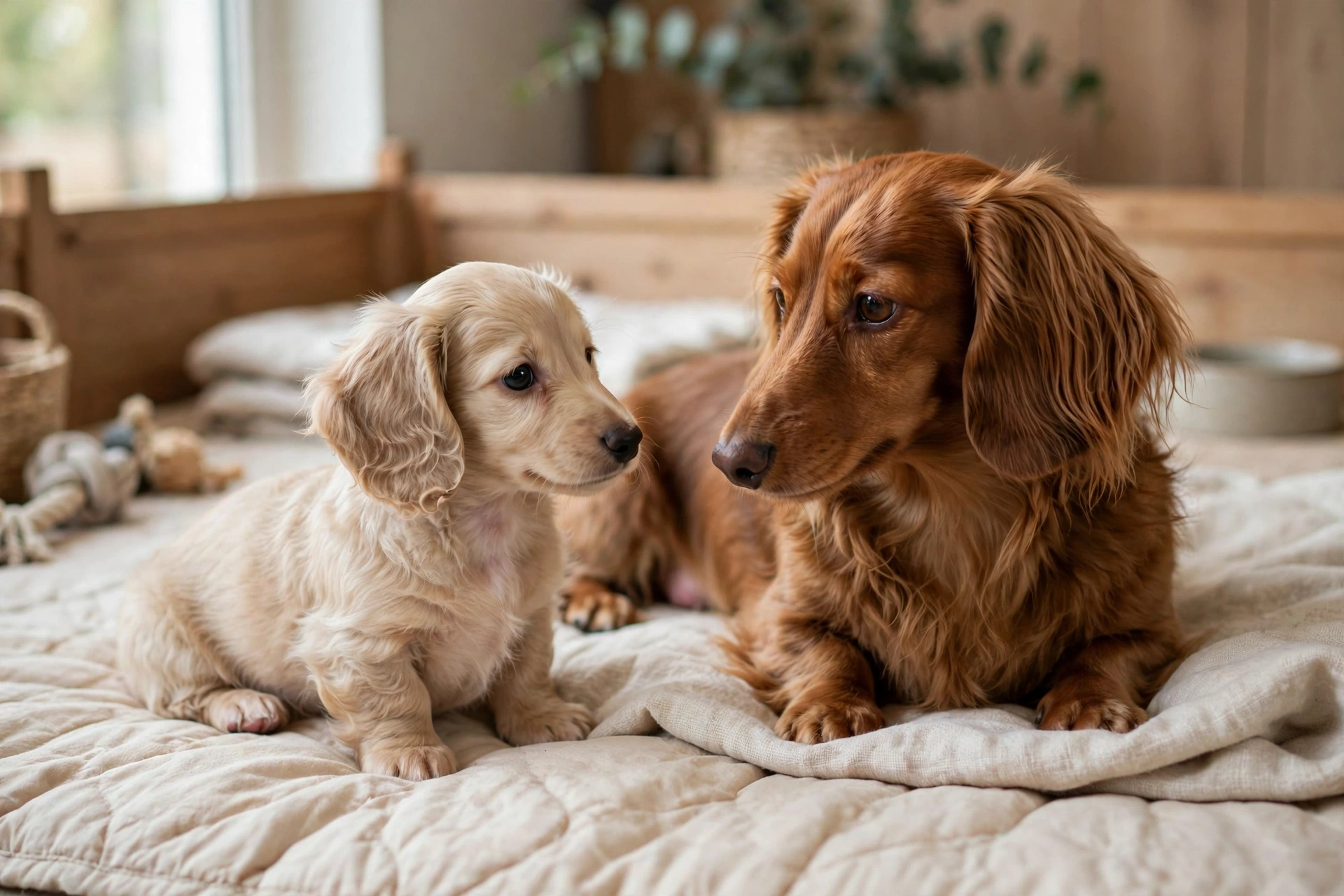
Dachshund Puppy Costs and What to Know Before Buying
Puppy prices in the US generally run from about $1,000 to $3,000 from a breeder, varying by size, coat, breeder and state. Rescue dogs cost less, often a few hundred dollars in adoption fees, and adult dogs skip the hardest puppy months. First year spending goes well beyond purchase price, covering vaccines, microchip, neutering, a crate, bedding, leads and food. Health testing separates careful breeders from sellers cutting corners, so ask for IVDD aware breeding, eye results and Lafora testing where relevant. Meet the mother, view clean housing and watch puppies move, eat and play before paying any deposit. Avoid sellers who offer every color, ship puppies unseen or refuse health paperwork, because those signs point to profit over welfare. Budget monthly for food, insurance, grooming, dental care and routine vet visits across a life that may reach 16 years. Time costs matter too, with house training, social lessons and daily exercise needing hours each week for the first year. Paperwork should include a contract, vaccination record, microchip details and written health results before the puppy leaves the breeder.
Pros and Cons
Balance defines the breed, with big loyalty and character on one side and back care, barking and stubborn streaks on the other. Read both lists against your own routine before choosing a puppy or an adult rescue dog.
Pros
- Devoted, loyal company that bonds closely with its people
- Small size that fits apartments and smaller homes
- Long lifespan of 12 to 16 years
- Funny, lively character with real watchdog value
- Moderate shedding with manageable coat care
Cons
- Back disease risk that needs ramps and weight control
- Stubborn training style that tests new owners
- Loud barking that needs early management
- Strong prey drive around small animals
- House training that can take months
None of the drawbacks put off committed owners, yet each one deserves honest thought before money changes hands.
FAQs
Answers below stay short and direct, covering the questions new owners ask most often before bringing a puppy home.
Are Dachshunds good apartment dogs?
Yes, this breed fits apartment living with daily walks, play and firm bark training from the start. Daily outdoor time matters more than indoor floor space for a happy dog.
How much exercise does a Dachshund need each day?
Standards need about 1 hour daily, split into two walks plus play at home. Miniatures thrive on a bit less, near 40 to 50 minutes spread across the day.
Do Dachshunds shed a lot?
No, shedding stays moderate in all three coat types throughout the year. Weekly brushing keeps loose hair off furniture and clothing in most homes.
Why do Dachshunds need ramps?
Ramps remove jumping strain from the long spine during daily life on sofas, beds and car trips. Jumping down lands hard on discs and raises IVDD risk over time.
Are Dachshunds good with children?
Yes, older and calm children who handle a small dog gently usually bond well with this breed. Close supervision stays wise around toddlers, rough play and any dog with back pain.
How long do Dachshunds live?
Life expectancy runs from 12 to 16 years under American Kennel Club figures for the breed. Lean weight, dental care and back protection help many dogs reach the upper years.
What does a Dachshund puppy cost in the US?
Prices generally run from about $1,000 to $3,000 from a breeder, varying by size, coat, breeder and state. Rescue adoption usually costs less, often a few hundred dollars.
The Verdict
The right owner for this breed wants character, closeness and daily involvement more than easy obedience or silence. Use this Dachshund breed guide to judge fit honestly against your home, schedule, budget and patience for training. Choose a Standard for a sturdier walking partner or a Miniature for easier lifting and smaller spaces. Protect the back, hold a lean weight and keep up vet and dental checks from puppyhood onward. A well cared for Dachshund commonly lives 12 to 16 years as a loyal, funny and devoted household companion.
Sources:
American Kennel Club (AKC) – Dachshund breed profile
ASPCA – General Dog Care